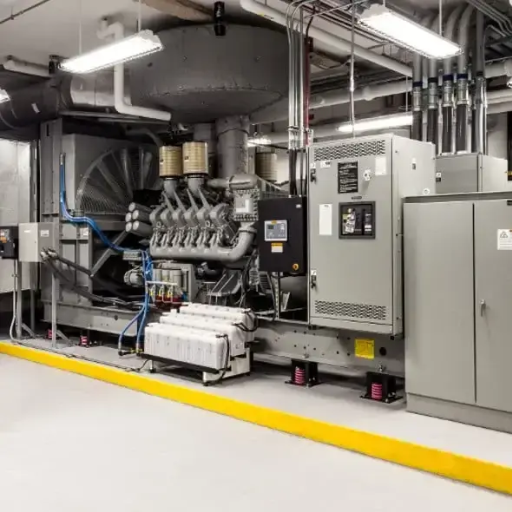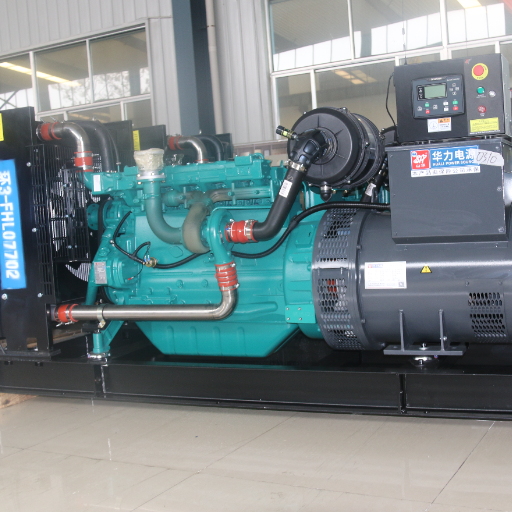
Heavy Duty Diesel Generator for Mining: Sizing & Selection Guide (500kW–4,000kW)
A heavy-duty diesel generator for mining is an industrial genset, usually 500kW to 4,000kW or larger, configured for prime or continuous power in harsh, remote mine environments. It differs from a commercial standby unit in three ways: it must start large motors reliably, survive dust and vibration, and deliver usable power after altitude and temperature derating.
Most procurement teams start with a simple question: “How many kilowatts does the mine need?” That question is necessary, but it is not sufficient.
In 2023, a copper mine in Zambia ordered a 1,250kW genset for a 980kW running load. The running load calculation was correct.
What the team missed was the 600hp ball mill motor, which drew nearly six times its running kVA during direct-on-line startup. The first time the mill tried to start on generator power, a voltage dip collapsed the conveyor control voltage and tripped the entire crushing line.
Two days of lost production cost more than the price difference to upgrade to a properly sized 1,500kW unit.
At Shandong ZC Power CO., LTD. (ZC Power), our engineers size heavy duty diesel generators for mines, quarries, and remote infrastructure projects across Africa, the Americas, the Middle East, and Southeast Asia. In this guide, we will walk through the exact methodology our team uses to specify a mining generator set that starts every critical motor and survives the site.
Key Takeaways
- A heavy duty diesel generator for mining is typically a 500kW–4,000kW+ prime-rated genset built for dust, vibration, and extreme temperatures.
- Motor starting kVA often governs size; a large DOL motor can draw 5–7× its running kVA during startup.
- Altitude and temperature must be derated before selecting the final unit, typically ~1% per 100m above 1,000m and ~3% per 10°C above 40°C.
- Most mines need a prime power (PRP) rating, not standby (ESP), because the genset runs whenever the grid is unavailable.
- Mine spec generators add heavy-duty skids, fire suppression, emergency stops, enhanced filtration, and remote monitoring for safety and uptime.
What Is a Heavy Duty Diesel Generator for Mining?
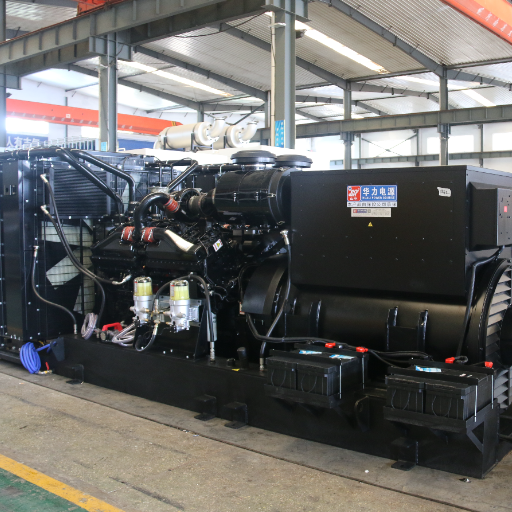
A heavy duty diesel generator for mining is a complete generator set engineered to supply prime or continuous power in harsh, high-vibration, dusty environments. These gensets typically range from 500kW to 4,000kW or more and are built with reinforced base frames, high-capacity cooling systems, heavy-duty air filtration, and mine-site safety features.
Commercial standby generators are designed for occasional emergency use. A mining genset is designed for continuous or near-continuous duty. It must handle cyclic loads from crushers, mills, and hoists; start large motors across the line; and keep running when the ambient temperature exceeds 40°C or the site sits above 1,500m elevation.
The correct ISO 8528-1 duty rating matters. Mines usually need prime power (PRP), which allows variable-load operation for unlimited hours, with a 24-hour average load factor not exceeding 70% of the PRP rating.
Standby (ESP) is for emergency-only operation and is not suitable for routine mine power. Continuous power (COP) is for constant 100% load, such as base-load islanded operations.
Why Mining Power Is Different
Mining power systems operate under conditions that rarely occur in commercial or municipal installations.
Remote and off-grid operation. Many mines are far from any utility grid. The generator is the only source of power, so reliability is not a preference; it is a production requirement.
Cyclic and shock loads. Crushers, mills, and hoists impose rapid load changes. A crusher can swing from 40% to 90% load in seconds. The engine and alternator must recover quickly without excessive voltage or frequency dip.
Dust, vibration, and contamination. Mine sites generate abrasive dust that clogs air filters and radiators. Vibration from blasting and heavy haulage can loosen connections and fatigue sheet-metal enclosures.
Altitude and temperature extremes. High-altitude mines in Peru, Chile, or Tibet have thinner air that reduces engine output. Desert mines in Africa or Australia face 45°C+ ambient temperatures that reduce cooling capacity.
Safety and regulatory requirements. Mine sites often require emergency stops, fire suppression, battery isolators, flameproof equipment, and compliance with local mining regulations.
These factors mean a standard commercial generator will fail prematurely or undersize the real load. A heavy duty diesel generator for mining must be specified as a system, not just a kW rating. For a broader overview of industrial gensets, read our heavy duty diesel generator buying guide.
Key Mining Loads and Power Requirements
Understanding what the generator must actually power is the first step in sizing. Mining loads fall into several categories, each with different power characteristics.
| Load Type | Typical Power Range | Load Characteristic | Sizing Impact |
|---|---|---|---|
| Crushing plant | 300kW–2,000kW | High shock, high starting kVA | Governs generator size |
| Grinding mills (ball/SAG) | 400kW–4,000kW+ | Continuous heavy load | Determines base load |
| Conveyors | 50kW–500kW each | Multiple motors, intermittent | Diversity factor critical |
| Dewatering pumps | 100kW–1,000kW | High inertia starts | Motor starting kVA |
| Ventilation fans | 200kW–1,500kW | Continuous operation | Base load contribution |
| Camp and auxiliary | 200kW–800kW | Stable, low shock | Minor sizing impact |
Crushing and grinding equipment usually dominates the load list. A single large mill motor can require more starting kVA than the entire running load of the plant. That is why motor starting analysis, not just running kW, governs the final generator size.
For a deeper look at sizing methodology, see our heavy duty diesel generator sizing process.
Sizing a Heavy Duty Diesel Generator for Mining
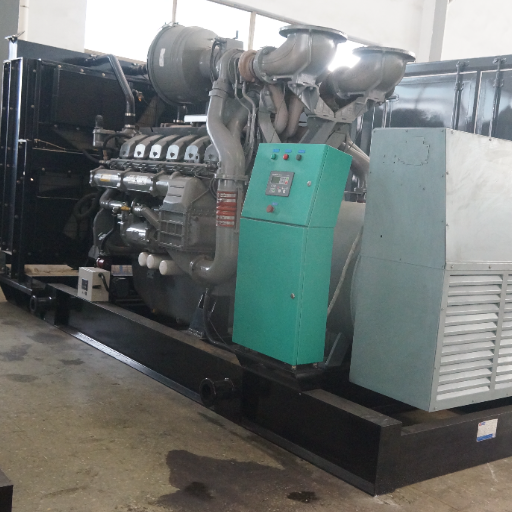
The sizing workflow used by ZC Power engineers follows eight steps. Skipping any step is where expensive mistakes happen in heavy-duty diesel generators for mining projects.
1. Create a Complete Load Inventory
List every piece of equipment the generator must supply, including running kW, running kVA if known, starting method, and duty cycle. Separate motor loads from static loads. Motors are the dominant sizing factor in most mining plants.
2. Convert Running kW to Running kVA
Generators are rated in kVA, but loads are usually listed in kW. Use the load power factor to convert:
kVA = kW ÷ Power Factor
For most mining loads, power factor ranges from 0.8 to 0.85. A 1,000kW load at 0.8 power factor requires 1,250kVA of alternator capacity.
3. Calculate the Largest Motor Starting kVA
Motor starting surge is the single most common cause of mining generator failure. Typical multipliers are:
| Starting Method | Starting kVA Multiplier |
|---|---|
| Direct On Line (DOL) | 5–7× running kVA |
| Star-Delta | 2–3× running kVA |
| Soft Starter | 1.2–1.5× running kVA |
| VFD | 1.0–1.2× running kVA |
4. Apply Diversity Factor
Not all equipment runs simultaneously. A diversity factor of 0.7 to 0.95 is typical for mining, depending on operating shifts and process design.
5. Add Future Expansion Margin
Mines expand. Generators last 20 to 30 years. Add 15–25% margin for future load growth. This also keeps the generator in its efficient operating range.
This margin is one reason heavy duty diesel generator for mining sizing often recommends a unit 20% larger than today’s measured peak.
6. Apply Site Derating
Altitude and temperature reduce engine output and cooling capacity. Typical rules:
- Altitude: ~1% derating per 100m above 1,000m
- Temperature: ~3% derating per 10°C above 40°C
7. Select the Correct ISO 8528 Duty Rating
Choose standby (ESP), prime (PRP), or continuous (COP) based on how the generator will run. Most mines need PRP because the genset operates whenever grid power is unavailable. Match the duty rating to the real operating profile.
If you are unsure which duty cycle applies, see our explanation of prime vs standby power ratings.
8. Choose the Next Standard Generator Size
After all calculations, select the next standard commercial rating above your requirement. Target normal operation at 70–80% of rated capacity.
Worked Examples for Mining Applications
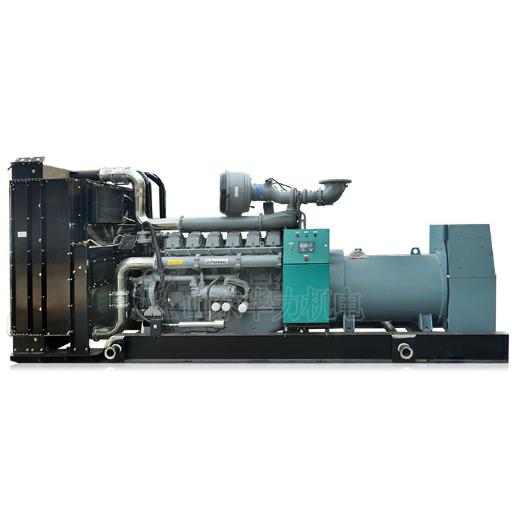
Example 1: 1,000kW Crushing Plant Prime Power
A copper mine needs prime power for a crushing plant. The load inventory totals 950kW running load. The largest motor is a 250kW crusher with DOL starting.
- Running kVA at 0.8 PF: 950 ÷ 0.8 = 1,188kVA
- Crusher running kVA: 250 ÷ 0.8 = 313kVA
- DOL starting kVA at 6×: 1,876kVA
- Peak before diversity: 1,188 + 1,876 = 3,064kVA
- Diversity factor 0.80: 2,451kVA
- Future margin 20%: 2,941kVA
- Site conditions: 2,000m altitude → ~10% derating
- Adjusted requirement: 2,941 ÷ 0.90 = 3,268kVA
- Final selection: 3,500kVA (2,800kW at 0.8 PF) prime-rated genset
Adding a soft starter to reduce crusher starting surge to 1.5× would drop the requirement to roughly 2,000kVA, a significant capital saving.
Example 2: 1,500kW Gold Mine with Ball Mill Start
A remote gold mine provides a classic heavy duty diesel generator for mining cases. Running load is 1,200kW. The largest motor is a 400kW ball mill with DOL starting.
- Running kVA at 0.8 PF: 1,200 ÷ 0.8 = 1,500kVA
- Ball mill running kVA: 400 ÷ 0.8 = 500kVA
- DOL starting kVA at 6×: 3,000kVA
- Peak before diversity: 1,500 + 3,000 = 4,500kVA
- Diversity factor 0.80: 3,600kVA
- Future margin 20%: 4,320kVA
- Site derating: 2,500m altitude → 15% derating
- Adjusted requirement: 4,320 ÷ 0.85 = 5,082kVA
- Final selection: 5,250kVA (4,200kW at 0.8 PF) prime-rated genset
Alternatively, adding a soft starter to reduce the ball mill starting surge to 1.5× would drop the requirement to roughly 2,600kVA.
Example 3: 500kW Remote Mine Camp Standby
A remote exploration camp needs standby power during grid outages. The load inventory totals 420kW, mostly lighting, HVAC, and kitchen equipment.
- Running kVA at 0.85 PF: 420 ÷ 0.85 = 494kVA
- Largest motor: 75kW air compressor with DOL starting at 6× = 529kVA
- Peak before diversity: 494 + 529 = 1,023kVA
- Diversity factor 0.90: 921kVA
- Future margin 15%: 1,059kVA
- Site conditions: sea level, 35°C → no significant derating
- Final selection: 1,250kVA (1,000kW at 0.8 PF) standby-rated genset
This unit will normally run at about 79% of rated kVA, leaving room for growth and limiting voltage dip during compressor startup.
Site Condition Derating for Mining Generators
A generator specified for sea-level conditions will not deliver its nameplate rating at a high-altitude mine or in a desert summer. Derating must be applied before selecting the final unit. This is one of the most common errors in heavy-duty diesel generators for mining specifications.
Altitude Derating
Engine output drops because thinner air reduces combustion oxygen. A common rule is approximately 1% derating for every 100m above 1,000m. A 2,000kW generator at 3,000m may effectively deliver only 1,800kW without modification.
Temperature Derating
High ambient temperature reduces cooling system capacity. A common rule is approximately 3% derating for every 10°C above 40°C. At 50°C, the same 2,000kW generator may be effectively derated to roughly 1,940kW.
Combined Derating Example
A 2,000kW generator installed at 3,000m and 50°C might be derated as follows:
- Altitude derating: 2,000m above 1,000m × 1% = 20% → 1,600kW
- Temperature derating: 10°C above 40°C × 3% = 3% → 1,552kW
In this case, the buyer should either specify a larger generator or order a high-altitude, high-temperature package with oversized radiator and adjusted fuel injection.
Dust and Filtration
Dust clogs air filters and radiators, forcing more frequent maintenance and reducing effective cooling. Pre-cleaners, cyclonic filters, and high-capacity air filter housings are standard on mine spec units.
Mine Spec Generator Requirements
A mine spec generator goes beyond a standard industrial genset. It includes features required for safety, reliability, and regulatory compliance on mine sites. Specifying a true heavy duty diesel generator for mining means checking every item on this list.
Heavy-duty skid or base frame. The genset must withstand blasting vibration and heavy haulage traffic without flexing or cracking.
Fire suppression system. Automatic or manual fire suppression is often required for engine compartments and fuel systems.
Emergency stops and battery isolators. Remote emergency stop stations and battery isolators allow rapid shutdown during incidents.
Flameproofing where required. In coal mines or other hazardous atmospheres, electrical equipment may need explosion-proof or flameproof certification.
High-capacity cooling. Tropical-rated radiators, oversized heat exchangers, and remote cooling options maintain output in extreme heat.
Enhanced air filtration. Pre-cleaners, cyclonic filters, and dual-stage air filters protect the engine in dusty conditions.
Remote monitoring and parallel-ready controls. Deep Sea Electronics (DSE) or SmartGen controllers enable remote monitoring and future paralleling.
Containerized or trailer-mounted options. CSC-certified containerized generators protect the unit in transit and on site. Trailer-mounted units allow rapid relocation across large mine sites.
Fuel Autonomy, Paralleling, and Redundancy
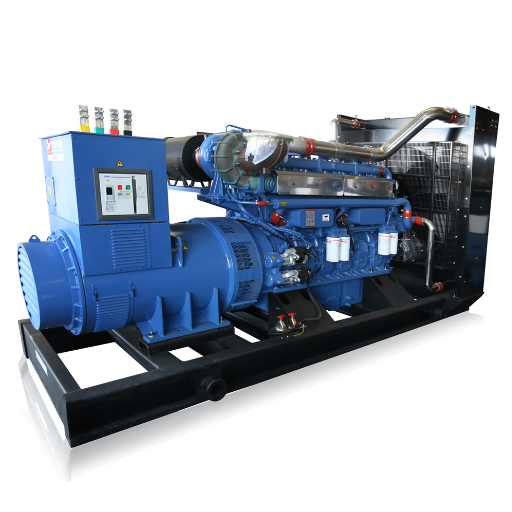
Mining power systems must keep running even when fuel deliveries are delayed or a generator fails.
Fuel Tank Sizing
Fuel autonomy is the number of hours the genset can run at full load without refueling. For remote mines, 24–72 hours of autonomy is common. A 1,000kW genset at 200g/kWh fuel consumption burns roughly 200 liters per hour. Seventy-two hours of autonomy requires a 14,400-liter tank, plus safety margin.
N+1 Redundancy
Critical mine infrastructure often uses N+1 redundancy. If the site needs 2,000kW of prime power, three 1,000kW gensets are installed. Any two units can carry the full load, allowing maintenance or failure of the third.
This architecture is common when a heavy duty diesel generator for mining protects dewatering pumps, ventilation fans, or process-critical crushing lines.
Load Priority and Load Shedding
When a generator trips or fuel runs low, load priority logic sheds non-critical loads first. Camp power, lighting, and dewatering pumps usually have higher priority than crushers or conveyors.
Parallel Synchronization
Multiple generators can operate in parallel to share load and provide redundancy. Synchronization cabinets match voltage, frequency, and phase angle before closing the breaker. For details on transfer switching, see our automatic transfer switch sizing guide.
Common Mistakes When Buying a Mining Generator
Even experienced procurement teams make these errors when sourcing a heavy duty diesel generator for mining.
Ignoring motor starting surge. A generator sized only for running load will trip the first time a large crusher or mill motor starts.
Forgetting site derating. Altitude and temperature can reduce usable output by 20% or more. Derating must be applied before selecting the generator.
Buying standby-rated units for prime duty. ESP-rated generators are not designed for continuous operation and will fail prematurely if used as prime power.
Undersizing fuel tanks. A generator that runs out of fuel during a storm or supply delay is useless.
Skipping mine-spec features. Standard canopies and filters will not survive abrasive mine dust or meet site safety requirements.
Choosing trading companies without engineering support. A middleman cannot provide load studies, site derating analysis, or OEM spare parts when something fails.
When to Involve a Factory Engineer
Some mining generator projects are straightforward, but others require factory engineering support. Contact a manufacturer engineer when:
- Total load exceeds 1,000kW
- Individual motor starts exceed 200kW
- The site is above 1,500m altitude or regularly exceeds 45°C
- Loads include large VFDs, UPS systems, or DC rectifiers
- Multiple generators must operate in parallel
- Custom voltage or frequency is required
- The project needs containerized or trailer-mounted configuration
At ZC Power, our team of 80+ engineers provides load assessment, site derating analysis, motor starting studies, and custom generator specification. We build diesel generator sets from 8kVA to 4,000kVA in open, silent, containerized, and trailer configurations, and every unit is load-bank tested in our national standard testing center before shipment.
Contact the ZC Power Engineering Team for a free mining power assessment and factory-direct proposal for your next heavy duty diesel generator for mining project.
Conclusion
A heavy duty diesel generator for mining is not an off-the-shelf commercial unit. It is a purpose-built power system selected for the mine’s specific loads, environmental conditions, duty cycle, and safety requirements.
The best specification starts with a complete load inventory, adds motor starting surge, applies diversity and future growth margins, and then derates for altitude, temperature, and dust. It also matches the ISO 8528 duty rating to the real operating profile, usually prime power for off-grid or grid-weak mines.
At ZC Power, we have sized, built, and commissioned heavy duty diesel generators for some of the world’s most demanding mining environments for more than 25 years. If you are evaluating a new project, our engineers can validate your load list, recommend the right duty rating, and deliver a custom genset tested to its full rated output before it leaves our factory.
Request Your Free Mining Power Assessment Today and get a factory-direct quote for a heavy duty diesel generator for mining sized exactly for your site.