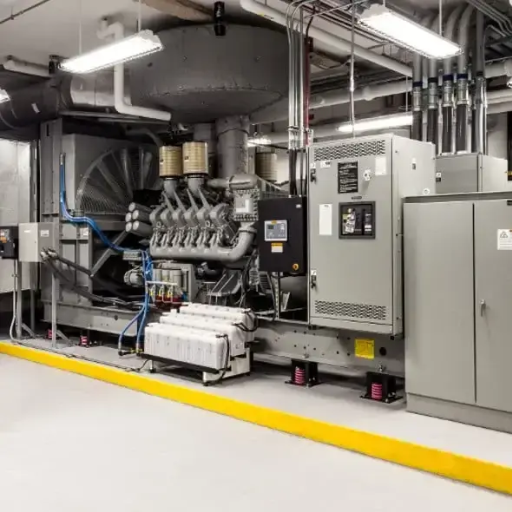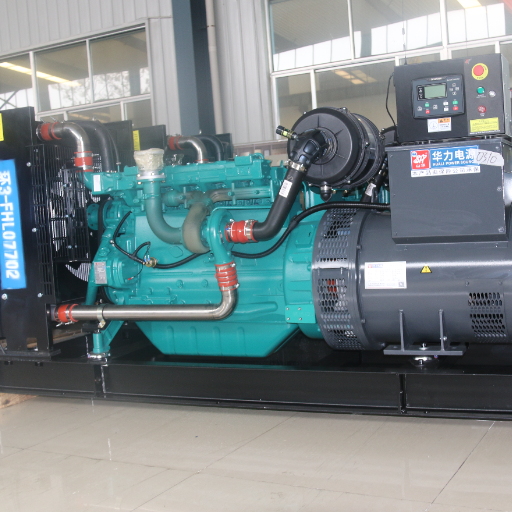
Silent Heavy Duty Diesel Generator: Industrial Buyer’s Guide (500kVA–2,000kVA)
A silent heavy duty diesel generator is the practical choice when a factory, hospital, or data center needs backup or prime power in a noise-sensitive location. These units combine a high-output diesel engine (typically 100kVA to 2,000kVA and above) with a sound-attenuated canopy, supporting either prime or standby power depending on the site. That canopy keeps operating noise between 60 dB(A) and 75 dB(A) at 7 meters.
In 2024, a contractor in Lagos installed a standard open-type 250kVA genset on a rooftop to cut costs. Within a week, neighbors filed noise complaints. Environmental officers measured 84 dB(A) at the property boundary and ordered the unit shut down. The retrofit (acoustic fencing, exhaust silencer, and vibration pads) cost more than a factory-built silent canopy would have.
That story repeats across cities where grid instability drives generator demand. Africa’s diesel generator market alone is projected to reach USD 1.68 billion in 2026. Much of that demand is for standby power near homes or commercial zones.
Buyers increasingly need heavy-duty output without violating noise ordinances. This guide explains how silent heavy-duty diesel generators work, how to compare noise claims, and how to specify the right unit for your site.
Key Takeaways
- A silent heavy duty diesel generator wraps a high-output diesel engine in a sound-attenuated canopy, cutting noise from 95–128 dB(A) down to 60–75 dB(A) at 7 meters.
- Noise level is the deciding factor, not power output: the same engine delivers the same kVA in either an open frame or a silent canopy.
- Hospitals typically need ≤65 dB(A), data centers often target ~72 dB(A), and industrial sites may accept 70–75 dB(A) at 7 meters.
- The 15–40% upfront premium for a silent canopy is often offset by avoiding generator-room construction, faster permits, and higher resale value.
- Always request a factory noise test report referencing ISO 8528-10 and confirming the measurement distance and load.
Need a site-specific silent generator recommendation? Contact a ZC Power engineer for a factory-direct quote and acoustic assessment.
What Is a Silent Heavy Duty Diesel Generator?
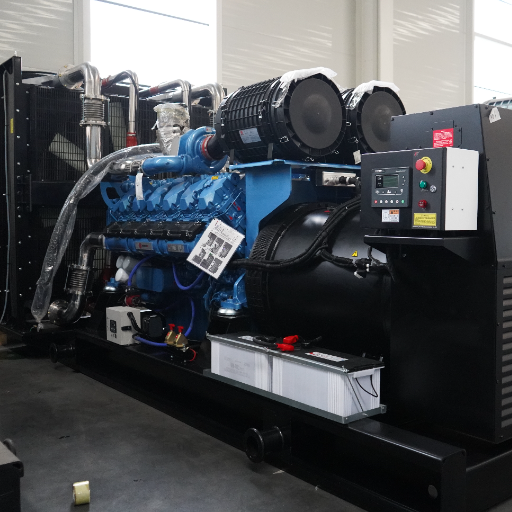
A silent heavy duty diesel generator is an industrial diesel genset enclosed in a steel acoustic canopy. The canopy is lined with sound-absorbing material. It uses labyrinth air ducts to control intake and exhaust noise. Vibration isolators, exhaust silencers, and weatherproof seals complete the package.
The result is a unit that can sit outdoors near hospitals, hotels, schools, or urban data centers without triggering noise complaints or regulatory action.
At ZC Power, we classify heavy-duty units in the 100kVA to 4,000kVA range. A 500kVA silent diesel generator for a hospital, for example, typically produces 65–75 dB(A) at 7 meters. A 1,000kVA containerized silent generator for a data center or industrial plant may be rated at 75–85 dB(A) at 7 meters. The exact figure depends on the enclosure class and engine configuration.
The phrase “silent” is relative. No diesel generator is truly silent. Industry convention uses the term for any generator with a sound-attenuated enclosure that reduces noise below open-frame levels. “Super silent” usually means ≤65 dB(A) at 7 meters. “Standard silent” means 65–75 dB(A).
These units differ from portable inverter generators. Inverter generators use variable engine speed to reduce noise for small loads, but they top out at a few kilowatts. A silent heavy-duty diesel generator uses acoustic engineering to manage the noise of a large industrial engine. These engines produce hundreds or thousands of kilowatts.
How Loud Is a Silent Heavy Duty Diesel Generator?
Understanding decibel ratings is essential. Decibels use a logarithmic scale, so a small numerical change means a large perceived difference. Every 10 dB(A) increase roughly doubles perceived loudness. A generator rated at 75 dB(A) sounds about twice as loud as one rated at 65 dB(A). That’s why a 5 dB(A) gap matters more than it appears.
Typical noise levels by generator type
| Generator Type | Typical Noise at 7 Meters | Comparable Sound |
|---|---|---|
| Normal conversation | 60 dB(A) | Reference point |
| Super silent diesel generator | 50–65 dB(A) | Quiet conversation to normal speech |
| Standard silent diesel generator | 60–75 dB(A) | Vacuum cleaner to moderate traffic |
| Open type diesel generator | 78–85 dB(A) | Busy traffic to loud machinery |
| Open type generator at 1 meter | 95–128 dB(A) | Jackhammer to jet engine at distance |
Sound pressure also drops with distance. Every time you double the distance from the source, the level falls by roughly 6 dB(A). A generator rated at 75 dB(A) at 7 meters becomes about 69 dB(A) at 14 meters and 63 dB(A) at 28 meters. This is why local noise limits are usually measured at the property boundary or nearest sensitive receptor, not at the generator itself.
When comparing generator noise level dB claims, always confirm three things. First, the measurement standard: ISO 8528-10 is the industry reference. Second, the distance, usually 7 meters. Third, the load condition, typically 75% or 100% of rated load. A rating quoted at 1 meter is not comparable to one quoted at 7 meters.
How Acoustic Canopies Reduce Generator Noise
A quality silent canopy is an engineered system, not just a metal box. The main noise-control elements of a silent heavy duty diesel generator work together. They block, absorb, and redirect sound energy while maintaining proper cooling airflow.
Sound-absorbing lining
The inner surfaces of the canopy are lined with rockwool, fiberglass, or specialized acoustic foam behind perforated steel panels. These porous materials absorb airborne engine noise. They convert sound energy into heat through friction. Thickness and density matter. Cheap canopies often use thin or sparse lining that barely reduces noise.
Labyrinth air ducts
Cooling air must enter and exit the enclosure, but a straight opening would let noise escape directly. Labyrinth ducts use angled baffles and multiple turns to block direct sound paths while allowing airflow. Engineered intake and exhaust ducts also reduce fan noise.
Exhaust silencers
Exhaust gas pulsation is one of the dominant noise sources in diesel generators. A heavy-duty industrial muffler or silencer can reduce exhaust noise by 30–50 dB(A). High-quality silent generators use chamber-type, absorptive, or combination silencers matched to the engine size.
Vibration isolators
Engine and alternator vibration can travel through the base frame into the ground or building structure. This creates structure-borne noise. Rubber mounts, spring isolators, or inertia bases decouple the generator from its surroundings. This can account for 20–30% of the total noise reduction.
Sealed doors and gaskets
Even small gaps around access panels can leak significant sound. Quality canopies use sealed doors, acoustic gaskets, and secure latches to prevent sound leakage while still allowing technician access.
Cheap canopies often skip dense acoustic lining or use thin single-skin steel. They may look like a soundproof diesel generator, but the noise reduction is poor and the engine can overheat. Always request a factory noise test report. It should reference ISO 8528-10 and include the actual test conditions.
Silent vs Open Type Heavy Duty Generator
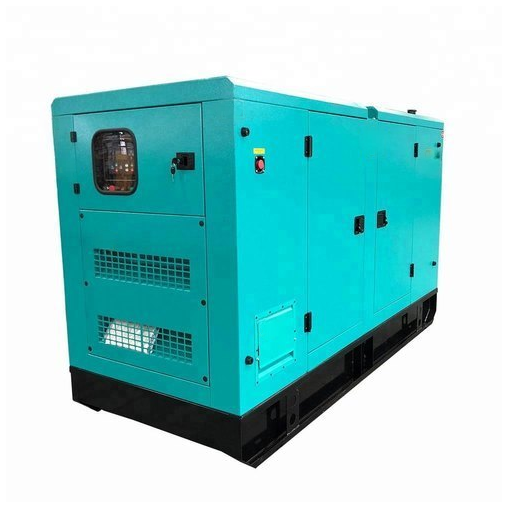
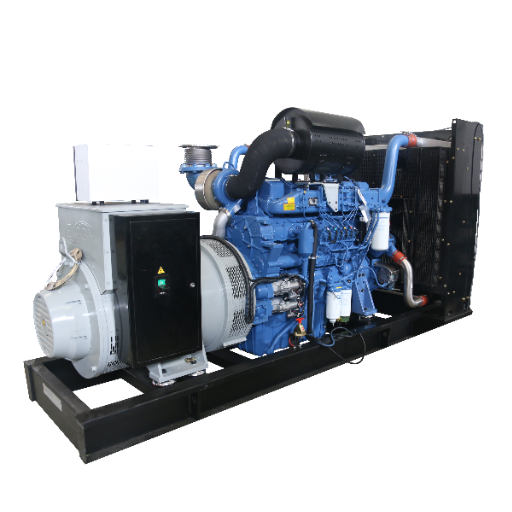
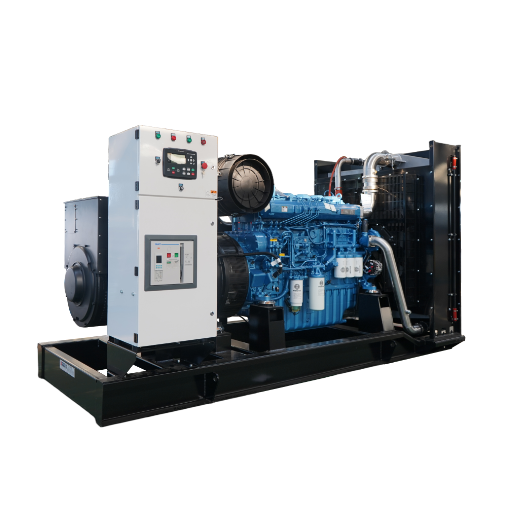
The same diesel engine can produce the same kVA output whether it sits on an open base frame or inside a silent heavy duty diesel generator canopy. The enclosure changes the ownership equation. It doesn’t change the power.
| Factor | Open Type Generator | Silent Type Generator |
|---|---|---|
| Noise at 7 m | 78–85 dB(A), up to 95+ dB(A) | 60–75 dB(A); super-silent 50–65 dB(A) |
| Weather protection | Minimal; needs shelter | Built-in weatherproof canopy |
| Upfront cost | Lower | 15–40% higher |
| Installation | May need generator room or acoustic screen | Direct outdoor installation on a pad |
| Maintenance access | Fast and unrestricted | Requires opening panels |
| Cooling efficiency | Maximum natural airflow | Engineered; clearance dependent |
| Permits / compliance | Often harder in urban/residential areas | Easier approval in noise-sensitive zones |
| Resale value | Lower in urban markets | Higher where noise limits apply |
Choose an open type generator when you already have a plant room, operate in a remote industrial zone, need the lowest capital cost, and want fast maintenance access.
Choose a silent type generator when you need outdoor installation, must meet noise ordinances, want faster permit approval, and prefer to avoid the civil cost of a generator room.
For a deeper comparison of enclosure types, see our open type vs silent type generator guide.
Applications Requiring Silent Heavy Duty Generators
Different applications have different noise limits for a silent heavy duty diesel generator. Specifying the right enclosure class starts with knowing the regulatory and operational environment.
Hospitals and healthcare
Hospitals typically require ≤65 dB(A) at property lines, and some premier facilities target 55–60 dB(A). Patient recovery, sleep quality, and 24/7 readiness all depend on quiet operation. A super silent generator (≤65 dB(A) at 7 meters) is usually necessary for urban hospitals.
Data centers
Urban data centers often face neighbor proximity and mixed-use zoning. A 500kW containerized backup generator rated at 72 dB(A) may be acceptable for an industrial park, but a data center near residences may need additional attenuation. Multiple generators also create additive noise, so synchronized operation must be considered.
Urban construction and events
Construction sites in cities, outdoor festivals, and film productions need power without violating noise ordinances or disrupting the environment. Trailer-mounted or mobile silent generators allow rapid deployment while staying within permit limits.
Commercial buildings and hotels
Hotels, schools, and residential developments usually fall under strict municipal noise rules. Silent generators enable backup power installations where open units would face complaints or rejection.
Mining and industrial sites
Remote mines and quarries may not have residential neighbors, but sites near villages, worker accommodations, or wildlife areas increasingly need noise control. Containerized silent generators are common for large mining power stations.
Regional Noise Regulations and Why They Matter
A silent heavy duty diesel generator is not a luxury in many jurisdictions; it is a legal requirement.
| Region / Standard | Typical Limit | Measurement Point |
|---|---|---|
| India (CPCB) | ≤75 dB(A) for new gensets up to 1000 kVA | 1 meter from the enclosure |
| China (GB 12348) | 65 dB(A) daytime, 55 dB(A) nighttime at boundary | Factory/site boundary |
| UK (BS 4142) | Site-specific; typically background +10 dB(A) | Nearest dwelling/boundary |
| Australia (AS 1055) | 55–65 dB(A) daytime, 45–55 dB(A) nighttime | Receptor location |
| WHO guideline | 55 dB(A) daytime, 45 dB(A) nighttime | Outdoors, residential areas |
| UAE / Dubai | 55 dB(A) residential, 45 dB(A) at night | Property boundary |
Before selecting an enclosure, confirm the applicable noise limit with the local authority. In many cases, the cheapest path to compliance is a properly specified silent type generator rather than retrofitting an open unit.
Lifecycle Cost: Is the Silent Premium Worth It?
The purchase price of a silent heavy-duty diesel generator is only one line item. A full comparison must include shelter, installation, permits, maintenance access, and resale value.
5-year TCO example for a 500kVA diesel generator set
| Cost factor | Open type generator | Silent type generator |
|---|---|---|
| Equipment purchase | ~$45,000 | ~$58,000 |
| Generator room/shelter | ~$75,000 | $0 |
| Installation labor | ~$15,000 | ~$5,000 |
| Noise compliance/permits | ~$8,000 | ~$1,000 |
| 5-year maintenance | ~$12,000 | ~$11,000 |
| Resale value at year 5 | ~$18,000 | ~$24,000 |
| 5-year TCO | ~$137,000 | ~$51,000 |
The numbers are illustrative, but the pattern is real. Open type generators often look cheaper on the quote until you add the civil works required to make them acceptable on site. For a closer look at operating costs, see our heavy duty diesel generator fuel consumption guide.
That said, if you already have a generator room or operate in a remote industrial zone with no noise restrictions, the open type remains the lower-cost choice. The right decision is site-specific, not universal.
For a current, detailed breakdown of what drives each quote, our heavy duty diesel generator price guide for 2026 shows how engine tier, enclosure, controls, and logistics shape the final number.
Specifying a Silent Heavy Duty Diesel Generator
A complete genset specification should name the engine, alternator, controller, enclosure type, and testing standard. Vague quotes lead to expensive surprises. Don’t accept a one-line description.
Engine brands
Common choices for heavy-duty silent generators include Cummins, Perkins, Weichai, Yuchai, MTU, and Scania. Selection depends on parts availability, local service network, emissions compliance, and budget.
Alternator brands
Stamford and Leroy-Somer are the most common premium alternators. These provide stable voltage output and global parts availability.
Controllers
Deep Sea Electronics (DSE) and SmartGen controllers manage automatic starting, monitoring, and protection. For backup power, an AMF (Auto Mains Failure) panel ensures seamless switchover when the grid drops.
Enclosure class
Specify whether you need standard silent (65–75 dB(A)), a super silent generator (50–65 dB(A)), or containerized (75–85 dB(A) for very large units). Confirm the canopy material, acoustic lining thickness, and IP rating for outdoor use.
Testing and documentation
Request a factory noise test report. It should reference ISO 8528-10 and show measurement at 7 meters at declared load. Also request load-bank testing documentation to verify electrical output.
For guidance on selecting the engine brand, see our heavy duty diesel generator brands guide.
Common Mistakes When Buying Silent Heavy Duty Generators
Even experienced buyers make expensive errors when buying a silent heavy duty diesel generator. Watch for these:
Comparing only the equipment price. A 13,000savingonthegeneratorcandisappearintoa13,000savingonthegeneratorcandisappearintoa75,000 generator room.
Ignoring the measurement standard. “72 dB(A)” at 1 meter is not the same as 72 dB(A) at 7 meters.
Buying a canopy without acoustic lining. Some sellers offer weather canopies that look like silent enclosures but provide minimal noise reduction.
Undersizing airflow clearance. Silent canopies need enough surrounding space for intake and exhaust air. Poor placement causes overheating and premature engine wear.
Assuming the canopy reduces power output. A properly ventilated silent canopy does not change the engine’s rated kW output or fuel consumption.
Forgetting maintenance access. A tightly packed canopy may look compact, but it can double service time and cost.
Frequently Asked Questions
What is a silent heavy duty diesel generator?
A silent heavy duty diesel generator is a high-capacity diesel genset enclosed in a sound-attenuated canopy. The canopy reduces operating noise from 95–128 dB(A) for an open unit down to 60–75 dB(A) at 7 meters, making it suitable for hospitals, data centers, and urban industrial sites.
How loud is a 500kVA silent generator?
A standard 500kVA silent generator typically produces 65–75 dB(A) at 7 meters. Super-silent versions can reach 50–65 dB(A) at 7 meters. Always confirm the rating follows ISO 8528-10 and states the measurement distance and load.
What dB level is acceptable for residential areas?
Most residential guidelines limit noise to 55 dB(A) during the day and 45 dB(A) at night. These limits are measured at the property boundary or nearest sensitive receptor. This aligns with WHO guidance. A standard silent generator typically meets daytime limits at distance; super-silent units are safer for nighttime and close-boundary installations.
Does a silent canopy affect fuel consumption or power output?
No. A properly ventilated silent canopy does not change the engine’s fuel consumption or rated kW output. The key is engineered airflow: the canopy must allow enough cooling air to enter and hot air to escape while keeping noise inside.
Is a silent generator worth the extra cost?
For noise-sensitive or outdoor sites, yes. The upfront premium of 15–40% is often offset by avoiding generator-room construction, faster permits, lower installation labor, and higher resale value. In a 500kVA example, the 5-year total cost of ownership of a silent type generator was roughly one-third that of an open type once shelter and compliance costs were included.
Can I use an open type generator instead with a sound wall?
You can, but retrofitting rarely matches the performance and cost efficiency of a factory-built silent generator. Aftermarket barriers, upgraded mufflers, and vibration pads may provide 5–15 dB(A) reduction. For significant noise requirements, a purpose-built silent generator is usually more cost-effective and reliable.
What engine brands are best for silent heavy duty generators?
Cummins, Perkins, Weichai, Yuchai, MTU, and Scania are common choices. The best brand depends on parts availability, local service support, emissions requirements, and budget. Pair the engine with a quality alternator such as Stamford or Leroy-Somer and a controller from Deep Sea Electronics or SmartGen.
How do I verify a manufacturer’s noise claims?
Request a factory noise test report that references ISO 8528-10 and includes the measurement distance, load condition, and ambient conditions. Reputable manufacturers conduct load-bank testing and document both electrical output and acoustic performance before shipment. This is the only reliable way to confirm the published generator noise level dB rating.
Silent Heavy Duty Diesel Generator: The Bottom Line
The choice between an open type and a silent heavy-duty diesel generator always comes back to site conditions, not brand preference. If your installation is in a noise-sensitive area, an urban environment, or a location without an existing generator room, the silent canopy is usually the lower-risk and lower-total-cost option.
Verify the noise data. Confirm the measurement standard and distance. Calculate the full lifecycle cost, including shelter, permits, and installation. And source from a manufacturer that tests every unit before shipment. The enclosure protects your investment; the factory behind it protects your uptime.
At ZC Power, we build silent heavy-duty diesel generators from 100kVA to 4,000kVA, each load-bank tested and noise-verified in our national standard testing center. Our engineering team can recommend the right enclosure class, engine configuration, and acoustic treatment for your specific site and regulatory environment.
Talk to a ZC Power engineer about your project. We will recommend the right silent heavy duty diesel generator configuration, calculate the installed cost for your site, and deliver a factory-direct genset built to your exact specifications.
For a broader overview of industrial generator selection, read our heavy duty diesel generator buying guide.