Heavy Duty Diesel Generator Price Guide (2026)
A heavy duty diesel generator costs between 15,000 and 15,000 and 500,000+ in 2026, depending on power rating, configuration, and installation requirements. For a 500 kW diesel generator price, buyers typically invest 45,000 to 45,000 to 85,000 for the equipment alone, with total project costs reaching 65,000 to 65,000 to 120,000 after installation, fuel systems, and switchgear. This guide breaks down exactly what drives those numbers.
According to MarketsandMarkets, the global diesel generator market reached a value of $18.24 billion in 2025 and is projected to grow to $19.26 billion in 2026, maintaining a compound annual growth rate (CAGR) of 5.9% through 2031. Understanding price trends for heavy-duty diesel generators is crucial for procurement managers and project contractors.
Unit price is only the starting point. Installation, fuel infrastructure, and long-term operating expenses often double the initial investment over a generator’s 20- to 25-year lifespan.
At Shandong ZC Power CO., LTD. (ZC Power), we have manufactured industrial power solutions since 1999 from our 300,000-square-meter facility in Jining, Shandong. Our engineering team has delivered gensets to over 80 countries.
We understand that accurate budgeting separates successful projects from costly overruns. This guide provides a complete heavy duty diesel generator price breakdown for 2026, from factory-direct equipment costs to total cost of ownership.
Ready to budget your project? Contact the ZC Power Engineering Team for a free, customized quote with factory-direct pricing.
Key Takeaways
- Heavy duty diesel generator price ranges from 15,000to15,000to500,000+, with the 500 kW segment representing the most common industrial procurement sweet spot at 45,000to45,000to85,000 for equipment.
- Industrial diesel generator price per kW decreases as size increases, from roughly 150perkWat100kWdownto150perkWat100kWdownto80 to $120 per kW at 2,000 kW.
- Factory-direct pricing from certified Chinese manufacturers delivers 30 to 50% lower upfront costs than Tier 1 Western brands, with identical engine platforms and ISO 9001/CE certification.
- Installation and balance-of-plant costs add 25 to 50% to equipment price, including foundation, electrical, fuel storage, and automatic transfer switch sizing.
- Fuel represents 60 to 70% of lifetime operating cost, making fuel efficiency and load optimization critical to diesel generator total cost of ownership.
- Lead times from direct manufacturers are 15 to 45 days versus 6 to 10 months for major Western brands, a crucial factor for time-sensitive infrastructure projects.
Heavy Duty Diesel Generator Price by Size (2026)
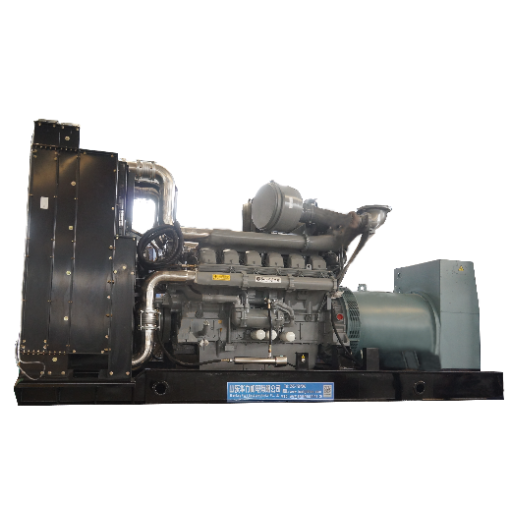
For procurement teams, the most practical starting point is a price-by-size framework. The following table outlines factory-direct commercial diesel generator cost ranges for open-type units in 2026. Silent canopies add 15 to 25%, while containerized configurations add 20 to 35%.
For buyers asking how much does a heavy duty diesel generator cost, these ranges represent real-world factory-direct heavy duty diesel generator price points.
| Power Rating | Open Type (USD) | Silent Type (USD) | Containerized (USD) | Typical Applications |
|---|---|---|---|---|
| 100 kW | 15,000–15,000–22,000 | 18,000–18,000–27,000 | 22,000–22,000–32,000 | Small commercial, telecom, rural clinics |
| 250 kW | 28,000–28,000–40,000 | 34,000–34,000–50,000 | 38,000–38,000–55,000 | Manufacturing plants, hotels, mid-size data centers |
| 500 kW | 45,000–45,000–65,000 | 55,000–55,000–80,000 | 60,000–60,000–90,000 | Hospitals, large commercial facilities, industrial backup |
| 1,000 kW | 85,000–85,000–120,000 | 105,000–105,000–150,000 | 115,000–115,000–165,000 | Mining operations, oil & gas, large manufacturing |
| 1,500 kW | 130,000–130,000–180,000 | 160,000–160,000–220,000 | 175,000–175,000–240,000 | Heavy industry, utility-scale backup, desalination plants |
| 2,000 kW+ | 180,000–180,000–300,000+ | 220,000–220,000–370,000+ | 250,000–250,000–420,000+ | Power stations, mega-construction, offshore platforms |
These figures represent equipment-only, FOB factory pricing for standard configurations with Weichai, Yuchai, or equivalent engines. Premium engines such as Cummins or Perkins fall at the upper end of each range.
For buyers evaluating commercial generator cost per kW, the economics improve significantly at higher power ratings. A 100 kW unit costs approximately 150to150to220 per kW, while a 2,000 kW unit drops to 90to90to150 per kW. This pricing pattern explains why large industrial buyers consolidate loads into fewer, larger gensets rather than deploying multiple smaller units.
Case Study: Karim’s Mining Power Upgrade in West Africa
Karim Osei manages procurement for a gold mining project in Ghana. In 2024, he planned to replace three aging 500 kW open-type generators with a more efficient centralized power supply system. After evaluating quotes exceeding $280,000 per unit from top-tier Western brands, Karim decided to partner directly with ZC Power. We designed and manufactured a system comprising two 1,000 kW containerized generator sets—equipped with Cummins engines and parallel synchronization control cabinets—at a total cost of $195,000.
The project included custom 40-foot containers with anti-corrosion coatings, 3,000-liter extended base tanks, and Deep Sea Electronics 8610 controllers for remote monitoring. By consolidating from three 500 kW units to two 1,000 kW units, Karim reduced his industrial diesel generator price per kW from 187to187to97. The price advantage came from fewer larger units and direct manufacturing. The gensets were delivered within 35 days, commissioned on-site by our engineers, and have operated continuously for 18 months with zero unplanned downtime.
Mining sites bring unique challenges like dust, vibration, altitude, and remote fuel logistics, so if you are powering an operation like Karim’s, our dedicated guide to the heavy duty diesel generator for mining explains how to spec parallel power plants, environmental protection, and derating for these demanding conditions.
What Drives Heavy-Duty Generator Cost in 2026?
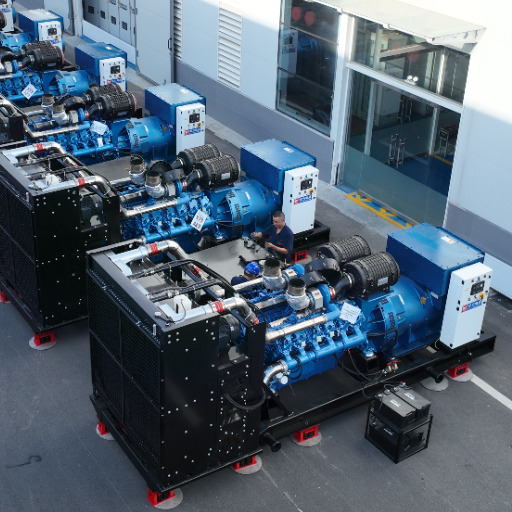
Several technical and commercial factors determine the heavy-duty diesel generator price. Understanding these variables helps buyers avoid budget surprises and negotiate from a position of knowledge.
Engine selection, duty rating, enclosure type, emissions compliance, controls, and fuel capacity all move the final number.
Engine Brand and Origin
The engine is the single largest cost component, typically representing 40 to 50% of the equipment price. Chinese OEM engines from Weichai and Yuchai offer excellent reliability and value for standard applications.
Cummins and Perkins command a 25 to 40% premium but are often specified for projects requiring global brand recognition or specific emissions certifications. Caterpillar engines sit at the top of the pricing spectrum, with premiums of 50 to 80% over Chinese OEM equivalents. At ZC Power, we integrate all four brands, allowing buyers to match the engine to the budget and application without compromising on alternator or control panel quality.
Because the engine brand shapes both price and long-term parts availability, our overview of the leading heavy duty diesel generator brands compares Weichai, Yuchai, Cummins, Perkins, and Caterpillar side by side so you can match the right engine to your budget and region.
Power Rating and Duty Cycle
A generator rated for standby power is engineered for intermittent emergency use and costs less than a prime power or continuous power unit built for sustained operation. For buyers evaluating prime vs. standby power ratings, the cost delta between a standby and prime-rated 500 kW unit is typically 10 to 15%. However, deploying a standby-rated generator in a prime power application will void the warranties and increase the risk of premature failure.
Sound Attenuation Requirements
Urban installations, hospitals, and data centers require silent canopies that keep noise below 75 dB at 7 meters. The acoustic engineering, additional steel, and sound-absorbing materials add 15 to 25% to the base price. For extreme noise restrictions, super-silent canopies achieving 65 dB can add 30 to 40%. Open-type generators are suitable for remote industrial sites where noise ordinances do not apply.
If your site sits near residential areas or must meet strict municipal noise limits, our guide to the silent heavy duty diesel generator explains how acoustic enclosures, exhaust silencers, and airflow design work together to hit tight decibel targets without starving the engine of cooling air.
Emissions Compliance
EPA Tier 4 Final and EU Stage V compliance require advanced after-treatment systems, including diesel particulate filters (DPF) and selective catalytic reduction (SCR). These systems add 8,000to8,000to25,000 depending on engine size. For projects in regions without stringent emissions mandates, Tier 2 or Tier 3 engines offer significant cost savings without sacrificing reliability.
Control Systems and ATS Integration
Basic SmartGen controllers are standard and cost-effective. Upgrading to Deep Sea Electronics 7320 or 8610 series controllers adds 1,500 to 1,500 to 5,000 but enables advanced remote monitoring, parallel synchronization, and building management system integration. A properly sized automatic transfer switch (ATS) adds 3,000 to 3,000 to 15,000 depending on amperage and transition type.
Fuel Tank Capacity and Extended Runtime
Standard base tanks provide 8 to 12 hours of runtime. Projects requiring 24- to 72-hour autonomy need external double-wall fuel tanks, which add 5,000to5,000to25,000 plus installation. Underground fuel systems for environmental compliance can double that figure.
Factory-Direct vs. Brand-Name Pricing
One of the most significant decisions affecting heavy duty diesel generator price is whether to source from a Tier 1 Western brand, a trading company, or a certified direct manufacturer like ZC Power. The choice often changes the final cost by 30% or more.
The Tier 1 Brand Premium
Caterpillar, Cummins direct, and Kohler are established names with extensive global dealer networks. Their equipment is excellent, but buyers pay a substantial premium for the brand badge and local inventory. In 2026, Tier 1 premiums range from 30 to 50% above factory-direct pricing for equivalent kW ratings. Lead times for custom configurations often stretch to 6 to 10 months, a dealbreaker for urgent infrastructure projects.
The Trading Company Risk
Alibaba and Global Sources list thousands of diesel generator suppliers, but the majority are trading companies, not factories. These middlemen add markups of 20 to 40% and cannot verify quality, customize engineering, or provide meaningful after-sales support. Worse, some source from unregulated workshops using counterfeit components.
The Certified Direct Manufacturer Advantage
As a source manufacturer established in 1999, ZC Power offers the quality assurance of Tier 1 brands with the pricing efficiency of direct production. We hold ISO 9001, CE, and CCC certifications.
Every genset undergoes rigorous load-bank testing in our national standard testing center. We use authentic Stamford, Leroy-Somer, and Faraday alternators, and genuine Deep Sea or SmartGen controllers. Our factory-direct pricing eliminates middleman markups, and our 15- to 45-day lead times keep projects on schedule.
For buyers concerned about Chinese manufacturing quality, the evidence is in the engineering. We build gensets with the same Cummins and Perkins engines, the same Stamford alternators, and the same ABB switchgear as Western brands. The difference is our overhead structure, not our component quality. We have exported to over 80 countries, and our 80-plus technical engineers provide lifetime support and OEM parts supply.
Installation and Total Project Cost
Equipment price is only 60 to 70% of the total project investment. Buyers who budget only for the genset itself risk stalled projects and cost overruns. A comprehensive estimate of heavy duty diesel generator price must include the following categories.
| Cost Category | % of Total | Typical Range (500 kW Project) |
|---|---|---|
| Equipment (genset) | 60 – 70% | 45,000–45,000–65,000 |
| Installation & labor | 15 – 25% | 12,000–12,000–22,000 |
| ATS & switchgear | 5 – 10% | 5,000–5,000–12,000 |
| Foundation & fuel system | 5 – 10% | 4,000–4,000–10,000 |
| Permits, inspections, commissioning | 2 – 5% | 2,000–2,000–5,000 |
| Total Project Cost | 100% | 68,000–68,000–114,000 |
Foundation and Site Preparation
Heavy duty gensets require reinforced concrete pads rated for the unit’s static and dynamic load. A 500 kW unit typically needs a 3-meter by 2-meter pad, 200 mm thick, costing 3,000 to 3,000 to 6,000 including excavation and rebar. Vibration isolation pads add 800 to 800 to 2,500. For detailed budgeting, see our guide on commercial generator installation cost.
Electrical and Switchgear
Connecting a 500 kW unit to a facility’s electrical distribution requires appropriately sized cabling, conduit, and breaker panels. Budget 4,000to4,000to10,000 for electrical materials and labor.
Fuel System Infrastructure
Above-ground double-wall fuel tanks with leak detection cost 5,000 to 5,000 to 15,000 depending on capacity. Underground systems with concrete vaults can reach 20,000to20,000to40,000. Fuel piping, day tanks, and transfer pumps add another 2,000to2,000to5,000.
Case Study: Dr. Patel’s Hospital Expansion in Nairobi
Dr. Anika Patel oversees facilities at a 240-bed private hospital in Nairobi, Kenya. When expanding the surgical wing in 2025, she needed a 500 kW standby genset to support the new operating theaters and ICU. Her initial budget of $55,000 covered only the equipment. After engaging ZC Power’s engineering team for a site assessment, the full project scope became clear.
The final budget includes: a 500 kW silent generator set powered by a Cummins engine (62,000), a 400-amp automatic transfer switch (ATS) (8,500), a 2,000-liter external fuel tank (7,200), a reinforced concrete base with vibration-dampening mounts (4,800), and upgrades to electrical cabling and circuit breakers (6,500). The total project cost is 89,000.
By understanding the full picture upfront, Dr. Patel secured board approval in a single presentation and avoided the change orders that often plague under-budgeted generator projects. The unit was commissioned in March 2026 and provides seamless backup power to critical hospital systems.
Operating Cost and Total Cost of Ownership (TCO)
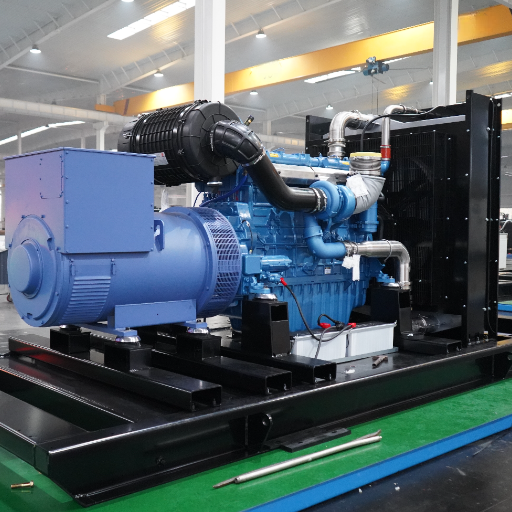
The purchase price is a small fraction of what a heavy duty diesel generator will cost over its operational life. For most industrial buyers, the total cost of ownership over 10 years is 3 to 5 times the initial equipment investment.
Fuel Consumption by Size
Fuel is the dominant operating expense, representing 60 to 70% of total OpEx. Consumption varies by load factor, engine efficiency, and ambient conditions. The following table provides approximate fuel consumption rates at 75% load for common industrial ratings.
| Power Rating | Fuel Consumption (L/hr at 75% load) | Annual Fuel Cost (USD, 2,000 hrs) |
|---|---|---|
| 250 kW | 52 – 58 | 78,000–78,000–87,000 |
| 500 kW | 98 – 112 | 147,000–147,000–168,000 |
| 1,000 kW | 195 – 220 | 292,000–292,000–330,000 |
| 1,500 kW | 290 – 330 | 435,000–435,000–495,000 |
Assumes diesel at $1.00 per liter, a conservative global average for industrial buyers. Remote sites with higher fuel logistics costs should adjust accordingly.
Since fuel dominates lifetime cost, getting these numbers right is essential to any budget; our deep dive into heavy duty diesel generator fuel consumption explains how load factor, ambient conditions, and power factor shift real-world usage away from the table figures above.
Maintenance Schedules and Costs
Planned maintenance includes oil and filter changes every 250 hours, coolant replacement every 2,000 hours, and major overhauls at 10,000 to 15,000 hours. Annual maintenance for a 500 kW unit typically costs 3,000to3,000to6,000 for parts and labor.
Unplanned repairs can escalate quickly without a generator maintenance contract. At ZC Power, we offer structured maintenance agreements with scheduled inspections, OEM parts, and remote diagnostics to prevent failures before they occur.
10-Year TCO Comparison
Consider a 500 kW standby genset purchased for $55,000 and running 200 hours per year. Over 10 years, the TCO breaks down as follows:
- Equipment: $55,000
- Installation and balance of plant: $25,000
- Fuel (200 hrs/yr at 105 L/hr, 1.00/L):1.00/L):210,000
- Maintenance and parts: $45,000
- 10-Year TCO: $335,000
The initial equipment purchase represents only 16% of the total lifecycle cost. This is why fuel efficiency, reliability, and maintenance support matter far more than a few thousand dollars of upfront savings. For a deeper analysis of ROI, see our guide on standby generator ROI. Heavy duty diesel generator price should always be evaluated against lifetime value.
Downtime Cost Avoidance
For data centers, hospitals, and manufacturing plants, the cost of generator failure during an outage dwarfs the equipment price. Industry research estimates average IT downtime at $5,600 per minute.
A hospital losing power to surgical suites faces not only financial loss but patient safety risks. From this perspective, investing in a reliable, well-supported genset is not an expense. It is insurance against catastrophic operational and financial damage.
How to Get an Accurate Quote for Your Project
Accurate pricing requires more than selecting a kW rating from a table. Buyers who provide detailed project specifications receive precise, competitive quotes and avoid costly change orders. Use the following checklist to prepare for discussions with your manufacturer.
Load Calculation Checklist
- List all critical equipment requiring backup power.
- Document running wattage and starting surge for each motor load.
- Apply diversity factors to avoid oversizing.
- Add 20 to 25% future growth margin.
- Convert total load to kVA at your facility’s power factor.
For detailed guidance, see our article on sizing a heavy duty diesel generator.
Site Conditions
Altitude and temperature significantly affect engine output. A generator rated at sea level loses approximately 3 to 4% of its power for every 300 meters of elevation above 1,000 meters.
A 500 kW unit at 3,000 meters effectively becomes a 400 kW unit unless derated. High-ambient-temperature environments above 40 degrees Celsius require enhanced cooling systems. ZC Power engineers custom derating and cooling solutions for high-altitude projects in the Andes, East Africa, and Central Asia.
Runtime Requirements
Standby applications with occasional utility outages require different fuel storage and maintenance strategies than prime power installations running 8,000 hours per year. Define your expected annual runtime and maximum continuous runtime to size fuel tanks and maintenance schedules correctly.
Fuel Storage and Delivery Logistics
Remote mining and construction sites often receive fuel by truck or barge. Storage capacity must cover the longest interval between deliveries plus a safety margin. For a site receiving fuel every 14 days and consuming 1,500 liters daily, a 25,000-liter tank is the minimum prudent size.
New gensets must match existing voltage, frequency, and phase configuration. Parallel operation with existing units requires compatible governors, alternators, and synchronization controllers. ZC Power’s engineering team reviews single-line diagrams and conducts load flow studies to ensure seamless integration.
ZC Power Heavy Duty Generator Solutions
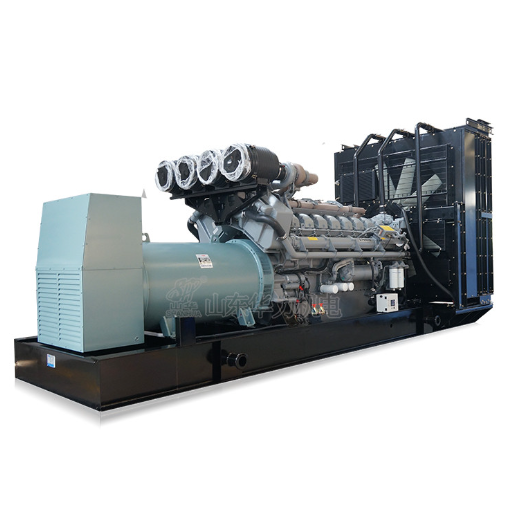
For over 25 years, ZC Power has engineered heavy duty diesel generator sets for the world’s most demanding industries. Our solutions span 10 kW to 3,000 kW and beyond, with configurations tailored to each project’s environmental, electrical, and logistical requirements. Our heavy-duty diesel generator price structure reflects direct manufacturing, not middleman markups.
Engine Partnerships and Component Quality
We integrate engines from Weichai, Yuchai, Cummins, Perkins, and Caterpillar, matched with Stamford, Leroy-Somer, or Faraday alternators. Control systems range from reliable SmartGen modules to advanced Deep Sea Electronics 8610 panels with cloud monitoring. Switchgear from ABB and Schneider Electric ensures safe, compliant electrical distribution.
Standard generators fail in extreme conditions. ZC Power specializes in tailored solutions for environments that destroy ordinary equipment:
- High altitude: Custom turbocharging and cooling for operations above 4,000 meters.
- Extreme cold: Winterized heating blocks, oil pan heaters, and cold-start battery systems for arctic environments.
- Marine and coastal: Heavy-duty anti-corrosion coatings, stainless steel hardware, and sealed enclosures for salt spray.
- Desert and dust: Cyclonic air pre-cleaners and heavy-duty filtration for mining and construction sites.
- Containerized power: Custom 20-foot and 40-foot CSC-certified containerized power stations with integrated fuel tanks, switchgear, and HVAC.
For projects that need rapid deployment in remote or harsh locations, our guide to the containerized heavy duty diesel generator covers CSC certification, integrated fuel and switchgear systems, and the weatherproofing that lets these power stations ship by sea and commission within days of arrival.
Every genset that leaves our facility undergoes 110% load testing for a minimum of 4 hours in our national standard testing center. We verify voltage stability, frequency regulation, and exhaust emissions. Units are not released until they meet 100% of rated specifications. This is why we warranty every genset for 1 year or 1,000 hours, with lifetime parts availability and remote engineering support.
Global Support Network
Our 80-plus technical engineers provide installation guidance, commissioning, and troubleshooting across time zones. We have managed exports to Africa, the Middle East, Southeast Asia, South America, and Eastern Europe. ZC Power handles the logistics complexity so your project stays on schedule.
Case Study: Elena Rodriguez’s Data Center in Colombia
Elena Rodriguez is the Facilities Director of a Tier III data center in Bogotá, Colombia. During a 2025 capacity expansion, she required three 1,500 kW backup generator sets featuring N+1 redundancy and paralleling capabilities, with noise levels kept below 75 dB to comply with municipal regulations. Quotes from top-tier brands exceeded $1.8 million for the equipment alone, with lead times stretching to eight months.
Elena partnered with ZC Power to design a solution that met all technical specifications. We delivered three 1,500 kW sound-attenuated generator sets powered by Cummins engines and Stamford alternators, equipped with DSE 8610 controllers and paralleling switchgear.
The equipment cost was $1.15 million, and the turnaround time from order to delivery was just 42 days. Our engineers supervised on-site commissioning, and the system successfully assumed the full load in parallel within 10 seconds of a simulated utility power failure. By leveraging factory-direct pricing from a certified manufacturer, Elena saved $650,000 without compromising on reliability or regulatory compliance.
Conclusion
In 2026, the price range for heavy-duty diesel generators is broad, extending from $15,000 for units suited to small-scale commercial use to $500,000 or more for megawatt-class industrial power plants. Units in the 500-kilowatt (kW) range remain the most common choice for hospitals, manufacturing facilities, and data centers; equipment costs for these units fall between $45,000 and $85,000, while total project costs range from $68,000 to $114,000.
However, price is only the starting point. The true measure of value lies in total cost of ownership, operational reliability, and the quality of long-term support. A genset that fails during a critical outage costs far more than the premium for a well-engineered, thoroughly tested unit. Factory-direct pricing from a certified manufacturer like ZC Power delivers the optimal balance of capital efficiency, component quality, and engineering accountability.
At Shandong ZC Power CO., LTD., we have spent over two decades building power solutions that keep hospitals, mines, data centers, and construction sites running without interruption. Our 300,000-square-meter facility, ISO 9001/CE/CCC certifications, and 80-plus technical engineers ensure that every genset we deliver performs exactly as specified.
Ready to move your project forward? Contact the ZC Power Engineering Team today for a free, customized site assessment and factory-direct quote tailored to your exact load, environment, and runtime requirements.