Generator Load Calculation: Step-by-Step Engineering Guide (2026)
Generator load calculation is the process of adding up every electrical load you want to power, converting real power (kW) to apparent power (kVA), adding the surge demand of the largest motor, and applying a safety margin so your genset does not trip when the grid fails. Get it wrong by 10% and you either waste fuel and capital on an oversized unit or watch voltage collapse when the compressor starts.
At ZC Power, we have spent 25 years building diesel generator sets from 8 kVA to 4,000 kVA. We have seen the same mistake on five continents: a load list that looked fine on paper but ignored motor starting kVA. This guide explains how to calculate generator load, including formulas, worked examples, and a free spreadsheet you can download.
Key Takeaways
- Generator load calculation converts kW to kVA, adds the largest motor’s starting surge, and applies a 15-25% margin.
- Most industrial motors draw 5-7 times their running current during direct-on-line (DOL) startup; that surge often dictates generator size.
- NEC Article 220, NEC 220.87, and NFPA 110 provide the code framework for standby and emergency generator sizing.
- Voltage dip during motor starting should usually stay below 15-20% to prevent contactor dropout and stalling.
- A downloadable Excel load-calculation spreadsheet eliminates manual errors and captures B2B leads.
What Is Generator Load Calculation?
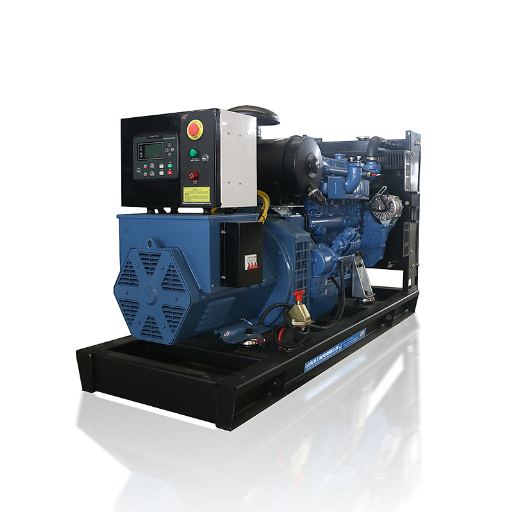
Generator load calculation is the engineering step that determines how much electrical power a generator must supply. It starts with a complete inventory of connected loads, records each load’s running and starting demand, applies diversity and demand factors, converts kilowatts (kW) to kilovolt-amperes (kVA), and adds safety margins. The result is the minimum generator rating that will start every motor and run every load without overload or unacceptable voltage dip.
Three numbers matter most:
- Connected load: the sum of every device’s nameplate rating if everything ran at once.
- Demand load: the realistic peak after diversity and coincidence factors.
- Peak starting load: the demand load plus the inrush of the largest motor.
A generator must be sized for the peak starting load, not the average running load.
Why Generator Load Calculation Matters
Safety comes first. NFPA 110 requires emergency generators to carry 100% of the calculated emergency load, including motor inrush, while keeping voltage within acceptable limits. A hospital, data center, or high-rise cannot afford a generator that stalls during transfer.
Cost matters too. Oversizing by one standard frame size can add thousands of dollars in capex and thousands more in lifetime fuel. Chronic under-loading also causes wet stacking, carbon buildup, and shortened engine life. Undersizing creates outages, equipment damage, and regulatory failures.
In 2023, a Lagos pharmaceutical warehouse installed a 50 kVA standby unit to back up a 15 kW refrigeration compressor. The compressor’s DOL starting kVA was nearly 90 kVA. Every time utility power failed, the generator lugged, voltage dipped below 60%, and the compressor contactor dropped out. The site lost a full batch of cold-chain product. The fix was a 150 kVA genset with a soft starter, a lesson in why generator load calculation must include motor starting kVA.
The 7-Step Generator Load Calculation Method
This is the standard generator sizing calculation method ZC Power engineers use for commercial and industrial projects. It works for single-phase homes, three-phase factories, and MCC-heavy plants.
- List every load. Record nameplate kW or kVA, voltage, phase, and quantity.
- Record running and starting demand. For motors, note running watts and starting watts or Locked Rotor Amps (LRA).
- Apply demand and diversity factors. Not every load runs at full nameplate simultaneously.
- Convert kW to kVA. Use the power factor for each load type.
- Add the largest motor starting surge. This often sets the generator’s minimum kVA.
- Apply environmental derating. Hot climates and high altitude reduce usable output.
- Add 15-25% growth and safety margin. Future loads and calculation uncertainty demand headroom.
The final formula is:
Generator kVA = (Demand kVA + Largest Motor Starting kVA − Largest Motor Running kVA) × Derating Factor × Safety Margin
Worked Example — Single-Phase Residential
A 2,000 sq ft home using the NEC 220.82 Optional Method:
- General lighting and receptacles: 3 VA/sq ft × 2,000 = 6,000 VA
- Small-appliance circuits: 2 × 1,500 VA = 3,000 VA
- Electric range: 8,000 VA
- Electric water heater: 4,500 VA
- Central AC (largest of heating/cooling): 5,000 VA running, 15,000 VA starting
- Subtotal connected: 26,500 VA
- First 10,000 VA at 100%, remainder at 40% = 10,000 + (16,500 × 0.40) = 16,600 VA demand
- Add largest motor starting surge: 16,600 − 5,000 + 15,000 = 26,600 VA
- Apply 25% margin: 26,600 × 1.25 = 33,250 VA, or roughly 33 kVA
A 30-36 kW air-cooled standby generator is the right neighborhood.For a room-by-room approach to backing up a home like this one, our guide to whole house generator sizing walks through building the load list and choosing the right capacity.
Worked Example — Three-Phase Commercial Building
A small clinic with a 400 V, three-phase service:
| Load | Quantity | Running kW | PF | Running kVA |
|---|---|---|---|---|
| HVAC chiller | 1 | 45 | 0.85 | 53 |
| Air handling units | 4 | 3 each | 0.90 | 13 |
| Lighting | — | 18 | 0.95 | 19 |
| Medical equipment | — | 12 | 0.90 | 13 |
| Pumps | 2 | 5 each | 0.85 | 12 |
| Connected total | 110 kVA |
Apply a diversity factor of 0.75 for commercial buildings: 110 × 0.75 = 82.5 kVA demand.
The largest motor is the chiller at 45 kW. DOL starting kVA ≈ 6 × running kVA = 318 kVA. Because the chiller is the largest motor, subtract its running kVA and add starting kVA:
82.5 − 53 + 318 = 347.5 kVA peak starting load
Apply 15% margin: 347.5 × 1.15 = 400 kVA. The clinic needs at least a 400 kVA standby genset, and a soft starter or VFD on the chiller would dramatically reduce that requirement.For the full treatment of balancing loads across phases and applying the three-phase formula, see our dedicated guide to three phase generator sizing.
Worked Example — Industrial MCC with DOL Motor
A Peru mining camp at 3,800 m altitude planned a 500 kVA genset for a 75 kW ball-mill feed pump started DOL.
- Pump running kW: 75 kW at 0.88 PF = 85 kVA running
- DOL starting kVA: 6 × 85 = 510 kVA
- Other plant loads after diversity: 180 kVA
- Peak starting load: 180 − 85 + 510 = 605 kVA
At 3,800 m, altitude derating is roughly 35%, so a 500 kVA nameplate delivers only about 325 kVA usable. The site would have been unable to start the pump. ZC Power engineers specified a 750 kVA unit with a soft starter, bringing starting kVA down to roughly 200 kVA and keeping the project on budget.Because high-elevation projects like this one live or die on the derating figure, our guide to altitude derating generator sizing gives the full correction tables and worked examples so you never undersize in thin air.
kW to kVA Conversion and Power Factor
Real power (kW) is what your equipment does. Apparent power (kVA) is what the generator must supply. The link between them is power factor (PF), the ratio of real power to apparent power.
| Calculation | Formula |
|---|---|
| Single-phase kW | kW = (V × A × PF) / 1,000 |
| Three-phase kW | kW = (V × A × √3 × PF) / 1,000 |
| kVA from kW | kVA = kW / PF |
| Full-load current (3-phase) | I = (kVA × 1,000) / (√3 × V) |
Typical power factors:
- Resistive loads (heaters, incandescent lights): 1.0
- Motors under full load: 0.85-0.90
- Motors lightly loaded: 0.60-0.75
- Variable-frequency drives (VFDs): 0.90-0.98
- LED lighting with electronic drivers: 0.90-0.95
Always use the power factor at the actual operating load, not the motor nameplate PF alone. A lightly loaded motor draws a lower kW but the same magnetizing current, so its effective PF drops and the generator sees more kVA per kW.For a dedicated conversion reference, including a 0.8 PF table for standard genset sizes and single-phase and three-phase formulas, see our kva to kw conversion guide.
Motor Starting kVA and Voltage Dip
Motors are the reason generator load calculation fails. A direct-on-line (DOL) motor can draw 5-7 times its full-load current for a few seconds at startup. That inrush current, sometimes called surge watts in smaller units, determines whether the generator’s voltage stays within limits.Because this single factor so often decides the final rating, our dedicated guide to motor starting generator sizing explains how to calculate surge and voltage dip for each starting method.
| Starting Method | Starting Current vs FLA | Starting kVA vs Running | Typical Voltage Dip Reduction |
|---|---|---|---|
| DOL (Direct On Line) | 5-7× | ~6× | Baseline |
| Star-Delta (Y-Δ) | ~2-3× | ~2× | 40-50% |
| Soft Starter | 1.5-2.5× | 1.5-2× | 40-60% |
| VFD | 1.0-1.5× | 1.0-1.5× | 70-90% |
A quick estimate of voltage dip during motor starting:
%Vdip ≈ (S_start / S_gen) × X”d × 100
Where S_start is motor starting kVA, S_gen is generator rated kVA, and X”d is generator subtransient reactance (typically 0.10-0.18 per unit for modern brushless alternators).
For a 75 kW DOL pump on a 500 kVA genset with X”d = 0.15:
- S_start ≈ 450 kVA
- %Vdip ≈ (450 / 500) × 0.15 × 100 = 13.5%
That is acceptable for most motor control circuits. If the same pump starts on a 300 kVA genset, the dip jumps to 22.5%, risking contactor dropout for other loads.
ISO 8528-5 defines step-load acceptance. A well-designed diesel genset should accept a 60% step load and recover voltage and frequency within specified limits. For critical applications, specify G2 or G3 performance class rather than the looser G1 class.
NEC, NFPA, and IEC Code Requirements
Codes turn engineering judgment into legal requirements. The method you use depends on whether the system is emergency, legally required standby, or optional standby under prime or standby power ratings.
- NEC Article 220 provides the Standard and Optional methods for calculating branch-circuit, feeder, and service loads. For dwellings, the Optional Method in 220.82 often produces a smaller, more realistic load.
- NEC 220.87 allows existing buildings to size standby generators from utility billing-history peak demand, typically with a 25% margin.
- NEC Article 702.6 states that optional standby systems must be sized per Article 220 if no other acceptable method is used.
- NFPA 110 requires emergency generators to supply 100% of the calculated emergency load, including motor starting inrush, and to maintain voltage within acceptable dip limits. Typical design practice adds 10-20% spare capacity.
- IEC 60034-1 and ISO 8528-5 govern alternator performance and load acceptance for international projects outside North America.
In 2024, a Nairobi hospital combined NEC 220.87 billing history with NFPA 110 life-safety loads. The billing history showed a 220 kW peak, but life-safety loads added another 80 kW that had to run regardless of average demand. The correct emergency genset was 350 kVA, not the 275 kVA the billing history alone suggested.For emergency backup systems specifically, our guide to standby generator sizing explains how to match the ESP rating to intermittent outage duty.
Common Generator Load Calculation Mistakes
Even experienced engineers slip up. Watch for these errors:
- Ignoring starting watts. The load list sums running kW and forgets the compressor or chiller surge.
- Using nameplate totals without diversity. Not every device peaks at the same moment.
- Forgetting power factor. A 100 kW load at 0.80 PF demands 125 kVA from the generator.
- Skipping altitude and temperature derating. A 500 kVA nameplate can become 350 kVA usable at 3,000 m or 50°C.
- No growth margin. Future loads, data-center expansion, or EV chargers can invalidate a sizing in two years.
- Mixing single-phase and three-phase loads incorrectly. Single-phase loads must be balanced across phases; total generator kVA is set by the most heavily loaded phase, not the arithmetic sum.
- Neglecting harmonic loads. VFDs, UPS systems, and LED drivers create harmonic currents that heat alternator windings and may require oversized or 6/12-pulse alternators.
For a broader view of the full sizing process, see our complete guide on how to size a generator. For commercial building sizing by industry, see our commercial standby generator sizing guide. And if you are comparing duty ratings, our prime vs standby power explanation clarifies which rating applies to your load profile.
Free Generator Load Calculation Spreadsheet
Manual load lists invite arithmetic errors. The ZC Power generator load calculation spreadsheet automates the work:
- Enter each load’s nameplate kW, voltage, phase, power factor, and starting multiplier.
- The sheet calculates running kVA, starting kVA, and three-phase phase balance.
- It flags when the largest motor’s starting kVA exceeds 60-65% of a candidate generator.
- It applies altitude and temperature derating automatically.
- It exports a summary you can send to our engineering team for a factory-direct quote.
When to Call an Engineer
For simple residential standby, a reputable dealer can often size from a load worksheet. Call a qualified engineer when:
- Total load exceeds 50 kW or the service is three-phase.
- You have multiple motor control centers (MCCs) or large DOL motors.
- The application is life-safety or legally required standby under NFPA 110.
- Motors start sequentially or in groups, creating step-loading issues.
- Loads include high harmonics from VFDs, UPS systems, or rectifiers.
- The site needs automatic transfer switch (ATS) coordination with an AMF panel for automatic mains failure detection.
- The site has unusual voltage, frequency, altitude, or temperature requirements.
- You need parallel generators, remote monitoring, or smart-grid integration.
At ZC Power, our 80+ engineers size gensets daily for projects in Africa, the Middle East, Southeast Asia, and South America. We do not just sell catalog ratings; we verify every unit in our national standard testing center with full-load bank testing before shipment.
Frequently Asked Questions About Generator Load Calculation
What is the fastest way to calculate generator load for a home?
Use the NEC 220.82 Optional Method: 3 VA per square foot for general lighting and receptacles, plus 1,500 VA for each small-appliance and laundry circuit, plus the largest of heating or cooling at 100%, plus 100% of the first 10,000 VA and 40% of the remainder. Add the starting surge of the largest motor, then apply a 25% margin.
How much extra capacity should a generator have?
NFPA 110 design practice and most engineering standards recommend 10-20% spare capacity above the calculated peak load. For optional standby systems with uncertain future growth, 20-25% is common.
Can I size a generator from my utility bill?
Yes. NEC 220.87 permits using the maximum demand from the last 12 months of billing data, typically with a 25% margin. This works well for existing buildings but does not replace a full load study for new construction or life-safety loads.
Why does motor starting matter more than running load?
A DOL motor can pull 5-7 times its running current for a few seconds. That inrush current creates a voltage dip across the generator. If the dip is too deep, contactors drop out and other motors stall. The generator must be large enough — or the motor start must be softened — to keep voltage within limits.
What is the difference between kW and kVA?
kW is real power, the actual work the load performs. kVA is apparent power, the total current the generator must supply. The difference is power factor: kVA = kW ÷ PF. A low power factor means the generator supplies more current for the same useful work.
When is generator load calculation legally required?
NFPA 110 requires documented load calculations for emergency and standby power systems. NEC Article 220 and Article 702.6 require sizing by an acceptable method for optional standby systems. Local authorities having jurisdiction may also require stamped engineering drawings for commercial and healthcare applications.
Conclusion
Generator load calculation is not guesswork. It is a structured process: list every load, convert kW to kVA, add the largest motor’s starting surge, apply environmental derating, and add a safety margin. Skip any step and you risk either an expensive oversized unit or a generator that fails when it matters most.
For quick home and business sizing charts, see what size generator do I need. For the complete 10-step sizing methodology, read how to size a generator. And if you want the math done for you, download the free generator load calculation spreadsheet or contact the ZC Power engineering team for a factory-direct sizing review and quote.