
Motor Starting Generator Sizing: LRA, Voltage Dip, and Surge Calculations (2026)
Motor-starting generator sizing means matching a genset’s kVA output to the motor’s starting kVA, not just its running kW, so that the voltage dip stays within safe limits during startup. The practical rule of thumb: plan for 2 to 3 times the motor’s kW for direct-on-line starting, or roughly 1.2 to 1.3 times with a soft starter or VFD.
Get this wrong, and the failure is dramatic. The utility drops out, the genset starts, the transfer switch closes, and then the big pump or compressor tries to spin up. Voltage collapses, the contactor drops out, and the motor stalls before it ever reaches speed. Your backup power system is running, and your facility is still dark.
In 25 years of manufacturing gensets at our facility in Jining, Shandong, motor starting has been the single most common reason a correctly “load-calculated” generator fails in the field. This guide gives you the complete method: how to read locked rotor amps from a nameplate, how NEMA code letters translate into starting kVA, how to calculate voltage dip, and when a starter upgrade beats a bigger generator.
Key Takeaways
- Motors draw 5 to 7 times their full-load current during direct-on-line starting; starting kVA, not running kW, usually sets the genset size.
- The NEMA locked rotor code letter on the motor nameplate gives you the exact starting kVA per horsepower. Two motors of identical horsepower can differ by 60% or more.
- Keep instantaneous voltage dip at or below 20% to 25% (35% absolute maximum) to prevent contactor dropout and stalled motors.
- Soft starters and VFDs cut the required genset capacity roughly in half and often cost less than upsizing the generator.
- Start the largest motor first, then bring remaining loads online at 10 to 15 second intervals.
Why Motor Starting Drives Generator Sizing
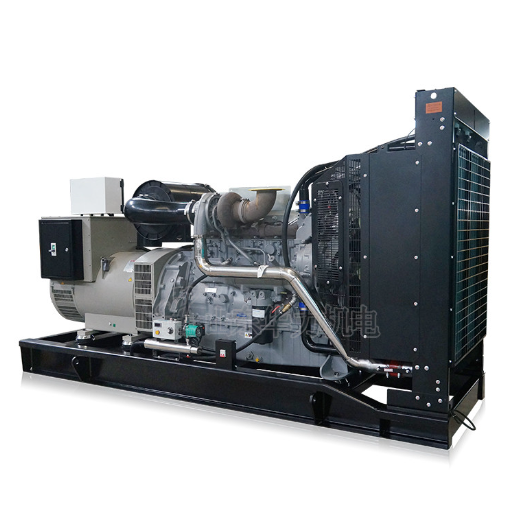
A running motor is a modest, predictable load. A starting motor is something else entirely. At the instant of energization, a motor behaves almost like a short circuit, drawing locked-rotor current until it accelerates past roughly 75% of rated speed.
The numbers are stark. A 100 HP motor with a NEMA Code G rating needs about 630 kVA to start across the line, yet only about 100 kVA to keep running. The starting demand is six times the running demand. If the genset cannot supply that surge while holding voltage up, the motor never reaches operating speed. This is why generator sizing for motor starting is a different discipline from sizing for running load.
Undersizing has obvious consequences: voltage collapse, stalled motors, dropped contactors, and nuisance breaker trips. Gross oversizing is also a mistake. A genset that never exceeds 30% of its rated load will wet stack, burn fuel inefficiently, and wear out early. The goal is a unit that starts the largest motor cleanly, then runs in its healthy 70% to 80% load band.
This article expands the motor starting step of our broader generator sizing methodology. If you haven’t built your base load inventory yet, start with our guide to generator load calculation, then return here for the surge analysis.
Locked Rotor Amps and Starting kVA
Every serious motor starting generator sizing calculation begins on the motor nameplate, not with a rule of thumb.
Reading the Motor Nameplate
Four nameplate values matter for generator sizing:
- Horsepower (HP) or kilowatts (kW): the motor’s rated mechanical output.
- Full load amps (FLA): the current drawn at rated load and voltage.
- Locked rotor amps (LRA): the current drawn at the instant of startup with the rotor stationary.
- NEMA code letter: a letter from A to V that encodes the locked rotor kVA per horsepower.
If the nameplate lists LRA directly, use it. If it only shows the code letter, the table below gives you what you need.
NEMA Locked Rotor Code Letters
Per NEMA MG 1, each code letter corresponds to a range of locked rotor kVA per horsepower:
| Code Letter | kVA per HP | Code Letter | kVA per HP |
|---|---|---|---|
| A | 0–3.14 | L | 9.0–9.99 |
| B | 3.15–3.54 | M | 10.0–11.19 |
| C | 3.55–3.99 | N | 11.2–12.49 |
| D | 4.0–4.49 | P | 12.5–13.99 |
| E | 4.5–4.99 | R | 14.0–15.99 |
| F | 5.0–5.59 | S | 16.0–17.99 |
| G | 5.6–6.29 | T | 18.0–19.99 |
| H | 6.3–7.09 | U | 20.0–22.39 |
| J | 7.1–7.99 | V | 22.4 and up |
| K | 8.0–8.99 |
Most industrial motors fall between Code F and Code L. Notice the spread: a Code L motor demands nearly twice the starting kVA of a Code F motor of the same horsepower. Assuming “6 times FLA” without checking the letter can easily produce a 30% to 50% sizing error in either direction.
Calculating Starting kVA
With the code letter in hand, the calculation is straightforward.
Starting kVA = HP × code letter kVA/HP
For a 20 HP, Code G motor at 460V three-phase, using the midpoint of 6.29 kVA/HP:
- Starting kVA = 20 × 6.29 = 126 kVA
- Locked rotor amps = 126,000 / (460 × 1.732) = 158 A
For a single-phase motor, divide by voltage alone. A 5 HP, Code L pump motor at 240V:
- Starting kVA = 5 × 9.9 = 49.5 kVA
- Locked rotor amps = 49,500 / 240 = 206 A
Compare that 206 A inrush with the motor’s running current of roughly 25 A. That is the surge your genset must absorb. Locked rotor amps drive generator sizing more than any other nameplate value.
Motor Starting Methods and Surge Multipliers
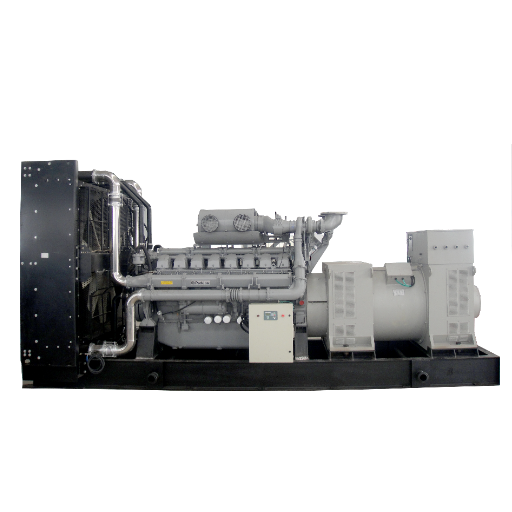
The starting method changes the surge dramatically. The table below is the core reference for motor starting generator sizing:
| Starting Method | Inrush (× FLA) | Typical Genset Ratio | Best For |
|---|---|---|---|
| Direct-On-Line (DOL) | 5–7× | 2–3× motor kW | Small motors, simple loads |
| Star-Delta | 2–2.5× | ~1× motor kW | Medium motors, low starting torque loads |
| Soft Starter | 1.5–3× | 1.2–1.3× motor kW | Large motors, frequent starts |
| Variable Frequency Drive (VFD) | 1–1.1× | 1.1–1.15× motor kW | Controlled acceleration, variable loads |
One critical nuance: voltage dip and starting torque are linked by the square of voltage. A 30% voltage dip does not reduce starting torque by 30%. It reduces available torque and starting kVA by roughly half, because both scale with voltage squared. That is why a motor facing a deep dip does not simply start slowly. It stalls.
Load type also matters. Pumps and fans have low starting torque requirements and tolerate star-delta or soft starting well. Conveyors, crushers, and positive-displacement compressors often need near-full starting torque, which limits your options. Confirm the torque requirement with the equipment manufacturer before choosing a reduced-voltage method.
Voltage Dip: The Real Sizing Constraint
Running load decides fuel consumption. Voltage dip decides whether the system works at all.
Most contactors and control relays tolerate a 35% instantaneous dip, but field experience says design for 20% or less. At deeper dips, contactors chatter or drop out, VFDs fault, and the motor itself may never reach speed. For emergency systems, NFPA 110 requires Level 1 installations to hold at least 85% of nominal voltage during motor starting, and IEEE 446 guidance tightens that to 10% to 15% for sensitive electronic loads.
One warning on method: some sizing approaches check only the sustained dip after the first few cycles, which flatters the generator. What matters is the instantaneous dip at the moment of energization. Size for the instantaneous value.
The Voltage Dip Formula
A practical approximation used across the industry:
% Voltage Dip ≈ (Starting kVA / Genset kVA) × X”d × 100
X”d is the alternator’s subtransient reactance, typically 12% to 18% for quality machines. Ask your manufacturer for the actual figure; at ZC Power we publish X”d data for every alternator we build. If you need the steady-state math behind the running-kVA figure first, our kW to kVA conversion reference covers the formula in both directions.
Worked example: a 75 kW pump motor started DOL on a 500 kVA genset.
- Running kVA ≈ 75 / 0.85 PF ≈ 88 kVA
- Starting kVA ≈ 6 × 88 ≈ 530 kVA
- Voltage dip ≈ (530 / 500) × 0.15 × 100 = 15.9%
That passes the 20% target. The same motor on a 300 kVA genset produces a 26.5% dip, which is into the contactor-risk zone. Three-phase motor starting also has to respect per-phase current and balance limits; our three-phase generator sizing guide covers that side of the calculation.
How Much Surge Capacity Does a Generator Need?
As a working rule, a genset needs enough surge capacity to deliver 5 to 7 times the largest motor’s full-load current for direct-on-line starting, which translates to roughly 2 to 3 times the motor’s kW in generator capacity. With a soft starter or VFD, that requirement drops to 1.2 to 1.3 times the motor’s kW. A quality diesel genset can supply about 300% of its rated current for roughly 10 seconds, which is usually enough time for an induction motor to reach speed.
Step-Load Acceptance
Voltage dip is ultimately limited by the genset’s transient response. A well-built diesel genset can deliver roughly 300% of rated current for about 10 seconds, and ISO 8528-5 step-load acceptance for a quality unit is typically 60% to 70% of rated capacity while staying within voltage and frequency limits. This is why alternator quality matters as much as engine horsepower, and why we load-bank test every genset in our national standard testing center before shipment.
How to Size a Generator for Motor Starting in 6 Steps
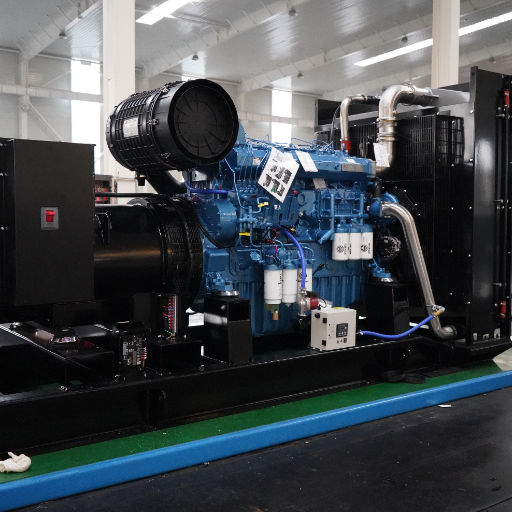
Here is the complete procedure we use in our own engineering department:
- Record the nameplate data. Capture HP or kW, voltage, phase, FLA, and LRA or NEMA code letter for every motor that must start on generator power.
- Calculate starting kVA. Use the code letter method above, then adjust for the starting method (DOL full value, star-delta roughly one-third, soft starter per its current limit setting, VFD near unity).
- Total the running load. Add up the kW and kVA already online when the motor starts. Use your load calculation worksheet with realistic demand factors.
- Check the voltage dip. Apply the dip formula with the manufacturer’s actual X”d. Target 20% or less; 35% is the hard ceiling.
- If the dip is too deep, compare two fixes. Upsizing the genset is one option. Changing the starting method is the other. Price both; the starter often wins.
- Plan the sequence and select the rating. Decide what starts when, add your growth margin, and round up to the next standard kVA size. For a quick preliminary check, try our generator sizing calculator.
Worked Examples
Residential and Light Commercial: 5 HP Well Pump
Recall the 5 HP, Code L, 240V single-phase pump from earlier: 206 A locked rotor, about 25 A running.
A 12 kW standby genset delivers about 50 A rated at 240V, and roughly 150 A at its 300% short-term overload. That is not enough; the pump stalls every time. A 20 kW unit delivers about 83 A rated and roughly 250 A at overload, which starts the pump cleanly with margin for the refrigerator and lighting circuits already online. The alternative: a soft start kit on the pump, which would let the 12 kW unit work.
Commercial: 50 HP Chiller Pump, Star-Delta
A 50 HP, Code G motor at 460V needs 50 × 6.29 = 314 kVA to start DOL. On star-delta, that drops to roughly one-third, about 105 kVA.
Dip on a 150 kVA genset with 15% X”d: (105 / 150) × 0.15 × 100 = 10.5%. Comfortable. The same motor DOL on that genset would pull a 31% dip, which is unacceptable. This is why so many commercial chillers ship with star-delta or soft start from the factory.
Industrial: 200 HP Compressor, DOL vs Soft Starter
A 200 HP, Code G compressor at 460V needs 200 × 6.29 = 1,258 kVA to start DOL. Solving the dip formula for a 20% target with 15% X”d:
- Required genset kVA = (1,258 × 0.15 × 100) / 20 ≈ 943 kVA, so a 1,000 kVA unit.
Add a soft starter limited to 2.5× FLA. Running kVA is about 175, so starting kVA falls to roughly 440:
- Required genset kVA = (440 × 0.15 × 100) / 20 ≈ 330 kVA, so a 350 to 400 kVA unit.
The soft starter costs a fraction of the 600 kVA difference in genset price. When Miguel, a maintenance engineer at a mining supply workshop outside Antofagasta, Chile, ran this calculation for his 200 HP compressor, he discovered a second problem. At 2,800 meters of altitude, his genset would lose roughly 18% of its capacity to derating. His original plan assumed a 350 kVA unit. The corrected specification, soft starter plus altitude margin, landed at 500 kVA. The compressor now starts first in the sequence, every time, without dragging the workshop’s voltage down.
For sites running multiple large machines, our guide to heavy-duty diesel generator sizing covers the 500 kW and above territory in more depth.
What size generator for a 1000 HP motor? This common question has no cheap answer for DOL starting: at 2 to 3 times the motor’s 746 kW, you would need 1,500 to 2,200 kW of genset capacity. With a soft starter or VFD, 900 to 1,000 kW is realistic. At this scale, always model the dip with real nameplate data and alternator X”d values, and consider splitting the load across paralleled gensets.
If your facility has motors over 50 HP and you’d like a factory engineer to verify the math, send us the nameplate data. Our team will run the voltage dip calculation free of charge. Contact our engineering team.
Staggered Starting and Load Sequencing
You rarely need to start every motor at once. Sequencing is often the cheapest “extra” capacity you can buy.
The strategy is simple: start the largest motor first, while the generator carries nothing else, then bring smaller loads online at 10 to 15 second intervals. Each start sees a generator that has already recovered from the last one. Peak demand drops dramatically, and a smaller genset does the work of a larger one.
When Priya, operations manager for a greenhouse complex in Ontario, mapped her outage sequence, she found her six 15 HP ventilation fans all started simultaneously on generator power. Reprogramming the controller to stage the fans in three pairs let her stay with a 150 kVA genset instead of upgrading to 250 kVA. The control change cost less than a service call.
Sequencing depends on the switchgear. An automatic transfer switch with staggered-restart logic is what turns this from a manual workaround into an automatic one.
Common Motor Starting Generator Sizing Mistakes
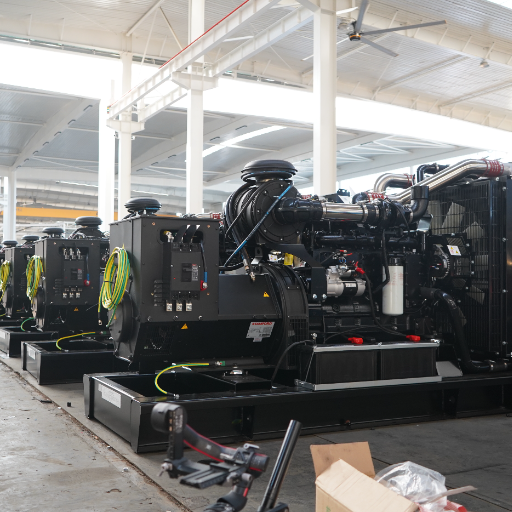
- Sizing to running kW and ignoring LRA. The classic failure. The genset carries the building perfectly, right up until the largest motor tries to start.
- Skipping the NEMA code letter. A Code F and a Code L motor of identical horsepower differ by nearly 2:1 in starting kVA. Check the nameplate.
- Accepting deep voltage dips. Below about 30% dip, torque collapses with the square of voltage and motors stall instead of starting slowly.
- Forgetting the loads already running. The dip calculation must include the base load on the bus when the motor starts.
- Treating VFD loads as surge-free without checks. VFDs do eliminate starting surge, but their harmonics and input current draw still belong in the load total.
- Never pricing the starter alternative. When a project in Texas kept stalling a 75 HP DOL pump at a water treatment plant, the nameplate check revealed a Code L motor. A retrofit soft starter solved it for less than half the cost of the 500 kVA genset upgrade the team had been quoted.
When to Call a Generator Engineer
Some motor starting projects are routine. Others deserve professional review:
- Any single motor larger than 50 HP on standby power.
- Multiple large motors, compressors, or chillers in one system.
- Mission-critical or NFPA 110 life-safety installations (see our guide to standby generator sizing for emergency-system context).
- Sites above 1,500 meters or above 40°C ambient, where derating compounds the surge problem.
- Existing systems showing contactor chatter, stalled starts, or breaker trips during outages.
- Parallel genset configurations or N+1 redundancy.
At Shandong ZC Power CO., LTD., our team of 80+ engineers reviews motor starting scenarios daily across our 8 kVA to 4,000 kVA genset range. We publish subtransient reactance data for our alternators, verify step-load acceptance in our national standard testing center, and provide complimentary motor starting assessments with a factory-direct quote.
Conclusion
Motor starting generator sizing comes down to four disciplines: find the real starting kVA from the nameplate and NEMA code letter, respect the voltage dip limits that keep contactors closed and motors accelerating, choose the starting method that fits the load’s torque requirements, and sequence what you can. Do those four things, and the 2-to-3-times rule of thumb becomes a verified engineering answer instead of a guess.
The expensive mistakes all come from skipping steps: sizing to running watts, assuming a code letter, or never pricing a soft starter against a larger genset. A correctly sized system starts the largest motor cleanly, runs in its efficient 70% to 80% load band, and keeps your facility powered through every outage for the life of the machine.
Request your free motor starting assessment from ZC Power today. Send us your motor nameplate data and site conditions, and our engineers will confirm the starting kVA, model the voltage dip, and recommend a genset and starting configuration built for your exact load.
Frequently Asked Questions
What is locked rotor amps (LRA) and why does it matter for generator sizing?
Locked rotor amps is the current a motor draws at the instant it is energized while the rotor is still stationary. It is typically 5 to 7 times the motor’s full-load current and represents the surge the generator must supply. LRA directly determines starting kVA, which usually sets the genset size rather than the motor’s running kW.
How do I calculate motor starting kVA from the NEMA code letter?
Multiply the motor horsepower by the kVA-per-HP value for its NEMA code letter. For example, a 50 HP motor with Code G (using 6.29 kVA/HP) needs approximately 50 × 6.29 = 314 kVA to start direct-on-line. If the nameplate lists LRA directly, you can also calculate starting kVA as LRA × voltage × 1.732 for three-phase motors.
What voltage dip is acceptable during motor starting?
Design for 20% or less instantaneous voltage dip. Most contactors and relays tolerate up to 35%, but deeper dips cause contactors to chatter or drop out, VFDs to fault, and motors to stall because starting torque drops with the square of voltage. NFPA 110 Level 1 installations must hold at least 85% of nominal voltage.
What size generator do I need for a 100 HP motor?
For direct-on-line starting, plan for 2 to 3 times the motor’s kW, so roughly 150 to 225 kW. With a soft starter or VFD, 1.2 to 1.3 times the motor kW (about 120 to 130 kW) is often sufficient. The exact answer depends on the NEMA code letter, starting method, and alternator subtransient reactance.
Does a soft starter reduce the size of generator needed?
Yes. A soft starter can cut the required genset capacity roughly in half compared to direct-on-line starting. A motor that needs a 1,000 kVA genset for DOL starting may only need a 350 to 400 kVA genset with a properly set soft starter.
Can I start a motor with a VFD on generator power?
Yes. A VFD eliminates the high inrush current of across-the-line starting, typically drawing only 1 to 1.1 times the motor’s full-load current during acceleration. However, VFDs introduce harmonics and input current characteristics that must still be included in the total load calculation.
Should I start all motors at once or stagger them?
Stagger them whenever possible. Start the largest motor first, then bring additional loads online at 10 to 15 second intervals. Sequencing reduces peak demand and often allows a smaller genset to do the work of a larger one. An automatic transfer switch with staged-restart logic can automate this.
What is the rule of thumb for generator sizing for motor starting?
For direct-on-line starting, size the generator at 2 to 3 times the motor’s kW rating. For soft starter or VFD starting, 1.2 to 1.3 times the motor kW is a practical starting point. Always verify the result with the actual voltage dip calculation.
How does altitude affect motor starting generator sizing?
Diesel gensets lose output as altitude increases, typically around 10% per 1,000 meters above sea level. A site at 2,800 meters might derate the genset by roughly 18%, so the calculated genset size must be increased accordingly. Always apply altitude and temperature derating before finalizing the specification.
Can I size the generator using running kW only?
No. Sizing to running kW while ignoring locked rotor amps is the most common cause of generator failure on motor loads. The genset may carry the building perfectly until the largest motor tries to start, at which point voltage collapses and the motor stalls.
Where can I get help with a motor starting calculation?
For motors over 50 HP, critical applications, or sites with altitude or temperature derating, send the motor nameplate data and site conditions to our engineering team. We provide complimentary motor starting assessments and factory-direct quotes.


