Whole House Generator Sizing: A Step-by-Step Homeowner’s Guide (2026)
The right size for a whole-house standby generator, one with a standby duty rating rather than a prime rating, is the smallest kilowatt rating that can start your largest motor and still carry every load you want to run at the same time, plus a 20-25% margin for safety and future growth. Get it wrong and you either waste fuel and capital on an oversized unit, or you watch voltage collapse when the air conditioner starts.
If you are asking, “What size whole house generator do I need?” the answer starts with the largest motor in your home, not your square footage. Most homeowners size by square footage alone or copy whatever the neighbor installed. That shortcut ignores the single factor that determines whether a generator actually works during an outage: the starting surge of motor-driven loads. At ZC Power, we have built diesel generator sets from 8 kVA to 4,000 kVA since 1999, and we have seen the same residential sizing error on every continent. This guide gives you a code-aware, engineering-backed method for whole house generator sizing, including NEC 220.82, NEC 220.87, appliance wattage tables, and a free worksheet you can download.
Key Takeaways
- Whole house generator sizing must account for the largest motor starting surge, not just running watts.
- The NEC 220.82 Optional Method provides a code-compliant shortcut for most U.S. dwellings.
- Existing homes can often use NEC 220.87 billing-history demand multiplied by 125%.
- Square footage is only a starting screen; the appliance list determines the final kW rating.
- Load-shed modules and soft starters can let a smaller generator power a larger home safely.
What Is Whole House Generator Sizing?
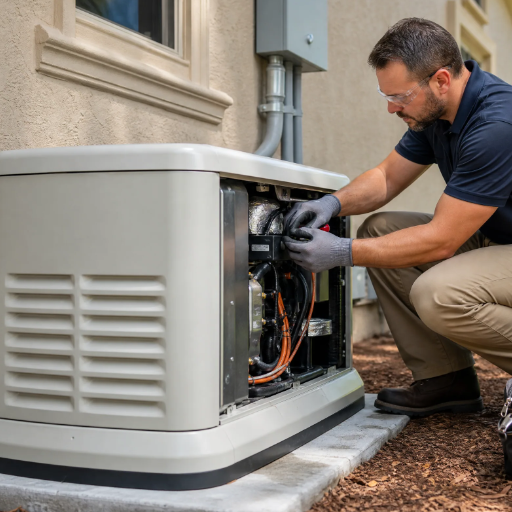
Whole house generator sizing is the engineering process of matching a standby generator’s output to the total electrical demand of a home, including the surge current needed to start motors. It converts connected load into demand load, adds the largest single motor starting surge, applies environmental derating if needed, and adds a safety margin. The result is the minimum generator rating that will start every load and keep voltage within acceptable limits during an outage.
Done correctly, whole house generator sizing balances first cost, fuel consumption, reliability, and future expansion. Done incorrectly, it leaves you with a generator that is either too small to start the AC or so large that it runs inefficiently for years.
Three coverage levels matter:
- Whole-house backup: Powers every circuit at once, typically 22-48 kW for U.S. homes.
- Essential-circuits backup: Powers only critical loads such as refrigeration, HVAC, lighting, and medical devices, typically 7-15 kW.
- Partial-home backup with load management: Uses an automatic transfer switch (ATS) with load-shed modules to rotate non-essential loads, often 14-22 kW.
Your coverage choice determines the rest of the calculation. Before you add a single watt, decide what must stay on during an outage and what can wait.Because home backup units are specified on the standby (ESP) duty rating rather than a prime rating, our guide to standby generator sizing explains how that rating matches the intermittent nature of outage duty and why it shapes every number below.
Why Whole House Generator Sizing Matters
Safety comes first. An undersized generator cannot supply the inrush current of a central AC compressor or well pump. Voltage dips, motors stall, contactors (the electrically operated switches inside appliances and motor starters) drop out, and the generator overloads. In the worst case, repeated overloads damage appliances and create fire risks from overloaded conductors. The purpose of standby power is to keep voltage within limits and protect every connected load. Proper whole house generator sizing makes that possible.
Cost matters too. Oversizing by one standard frame size can add thousands of dollars in capital cost and thousands more in lifetime fuel. Chronic under-loading also causes wet stacking, unburned fuel and carbon buildup in the exhaust system of diesel engines, and shortened engine life. Right-sizing protects both your family and your budget. Whether you call it home standby power sizing or whole house generator sizing, the goal is the same: deliver safe, stable power during an outage without paying for capacity you will never use.
When Hurricane Maria struck Puerto Rico in 2017, the Garcia family in San Juan installed what they believed was a “whole house” 18 kW standby generator. The unit ran the lights and refrigerator without issue, but the moment both air-conditioning compressors tried to start simultaneously, the generator lugged, voltage collapsed, and the unit shut down on overload. Their $12,000 investment left them powerless during a critical outage. The fix was a properly sized 36 kW unit with an ATS load-shed module, a lesson in why whole house generator sizing must start with the largest motor surge.
Whole House vs. Essential Circuits: Choose Your Coverage First
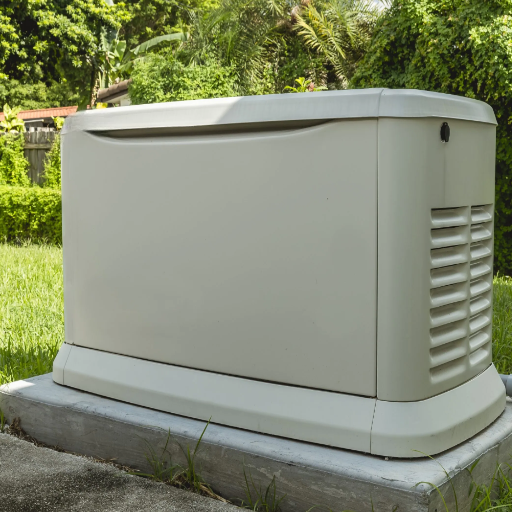
The biggest decision in whole house generator sizing is not the math. It is deciding what you actually need to power. Whole house generator sizing always begins with this coverage choice, because the coverage level determines the demand factors, the safety margin, and the final kW rating.
Whole-house coverage is simple: every circuit runs at once. You do not think about priorities. You also pay for the largest possible unit, and you may run it at low load much of the time.
Essential-circuits coverage protects only the loads that matter during an outage: refrigerator, furnace blower, well pump, sump pump, a few lighting circuits, and perhaps medical equipment. This approach can cut the required generator size by 30-50%.
Partial-home coverage with load management is the smart middle ground. An ATS with load-shed modules keeps critical loads powered and briefly delays non-essential loads such as the electric water heater, second AC unit, or EV charger. A 22 kW unit with good load management can behave like a 30 kW unit.
Choose whole-house coverage if outages are frequent, long, or if your household includes medical equipment. Choose essential or managed coverage if budget is tight and you only need to survive short outages comfortably. For help choosing fuel type, features, and budget, see our complete backup generator for home guide.
The 6-Step Whole House Generator Sizing Method
This is the standard method ZC Power engineers use for residential standby generator sizing, the same whole house generator sizing and home standby generator sizing process we apply to factory-direct gensets shipped to more than 60 countries. It works for new construction, existing homes, and international projects using 120/240 V split-phase or 230 V single-phase service.
- List every load you want to back up. Record nameplate watts, voltage, phase, and quantity.
- Record running watts and starting watts. For motors, note running watts and starting watts or Locked Rotor Amps (LRA), the maximum current the motor draws when it is first energized.
- Apply NEC demand factors. Use NEC 220.82 Optional Method for dwellings, or NEC 220.87 for existing homes with usage history.
- Add the largest single motor starting surge. This often sets the minimum generator kilowatt rating.
- Apply environmental derating. High altitude and extreme heat reduce usable output.
- Add 20-25% safety and growth margin. Round up to the next standard kW rating.
The final formula is:
Generator kW = (Demand Load kW + Largest Motor Starting kW − Largest Motor Running kW) × Derating Factor × Safety Margin
Worked Example — 2,500 sq ft Home with Central AC
A 2,500 sq ft home using the NEC 220.82 Optional Method:
- General lighting and receptacles: 3 VA/sq ft × 2,500 = 7,500 VA
- Small-appliance circuits: 2 × 1,500 VA = 3,000 VA
- Electric range: 8,000 VA
- Electric water heater: 4,500 VA
- Central AC (largest of heating/cooling): 5,000 VA running, 15,000 VA starting
- Subtotal connected: 28,000 VA
- First 10,000 VA at 100%, remainder at 40% = 10,000 + (18,000 × 0.40) = 17,200 VA demand
- Add largest motor starting surge: 17,200 − 5,000 + 15,000 = 27,200 VA
- Apply 25% margin: 27,200 × 1.25 = 34,000 VA, or 34 kW
A 36-38 kW standby genset is the right neighborhood. This example shows why whole house generator sizing must include central AC tons and compressor inrush, not just the square-footage rule of thumb. With a load-shed module delaying the water heater and second AC, a 22-24 kW unit could also work.
Worked Example — Existing Home Using NEC 220.87
A home in Phoenix has 12 months of utility billing history showing a peak demand of 6.2 kW. The NEC 220.87 method allows the standby generator to be sized from actual demand multiplied by 125%:
- 6.2 kW × 1.25 = 7.75 kW calculated load
- Add life-safety and medical loads not captured in billing history: +1.5 kW
- Apply 25% margin: 9.25 × 1.25 = 11.56 kW
A 12-14 kW essential-circuit unit covers this home. This existing-home example shows how whole house generator sizing can be grounded in real demand rather than worst-case connected load. If the owner wants whole-house coverage with future EV charger growth, a 20-22 kW unit is more appropriate.
Generator Sizing by Square Footage: Quick Chart for Home Size
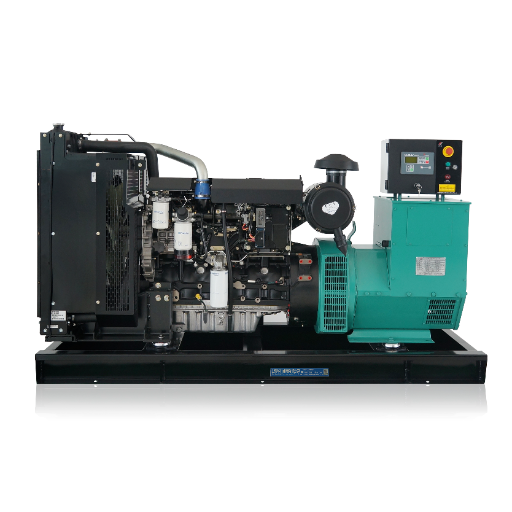
Generator sizing by square footage is not enough by itself, but it is a useful starting screen. Use this table to bracket your search, then complete the appliance inventory. For an interactive version, try our online generator sizing calculator.
| Home Size | Heating/Cooling | Typical Generator Size |
|---|---|---|
| Under 1,500 sq ft | Gas heat, no AC | 7-10 kW |
| 1,500-2,500 sq ft | Gas heat, central AC | 14-20 kW |
| 2,500-4,000 sq ft | Central AC | 22-26 kW |
| Over 4,000 sq ft | All-electric, multiple HVAC | 30-48+ kW |
All-electric homes with electric heat, heat pumps, or multiple air conditioners move toward the top of each range. Homes with load-management modules can move toward the bottom.
Appliance Wattage Reference Table
Use these typical values to build your load list. Always verify with the actual nameplate on your equipment. The appliance table is the heart of whole house generator sizing, because it turns guesses into documented watts and surge values.
| Appliance | Running Watts | Starting Watts |
|---|---|---|
| Refrigerator / freezer | 700 | 1,400-2,200 |
| Central AC (per ton) | 1,000-1,500 | 3,000-5,000 |
| Furnace blower (gas) | 600-800 | 1,200-2,000 |
| Well pump (1 HP) | 1,000 | 3,000-4,000 |
| Sump pump (1/2 HP) | 500 | 1,500-2,500 |
| Electric water heater | 3,000-4,500 | Same as running |
| Electric range (one element) | 1,500-2,500 | Same as running |
| Microwave | 1,000-1,500 | Same as running |
| Lights and outlets (per circuit) | 500-1,500 | Same as running |
| EV charger (Level 2) | 3,000-7,200 | Same as running |
| Medical devices (oxygen concentrator) | 300-600 | Same as running |
The largest single starting wattage in your list usually determines the minimum generator size, because you add it once, not for every motor.Note that a Level 2 EV charger adds 3,000-7,200 W of continuous load, which can rival the rest of the house combined, so our dedicated guide to generator sizing for ev charger setups shows how to add one or more chargers without upsizing your unit.
Running Watts vs. Starting Watts
This is where most whole house generator sizing errors happen. Electric motors draw 3-7 times their running current for a few seconds at startup. That surge current, sometimes called inrush current or locked-rotor amps (LRA), can be 5-7 times the running watts for direct-on-line compressor motors.
Residential loads are usually rated in kilowatts (kW), the real power your appliances consume. The generator’s total current capacity is measured in kilovolt-amperes (kVA), or apparent power. The power factor of the load determines how much real power (kW) the generator can deliver. For most homes, assuming a power factor around 0.85-0.90 is reasonable.
A 3.5-ton central air conditioner might run on 3,500 W but require 12,000-15,000 W to start the compressor. A well pump might run on 1,000 W but need 4,000 W to start. If your generator cannot supply that surge, the motor will not start, voltage will dip for every other load, and the generator may overload.
The correct approach is to add all running watts for the loads you plan to run simultaneously, then add only the largest single starting surge. You do not add every motor’s starting surge at once, because motors rarely start at exactly the same moment.
A soft-start kit or variable-speed compressor reduces starting surge significantly. A soft starter can cut a compressor’s inrush by 40-60%, which often allows a smaller generator to power a larger home.
Load Management: How to Power More with a Smaller Generator
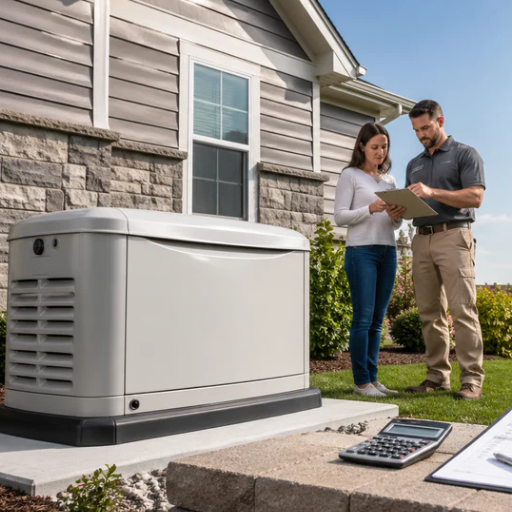
A load management module is a device built into or added to the ATS. It monitors generator output and temporarily delays non-essential loads when the generator is near capacity. When the AC finishes starting or the water heater cycle ends, the module brings the next load online. Some modules simply load shed one circuit at a time; others stage multiple priorities. Make sure your switch is matched to the generator output by following our automatic transfer switch (ATS) sizing guide.
Priority staging typically looks like this:
- Critical loads: refrigerator, furnace blower, medical devices, security systems
- High-priority loads: central AC, well pump, sump pump
- Delayed loads: electric water heater, clothes dryer, pool pump, EV charger
- Optional loads: outdoor lighting, workshop equipment, hot tub
When the generator approaches its limit, the module will load shed the lowest-priority circuits first. A 22 kW generator with intelligent load shedding can often back up a home that would otherwise need 30 kW. The trade-off is that you cannot run every circuit at full power simultaneously. For most households during an outage, that trade-off is acceptable.
In 2023, a Texas family with a 3,200 sq ft all-electric home was quoted a 38 kW whole-house unit. Their contractor recommended adding a load-shed module instead. The final installation used a 26 kW standby generator with staged water heater and EV charger delay, saving roughly $4,000 in equipment and reducing long-term fuel consumption. It is a practical reminder that whole house generator sizing is not only about total kW, but about when each load is allowed to start.
NEC 220.82 Generator Sizing and Other Code Methods
Codes turn engineering judgment into enforceable requirements. The method you use depends on whether the home is new construction, existing, or has reliable usage history. Following an approved code method is the surest way to keep whole house generator sizing defensible to inspectors and insurers.
- NEC Article 220 provides the Standard Method for calculating branch-circuit, feeder, and service loads. For dwellings, the Optional Method in 220.82 is often more practical.
- NEC 220.82 Optional Method applies demand factors to dwelling-unit loads: 100% of the first 10 kVA and 40% of the remainder for general loads, plus the larger of heating or cooling at 100%.
- NEC 220.87 allows existing dwellings to size standby generators from the maximum demand recorded over the last 12 months, typically multiplied by 125%.
- NEC Article 702.6 states that optional standby systems must be sized by an acceptable method, which includes Article 220 and 220.87.
- NFPA 110 requires emergency generators to supply 100% of the calculated emergency load, including motor inrush, while maintaining voltage within acceptable limits.
A common mistake is adding the 25% largest-motor surcharge to a 220.82 calculation. That surcharge belongs to the Standard Method under Article 430, not the Optional Method. Adding it overstates the load and leads to unnecessary oversizing.
Common Whole House Generator Sizing Mistakes
Even experienced contractors slip up. Watch for these errors in whole house generator sizing:
- Sizing by service panel rating alone. A 200 A main breaker does not mean you need a 48 kW generator. Panel size is not load.
- Ignoring starting watts. The load list sums running watts and forgets the AC or well pump surge.
- Using square footage as the only input. Square footage is a rough screen, not a final size.
- Double-counting heating and cooling. NEC 220.82(C) says to use only the larger of heating or cooling, not both.
- Adding the 25% largest-motor surcharge to 220.82. That belongs to the Standard Method.
- Forgetting future loads. EV chargers, pool equipment, and home additions can invalidate a sizing in two years.
- Choosing fuel type before sizing. Propane has slightly lower energy content than natural gas, so a propane unit may need a higher kW rating for the same load.
- Skipping altitude and temperature derating. A 22 kW nameplate can become an 18 kW usable unit at high altitude or extreme heat.
For a broader view of generator sizing across commercial and industrial applications, see our complete guide on how to size a generator. For quick charts and a faster answer, see what size generator do I need.
Free Whole House Generator Sizing Worksheet
Manual load lists invite arithmetic errors. The ZC Power whole house generator sizing worksheet also works as a simple whole house generator size calculator. It automates the work:
- Enter each appliance’s running and starting watts.
- The sheet calculates total demand and largest surge automatically.
- It applies the NEC 220.82 Optional Method demand factors.
- It includes a square-footage quick-check.
- It flags when load management or a soft starter would help.
- It exports a summary you can send to our engineering team for a factory-direct quote.
When to Call an Engineer or Electrician
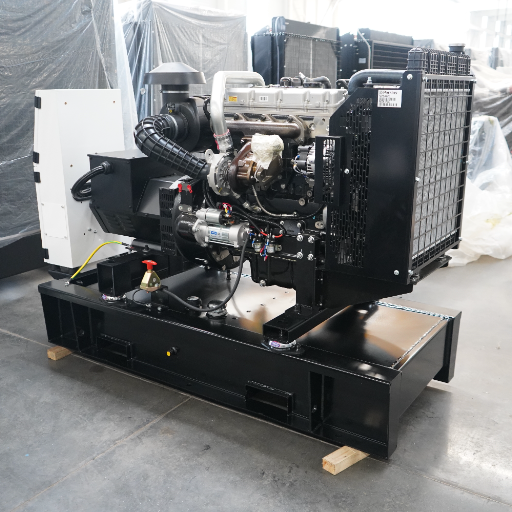
For simple essential-circuit backup, a reputable dealer can often size from a load worksheet. Call a qualified engineer or electrician when:
- Total load exceeds 30 kW or the service is 400 A or larger.
- You have multiple HVAC systems, a pool, a large workshop, or an EV charger.
- The application includes life-safety or medical equipment.
- You want load management, soft-start, or ATS coordination.
- The site uses unusual voltage such as 120/208 V or 120/240 V split-phase, or 50 Hz for export.
- The site is at high altitude or extreme temperature.
- You need a diesel standby unit rather than natural gas or propane.
If your project matches any of these conditions, contact ZC Power for a factory-direct sizing review and quote.
At ZC Power, our 80+ engineers size gensets daily for projects in Africa, the Middle East, Southeast Asia, and South America. We do not just sell catalog ratings; we verify every unit in our national standard testing center with full-load bank testing before shipment.
Frequently Asked Questions About Whole House Generator Sizing
How do I calculate what size whole house generator I need?
Add the running watts of every load you want to back up simultaneously. Add only the largest single starting surge. Apply NEC 220.82 demand factors or NEC 220.87 billing history, add altitude and temperature derating if needed, and multiply by 1.20-1.25 for safety margin.
Can I size a whole house generator by square footage?
Only as a rough starting screen. Square footage does not tell you whether the home has gas heat, electric heat, central AC, well pumps, or EV chargers. Always complete an appliance load list before finalizing the kW rating.
What size whole house generator do I need for a 2,000 sq ft home?
A typical 2,000 sq ft home with gas heat and central AC needs 14-20 kW for whole-house coverage, or 10-14 kW for essential circuits only. An all-electric home may need 22-26 kW.
Is a 22 kW generator big enough for a whole house?
A 22 kW generator is enough for many homes up to 2,500-3,000 sq ft with one central AC unit and gas heat. Larger homes, all-electric homes, or homes with multiple AC systems usually need 26-38 kW.
What is the difference between running watts and starting watts?
Running watts are the continuous power a load needs. Starting watts are the extra surge a motor draws for a few seconds at startup, often 3-7 times higher. Generators must be sized for the largest starting surge plus running loads.
Should I add a load-shed module to my ATS?
If you want to power a larger home with a smaller generator, a load-shed module is one of the most cost-effective upgrades. It delays non-essential loads so the generator never exceeds capacity.
Conclusion
Whole house generator sizing is not guesswork. It is a structured process: choose your coverage level, list every load, apply NEC demand factors, add the largest motor starting surge, account for environment, and add a safety margin. Skip any step and you risk either an expensive oversized unit or a generator that fails when it matters most.
For the engineering math behind kW, kVA, and motor starting, see generator load calculation. And if you want the math done for you, download the free whole house generator sizing worksheet or contact the ZC Power engineering team for a factory-direct sizing review and quote.


