Cummins vs Perkins Generator: An Engineer’s Honest Comparison (2026)
In the Cummins vs Perkins generator debate, neither brand wins outright. Perkins typically delivers better value below roughly 200kVA, with lower fuel consumption, quieter operation, and cheaper parts. Cummins typically dominates above 200kVA, where high torque, continuous-duty durability, and advanced diagnostics justify the higher price.
Here is what most comparison articles will not tell you: the badge on the engine is only half the decision.
If you are specifying a diesel generator right now, you have probably noticed that both brands have passionate defenders. They are both justified. Cummins (USA, founded 1919) and Perkins (UK, founded 1932, Caterpillar-owned since 1998) are two of the most proven engine families in power generation. At ZC Power, we have integrated both into our generator sets for over two decades, so we hold no brand loyalty. This guide gives you the honest numbers, the application-by-application verdict, and the spec-sheet traps that other comparisons skip.Because the engine is only half the story, it also helps to understand what a genuine diesel generator set manufacturer actually does, since the factory that builds the set around either engine shapes its five-year outcome as much as the badge does.
Key Takeaways
- Below ~200kVA, Perkins usually wins on total cost: 5-10% better fuel economy at steady loads, quieter operation (~65-70 dB with canopy), and up to 75% parts interchangeability.
- Above ~200kVA, Cummins usually wins on durability: built for continuous prime power with 20,000-25,000 hour overhaul intervals and high-torque performance at peak loads.
- The engine is only half the decision. Alternator quality, canopy engineering, control systems, and factory load bank testing determine whether either engine survives year five.
- “Cummins” can mean imported US engines or DCEC/CCEC joint-venture engines; always verify what you are actually buying via serial numbers and authorization certificates.
- Match the engine to your duty cycle and region, not to brand loyalty. Parts availability in your country often matters more than spec-sheet advantages.
Cummins vs Perkins at a Glance
| Factor | Perkins | Cummins |
|---|---|---|
| Origin | UK (Caterpillar-owned) | USA |
| Typical genset range | ~10-2,500 kVA | ~20-3,000+ kVA |
| Fuel efficiency | 5-10% better at steady loads | Stronger at maximum/peak loads |
| Noise (with silent canopy) | ~65-70 dB | ~75+ dB |
| Typical overhaul interval | ~20,000 hours | ~20,000-25,000 hours |
| Initial cost | Lower | Higher |
| Parts cost | Lower; high interchangeability | Higher; long service intervals |
| Technology focus | Simple, easy to service | Advanced diagnostics, remote monitoring |
| Sweet spot | Standby, telecom, commercial, rental | Prime power, mining, data centers |
Use this table as your starting filter, not your final answer. The sections below explain when each row actually matters.
Is Cummins Better Than Perkins?
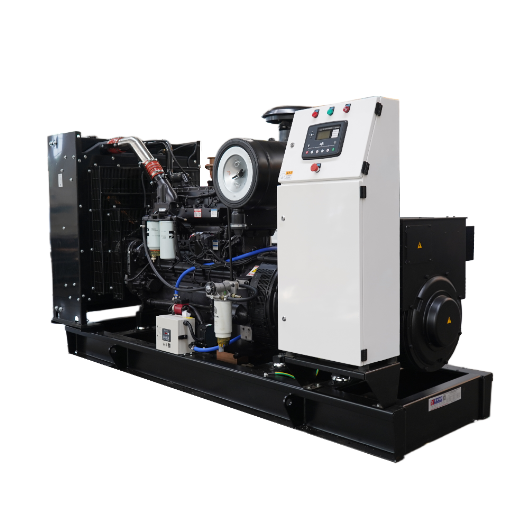
Cummins is not universally better than Perkins. Perkins generators typically cost less to buy and run below 200kVA, with better fuel economy and lower noise. Cummins generators handle heavier continuous loads, offer longer overhaul intervals, and provide more advanced monitoring technology. The better choice depends on your power rating, duty cycle, and site conditions.
That is the short answer. Here is the longer one, split by where each brand genuinely earns its premium.
Where Perkins Wins
Fuel economy at steady loads. Across industry comparisons, Perkins engines routinely deliver 5-10% lower fuel consumption than equivalent Cummins models at standard, steady-state loads. For standby units and sites running predictable loads, that gap compounds into real money over a 10-year service life.
Noise-sensitive environments. Perkins engines run quieter at the engine level, which makes it easier and cheaper to engineer a genset below strict urban noise limits. For hospitals, telecom shelters, and commercial buildings, this matters.
Lifecycle cost below 200kVA. Perkins parts cost less, and up to 75% of components are interchangeable across engine families. Industry analyses estimate roughly 13% lower total lifecycle cost in the sub-200kVA class.
Consider Samuel, who manages power for a telecom infrastructure company operating 60 tower sites across East Africa. Each site runs a 60kVA prime-rated genset, eight to twelve hours daily. In 2024, he standardized on Perkins-powered units after modeling fuel costs across the fleet. The 8% fuel advantage saved his operation roughly $41,000 in the first year alone, and local technicians already knew the Perkins 1100 series inside out. For his duty cycle, the decision was arithmetic, not branding.
Where Cummins Wins
Continuous heavy-duty operation. Cummins engines are engineered for high torque and sustained output at maximum load. Technologies like high-pressure common rail (HPCR) fuel systems and variable geometry turbochargers (VGT) deliver stronger performance exactly where Perkins engines start working hard: peak and continuous loads.
Overhaul intervals. Cummins engines in well-maintained prime power applications typically reach 20,000-25,000 hours before major overhaul, at the top end of the industry range. For a mine running 24/7, those extra 5,000 hours defer a five-figure rebuild by years.
Diagnostics and monitoring. Modern Cummins engines ship with sophisticated electronic management, remote monitoring integration, and predictive maintenance capability. For data centers and mission-critical sites, that visibility is worth paying for.
Global heavy-industry footprint. In mining regions and large construction markets, Cummins’ service infrastructure is often deeper than any competitor’s.
Head-to-Head on the Numbers That Matter
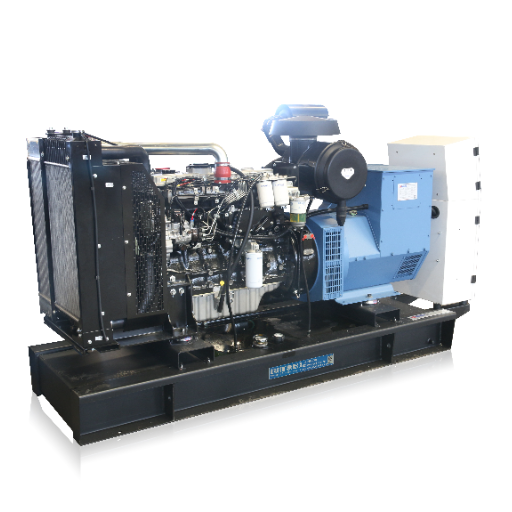
Fuel Consumption and Total Cost of Ownership
Fuel is your largest lifecycle expense, typically 60-70% of a genset’s 10-year operating cost. The pattern across the Cummins and Perkins engine ranges is consistent:
- Steady, partial loads (standby, telecom, commercial): Perkins holds a 5-10% fuel advantage.
- Maximum and highly variable loads (mining, heavy prime power): Cummins’ HPCR and VGT systems close or reverse the gap.
A worked example: a 100kVA standby unit running 200 hours per year might save $1,500-2,500 per decade on fuel with Perkins. A 500kVA prime unit running 4,000 hours per year operates in Cummins territory, where torque response and durability outweigh marginal fuel differences. Scale changes the verdict, so always weigh the purchase price against 10-year operating cost rather than comparing sticker prices alone.
Noise Levels and Site Restrictions
At the engine level, Perkins runs quieter. In practice, genset noise depends heavily on canopy engineering: a well-built sound-attenuated canopy brings the engine below 75 dB at 7 meters. The practical difference is cost and margin. Achieving a strict 65 dB hospital-grade limit is simply easier with a quieter base engine.
Durability and Overhaul Intervals
Both brands are 20,000-hour-class engines when maintained properly. Perkins standby units show remarkable longevity; industry data suggests over 80% of standby units remain in service past 20 years. Cummins stretches further under continuous heavy load, which is precisely the scenario where overhaul intervals matter most. Maintenance discipline beats brand selection here: skipped oil changes kill either engine at 8,000 hours.
Spare Parts and Regional Service Networks
This row of the table is underrated. A theoretically superior engine with no local parts support is an operational liability. Before choosing, ask three questions:
- Which brand do technicians in your region already service daily?
- How fast can genuine parts reach your site: days or weeks?
- Does your supplier stock and air-ship OEM parts directly?
In much of Africa and South Asia, Perkins’ parts interchangeability and widespread small-engine footprint give it an edge below 200kVA. In mining belts and heavy industrial zones, Cummins’ network often runs deeper. Your factory partner should supply authentic parts for both. We cover this in our OEM diesel generator sourcing guide, including how to verify genuine components.
Want a brand-neutral recommendation? Send ZC Power your load profile and duty cycle, and our engineers will quote the same genset with both engine options so you can compare real numbers. Contact our engineering team for a side-by-side proposal.
Matching the Engine to Your Application
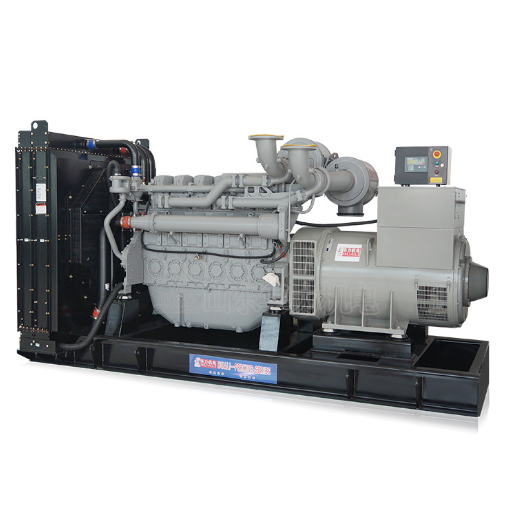
Telecom, Commercial Buildings, and Rental Fleets
Perkins fits these profiles. Loads are predictable, runtime is moderate, noise limits are common, and fleet-scale fuel savings compound fast. Rental operators additionally benefit from Perkins’ parts interchangeability, which simplifies fleet maintenance across mixed unit ages.
Mining, Data Centers, and Heavy Industry
Cummins fits these profiles. A Zambian copper operation we supplied in 2023 runs six 800kVA prime units continuously at high altitude. Their engineering team evaluated both brands and chose Cummins for torque response under crusher-start loads and for the overhaul economics at 6,000+ annual runtime hours. Two years in, their fleet availability sits above 98%. At that duty cycle, the cheaper engine would have been the expensive decision.
The 200kVA Rule of Thumb, and When to Break It
The industry rule of thumb holds up well: Perkins below ~200kVA, Cummins above it. Break it when:
- Your region’s service network favors the “wrong” brand. Local support beats spec sheets.
- Your noise limit is extreme. A 250kVA hospital project may still favor Perkins for acoustic headroom.
- Your load profile is spiky at low ratings. High starting currents from motors and compressors can justify Cummins torque characteristics below 200kVA.
- Your fleet is standardized. Mixing engine brands across a fleet multiplies parts inventory and training costs.
What the Spec Sheets Don’t Tell You
DCEC/CCEC vs. Imported Cummins: Know What You Are Buying
“Cummins-powered” can mean an imported US-built engine or one produced by Cummins’ Chinese joint ventures, Dongfeng Cummins (DCEC) or Chongqing Cummins (CCEC). Both are genuine Cummins operations with legitimate quality standards, and JV engines power a huge share of the global mid-range market at more accessible prices. They are not identical to imported engines in cost, configuration, or perception in some markets. Neither is “fake,” but you deserve to know which one your quote includes. A transparent supplier states it on the datasheet.Because this is exactly the kind of detail an evasive seller will blur, it is worth going in with a prepared list of questions to ask a generator manufacturer, so you can pin down engine origin, series, and configuration before any money changes hands.
Decoding Perkins Series by kVA Range
Perkins organizes its generator engines into series that map roughly to power bands: the 400 series covers small units around 10-30kVA, the 1100 series spans roughly 30-250kVA, the 2000 series covers the mid-range up to about 750kVA, and the 4000 series handles large sets up to 2,500kVA. When a quote says “Perkins engine,” ask which series and model. The answer tells you exactly where the unit sits in the range.
Verifying Authentic Engines Before You Pay
Counterfeit badges are a real problem in the export market. A trader in the Gulf region shared a cautionary experience with us last year: he purchased twenty “Cummins” gensets at a price 25% below market, and serial verification with Cummins came back unregistered. The engines were unbranded copies with convincing decals. His remedy was simple but too late: verify engine serial numbers directly with the manufacturer (Cummins and Perkins both support this), request OEM authorization documentation from your supplier, and treat prices far below market as a warning, not a win.That “25% below market” figure is itself a classic warning sign, and our guide on how to spot a low quality generator supplier breaks down the full set of red flags, from fake certificates to standby ratings sold as prime, so you can catch the pattern before you pay.
Why the Engine Is Only Half the Decision
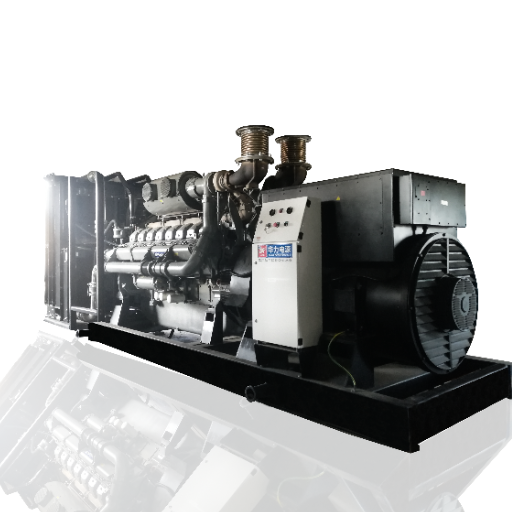
Here is the perspective you only get from a factory that builds with both brands. We have seen genuine Cummins engines fail early inside badly engineered gensets, and we have seen mid-tier engines run for decades inside well-built ones. The engine is the heart of the machine, but the body decides whether the heart survives:
- The alternator determines voltage stability and motor-starting capability. Insist on genuine copper-wound units from established brands like Stamford or Leroy-Somer.
- The cooling system decides whether your engine survives a 45°C summer at full load. Undersized radiators kill engines that never had a chance.
- The canopy controls noise, weather protection, and airflow. Acoustic engineering is a discipline, not an afterthought.
- The control system, whether Deep Sea or SmartGen, determines protection response, AMF switchover speed, and monitoring visibility.
- Factory testing is the final gate. Every genset should pass full load bank testing at 100% rated output before dispatch, with reports you can read.
This is why two “identical” 500kVA Cummins gensets from different suppliers can have completely different five-year outcomes. When you evaluate a Cummins vs Perkins generator purchase, evaluate the integrator with the same rigor you evaluate the engine.
Frequently Asked Questions
Which is more fuel-efficient, Cummins or Perkins?
Perkins is typically 5-10% more fuel-efficient at standard, steady loads, which benefits standby and telecom applications. At maximum and highly variable loads, Cummins’ HPCR fuel systems and VGT turbocharging close or reverse the gap.
Which lasts longer, a Cummins or a Perkins generator?
Both are 20,000-hour-class engines with proper maintenance. Perkins standby units frequently exceed 20 years of service. Cummins typically offers longer overhaul intervals (20,000-25,000 hours) under continuous heavy-duty prime power operation.
What is the 200kVA rule for Cummins vs Perkins?
It is an industry rule of thumb: Perkins generally offers better value, fuel economy, and noise performance below roughly 200kVA, while Cummins generally offers better durability, torque, and long-run economics above it. Break the rule when local service networks, extreme noise limits, or unusual load profiles demand it.
Is a DCEC Cummins engine genuine?
Yes. DCEC (Dongfeng Cummins) and CCEC (Chongqing Cummins) are official Cummins joint ventures producing genuine engines for the global market. They differ from imported US-built engines in cost and configuration, so confirm which one your quote includes and verify serial numbers with Cummins.
Which brand has cheaper spare parts?
Perkins parts are generally cheaper, with up to 75% interchangeability across engine families. Cummins parts cost more but service intervals are longer. Regional availability often matters more than list price, so confirm local parts support before choosing.
The Verdict: Match the Engine to the Mission
The Cummins vs Perkins generator question has a clean answer once you know your numbers. Below ~200 kVA with steady loads and noise constraints, Perkins usually delivers the better total cost of ownership. Above ~200 kVA with continuous heavy duty, Cummins usually earns its premium through durability and torque. Regional parts support can override both verdicts, and the quality of the genset built around the engine matters as much as the engine itself.
Your next step is not picking a brand. It is defining your load profile, duty cycle, noise limit, and service reality, then letting those four facts pick the brand for you.
Shandong ZC Power CO., LTD. has built generator sets with Cummins, Perkins, Weichai, and Yuchai engines since 1999, from 8kVA to 4000kVA, every unit verified by full load bank testing in our national standard testing center before dispatch. Because we integrate both brands, our only incentive is matching you with the right one.