15 Questions to Ask a Generator Manufacturer Before You Buy
The most important questions to ask a generator manufacturer cover five areas: power and application fit, component quality, testing and certification, commercial terms, and after-sales support. The 15 questions below walk through all five, and each one includes what a good answer sounds like and the red flag that should end the conversation.
Here is why the answers matter as much as the questions. In early 2025, Ahmed, a procurement officer for a mining contractor in Zambia, shortlisted three suppliers for two 500kVA prime power units. His entire evaluation came down to two questions: price and delivery time. He picked the cheapest quote, 18% below the others. The gensets arrived on schedule. Eight months later, both alternators failed insulation tests, the “copper windings” turned out to be aluminum, and the supplier’s WhatsApp number no longer worked. The savings disappeared in a single repair invoice.
Most buyers know they should ask more questions. Few know which questions actually separate a real manufacturer from a smooth-talking broker, and almost nobody teaches you how to judge the answers. This guide does both. We are Shandong ZC Power CO., LTD., a generator manufacturer established in 1999, and we field these questions from serious buyers every week. A factory with nothing to hide welcomes all 15.As a full-service diesel generator set manufacturer, we know exactly what honest answers to these questions should sound like, because we give them every day.
Key Takeaways
- Ask about power rating methodology first. A supplier selling “100 kVA as 100 kW” has overstated your capacity by 25% before the conversation even starts.
- Every legitimate manufacturer offers at least 1 year or 1,000 running hours of warranty on the engine and alternator, in writing.
- A factory that cannot produce a load-bank test report with your unit’s serial number has not tested your unit.
- Two or more red flag answers anywhere in this list means you walk away, regardless of price.
- The best suppliers answer with documents, not adjectives: test reports, authorization letters, and reference contacts.
The 15 Essential Questions to Ask a Generator Manufacturer
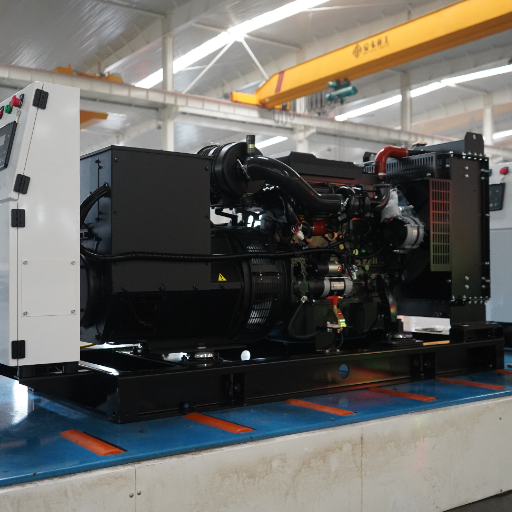
- Is this unit rated for standby, prime, or continuous power?
- How did you calculate the kVA/kW rating for my load profile?
- Can you customize voltage, frequency, and phase for my grid?
- Which engine and alternator brands do you use, and are they genuine?
- Is the alternator 100% copper-wound?
- What control panel and protection systems are included?
- What certifications do you hold, and can I verify them?
- Will you load-bank test my unit before shipment, and can I witness it?
- Can I visit the factory or book a live video audit?
- What exactly is included in the quote?
- What are the payment terms and lead time?
- What warranty do you offer, in writing?
- How do you supply spare parts after the sale?
- Who provides technical support, and in which languages?
- Can I speak with reference customers in my region?
Treat this list as your diesel generator buying checklist for supplier calls, factory visits, and RFQs. Now let us look at why each question works and how to score the answers.
Category 1: Power and Application Fit
1. Is this unit rated for standby, prime, or continuous power?
These three ratings are not marketing labels; they define how many hours the engine can run and at what load. A standby-rated unit pushed into prime power duty on a remote site will wear out years early.
- A good answer sounds like: “For your application, we recommend prime power rated at 400kW, which gives you 500kVA at 0.8 power factor with 10% overload capacity for one hour in twelve.”
- Red flag answer: “This generator can do everything.” One machine, three ratings, no questions about your usage pattern.
2. How did you calculate the kVA/kW rating for my load profile?
Industrial motors draw 3 to 6 times their running current at startup. A manufacturer who sizes your unit without asking about your largest motor’s starting surge is guessing. Also watch the kVA versus kW trick: at the standard 0.8 power factor, 100 kVA is only 80 kW, so a “100 kW” bargain unit may be 25% undersized on arrival.
- A good answer sounds like: “Send us your equipment list and starting sequence. Our engineers will return a sizing calculation within 48 hours.”
- Red flag answer: “500 kVA is enough for any factory.” No load list, no calculation, no questions.
3. Can you customize voltage, frequency, and phase for my grid?
A 400V/50Hz three-phase unit is useless on a 480V/60Hz grid without re-engineering the alternator and control system. Real manufacturers treat this as routine engineering; resellers treat it as a problem.
- A good answer sounds like: “We build to your grid spec, whether that is 380V/50Hz or 440V/60Hz, and we state the exact configuration on the nameplate and test report.”
- Red flag answer: “The voltage can be adjusted on site.” Voltage re-tapping has hard limits and is not a substitute for a correctly wound alternator.
Category 2: Components and Build Quality
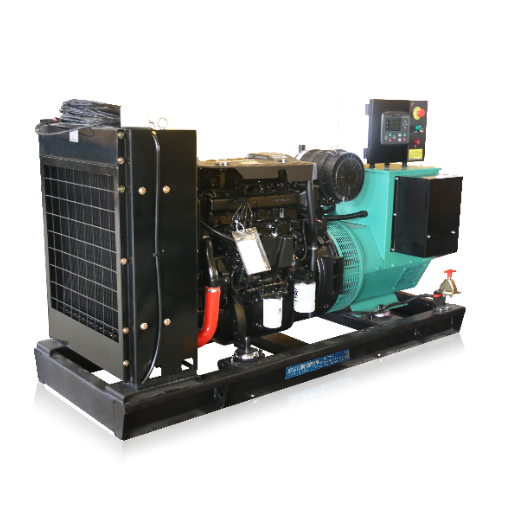
4. Which engine and alternator brands do you use, and are they genuine?
The engine and alternator determine 80% of a genset’s reliability and resale value. Established brands (Cummins, Perkins, Weichai, Yuchai for engines; Stamford, Leroy-Somer for alternators) come with global parts networks and serial number verification. You can check a Cummins serial yourself through QuickServe Online.If you are still deciding between the two most common engine choices, our cummins vs perkins generator comparison breaks down cost, fuel economy, and parts availability side by side.
- A good answer sounds like: “We use genuine Cummins engines with current-year OEM authorization letters, and you receive the serial numbers before shipment for independent verification.”
- Red flag answer: “Same quality as Cummins, our own brand.” House-brand engines are not automatically bad, but combined with a vague answer here, they usually mean untraceable components.
5. Is the alternator 100% copper-wound?
This is the question that makes weak suppliers uncomfortable. Aluminum windings cost far less, run hotter, and fail insulation earlier, yet they look identical from outside. Ahmed’s failed units in our opening story were aluminum-wound, and the discovery cost him a full rewinding at a local workshop.
- A good answer sounds like: “100% copper, and we will state it in the sales contract. You are welcome to verify by weight comparison or resistance test during inspection.”
- Red flag answer: “Copper is not important, our alternators are high quality.” Any deflection on this question is your answer.
6. What control panel and protection systems are included?
The controller is the genset’s brain. Ask for the brand (Deep Sea and SmartGen are the industry standards) and confirm the protection suite: low oil pressure shutdown, high coolant temperature shutdown, overcrank protection, and emergency stop.
- A good answer sounds like: “DSE 7320 controller with full shutdown protections, and we can add AMF or ATS integration plus remote monitoring if your site needs it.”
- Red flag answer: “Standard controller included.” If they cannot name the controller model, they have not specified your unit.
Category 3: Quality Assurance and Testing
7. What certifications do you hold, and can I verify them?
ISO 9001, CE, and CCC are the baseline for export-grade manufacturing, but certificates are routinely forged. The question is not whether they claim certification; it is whether the claim survives verification against the issuing body’s registry, such as the databases maintained by ISO member certification bodies.
- A good answer sounds like: “Here are the certificate numbers and the certification bodies. You can verify them in the registrars’ online databases, and we will send the Declaration of Conformity for your specific model.”
- Red flag answer: “All certificates are on our website.” A PDF on a homepage is decoration, not evidence.
8. Will you load-bank test my unit before shipment, and can I witness it?
A load bank test is the only proof that your genset delivers its rated output. The protocol steps from 25% to 100% load, holds full load for at least 60 minutes, and finishes with a 110% overload run, holding voltage within ±1% and frequency within ±0.5%. If you want to know exactly what a credible test covers, our step-by-step generator load bank testing procedure shows the hold times and pass/fail criteria to match against any report you receive.
- A good answer sounds like: “Every unit passes full load-bank testing in our testing center before dispatch. You can witness yours live on video with the serial number on camera, and the signed test report ships with the machine.”
- Red flag answer: “All machines are tested.” When you ask for your unit’s report, the answer becomes a generic document with no serial number.
9. Can I visit the factory or book a live video audit?
This question has a hidden benefit: you are not really asking about the visit. You are measuring how the supplier reacts to scrutiny. A genuine factory says yes immediately because production lines cannot be faked on camera. If you cannot travel, a third-party audit from SGS or Bureau Veritas costs 300 to 300 to 1,500 and answers this question for you. For a full walkthrough of the audit process, see our guide on how to verify a Chinese generator factory before you book a visit or wire a deposit.
- A good answer sounds like: “Anytime. We host buyer visits monthly, and we can do a live video walkthrough this week, production floor, testing center, and parts warehouse.”
- Red flag answer: “Visits are difficult to arrange right now.” Followed by a polished pre-recorded tour video.
Category 4: Commercial Terms
10. What exactly is included in the quote?
Two quotes can differ by 30% simply because one includes the battery, base fuel tank, silencer, ATS, export packaging, and pre-shipment testing while the other prices the bare machine. Ask for an itemized configuration list and compare quotes line by line.
- A good answer sounds like: “The quotation lists every component with brand and model: engine, alternator, controller, battery, tank capacity, canopy specification, and packaging. Nothing is assumed.”
- Red flag answer: “Everything you need is included.” Then the battery and testing report arrive as surprise charges.
11. What are the payment terms and lead time?
Standard export terms are 30% deposit with the balance against the bill of lading or after a passed factory test. Production lead time for a customized industrial genset typically runs 20 to 40 days. A supplier demanding 100% upfront, or promising a custom 1000kVA containerized unit in one week, is telling you something.
- A good answer sounds like: “30% deposit, balance after you witness the load test. Lead time 30 days, confirmed in the proforma invoice, with photos at each production milestone.”
- Red flag answer: “Full payment before production, special price today only.”
12. What warranty do you offer in writing?
The industry benchmark is 1 year or 1,000 running hours on the engine and alternator, whichever comes first. The critical word is “writing”: a verbal promise from a sales rep has no value at month eleven.
- A good answer sounds like: “12 months or 1,000 hours, stated in the contract, covering engine, alternator, and controller, with OEM parts air-shipped for warranty claims.”
- Red flag answer: “Don’t worry, our quality is very good.” No document, no warranty.
Category 5: After-Sales and Long-Term Support
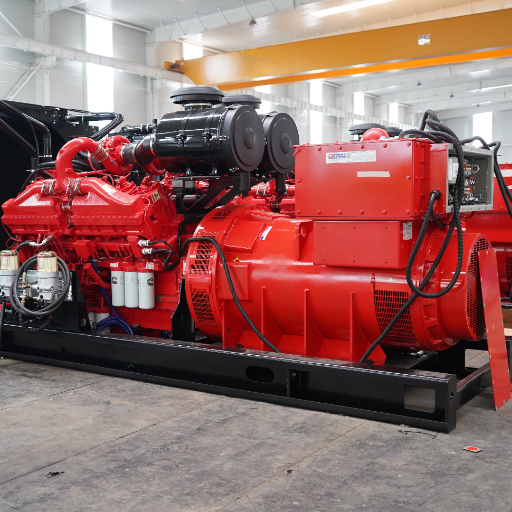
13. How do you supply spare parts after the sale?
A genset runs for 20 years; your supplier relationship lasts just as long. Ask where parts ship from, typical dispatch time, and whether they stock wear items (filters, belts, injectors) for your specific engine.For a full checklist of what strong coverage should include, see our guide to generator warranty and after sales support before you accept any supplier’s terms.
Consider Grace, who runs procurement for a regional distributor in Kenya. She asked this question to four shortlisted suppliers in 2024. Two described a parts warehouse with dispatch times and sent a recommended spare parts list with prices. One admitted they “order parts when customers need them,” meaning weeks of downtime per failure. She dropped the third supplier that week and never regretted it.
- A good answer sounds like: “We stock OEM parts for every model we build, dispatch within 48 hours by air freight, and provide a recommended two-year spare parts kit with your order.”
- Red flag answer: “Parts are easy to find locally.” True for Cummins filters, false for a house-brand controller board.
14. Who provides technical support, and in which languages?
When a hospital’s standby unit throws a fault code at 2 a.m., “email our sales team” is not support. Ask whether you get direct access to engineers, typical response times, and remote diagnostic capability.
- A good answer sounds like: “Our engineering team supports you directly in English, with response within 24 hours and remote guidance for controller diagnostics and installation.”
- Red flag answer: “Contact us anytime.” From a company with three employees and no engineering staff.
15. Can I speak with reference customers in my region?
Exporters with real track records have buyers in your region who took delivery of similar equipment in the last two years. Two or three contactable references tell you more than any certificate.
- A good answer sounds like: “We will introduce you to two customers in your region who run similar units, after we ask their permission, as any professional supplier would.”
- Red flag answer: “All client information is confidential.” Total confidentiality usually means total absence.
How to Judge the Answers You Get from a Generator Manufacturer
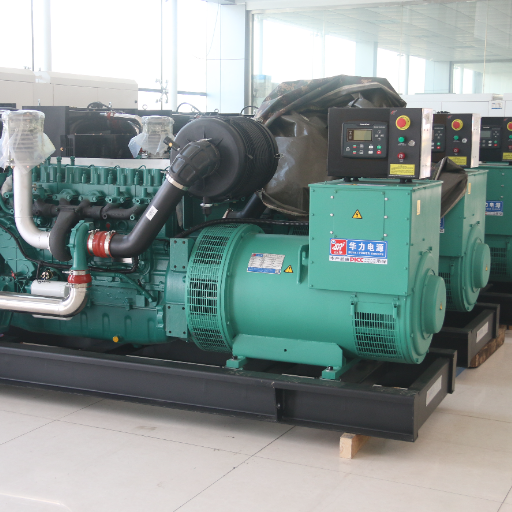
Collect answers in writing from every shortlisted supplier, then score them. One red flag answer is a warning to dig deeper. Two or more, on any questions on this list mean you walk away, because the pattern will not improve after your deposit clears.
| Question | Good Answer Includes | Red Flag Answer |
|---|---|---|
| Power rating (Q1-2) | Named rating standard + sizing calculation | “Enough for any factory” |
| Components (Q4-5) | Brand names + contract guarantee | “Same quality as…” deflections |
| Testing (Q8) | Serial-numbered load test report | “All machines are tested” |
| Quote (Q10) | Itemized configuration list | “Everything included” |
| Warranty (Q12) | 1 year / 1,000 hours in writing | Verbal promises only |
| Support (Q13-14) | Parts warehouse + engineer access | “Contact us anytime” |
What ZC Power’s Own Answers Look Like
We wrote this guide because we answer these questions weekly, so here is our answer key, briefly.
Shandong ZC Power CO., LTD. has manufactured generator sets in Jining, Shandong since 1999, across a 300,000-square-meter facility with a national standard testing center. We build with genuine Cummins, Perkins, Weichai, and Yuchai engines under current OEM authorizations, paired with 100% copper alternators. Every unit from 8kVA to 4000kVA passes full load-bank testing before dispatch, with the report attached to your serial number. Our warranty is 1 year or 1,000 running hours, in the contract, backed by 80+ engineers and an OEM parts warehouse. Factory visits and live video audits are welcome any week of the year.
When Sofia, a procurement manager for an infrastructure developer in the Philippines, ran this 15-question rubric across four shortlisted suppliers last year, two eliminated themselves on red flags alone: one deflected on copper windings, the other could not produce a serial-numbered test report. She told us the questions did half the work before she ever compared prices.
Frequently Asked Questions
What should I ask before buying an industrial generator?
Ask about the power rating standard (standby, prime, or continuous), engine and alternator brands, whether the alternator is 100% copper-wound, load-bank testing before shipment, warranty terms in writing, and spare parts supply. These six areas expose most supplier weaknesses within one conversation.
How do I know if a generator manufacturer is reliable?
A reliable manufacturer verifies cleanly: registered manufacturing scope on its business license, certifications that check out in issuer databases, serial-numbered load test reports, current OEM authorization letters, and reference customers you can contact. Unreliable suppliers answer with adjectives instead of documents.
What warranty should a diesel generator have?
The industry benchmark is 12 months or 1,000 running hours, whichever comes first, covering at minimum the engine, alternator, and controller. Anything shorter, vaguer, or purely verbal should be treated as no warranty at all.
Should I visit the factory before buying a generator?
For orders of $50,000 or more, you can arrange for a third-party inspection (typically costing between $300 and $1,500). For smaller orders, a reliable alternative is a live video showing the production line, the testing center, and the current date. If the supplier refuses both options, the answer is obvious.
Conclusion: The Questions Are Free, the Mistakes Are Not
Fifteen questions to ask a generator manufacturer, one answer key, and a simple scoring rule: documents beat adjectives, and two red flags end the conversation. The suppliers worth your budget will answer every question on this list with specifics, because they run real production lines, real testing centers, and real support teams. The ones who deflect have saved you from an expensive education.
Run this list before your next RFQ goes out, then verify the winning answers independently. Your future self, standing in front of a genset that starts every time, will be glad you did.