Custom Genset Manufacturer: How to Source a Tailored Diesel Generator Set
A custom genset manufacturer engineers and builds a diesel generator set around your site’s exact voltage, environment, noise limits, and load profile, rather than selling you a fixed off-the-shelf unit. The right factory will handle everything from engine selection to load bank testing under one roof. Here is how to choose one, and how the process works.
Consider what happened to Daniel, a procurement manager for a road construction firm in West Africa. In early 2025, he bought three standard 500kVA generator sets from an online supplier because the price looked unbeatable. Within four months, two units were derating badly in 45-degree heat, and the third tripped every time his crusher motor started. The supplier stopped answering emails. Daniel eventually paid for a full re-engineering job plus emergency rentals, erasing every dollar he thought he had saved.
You have probably felt a version of this pressure yourself. Off-the-shelf gensets are built for average conditions, but real project sites are never average. High altitude, coastal salt air, strict urban noise ordinances, unusual grid voltages: any one of these can turn a bargain machine into an expensive liability.
This guide shows you exactly what a custom genset manufacturer can tailor, how the ordering process works from RFQ to shipment, and how to verify you are dealing with a real factory instead of a middleman. It is written by the engineering team at Shandong ZC Power, a source manufacturer that has built tailored power solutions since 1999.
Key Takeaways
- A custom genset manufacturer tailors seven core areas: engine, alternator, voltage and frequency, acoustic canopy, control system, housing or mobility, and OEM branding.
- A legitimate custom order follows five stages: load assessment, engineering proposal, production, Factory Acceptance Test (FAT), and export logistics.
- Verify any factory with a live video walkthrough, certificate checks with issuing bodies, and a serial-numbered load bank test report before paying the balance.
- Engine brand, canopy grade, and emissions compliance drive most of the cost difference between custom builds.
- Factory-direct sourcing from a manufacturer like ZC Power (8kVA to 4000kVA, est. 1999) typically saves 20% to 40% compared to trading company markups.
What Is a Custom Genset Manufacturer?
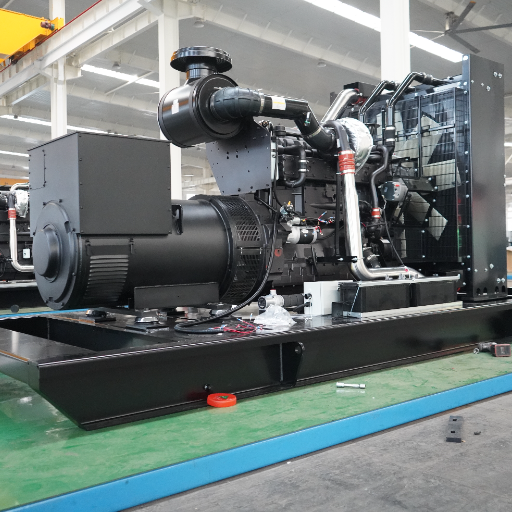
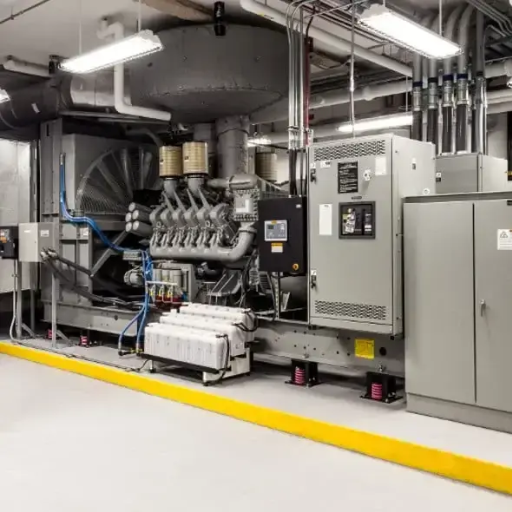
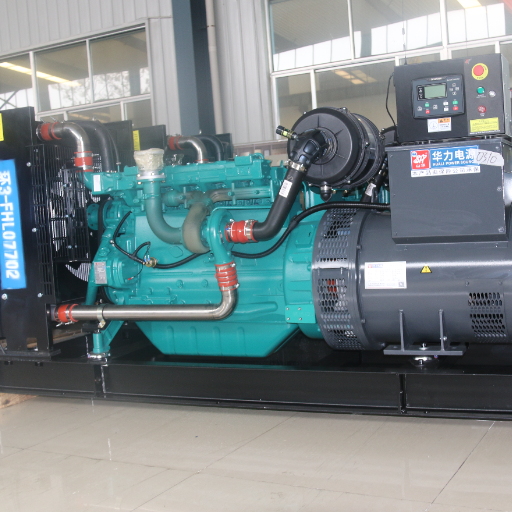
A custom genset manufacturer is a factory that designs, assembles, and tests generator sets to a buyer’s exact technical specifications, covering the engine, alternator, canopy, control panel, and enclosure, all on its own production lines.
It helps to understand the three types of suppliers in this market. Engine OEMs like Cummins build the diesel engines themselves. Packagers buy engines and alternators, then assemble standard product lines. Vertically integrated source factories do the packaging but also fabricate their own canopies, base frames, and control systems in-house.A true vertically integrated diesel generator set manufacturer controls every stage of this process in-house, which is exactly what makes genuine customization possible.
That third category is where true customization lives. If a supplier cannot weld its own canopy or program its own control panels, it cannot genuinely tailor your genset. It can only resell what it has in stock.
What Can Be Customized in a Diesel Generator Set?
Buyers are often surprised by how much of a genset can be engineered to order. A capable custom genset manufacturer will tailor seven core areas:
- Engine and alternator selection
- Voltage, frequency, and phase
- Canopy and acoustic engineering
- Control systems
- Mobility and housing
- Branding and OEM/ODM
- Environmental adaptations
Here is what each one involves.
Engine and Alternator Selection
The engine is the heart of your genset, and the choice affects reliability, fuel economy, and parts availability in your region. Reputable factories offer genuine engines from Cummins, Perkins, Weichai, Yuchai, and Deutz, matched to your duty rating.
The alternator matters just as much. Specify a 100% copper alternator from Stamford, Leroy-Somer, or Faraday, and confirm the brand in writing. Cheap copper-aluminum alternators are one of the most common corners cut by low-end assembly shops.
Voltage, Frequency, and Phase
Grid standards vary worldwide: 400V/230V at 50Hz across most of Africa and the Middle East, 480V at 60Hz in parts of the Americas, and dozens of regional variations. A real factory rewinds or reconfigures the alternator and programs the voltage regulator (AVR) to match your exact grid.
Canopy and Acoustic Engineering
If your site sits near a hospital, hotel, or residential zone, noise compliance is non-negotiable. Custom sound-attenuated canopies can bring operational noise below 75 dB(A) at 7 meters, with thicker industrial steel and anti-corrosion powder coating for coastal or desert deployments.
Control Systems
Control panels define how your genset behaves during an outage. Options include AMF (Auto Mains Failure) panels that restore power within milliseconds, ATS integration, parallel synchronization cabinets for multi-unit plants, and IoT-enabled controllers from Deep Sea or SmartGen that let you monitor fuel, oil pressure, and voltage from a smartphone.
Mobility and Housing
Open type, silent type, trailer-mounted, or fully containerized in 20ft or 40ft CSC-certified enclosures: the housing is chosen around how and where the unit operates. Trailer-mounted gensets suit construction fleets that reposition weekly, while containerized power stations protect prime power units on offshore platforms and remote mine sites.
Branding and OEM/ODM
For distributors, customization extends to your own brand identity. Colors, logos, model badges, and documentation can all carry your label, so you build local market equity instead of advertising the factory.
This is exactly how Priya, an equipment dealer in Southeast Asia, built her business. In 2024, she partnered with an OEM genset factory for white-labeled silent gensets in her company’s colors, with her logo on the canopy and her brand in the manuals. Within 18 months, her house brand was winning municipal tenders against established importers because she controlled her margins and her after-sales story. None of that is possible when you resell a trading company’s generic stock.
Environmental Adaptations
Extreme sites demand extreme engineering. A genuine custom genset manufacturer can add cold-start packages with coolant and oil heaters for sub-zero climates, high-altitude turbocharging and derating calculations, heavy-duty air filtration for dusty mining sites, and marine-grade coatings for salt-spray environments.
If any of these requirements sound like your project, it pays to talk to engineers before you request quotes. Contact the ZC Power engineering team for a free consultation on your site conditions, and we will tell you exactly which customizations your application needs.
The Custom Genset Order Process: From RFQ to Shipment
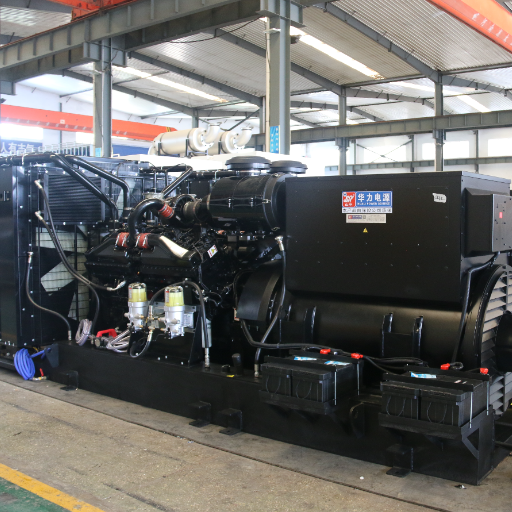
A transparent order process is one of the strongest signs of a legitimate custom genset manufacturer. Here is the five-stage workflow you should expect.
Step 1: Site Assessment and Load Calculation
Everything starts with your load profile. The factory’s engineers calculate your running load, motor starting surges (often 3 to 6 times running current), phase requirements, and environmental factors. Send photos, site data, and your equipment list. A good factory asks more questions than it answers at this stage.
Step 2: Engineering Proposal and Technical Drawings
Next, you receive a formal proposal: the engine and alternator combination, canopy design, control panel specification, fuel tank capacity, and dimensional drawings. Review this document carefully. It becomes the technical contract for your build, and vague proposals at this stage mean vague gensets later.
Step 3: Production and Assembly
Once you approve the drawings and pay the deposit, production begins. The factory fabricates the base frame and canopy, mounts the engine and alternator, wires the control system, and applies your specified coating and branding. For a custom unit, expect a lead time of 20 to 40 days depending on complexity.
Step 4: Factory Acceptance Test (FAT)
This is the step that separates real manufacturers from assembly shops. Before shipment, your exact unit goes on a load bank: progressive loading to 80% of rated capacity sustained for at least 60 minutes, 100% at peak, and a brief 110% overload. Voltage regulation should stay within ±1% and frequency within ±0.5%, consistent with the ISO 8528 standard for genset performance.
Demand a test report tied to your unit’s serial number, with photos or live video of the test. Never pay the balance before you have it.
Step 5: Export Packaging, Documentation, and Logistics
Finally, the factory handles export-grade packaging, customs documentation, and container loading, typically on FOB or CIF terms. An experienced exporter will have shipped to your region before and can advise on import duties and certification requirements.
Want to see this process applied to your project? Send us your load requirements and site conditions, and our engineers will return a tailored proposal with technical drawings within 48 hours.
How to Verify a Custom Genset Manufacturer (and Avoid Trading Companies)
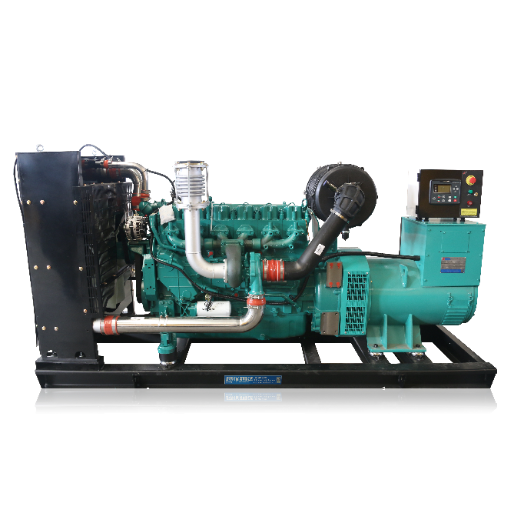
The biggest risk in sourcing heavy machinery from overseas is paying a middleman who poses as a factory. Trading companies add 20% to 40% markups, control nothing about quality, and often disappear when warranty claims arrive. Here is how to protect yourself.
- Check the business license. The registered business scope must say “manufacturing,” not “trading” or “wholesale.” Registered capital should match the claimed production scale.
- Request a live video walkthrough. Ask for a real-time call from the production floor, walking from engine storage to the welding line to the testing area. Real factories welcome this. Trading companies cite “safety policies” or broken cameras.
- Validate certificates with the issuing bodies. ISO 9001, CE, and CCC certificates can be verified directly. Do not accept PDF scans at face value, and confirm generator manufacturing is in the certificate’s scope.
- Verify component authenticity. Ask for the engine manufacturer’s authorization letter, and authenticate engine serial numbers through the engine brand’s own database.
- Commission a third-party audit. Firms like SGS or Bureau Veritas conduct factory audits for roughly 300 to 300 to 1,500, usually under 5% of your order value. It is the cheapest insurance in international procurement.
- Demand the serial-numbered FAT report described in the previous section.
For a deeper walkthrough of these checks, read our guide on how to verify a Chinese generator factory in 7 steps.
What Drives the Cost of a Custom Genset?
Custom genset pricing is not arbitrary. Five factors account for most of the difference between quotes.
- Engine brand and origin. A genuine Cummins or Perkins engine costs significantly more than a domestic equivalent, and earns it back in fuel economy, lifespan, and parts availability.
- Canopy grade. A super-silent canopy with thick acoustic insulation and premium coating adds cost, but it is far cheaper than retrofitting soundproofing on site.
- Control sophistication. A basic manual panel versus a Deep Sea AMF panel with cloud monitoring can differ by hundreds of dollars per unit.
- Emissions compliance. Meeting EPA or EU Stage V standards requires certified engines and aftertreatment, which raises the build cost.
- Order volume and MOQ. Genuine factories often accept an MOQ as low as one set for custom builds, with better unit pricing at volume.
One more cost factor is invisible on the quote itself: who you buy from. Because a source factory sells at true production cost, factory-direct pricing typically runs 20% to 40% below what a trading company charges for the same machine. When you compare quotes, compare the supply chain, not just the number.
Why Global Buyers Choose ZC Power as Their Custom Genset Manufacturer
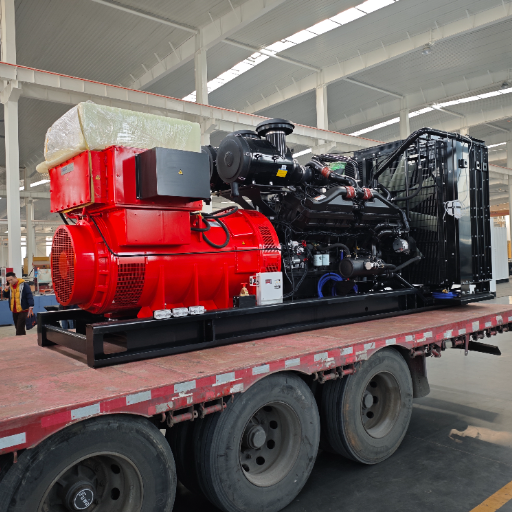
Shandong ZC Power CO., LTD. has engineered tailored power solutions since 1999. Our 300,000-square-meter facility in Jining, Shandong operates complete production lines for open, silent, trailer, and containerized gensets from 8kVA to 4000kVA.
Every unit passes through our national standard testing center for full load bank verification before dispatch, and our quality system carries ISO 9001, CE, and CCC certifications. We build on genuine Cummins, Perkins, Weichai, and Yuchai engines with Stamford and Leroy-Somer alternators, controlled by Deep Sea or SmartGen panels.
A hospital group in East Africa saw what this means in practice. They needed standby power that met a strict 75 dB noise limit and restarted critical systems within milliseconds of grid failure. Our engineers specified a silent-canopy 800kW unit with an AMF panel and custom anti-corrosion coating for the coastal climate. The genset passed its FAT on the first run, and it has carried the hospital through every outage since commissioning, without a single failed start.
Behind every order sits a team of 80 technical engineers, and we have exported to more than 50 countries across Africa, the Middle East, the Americas, and Southeast Asia. For distributors, our full OEM and ODM diesel generator program supports private labeling from a single container upward. After the sale, we supply OEM parts and remote engineering support for the life of the machine.
Frequently Asked Questions
What is the difference between a custom genset manufacturer and a trading company?
A custom genset manufacturer owns its production lines, employs its own engineers, and builds your unit to order. A trading company buys finished stock from factories, adds a markup, and resells it with no control over quality, customization, or after-sales support.
How much does a custom diesel generator set cost?
Cost depends on power rating, engine brand, canopy type, control system, and emissions compliance. As a framework, a genuine engine upgrade, a super-silent canopy, and an AMF panel each add meaningful cost over a base open-type unit. Request itemized quotes so you can compare specifications line by line rather than headline prices.
What is the typical lead time for a custom genset?
For most custom builds, expect 20 to 40 days of production after drawing approval, plus shipping time to your port. Complex containerized or parallel systems can take longer. Confirm lead time in the sales contract.
Can a factory customize the voltage and frequency for my country?
Yes. A capable custom genset manufacturer configures the alternator and AVR for your exact grid, whether 50Hz or 60Hz, single-phase or three-phase, at your required voltage. State your grid standard in the RFQ.
What is the minimum order quantity for a custom genset?
Genuine source factories commonly accept an MOQ of one set, even for fully customized builds. Distributors ordering private-labeled OEM gensets usually start from a single container to get the best unit economics.
How do I know the genset will perform to its rated output?
Require a Factory Acceptance Test with load bank verification before paying the balance: 80% load sustained for at least 60 minutes, plus 100% peak and 110% overload checks. Insist on a report tied to your unit’s serial number, witnessed live by video if you cannot attend in person.
Conclusion: Build Around Your Site, Not Around Stock
Sourcing from a custom genset manufacturer comes down to four disciplines. Know what can be customized, from engine selection to acoustic engineering. Follow a structured process from load assessment to Factory Acceptance Test. Verify the factory before you wire funds, with live video, certificate checks, and third-party audits. And compare quotes on specifications and supply chain, not headline price.
Get these right, and a custom-built genset stops being a risky overseas purchase. It becomes a 20-year asset engineered precisely for the site it protects.
Whether you need a single silent standby unit for a hospital or a fleet of containerized prime power stations for a mining project, our engineers are ready to design it with you. Contact ZC Power today for a free site assessment and factory-direct quote, and put 25 years of manufacturing expertise behind your next power project.