How to Verify a Chinese Generator Factory (7 Checks Before You Pay a Deposit)
To verify a Chinese generator factory, confirm its business license and manufacturing scope in China’s national registry, validate its ISO and CE certificates with the issuing bodies, prove it owns a real production line via live video or audit, and witness a full load-bank test before shipment. The seven checks below move from free desktop research to paid on-site verification, so you only spend money once a supplier has earned it.
Consider what is at stake. A 500kW standby genset means wiring a five-figure deposit to a company 10,000 kilometers away. When it works, you secure reliable power at true factory pricing. When it goes wrong, you get a container of problems and no warranty support.
In 2024, Daniel, a procurement manager for a construction contractor in Lagos, wired a 30% deposit for three trailer-mounted gensets after a polished video call with a “factory.” The units arrived with generic engines, aluminum-wound alternators, and nameplates that overstated output by 25%. The supplier stopped answering emails within a month. The painful part: every warning sign was visible before he paid, and every check that would have caught it was free.
We write this from an unusual position. Shandong ZC Power CO., LTD. is a Chinese generator factory, established in 1999, and we pass these checks for buyers every month. This guide shows you exactly how to verify a Chinese generator factory, what documents a legitimate manufacturer will hand over without hesitation, and the red flags that should end a conversation.
Key Takeaways
- Verify the business license on China’s National Enterprise Credit Information Publicity System (gsxt.gov.cn) and confirm the registered scope says “manufacturing,” not “trading.” This check is free and eliminates most fake factories.
- A real factory proves itself with a live video walkthrough, current-year OEM authorization letters, and an on-site load bank sized for its largest unit.
- Generator-specific fraud is technical: “100 kVA sold as 100 kW” is a 25% overstatement, and aluminum alternator windings are sold as copper. Both are easy to test.
- A third-party audit from SGS, Bureau Veritas, or TÜV costs 300 to 300 to 1,500, typically under 5% of order value.
- Never release the balance payment until you have witnessed a Factory Acceptance Test at 100% load, plus a 110% overload run.
How to Verify a Chinese Generator Factory: The 7-Step Ladder
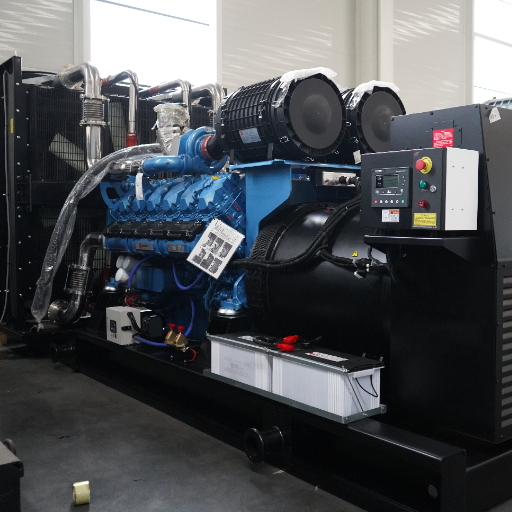
Work through these checks in order. Each one is cheaper than the problems it catches:
- Business license and registration check (free, 1 hour)
- Certification validation with issuing bodies (free, 1 to 2 hours)
- Factory vs. trading company test (free, one video call)
- Engineering specification interrogation (free, technical Q&A)
- Third-party factory audit (300to300to1,500)
- Witnessed Factory Acceptance Test (video or on-site)
- References, payment terms, and red flag review (free)
If a supplier fails any of the first four checks, stop. Don’t spend money on audits for a supplier that can’t survive a desktop review.
Check 1: Verify the Business License and Registration
Every legitimate Chinese company has a business license with an 18-digit Unified Social Credit Code. Ask for a scan of the license, then verify it yourself on the National Enterprise Credit Information Publicity System (gsxt.gov.cn), the official government registry.
Three fields matter most:
- Business scope. This is the single most important line on the license. It must explicitly include manufacturing or production of generator sets. If it lists only “sales,” “trading,” or “import and export,” you are talking to a middleman, regardless of what their website claims.
- Registered capital and establishment date. Compare both against the company’s claims. A “20-year factory” with a license issued in 2023 is a rebrand or a shell.
- Registered address. It should match the factory address you are quoted. A registered address in a downtown office tower paired with a factory address in an industrial zone is a classic trading company pattern.
While you are in the registry, check for court judgments and administrative penalties. A supplier with a trail of contract disputes has already shown you how they handle problems.
Check 2: Validate Certifications Against Issuer Databases
Certificates on a website prove nothing. PDFs are editable, and forged ISO and CE certificates are common enough that verification services treat them as a standard check.
For each certificate a supplier sends you:
- ISO 9001. Ask for the certificate number and the certification body, then confirm it in that body’s online registry. Check that the certified scope covers generator set manufacturing and that the certificate is current.
- CE. Request the Declaration of Conformity and the underlying test reports for the specific model you are ordering. A genuine manufacturer produces these within 48 hours. A supplier who cannot has not tested that configuration.
- OEM authorization letters. If the genset uses a Cummins, Perkins, Weichai, or Yuchai engine, ask for a current-year authorization letter from the engine maker. Expired letters and vague “partnership certificates” do not count.
A manufacturer’s willingness to be checked is itself data. Legitimate factories keep a verification file ready because serious buyers ask for it constantly.Genuine CE certified generator manufacturers keep this paperwork on file and hand it over on request, so treat any delay here as a warning in itself.
Want to see what a complete verification file looks like? [Contact our engineering team] and we will send ours: business license, ISO 9001 and CE documentation, OEM authorizations, and load test reports.
Check 3: Separate the Factory from the Trading Company
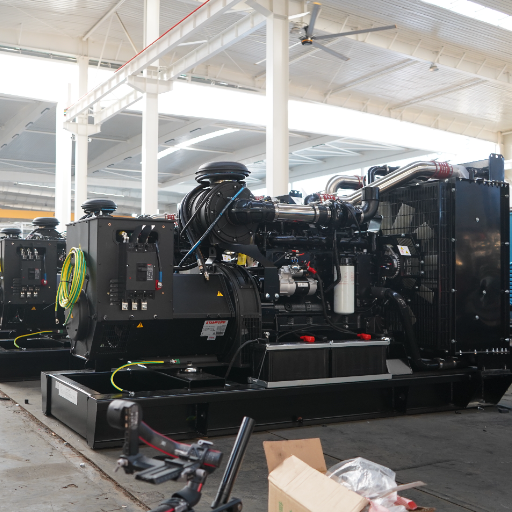
This is the highest-value free check. Research from supplier verification services estimates that in some Alibaba categories, a majority of “manufacturer” listings are actually trading companies. Some are honest brokers. Many are not, and on heavy equipment the difference decides whether you get warranty support in year three.
Two tests verify a Chinese generator manufacturer is what it claims to be.
The live video walkthrough. Ask for a video call and request a walk from the office onto the production floor, right now, showing today’s date on a phone or newspaper next to the equipment. A real factory does this happily; our team fields these requests weekly. A trading company will reschedule, send a pre-recorded “tour,” or show you a showroom.
The 1688 cross-check. Search the company on 1688.com, China’s domestic B2B platform. Real factories almost always have a domestic presence. Suppliers who exist only on export platforms are often export-only brokers.
On the call, look for the three things every working genset factory has: an assembly line (not a warehouse with hand tools), an engine inventory from authorized distributors, and a load bank capable of testing its largest unit. That last item matters more than any other piece of equipment in the building, as Check 6 explains.
Check 4: Interrogate the Engineering Specifications
Generator fraud is usually technical, so your verification should be too. You don’t need to be an electrical engineer to run these three checks.
The kVA versus kW test. Legitimate gensets are rated at a 0.8 power factor, so kW should equal roughly 80% of kVA. If a supplier advertises a “100 kW” unit whose nameplate reads 100 kVA, you are being sold 80 kW, a 25% overstatement. Maria, a facility manager for a cold-storage operator in Chile, learned this after commissioning: her “100 kW” standby unit tripped its breaker every time the compressor bank started. The replacement unit, properly sized, cost her a second procurement cycle and four months.
The winding question. Ask directly: is the alternator 100% copper-wound? Aluminum windings are the industry’s most common cost cut, and they run hotter, fail insulation earlier, and are harder to repair. Reputable builders use copper alternators from Stamford, Leroy-Somer, or equivalent, and will state it in the contract.
The serial number check. Every genuine engine carries a serial number you can verify with the manufacturer. Cummins engines can be checked through QuickServe Online; Perkins serials decode by prefix. Ask for the engine serial before shipment and verify it. A supplier who refuses has told you something important.These three checks are only part of a thorough interrogation. For a complete list of questions to ask a generator manufacturer about specs, serial numbers, and references, keep this framework handy before your next supplier call.
Check 5: Order a Third-Party Chinese Factory Audit
Once a supplier passes your desktop review, commission an on-site audit from SGS, Bureau Veritas, or TÜV. Expect to pay 300to300to1,500 depending on scope, almost always under 5% of a genset order value. It is the cheapest insurance in international procurement.
A proper factory audit verifies what documents cannot:
- Equipment ownership. Auditors check whether production machinery is owned or leased, and whether it matches the claimed capability.
- Workforce reality. Headcount is compared against payroll records, not the sales deck.
- Quality systems. Auditors confirm that ISO procedures are actually practiced on the floor, not just framed on a wall.
- Certification authenticity. Certificates are checked against registrar databases, not photocopies.
Match the service to your stage in the buying process:
| Service | Typical Cost | What It Verifies | When to Use It |
|---|---|---|---|
| Desktop verification report | Around $200 | Registration, litigation history, and tax rating pulled from official Chinese databases | First screening of any new supplier |
| On-site factory audit | 300to300to1,500 | Equipment ownership, workforce, quality systems, certification authenticity | Before a first order over $25,000 |
| Pre-shipment inspection | Varies by order size | The actual goods: serial numbers, nameplate ratings, quantity, packaging | Every order, before the balance payment |
One practical tip, however: give short notice. An audit scheduled three weeks out shows you a rehearsed factory. An audit with 48 hours’ notice shows you the real one. A manufacturer running genuine production lines has nothing to stage.
Check 6: Witness the Factory Acceptance Test
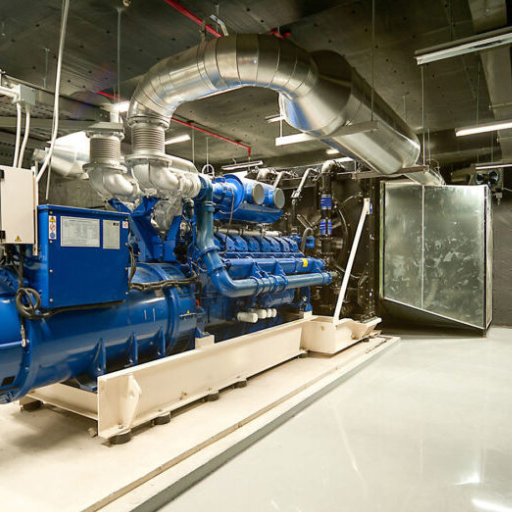
The Factory Acceptance Test (FAT) is where verification becomes physical. Before your genset ships, it should run on a load bank through a stepped protocol: 25% load, then 50%, 75%, and a minimum of 60 minutes at full rated load, finishing with a 110% overload run. Throughout, voltage regulation should hold within ±1% steady-state and frequency within ±0.5%.
You have two options for witnessing it:
- On-site. If you or your agent can attend, do it for first orders over $50,000. You will learn more about a factory in one afternoon on its test bay than in months of email.
- Live video. Ask for a real-time video of the test with calibrated instruments visible on camera, your engine serial number shown, and the test report signed and dated.
Any factory with a national standard testing center treats this as routine, because every unit goes through full-load testing before dispatch anyway. A supplier who hesitates, substitutes a “test report” from a different serial number, or offers only photos is telling you the test never happened.
If the unit fails any step, the purchase contract should require repair and re-testing at the seller’s cost before the balance falls due. Legitimate factories accept this clause without negotiation, because their units pass.
Check 7: Check References, Payment Terms, and Red Flags
The final check covers everything around the machine itself.
References. Ask for three contactable customers in your region who received similar equipment in the last two years. Real exporters have them. “All our clients are confidential” usually means there are none.
Payment structure. For buyers who want to import a generator from China safely, payment terms are the last line of defense. Standard terms are a 30% deposit with the balance against the bill of lading or after FAT. For orders above $100,000, a letter of credit adds bank-enforced document verification. Pay only to a company bank account in mainland China matching the licensed company name. A request to pay a personal account or an offshore entity is the single loudest alarm in Chinese sourcing.
The red flag roundup. Walk away if you see:
- Pricing 15% to 20% below every other quote (the savings come from aluminum windings, thin steel canopies, or refurbished engines)
- Refusal of live video, short-notice audits, or witnessed load tests
- Vague warranty terms; legitimate manufacturers offer 1 year or 1,000 running hours on engine and alternator
- Website photos that appear on multiple unrelated supplier sites
- Pressure to pay the full balance before shipment
Any one of these signs should slow you down, and several together should end the conversation. Our guide on how to spot a low quality generator supplier breaks down each warning sign in more detail so you can catch trouble before your deposit leaves the bank.
What a Transparent Manufacturer Will Hand You
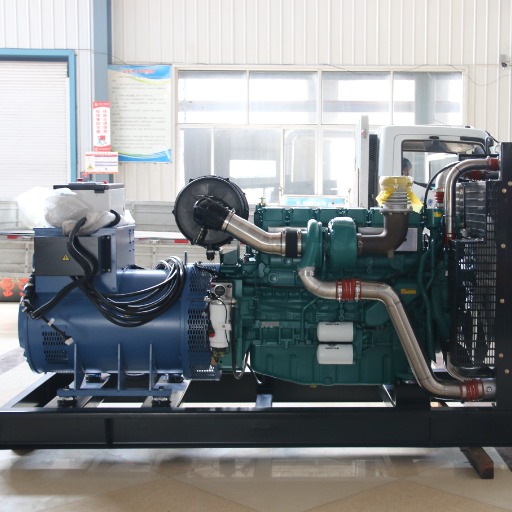
Verification has a flip side: the best factories make it easy. When buyers run these seven checks on us, here is what they find.
Shandong ZC Power CO., LTD. was established in 1999 and operates a 300,000-square-meter manufacturing facility in Jining, Shandong, with a business scope that reads manufacturing, because that is what we do. Our ISO 9001, CE, and CCC documentation verifies against issuer registries. Our OEM relationships with Cummins, Perkins, and Weichai come with current authorization letters. Every genset we build, from 8kVA portables to 4000kVA containerized power stations, passes full load-bank testing in our national standard testing center before it ships. Buyers are welcome to witness it live or on-site.
When a distributor from Nairobi asked for a short-notice video audit last year, our engineers walked the production line with him on a Tuesday afternoon, opened the alternator housing on his 500kW silent unit, and stamped his name and the date on the test report before his deposit cleared. That is what “nothing to hide” looks like in practice.
Frequently Asked Questions
How do I verify a Chinese generator manufacturer?
Verify the business license on gsxt.gov.cn and confirm the registered scope says manufacturing, not trading. Then validate ISO and CE certificates with the issuing bodies, request a live video walkthrough of the production line, check engine serial numbers with the manufacturer, and witness a full load-bank test before paying the balance.
Is it safe to buy a diesel generator from China?
Yes, provided you verify the supplier first. China has thousands of legitimate generator factories exporting worldwide. The risk comes from skipping verification: trading companies posing as factories, counterfeit engines, and overstated power ratings. Buyers who run the seven checks in this guide routinely source reliable equipment at factory-direct prices.
How much does a factory audit in China cost?
A third-party factory audit from SGS, Bureau Veritas, or TÜV typically costs 300 to 300 to 1,500, depending on scope and location. A basic desktop verification report starts around $200. For most generator orders, the audit fee comes to less than 5% of the order value.
What is a factory acceptance test for a generator?
A factory acceptance test (FAT) runs your genset on a load bank before shipment, stepping from 25% up to 100% of rated output, plus a 110% overload run. Passing units hold voltage regulation within ±1% and frequency within ±0.5%. You can witness the test on-site or via live video.
How can I tell if a Chinese supplier is a factory or a trading company?
Check three things. First, the business license scope must say manufacturing. Second, ask for a live video walkthrough of the production floor; trading companies cannot do this. Third, search the company on 1688.com, China’s domestic B2B platform, where real factories almost always maintain a presence.
Conclusion: Verify First, Then Buy With Confidence
Verifying a Chinese generator factory is not complicated; it is sequential. Run the free desktop checks first: the business license on gsxt.gov.cn, certification registries, the live video walkthrough, and the kVA math. Then escalate to a third-party audit and a witnessed Factory Acceptance Test for anything you cannot confirm remotely. Suppliers who pass all seven checks, and there are many good ones, earn your deposit. Suppliers who fail the free ones never deserved it.
The result is what every international buyer actually wants: factory-direct pricing on a machine that delivers its rated power, backed by engineers who will still answer in year five.