Generator Warranty and After-Sales Support: The International Buyer’s Guide
A standard diesel generator warranty covers 12 months or 1,000 running hours, whichever comes first, across the engine, alternator, and controller. Whether it actually pays out depends on three things: who honors it (manufacturer or middleman), how coverage degrades after year one, and what documentation you kept from day one.
Here is the blunt version: a five-year warranty you cannot claim is worth less than a one-year warranty you can. The difference is never the document. It is the process, the parts stock, and the proof you kept.
If you are evaluating generator suppliers right now, you have probably noticed that every quote promises strong warranty and after-sales support, and almost none of them define it. You are right to push past the headline number. This guide explains what standard generator warranty terms really cover, how coverage quietly shrinks over time, what voids it entirely, and the part no other guide writes: how warranty claims actually work when your supplier is 8,000 km away. We write this from the side that pays claims. Shandong ZC Power CO., LTD. has honored warranties across more than 50 countries since 1999, with claims handled directly by the engineers who built the machines.
Key Takeaways
- The industry benchmark is 12 months or 1,000 running hours, whichever comes first. Application matters: standby units often carry longer calendar terms (e.g., 2 years/1,000 hours) than prime-rated units (e.g., 1 year/3,000 hours).
- Coverage degrades: parts typically stay covered, but labor, travel, and freight commonly drop off after years 1-2. Consumables are never covered.
- The fastest ways to void coverage: missing service records, off-spec fuel (biodiesel above approved blends), running a standby-rated unit as prime power, and unauthorized repairs or non-OEM parts.
- On imported generators, clarify who pays freight and customs on warranty parts before you sign; that single line decides whether a claim saves you money or costs more than the repair.
- Test after-sales support before you buy: email a hypothetical fault to shortlisted suppliers and score their response. A 3-year warranty with a 24-hour response SLA beats a 5-year warranty with undefined commitments.
What a Standard Generator Warranty Actually Covers
The 12-Month / 1,000-Hour Benchmark
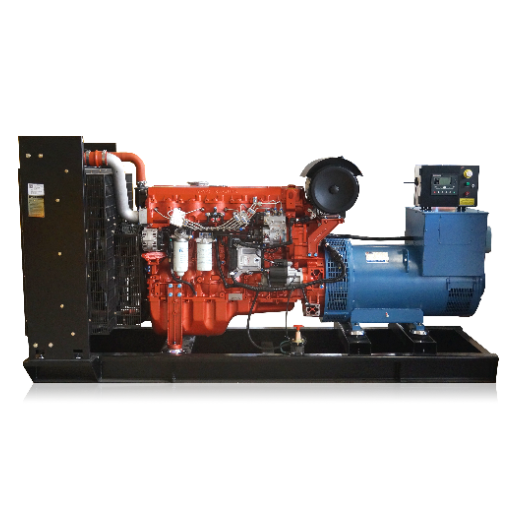
Across the industrial generator industry, the baseline warranty is 12 months or 1,000 running hours, whichever arrives first, covering defects in the engine, alternator, and control system. Premium manufacturers extend to 2-5 years on paper, but duration alone tells you little. As Powerpack’s warranty analysis puts it, a warranty that can actually be applied for one year is worth more than a five-year warranty that cannot be applied at all.
Two details deserve attention in any quote. First, the start date: does coverage begin at shipment, at delivery, or at commissioning? On an import with 30 days of sea freight, a shipment-start warranty quietly costs you a month. Second, component terms: the engine OEM, the alternator maker, and the genset assembler may each carry separate warranties with separate claim channels. Ask which entity you actually claim against.
Standby vs Prime: Same Engine, Different Warranty
Duty rating changes the warranty, not just the price. Manufacturers assign harder-working units different terms, because prime power engines accumulate hours far faster. A real manufacturer example, from Pramac’s published warranty statement:
| Application | Typical Term | Why |
|---|---|---|
| Standby (ESP) | 2 years / 1,000 hours | Limited annual runtime; emergencies only |
| Prime (PRP) | 1 year / 3,000 hours | Continuous variable load; hours accumulate fast |
| Continuous (COP) | 1 year, hour-capped | Constant full load; shortest calendar coverage |
If a quote offers identical warranty terms for standby and prime applications, read the fine print twice. Either the terms are marketing, or someone has not thought about your duty cycle.
How Warranty Coverage Degrades Over Time
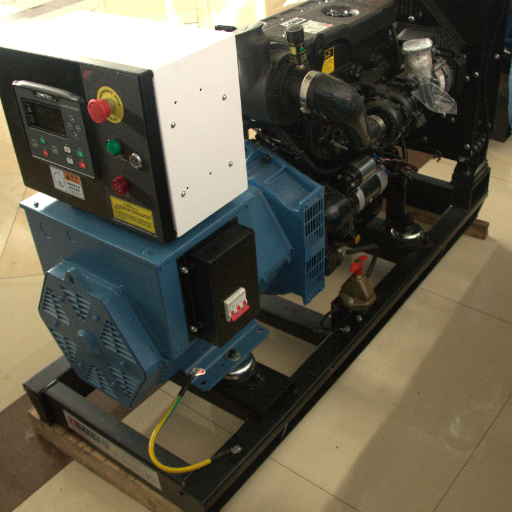
The pattern across multi-year warranties is consistent: the headline duration stays flat while the coverage shrinks underneath it.
| Coverage Element | Years 1-2 | Year 3+ |
|---|---|---|
| Parts | Covered | Usually covered |
| Labor | Covered | Buyer pays |
| Travel / service calls | Covered | Buyer pays |
| Freight on parts | Varies; often covered | Buyer pays |
| Consumables (oil, filters, belts, batteries) | Never covered | Never covered |
This is precisely where “extended warranties” often prove to be of little practical value. Bernard, a distributor in East Africa, sold a generator set to a commercial client that came with a five-year warranty from the supplier. In the third year, the unit required repairs costing $4,000 due to an alternator failure. However, the actual payout under the warranty terms was zero: while the cost of replacement parts was covered, labor, technician travel, and shipping costs were excluded after the second year; furthermore, the client was required to order parts through the supplier, who took a full ten weeks just to ship them. Ultimately, while the promise of a “five-year warranty” was technically honored, the client did not actually save on the repair costs.
The lesson is not that long warranties are worthless. It is that you must read what survives into the later years, and weigh the whole picture: purchase price is only 15-30% of a generator’s lifetime cost, and downtime routinely costs three to five times the maintenance bill.
What Voids a Generator Warranty
Based on Turnkey Industries’ breakdown of warranty voids and the exclusions manufacturers enforce, these are the eight coverage killers:
- Missing service records. Delayed maintenance without documented logs is the most common claim denial.
- Off-spec or contaminated fuel. Biodiesel above approved blends (typically B5 to B20, engine-dependent) can void fuel-system coverage.
- Duty-cycle abuse. Running a standby-rated unit as prime power voids coverage and shortens engine life simultaneously.
- Ignored derating. Operating above rated capacity for your altitude or ambient temperature.
- Unauthorized repairs. Work by non-certified technicians, or repairs started before written pre-approval.
- Non-OEM parts. Pattern parts fitted during the warranty period.
- Installation faults. Poor ventilation, incorrect cabling, missing protection devices.
- External events. Flood, fire, lightning, and transport damage fall to insurance, not warranty.
Notice how many of these are documentation problems rather than mechanical ones. The service logbook is a warranty document, not a maintenance nicety.
The Cross-Border Reality: Warranties on Imported Generators
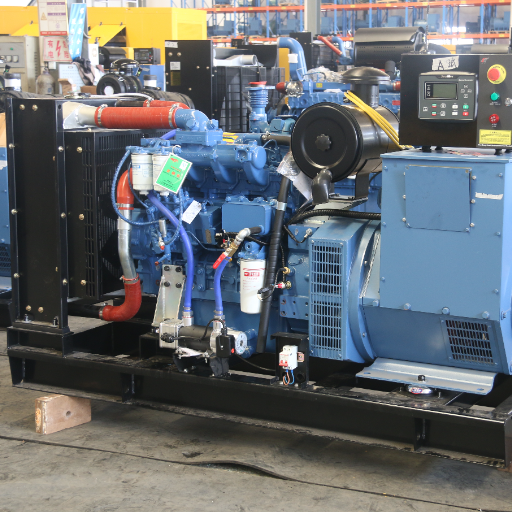
Domestic warranty guides stop at the service van down the road. If you import your generator, the claim crosses an ocean, and three questions decide whether your warranty has practical value.
Who Pays What on an International Claim
| Cost Element | Typical Division | Question to Lock Down |
|---|---|---|
| Replacement part | Manufacturer | Genuine OEM part, confirmed by serial? |
| Part freight | Varies widely | Air or sea? Who pays, and what is the dispatch SLA? |
| Customs duty on parts | Usually buyer | Can parts ship as warranty replacements at reduced/no duty in your country? |
| Labor | Usually buyer after years 1-2 | Is remote engineering guidance included free? |
| Technician travel | Almost always buyer | Is on-site support available at all, and at what day rate? |
None of these divisions is unfair by itself. What matters is that they are written into your contract before purchase, not discovered during a breakdown.
Proving Your Case from 8,000 km Away
A manufacturer across the world cannot inspect your site. Your evidence does the traveling. Keep this claim-readiness pack from the day the unit arrives:
- Commissioning report with date, load test results, and installer details
- Service logs with dates, hour readings, and parts used for every maintenance event
- Hour-meter photographs taken at each service
- Fuel and oil records, including fuel specification where possible
- Serial number photos of the engine, alternator, and controller at delivery
- The purchase contract and warranty document, filed where more than one person can find them
For the exact steps and parameters involved, our generator load bank testing procedure guide explains what a proper FAT report should contain, so your commissioning file starts with evidence a manufacturer can act on.
Ngozi, a facility manager at a bottling plant, filed a controller failure claim nine months after delivery. Because her team had the commissioning report, timestamped hour-meter photos, and complete service logs, the manufacturer approved the claim in four days and air-shipped the replacement controller; the plant was back to full redundancy on day nine. A parallel claim at a sister site, same unit, no records, spent six weeks in dispute and was eventually denied on maintenance-documentation grounds. Same machine, same fault, opposite outcomes. The difference was a folder.
The Claim Process Step by Step
Industry-standard claim processing runs 2-8 weeks. A good cross-border process looks like this:
- Fault report: you submit symptoms, serial numbers, hour reading, and photo/video evidence
- Remote diagnosis: the manufacturer’s engineers confirm the fault class and rule out operating causes (this is where your documentation pack earns its keep)
- Written pre-approval: the manufacturer authorizes the repair scope in writing before work begins
- Parts dispatch: genuine parts ship against the approval, with a stated dispatch SLA
- Repair and verification: the repair is completed, documented, and closed out with the manufacturer
Ask any shortlisted supplier to describe these steps, with timelines, in writing. Vague answers here predict slow claims later. The full context of what a competent factory handles after delivery, from commissioning guidance to parts channels, is in Step 7 of our guide to importing generators from China.
Spare Parts: The After-Sales Support That Matters Most
Warranties expire. Parts needs do not. A 20-year genset will need filters, belts, sensors, controllers, and eventually overhaul components long after any warranty ends, which makes the parts pipeline the truest measure of generator after-sales support.
Evaluate four things. First, genuine parts inventory: does the supplier stock what they sell, with authenticity you can verify against counterfeit risk? Second, supply horizon: serious manufacturers commit to parts availability for 10 years or more per model. Third, dispatch speed: for a standby unit protecting a hospital, a part that ships in 24 hours by air and a part that ships in six weeks by sea are different products. Fourth, identification support: can the supplier identify the correct part from your serial number, because they retain your build records? Distributors should also ask about parts-stocking programs; our OEM diesel generator sourcing guide covers how parts supply fits distributor partnerships.
This is the structural argument for buying from the factory. A trading company has no warehouse, no build records, and no engineers. When the unit fails, your email gets forwarded to a supplier you have never met.For a full breakdown of what a genuine diesel generator set manufacturer looks like, from certifications to in-house testing, see our dedicated guide before you weigh any warranty claim.
The Pre-Purchase Claim Test
Here is a supplier-evaluation tool that costs one email. Before you sign, send each shortlisted supplier a hypothetical fault: “Our 100kVA unit shows an AVR fault code after 400 hours. Walk me through exactly how your warranty claim process would handle this, with timelines.”
Then score the answers on three axes: response time (hours or days?), technical depth (did an engineer answer or a sales rep?), and process clarity (named steps, documents, and SLAs, or “don’t worry, we will take care of you”?). Felipe, a distributor in Chile, ran exactly this test on three suppliers in 2025. One replied in four hours with a numbered procedure and a named contact. Two never replied at all. He told us the test predicted his first year of support experience almost perfectly.
The logic is simple: a supplier’s best behavior is the behavior they show a prospect holding money. If the pre-sale answer is slow or vague, the post-sale answer will be worse. As the Alibaba B2B warranty guide notes, a 3-year warranty with a 24-hour response SLA routinely outperforms a 5-year warranty with undefined commitments.
10 Warranty Questions to Ask Before You Sign
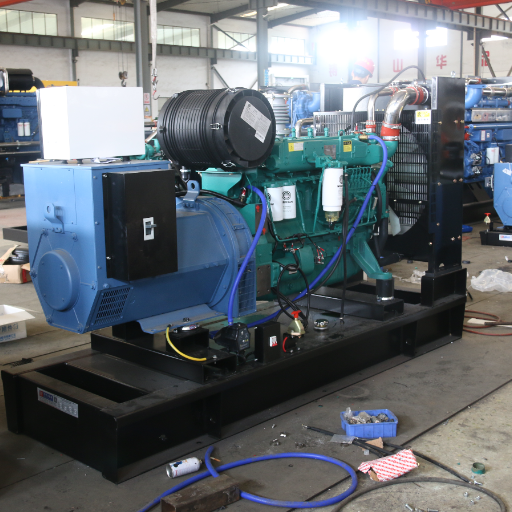
- What is the warranty period and the running-hour limit, and exactly when does coverage start?
- Do standby and prime applications carry different terms on this unit?
- Are engine, alternator, and genset warranties separate, and who do I claim against for each?
- What maintenance intervals, oils, and parts are required to keep coverage valid?
- Which documents must I produce for a claim, and what is the standard processing time?
- Are labor, travel, and freight covered, and for how many years?
- Who pays customs duty and freight on warranty replacement parts to my country?
- Is written pre-approval required before repairs begin?
- Is there a service partner or parts stock in my region, and what is the parts dispatch SLA?
- Is the warranty transferable if I resell the unit, and does that transfer survive rebranding?
Get the answers in writing. A supplier who puts these ten answers on paper is a supplier whose warranty means something.
Frequently Asked Questions
What does 1 year / 1,000 hours actually mean?
Coverage ends at whichever limit arrives first: 12 calendar months or 1,000 running hours. A standby unit running 200 hours per year uses the full year; a prime-power unit may burn 1,000 hours in eight weeks of continuous operation. Always evaluate both numbers against your expected duty cycle.
Is a longer generator warranty better?
Not by itself. Coverage typically degrades after years 1-2, with labor, travel, and freight dropping off while parts continue. A 3-year warranty with a defined 24-hour response SLA and clear claim process usually delivers more value than a 5-year warranty with undefined terms.
Does a generator warranty cover labor and shipping?
Usually only in the first one to two years, and freight coverage varies widely on international sales. Consumables like oil, filters, belts, and batteries are almost never covered. Confirm the labor, travel, freight, and customs division in writing before purchase.
Is a generator warranty transferable if I resell the unit?
Sometimes, but never assume it. Transferability matters especially for distributors, and rebranding a unit under your own name can change your legal role entirely. Ask for the transfer terms in writing, and check whether the component OEM warranties (engine, alternator) transfer separately from the genset warranty.
What should I do before filing a warranty claim?
Assemble your evidence first: serial numbers, current hour-meter photo, the fault symptoms in photos or video, your service logs, and the commissioning report. Then contact the manufacturer for remote diagnosis and written pre-approval before any repair work begins, since unauthorized repairs can void the claim itself.
A Warranty Is a Process, Not a Promise
Generator warranty and after-sales support look identical on quotation letters and diverge completely at the first fault. The suppliers worth paying are the ones who can show you the machinery behind the promise: defined claim steps with timelines, a parts pipeline measured in hours and years, and contract language that answers the ten questions above without hedging.
Your next step costs nothing: run the pre-purchase claim test on your shortlist, and ask each supplier for their warranty terms and claim procedure in writing. What comes back, and how fast, tells you most of what you need to know.
Shandong ZC Power CO., LTD. backs every genset with a 1-year/1,000-hour factory warranty honored directly by the manufacturer: no middlemen, genuine OEM parts air-shipped against written approvals, build records retained per unit, and a lifetime parts supply commitment supported by 80+ engineers across more than 50 export countries.
Read our warranty before you read our price list. Request our warranty terms and claim procedure with any quotation, and judge us by the same standard this guide teaches.