Natural Gas vs Propane Generator: Which Fuel Is Better?
If a natural gas pipeline serves your site, natural gas is the better fuel: it costs roughly half as much per kilowatt-hour and runs for as long as the line stays pressurized. If no pipeline exists, propane wins because it is stored on site and does not depend on a utility connection at all. The supply question comes before the fuel question, and that is the part most natural gas vs propane generator comparisons get backwards.
Buyers usually open with cost or cleanliness, and both are red herrings until they answer one question: can my site get utility gas? A hospital with a main line down the street should burn natural gas. A remote telecom tower, a farm, or a market without gas utilities should look at propane or diesel. This guide compares supply, fuel cost, power output, runtime, and cold-weather reliability, so you can pick for your actual site.
Key Takeaways
- The deciding factor is supply: with a pipeline, natural gas wins on fuel cost and unlimited runtime; without one, propane’s on-site storage wins.
- The same genset makes roughly 10 to 17 percent more power on propane than on natural gas, so size for the fuel you will actually burn.
- Natural gas runs as long as the line is pressurized. A propane tank is finite: a 500-gallon tank is roughly 60 to 80 hours at full load on a standby-scale unit.
- Propane vaporization slows sharply in cold weather. In cold climates, size the tank and bury it so it can vaporize fast enough at zero degrees.
- Most gas gensets are NG/LP-capable, but a real conversion means regulator, jet, and controller changes, not a casual fuel swap.
- Newer gensets run natural gas primary and auto-switch to a propane backup tank if line pressure drops.
Natural Gas vs Propane Generator: The Honest Short Answer
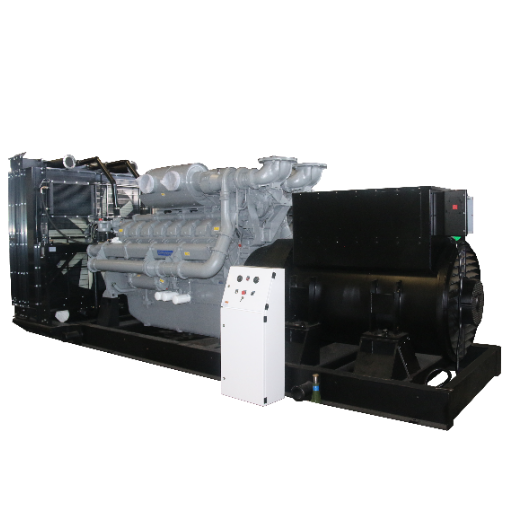
Natural gas is a utility fuel delivered by pipe. Propane is a stored fuel delivered by truck. Everything else in this comparison flows from that difference.
| Factor | Natural gas | Propane (LP) |
|---|---|---|
| Fuel supply | Utility pipeline | On-site tank, truck delivery |
| Fuel cost per kWh | Lower (about 40-60% less than propane) | Higher, varies with the market |
| Power output | The same genset makes ~10-17% less than on propane | Higher energy density, more kW |
| Runtime | Unlimited while the line is pressurized | Bounded by tank size |
| Cold weather | No fuel-supply limit | Vaporization slows as temperature drops |
| Storage | None needed | Tank required (bought or leased) |
| Best for | Connected sites, long or continuous runs | Off-pipeline sites, fuel independence |
So the short answer is not “natural gas is better” or “propane is better.” It is: whichever fuel your site can actually feed is the one that keeps the lights on.
The Question Before the Question: Do You Have a Pipeline?
Everything hinges on gas availability, so answer that first.
Where Natural Gas Wins: The Connected Site
If a natural gas main runs past the property, the case for utility gas is strong. You pay only for what you burn, with no tank to buy or lease, no delivery to schedule, and no fuel inventory to track. Fuel cost per kilowatt-hour is reliably lower than propane and stays flat regardless of load.
Natural gas also removes the biggest operational headache of a backup fleet: refueling. A genset on a live line can run through a week-long outage without anyone touching it, which is why grid-connected hospitals, data centers, and manufacturing plants choose it when it is available. It is the closest a backup system gets to unlimited fuel.
Where Propane Wins: The Off-Pipeline Site
No gas main means the choice is usually propane or diesel, and propane has real advantages for many of those sites. It stores indefinitely without the degradation that plagues diesel left in a tank for years; it burns cleaner, and a properly sized tank gives the site fuel independence: the generator answers only to its own inventory, not to a utility’s grid or pipeline.
That independence matters most exactly when the grid fails, which is also when gas utilities sometimes go down. If the pipeline loses pressure during an ice storm or an earthquake, a gas genset stops. A propane genset keeps running as long as the tank has fuel.
The Global View: This Comparison Looks Different Outside the US
Most of what ranks for this query assumes a US utility main at the property line, an assumption that does not survive export. Across Africa, the Middle East, and Southeast Asia, many buyers cannot get utility gas at all, so the real comparison is LPG versus diesel, and LPG delivery is far more established than gas pipelines in most developing markets. There, propane gensets offer the clean-burning middle path between diesel reliability and gas emissions.
Wondering how the gas decision interacts with diesel? Our [complete natural gas generators guide] walks the full three-fuel picture, and [contact the ZC Power engineering team] for a fuel-supply review before you commit to a configuration.
Fuel Cost: Where the Two Gases Really Diverge
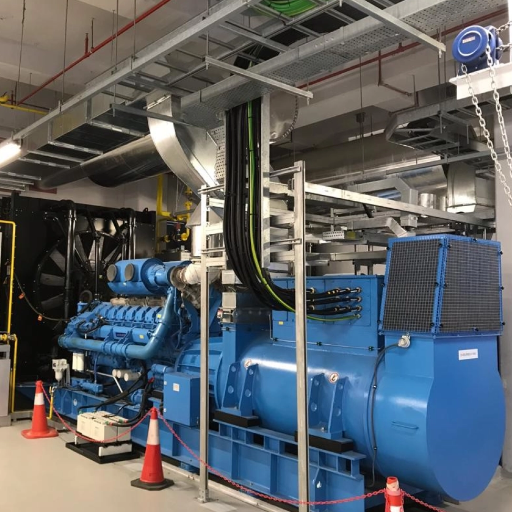
In terms of unit energy price, natural gas is almost invariably the cheaper fuel in areas with pipeline access. Based on projected average U.S. prices for 2025, natural gas costs approximately $0.20 per kilowatt-hour, whereas bulk propane costs around $0.45 per kilowatt-hour—a price gap that widens further when purchasing propane in small cylinders. Regional analyses indicate that, for an equivalent energy output, the cost of natural gas is only about 40% that of propane.
If annual operating hours are low, the cost difference between the two is negligible: for a standby unit running just 16 hours a year, the cost is approximately $16 using natural gas versus $36 using bulk propane. However, for primary or continuous operation, this cost gap becomes significant: for a facility operating 4,000 hours annually, the fuel cost difference—which can reach up to 50%—is substantial enough to offset a significant portion of the equipment investment. The longer the equipment operates, the more the lower per-kWh price of natural gas translates into significant value.
The trade is straightforward. Propane buyers pay more per unit of energy in exchange for fuel independence and zero reliance on utility infrastructure. Natural gas buyers get the cheaper, cleaner fuel but rent their energy security from the pipeline company. On a low-hours standby site, that trade barely moves the budget. On a prime-power site, fuel cost decides the fuel.
Power Output: Why the Same Generator Makes More on Propane
The two fuels are not energy equivalents, and it shows on the nameplate. Propane is roughly 2.5 times more energy-dense per cubic foot than natural gas, about 2,500 BTU per cubic foot versus 1,000 to 1,030, with liquid propane packing about 91,500 BTU per gallon, per the Briggs & Stratton fuel comparison. More energy per intake means more power from the same engine, which is why manufacturers rate a genset for the richer fuel and derate it for the leaner one.
Practically, the same generator makes roughly 10 to 17 percent more kilowatts on propane than on natural gas. A Kohler 14RCAL carries a 14 kW propane rating and a 12 kW natural gas rating, and a Generac dual-fuel 10 kW unit delivers 10 kW on LP but 9 kW on natural gas. On larger industrial gas engines the gap can be bigger still, which is exactly the trap that catches buyers who size on the higher nameplate.
Jorge, a facilities manager for a food-processing plant in New Jersey, specced a gas genset off the manufacturer’s propane rating because the number looked better on paper. The site was on natural gas. When the unit was commissioned, the building load he had sized at the LP figure was a thin margin at the natural gas rating, and he spent three weeks re-sequencing freezer loads to stay under the real number. The fix was straightforward after the fact: size a gas genset for the fuel the site will actually burn, never for the richer one.
So if your site is on natural gas, request quotes and performance data at the natural gas rating, not the propane nameplate. That is the number that has to cover your load.
Runtime and Storage: The Pipeline Versus the Tank
The runtime question follows supply. Natural gas is effectively unlimited while the line stays pressurized, which is why it is the default for facilities that need days of backup or prime power. A generator on a live line does not stop for fuel; the limits are the engine’s maintenance intervals, not its tank. See the full duty-rating picture in [how long can a natural gas generator run].
Propane is different. Runtime is a function of tank size and load. A home-standby-scale unit on a 500-gallon tank runs roughly 60 to 80 hours at full load before needing a refill, and industrial units scale the tank accordingly. The operational consequence is a delivery schedule: propane sites track tank level, order before storm season, and sometimes watch deliveries back up exactly when an outage makes everyone want fuel at once.
Propane’s compensating strength is shelf life. Diesel degrades in the tank and goes bad within about a year; propane does not, which makes it a natural fit for standby units that sit idle for months. A full propane tank is, in effect, a charged battery, ready the moment the grid drops.
The honest planning question for a propane site is not “which fuel” but “how long is the longest outage I must survive, and is my tank sized for it?” A tank sized for 72 hours is a real problem in a region where a storm can interrupt delivery for two weeks.
Cold Weather and Propane Vaporization: The Hidden Limit
The engineering catch most comparisons skip is that propane does not reach the engine as a liquid. It sits in the tank as a pressurized liquid, boils into vapor above it, and the generator draws that vapor. Boiling is endothermic: it consumes heat from the tank walls and the surrounding air. In cold weather there is less heat available, so the vaporization rate drops, and a generator that demands propane faster than the tank can boil it will starve, surge, and stall.
The numbers are stark. For an above-ground ASME tank, the maximum intermittent vapor draw falls steeply with temperature, per the LP-Gas Serviceman’s Handbook tables:
| Tank size | Max vapor draw at 40°F | Max vapor draw at 0°F | Max vapor draw at -20°F |
|---|---|---|---|
| 500 gallons | ~478,800 BTU/hr | ~300,100 BTU/hr | ~242,300 BTU/hr |
| 1,000 gallons | ~852,800 BTU/hr | ~534,500 BTU/hr | ~431,600 BTU/hr |
The visible warning is frost. When the tank or regulator frosts at the liquid line, the system is telling you it cannot vaporize fuel fast enough.
The fixes all come down to giving the tank more heat-exchange surface:
- Keep the tank full. Only the wetted area transfers heat, so a full tank vaporizes faster than a half-empty one.
- Go bigger, or bury it. A larger tank has more surface area, and buried tanks draw on warmer ground.
- Spec a liquid-withdrawal vaporizer in severe climates. It draws liquid and boils it in a coolant-heated vaporizer that a water-cooled engine can supply.
- Buy winter-grade propane. Summer fill can carry butane, which has little vapor pressure below about 40°F.
Natural gas has none of these constraints, which is a real cold-climate advantage for connected sites.
A dairy operation in Wisconsin learned this the hard way. Its propane-fed standby ran off a 500-gallon above-ground tank, sized for normal winter days. One February night, with the tank below half and the temperature at minus 15, the generator surged and stalled mid-outage, frost ringed at the tank’s liquid line. The fix was not a bigger engine. It was a buried 1,000-gallon tank that kept the wetted area high and the vaporization rate steady in the cold.
Can a Natural Gas Generator Run on Propane?
Yes, on most gas gensets, and the reverse is usually true too. Most gas generator engines burn either fuel, since the two are close enough that one engine platform covers both. The trouble starts when you run the wrong fuel through a system tuned for the other, because the two gases carry very different energy per volume.
A factory natural gas unit is set up with a regulator, gas jets, and a controller profile tuned to natural gas. Propane needs a different jet or orifice, a different regulator pressure, and often a different engine control profile, because Generac’s guidance makes clear that pipe sizing, fuel pressure, and BTU calculations all change between the two fuels. Some units are field-convertible with a selector valve and a controller setting, which a licensed technician can do in an afternoon. Others need a full conversion kit.
What you should not do is switch fuels casually or feed propane into a natural gas setup without conversion. Propane burns with roughly 2.5 times the energy per cubic foot, so a gas-tuned engine fed raw propane runs dangerously hot and lean. Casual switching demands purging, leak testing, and reverification by someone qualified, and the Briggs & Stratton owner’s manual voids the warranty if anyone makes permanent fuel connections other than a licensed installer.
If you think you might ever want both fuels, the clean answer is to spec an NG/LP-capable genset from the factory, set for your primary fuel, with the conversion hardware and controller profile for the second fuel documented in the manual. That is different from a dual-fuel generator that runs on diesel plus natural gas; for the pure-gas pair, the unit is one engine that burns gas, and the conversion is about tuning, not about adding a second fuel system.
The Emerging Option: Auto-Switchover NG With Propane Backup
The newest answer to the pipeline-reliability objection is a genset that does not make you choose at all. Manufacturers now ship gas gensets connected to both the natural gas line and a propane tank, run on natural gas as the primary fuel, and automatically switch to the propane tank when line pressure drops, switching back when the pipeline recovers. Caterpillar’s new 20 to 200 kW gas gensets do exactly this, carrying a roughly 24-hour propane buffer and EPA certification for both emergency and non-emergency duty.
This is the natural gas equivalent of the diesel dual-fuel insurance story. A facility that cannot afford the fuel to fail, a data center or a hospital in a storm corridor, gets the low operating cost of utility gas every normal day and stored fuel the moment the line drops. The propane tank stops being the fuel and becomes the reserve, which is exactly where stored fuel is most valuable.
For a buyer choosing between the two fuels, the auto-switchover unit reframes the decision: you no longer bet the whole site on the pipeline. You pick natural gas for its economics and carry propane as a modest insurance premium. If you need the same insurance against a diesel-fuel disruption instead, our [dual fuel generator] guide covers the diesel-and-gas configuration.
The Decision Checklist: Which Fuel Fits Your Site?
By now the comparison should resolve into a short checklist rather than a fuel debate. Run your site through it.
- Is a natural gas main available at the property line? Yes, natural gas is the default for its cost and unlimited runtime. No: propane or diesel.
- What is the longest outage you must survive, and can a tank cover it? A propane site lives or dies by tank size and delivery reliability in a crisis.
- How many hours a year will the generator actually run? Low hours, standby: fuel cost barely matters; choose for convenience. High hours or prime duty: natural gas’s cheaper per-kWh wins if it is available.
- Does the site get genuinely cold? If propane, bury the tank or size it for the coldest expected temperature, not the average.
- Could the gas utility lose pressure in a disaster? If the answer is yes and the load is critical, look at NG-with-propane auto-switchover or diesel.
- What does the local market actually supply? In many export markets LPG is ubiquitous and utility gas is not. Buy what your region can reliably deliver, not what a US comparison recommends.
Where does diesel fit in? It remains the strongest for the largest load steps and total fuel independence, which is why our [natural gas vs diesel generator] comparison still matters even once you have read this one. But between the two gases, the pattern is consistent: natural gas for connected, high-run-time sites; propane for off-pipeline and cold-but-managed sites; and a tank as backup for sites that cannot afford either to fail.
Frequently Asked Questions
Can a natural gas generator run on propane?
Yes, on most gas gensets, after conversion. Natural gas and propane need different jets, regulator pressure, and controller settings, and propane carries about 2.5 times the energy per cubic foot, so a licensed technician must retune the unit. Never feed propane into an unconverted natural gas setup.
Is propane cheaper than natural gas for a generator?
No. Based on average U.S. data for 2025, the cost of natural gas is approximately $0.20 per kilowatt-hour, whereas bulk propane is around $0.45 per kilowatt-hour. The advantage of propane lies in fuel independence and on-site storage capability, rather than price.
How much propane does a generator use per hour?
It depends on the unit and the load. A 10 kW generator at full load burns roughly 2 gallons of propane per hour, and a 500-gallon tank covers roughly 60 to 80 hours at that scale.
Which is better for cold weather, natural gas or propane?
Natural gas, because it has no fuel-supply limit in the cold. Propane vaporizes more slowly as temperature drops, and an undersized, above-ground, or half-empty tank can stall a generator at zero degrees. Buried tanks and liquid-withdrawal vaporizers solve it, but they cost money.
What is the difference between a natural gas generator and a propane generator?
Often the engine is the same. The difference is the fuel supply and system: natural gas units draw from a pipeline at lower regulated pressure, while propane units draw vapor from a pressurized tank and need a higher-pressure regulator and different jets. Ratings differ too, with most gensets making more power on propane.
Natural Gas vs Propane Generator: Decide by Supply First
The natural gas vs propane generator question has a clean answer once you stop asking it backwards. If a pipeline serves your site, natural gas delivers the lower fuel cost and the closest thing to unlimited runtime a generator can have, with propane only as an optional backup. If no line exists, propane delivers stored, clean-burning independence that diesel cannot match on emissions or shelf life, at the price of tank management and colder-weather engineering.
The three honest catches worth remembering: size a gas genset for the fuel you will actually burn, because the propane nameplate is roughly 10 to 17 percent higher; in cold climates, size and place the propane tank for the coldest night, not the average one; and treat fuel conversion as real engineering work, never as a casual swap.
Now check the property line. That answers the question faster than any spec sheet. [Contact the ZC Power engineering team] when you are ready to spec a gas or LPG genset around the fuel your site can actually feed, and we will build the fuel system to match.