Generator Battery Charger: Types, Sizing and Maintenance
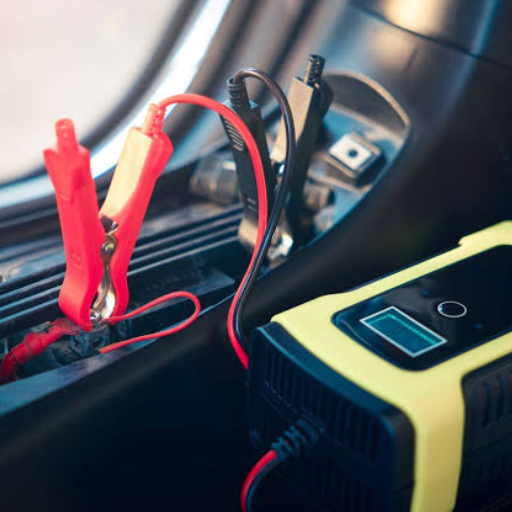
A generator battery charger is an AC-powered unit that keeps a genset’s starting battery charged while the set is sitting idle. That is its whole job, and it is a job the engine’s own alternator cannot do, because an alternator only charges while the engine is running.
On a standby set, sitting idle is almost all the machine ever does. So the charger, not the alternator, is what keeps the set ready to start. When it fails, nothing announces it. The battery simply goes flat, and the failure is discovered the first time the power goes out and the generator does not start.
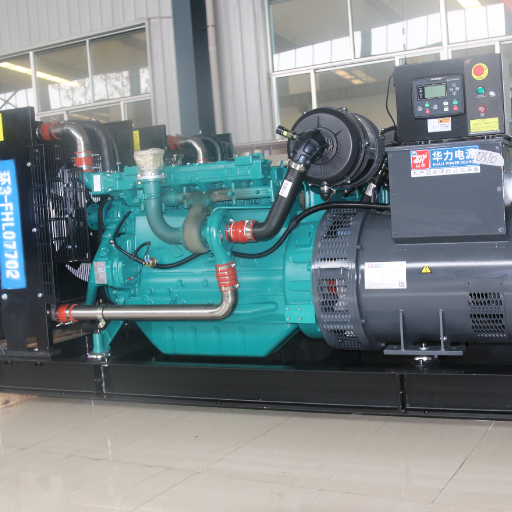
Most facilities learn this the hard way. At ZC Power we build generator sets from 8 kVA to 4000 kVA, and the DC starting system is one of the parts we watch most closely in commissioning, because it is quiet, cheap to get wrong, and entirely responsible for whether the set starts at all.
This guide covers the types of chargers used on generator sets, how three-stage charging works, how to size a charger to both the battery and the compliance requirement, and the one failure mode that quietly destroys batteries for years before anyone spots it.
Key Takeaways
- A generator battery charger maintains the starting battery while the set is idle, which the engine alternator cannot do. It runs from AC, mains or generator supply.
- Float, trickle and multistage chargers are not the same thing. A trickle charger holds a roughly constant current and can overcharge; a float charger holds a regulated voltage and self-limits; multistage chargers do both in sequence.
- Float voltage depends on battery chemistry. Flooded lead-acid, AGM and gel each want a different set-point, and equalizing an AGM or gel battery damages it.
- Size the charger from the recharge requirement plus the DC auxiliary load, not from the battery’s amp-hour rating alone. Auxiliary loads above the charger’s float current cause permanent overcharging.
- The charger is also a load on the generator. It draws AC continuously, so it belongs in the load calculation like any other sustained demand.
If your concern is the wider maintenance picture rather than the charger alone, our guide to heavy-duty diesel generator maintenance puts the charging system in the context of the full service schedule.
What a Generator Battery Charger Does
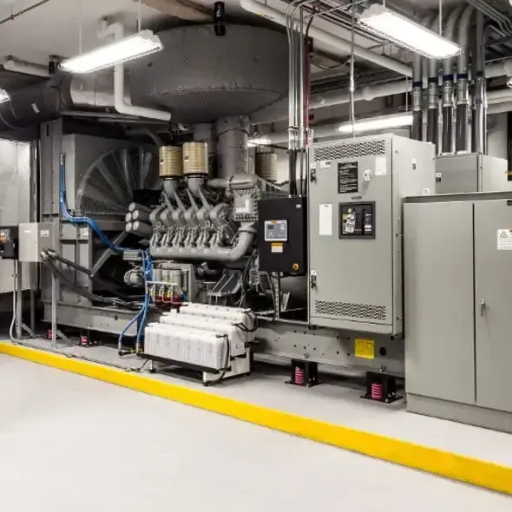
A genset has two electrical systems, and they are easy to confuse. The AC side is what the machine produces: the alternator generates, the control panel manages, the breaker protects. The DC side is what starts it: a lead-acid starting battery, a starter motor, and the control electronics.
The starting battery is not a convenience. It is what turns a stationary machine into a working one. Everything downstream, including the AC output the site depends on, is contingent on that battery having enough charge to crank the engine.
The DC Starting System on a Genset
The DC side is small and simple, which is exactly why it gets neglected. It consists of:
- A starting battery, typically 12 V on smaller sets and 24 V on larger ones.
- A starter motor, which draws several hundred amps for a few seconds during cranking.
- A charging source, which is the alternator while running and the static charger while idle.
- DC auxiliary loads, which include the automatic transfer switch, annunciators, control panel memory and any remote monitoring.
That last item matters more than its size suggests, and we return to it in the float-set-point trap below.
Alternator Charging Versus Static Charging
A generator set has two entirely separate ways of charging its own battery, and they operate at different times.
| Engine alternator | Static battery charger | |
|---|---|---|
| Power source | Driven by the running engine | AC supply: mains, or the generator itself |
| Works when the set is idle | No | Yes |
| Role on a standby set | Recharges the battery after a start | Maintains it between starts |
| Sized on | Alternator output, belt ratio, engine speed | Recharge requirement plus DC load headroom |
For a prime power set running every day, the alternator is doing most of the charging and the static charger is a backup. For a standby set, that relationship inverts completely. A double-source charger design that switches automatically between the engine alternator and a mains supply describes the arrangement most standby sets use in practice.
Why the Starting Battery Is a Life-Safety Component
On a hospital, data centre or emergency lighting system, the generator is not a convenience either. It is the difference between a facility that keeps operating and one that does not.
That means the starting battery inherits the same criticality. A flat battery on a standby set is a single point of failure upstream of every life-safety circuit the set supports, which is why the standards governing emergency power systems treat battery charging as a compliance requirement rather than an accessory.
This is an illustrative composite rather than a record of a specific client. A hospital’s standby set passed its monthly test for two years without incident. Then a real outage came, the set cranked once and died, and the battery was found flat. An electrician working on an unrelated circuit eight months earlier had isolated the charger’s supply and never restored it. Nothing in the test routine would have caught it, because the monthly test ran the set, and running the set charged the battery through the alternator. The set only looked healthy because it was never asked to start from a genuinely cold, isolated state.
Why the Engine Alternator Cannot Keep a Standby Battery Charged
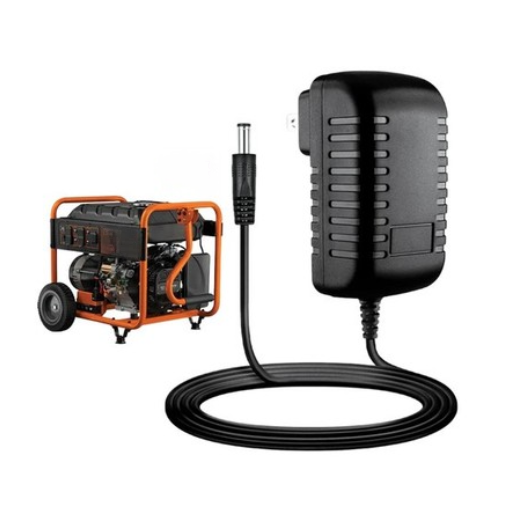
The single most useful idea on this page is that an alternator’s usefulness is proportional to how often the engine runs. Understanding why removes a whole category of confusion.
How an Alternator Charges, and When
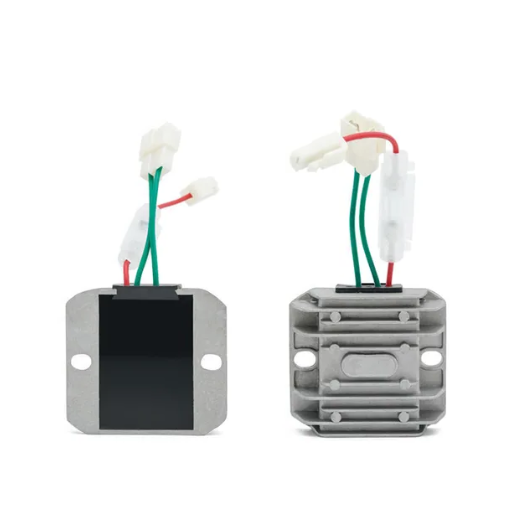
An engine alternator is a small generator bolted to the engine block and driven by a belt. When the engine turns, the alternator turns and produces DC to recharge the starting battery.
The critical word is when. The alternator produces nothing at rest. Its output exists only for as long as the engine is actually turning, which means charging and engine operation are the same event.
The Idle-Set Problem
Now apply that to a standby set. A set that runs for thirty minutes a month, plus the occasional outage, is producing alternator output for maybe six hours a year. The other 8,700 hours, the battery is on its own.
A lead-acid battery left to itself self-discharges. It also has to feed the DC auxiliary loads that stay energised around the clock. Research on backup generator battery systems treats this idle-period self-discharge as the central design problem, which is why two-stage charging and remote monitoring are studied for exactly this application (IEEE, lead-acid battery monitoring and charging for backup generators). Between the two, a battery with no maintenance charging will lose its charge over weeks, and a deeply discharged lead-acid battery sulfates in a way that is often permanent.
The alternator cannot solve a problem that exists while the alternator is stopped. That is the entire justification for the static charger, and it is why the charger is specified as standard equipment on standby sets rather than offered as an option.
Prime Power Versus Standby: Why the Duty Cycle Decides
This is also why the answer to “does my generator charge its own battery” genuinely depends on the application.
- Prime power, running daily: the alternator does the work, and the charger mainly holds the battery between runs.
- Standby, running rarely: the alternator contributes almost nothing, and the charger does all of the charging essentially.
- Emergency-only, sitting for months: the charger is the only thing between the battery and a slow death.
Types of Generator Battery Charger
Three terms get used loosely, and the differences between them are real. Confusing them is how batteries get damaged.
Float Chargers
A float charger holds a regulated, constant voltage and lets the battery draw whatever current it needs at that voltage.
As the battery approaches full charge, its current demand falls away naturally, so the charger is self-limiting. It cannot push energy into a full battery faster than the battery will accept it. That is what makes a float charger safe to leave connected indefinitely, which is exactly what a standby set needs.
The float voltage is set to the battery chemistry, typically in the low 13 volts for a 12 V lead-acid battery. We give the figures by chemistry in the next section.
Trickle Chargers and What the Name Really Means
A trickle charger holds a roughly constant current rather than a constant voltage, usually somewhere under 2 A. It charges slowly, and because current keeps flowing regardless of the battery’s state, a crude trickle charger can overcharge a battery if left connected.
The charging process does pass through a stage where current tapers to a trickle, and that stage is where the name comes from, but the name has since been applied to a different class of device. The distinction worth keeping is the control variable:
- Fixed voltage, self-limiting: a float charger, safe indefinitely.
- Fixed current, not self-limiting: a trickle charger, needs supervision.
On a full battery, a fixed-current charger has nowhere to put the energy it keeps supplying. That energy goes into electrolysis, which means water loss and gassing, and into grid corrosion. A battery treated this way can be destroyed within months while appearing to be maintained.
Multistage and Smart Chargers
Multistage chargers combine both behaviours in sequence. They charge at constant current until the battery reaches a set voltage, then hold that voltage while current tapers, then drop to a regulated float voltage for indefinite maintenance.
This is the standard architecture for generator service, and the three stages are covered in the next section. Patents covering mains-powered smart chargers for diesel genset batteries set out the control approach behind these units. Some units add an equalization stage, which is discussed with its warnings below.
Which Type Belongs on a Standby Set
For a standby set, the requirement points clearly at a multistage automatic charger with a regulated float stage, sized so that its float current comfortably exceeds the DC auxiliary load. A single-stage float charger will maintain an already-charged battery but will not reliably recover a deeply discharged one. A plain trickle charger is the wrong tool, and on an unattended set it is the wrong tool for a safety function.
The word automatic is doing real work in that sentence, and it is a compliance requirement rather than a preference, which we come to under NFPA 110.
Three-Stage Charging: Bulk, Absorption and Float
Multistage charging matches the charger’s behaviour to what the battery can accept at each point. Pushing current into a nearly full battery at the same rate as an empty one is what damages it.
Bulk Charge
The first stage delivers constant current at the charger’s rated output, and voltage rises as the battery fills. This covers roughly the first 70 percent of the charge, where most of the ampere-hours are delivered.
Absorption Charge
At the absorption voltage the charger switches to constant voltage and holds it, so current tapers naturally as the battery approaches full. Absorption finishes the job, and it is also the stage that causes trouble when a charger cannot leave it.
Float Charge
When current has tapered to a low threshold, the charger drops to the float voltage and holds the battery there indefinitely. The float stage supplies just enough current to offset self-discharge and the DC auxiliary load, which is precisely what a standby battery needs for months of idleness.
Equalization, and the Batteries It Damages
Some charger designs add an equalization stage: a deliberately elevated voltage applied for a limited period to rebalance cells in a flooded lead-acid battery and to counter sulfation.
Equalization is for flooded lead-acid batteries only. Applying an equalizing voltage to an absorbed glass mat or gel battery drives water out of the electrolyte in a sealed cell, and sealed cells cannot be topped up. The result is permanent damage.
If a charger has an equalization mode, and the battery is sealed, the mode must be disabled or the threshold respected. This is worth checking rather than assuming, because a charger’s default may be the flooded profile.
Float Voltage by Battery Type
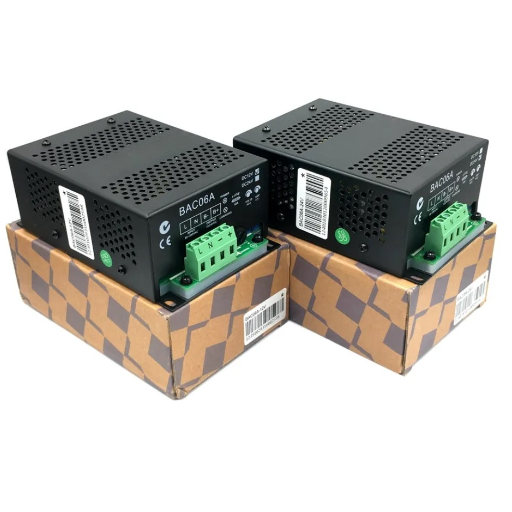
Float voltage is chemistry-specific. Applying the wrong set-point is one of the few ways to damage a battery while doing everything else right.
| Battery chemistry | Typical float voltage, 12 V | Equalization |
|---|---|---|
| Flooded lead-acid | 13.2 to 13.5 V | Permitted |
| AGM (absorbed glass mat) | 13.5 to 13.8 V | Not permitted unless the maker allows |
| Gel | 13.2 to 13.5 V | Not permitted |
These are typical values, and the battery manufacturer’s own data sheet governs. Charge voltages are published per product and per temperature, and a discrepancy between a generic table and a specific data sheet should always be resolved in favour of the battery you actually have.
Temperature Compensation
Battery charge voltage is temperature-dependent. A cold battery needs a slightly higher voltage and a warm one a lower voltage, which is why a charger serving a battery in an unheated plant room can be fighting the weather.
The compensation is typically applied as a small voltage adjustment per cell per degree away from a 25 °C reference. Because the correct figure depends on the chemistry and the product, a temperature-compensated charger with a remote battery sensor is the robust answer, and it is what we specify for critical standby installations. Where the battery and charger sit in different spaces, a sensor at the battery is not optional, because the charger’s own internal temperature will not represent the battery’s.
Reading the Battery, Not the Charger
One practical check belongs in the routine: measure at the battery terminals, not only at the charger. A voltage within a small margin of the set-point is healthy. A reading markedly above it, particularly on a 24 V system, points to overvoltage or calibration drift and should be investigated before it damages another battery.
How to Size a Generator Battery Charger
Sizing is where most of the practical mistakes happen, and the reason is that people size from the battery alone when the requirement also includes the DC load and the recharge time.
Starting From the Recharge Requirement
Emergency power standards require an automatic charger able to restore a discharged battery, not merely maintain a full one. The recharge window is stated in hours and applied as a performance requirement on the charger.
The figures commonly applied are 24 hours for Level 1 and 36 hours for Level 2, and this is where specification work starts, because a charger that only holds a float voltage will not meet it. Check the edition in force, and any local amendment, before writing the requirement into a specification.
Battery Amp-Hours and the 10 Percent Rule of Thumb
Given a battery capacity in amp-hours and a recharge window, the minimum charger current follows from the arithmetic: the charger must be able to return the battery’s capacity within that window, plus cover whatever the DC auxiliary load is drawing at the same time.
As a starting point, charger ratings are commonly specified at least 10 percent of the battery’s amp-hour capacity. For a 100 Ah battery, that is 10 A. Chargers in generator service typically fall in the 5 to 20 A range, which reflects how small starting batteries are compared with the loads they start.
The 10 percent figure is a rule of thumb for sizing, not a standard. It is a sensible floor, and the recharge window is what sets the actual requirement.
Adding DC Auxiliary Load Headroom
Here is the part that gets missed. The charger is not only charging a battery. It is also supplying whatever DC load is permanently connected, and that load is competing with the battery for the charger’s output.
The charger must therefore have enough current capacity to recharge the battery within the window and supply the standing DC load at the same time. Size it on the battery alone and the recharge time stretches, or the charger never reaches the state it needs to be in. That second outcome is worse than it sounds, and it is the subject of the next section.
If you are establishing what your DC auxiliary load actually is, the transfer switch is usually the largest single contributor, and our guide to automatic transfer switch sizing covers how those loads are calculated.
A Worked Example
Take a 24 V standby system with two 12 V batteries in series:
| Input | Value |
|---|---|
| Battery capacity | 100 Ah |
| DC auxiliary standby load | 0.5 A |
| Recharge window applied | 24 hours |
| Charger current for recharge alone | about 4.2 A (100 Ah over 24 h) |
| Plus standing load | 0.5 A |
| Minimum charger output | about 5 A |
A 10 A charger would be the practical selection, giving genuine margin rather than sitting exactly on the requirement. Sizing exactly to the calculated minimum leaves nothing for an aged battery, a lower-than-specified temperature or a load that grows. Margin here is cheap.
NFPA 110 Requirements for Battery Charging
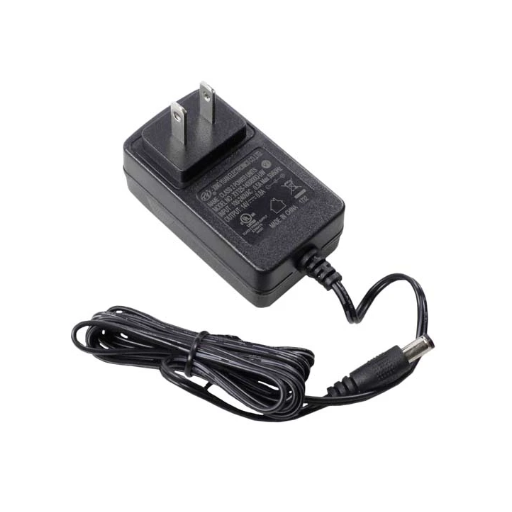
For emergency power systems, battery charging is not left to judgment. NFPA 110, the standard for emergency and standby power systems, sets requirements that shape what the charger must be.
The charger clauses and the general standard are worth keeping separate. Our NFPA 110 compliance guide covers the wider requirements, including the classification system, and the Level 1 versus Level 2 comparison explains how the type classification affects what a system must achieve.
Automatic Operation
The charger must operate without manual intervention. This is what the word “automatic” is doing in a specification, and it rules out any arrangement that depends on someone noticing a flat battery and connecting a charger.
It follows that a charger whose AC supply can be switched off, with nothing to report the fact, fails the intent of the requirement even if the unit itself is compliant. The supply should be dedicated and monitored.
The Recharge Window
The charger must be capable of restoring a discharged battery within a defined period, which is the requirement sizing begins from. Practically, it means the charger must have the current capacity described above, and that the battery must be able to accept it.
DC Metering and Permanent Marking
Two further requirements are easy to overlook and matter at replacement time.
Metering. The charger must carry a DC ammeter and a DC voltmeter so that its behaviour can be observed without test equipment. This is what makes a routine inspection possible at all: an operator can read the charging current and the battery voltage and see whether the system is behaving.
Permanent marking. The charger must be marked with the battery capacity range it suits, its nominal output current and voltage, and the battery type data. When a battery is replaced years later, that marking tells the technician what the charger is set up for. Without it, a charger set to one chemistry silently receives a battery of another.
Battery Voltage and Charger Failure Alarms
The charger is required to provide alarm contacts covering low battery voltage, high battery voltage, and charger malfunction.
Those three alarms are precisely the three ways a battery can fail, and their presence in the standard is a useful hint about what actually goes wrong in service. A flat battery should have been preceded by a low-voltage alarm, and a boiled battery by a high-voltage one. If neither ever fired, the alarms or their wiring are the first thing to check.
Our guide to the wider emergency power system requirements covers how these alarms integrate with the rest of the installation.
The Float-Set-Point Trap: Why Chargers Boil Batteries
This is the most useful section on this page, and it explains a failure that is routinely misdiagnosed as bad batteries.
If the DC auxiliary load exceeds the charger’s float current, the charger never leaves the absorption stage.
The charger sees a battery that will not come up to the float condition because energy is leaking away to the ATS, the annunciators and the control panel as fast as the charger supplies it. So it holds absorption voltage indefinitely. Absorption voltage is deliberately above float voltage, and holding a battery there permanently drives electrolysis and water loss.
The battery slowly boils. Over months, water is lost, the electrolyte becomes concentrated, and the plates are damaged. Eventually the battery fails, and it is replaced, and the replacement fails the same way.
How DC Auxiliary Loads Defeat a Charger
The mechanism is a comparison between two currents:
| Quantity | Example |
|---|---|
| Charger float-stage output | 0.6 A |
| Standing DC load, ATS and annunciators | 0.9 A |
| Net current available to the battery | negative |
With the load above the available float current, the battery cannot be maintained. The charger responds as designed by staying in absorption, and the damage follows from there. Nothing is malfunctioning. The system is simply undersized in a way that produces a slow failure rather than an obvious one.
The Symptoms
A battery in this condition usually shows:
- Repeated battery replacement, at intervals of a year or two, with no fault found in the battery itself.
- Electrolyte level falling faster than expected on a flooded battery.
- Warmth at the battery, or a smell of sulfur, in severe cases.
- A float voltage measured above the set-point.
- A charger that never appears to drop out of its higher-voltage stage.
The giveaway is the pattern of repeated replacement. One battery failing is a battery. Three failing the same way is a system.
This is an illustrative composite rather than a record of a specific client. A facility replaced the same 24 V starting battery three times in two years, and the third replacement was ordered with a note about battery quality. A technician measured the charger’s output during a site visit and found it holding absorption voltage continuously. The standing DC load, mostly the transfer switch and the remote annunciator, drew more than the charger could supply in float. The charger had been boiling every battery the whole time. The fix was a larger charger, not a different battery.
How to Check and Correct It
The check is straightforward and takes minutes:
- Measure the standing DC load with the charger supplying the panel and the set idle.
- Find the charger’s float-stage output current, which is a specification figure rather than a guess.
- Compare them. The float current must exceed the load with margin.
- Correct by increasing charger capacity, not by adjusting the float voltage. Raising the float set-point to chase a battery that will not hold is the wrong fix and will damage it.
Where the DC load has grown over the years, as loads do, this check is worth repeating periodically rather than treating as a one-off commissioning step.
The Charger Is Also a Load
A battery charger is not only a DC source. It is an AC load, it runs continuously, and it belongs in the load calculation for the site.
Charger Demand on the Genset
The charger draws from an AC supply, which is either the mains or the generator. Its consumption is modest, typically a small fraction of a kilowatt, but it is always on while the site has power. When the generator is running and feeding the charger, the charger becomes part of the load the set must carry while supplying everything else.
Why It Counts as a Continuous Load
A charger that runs continuously falls into the same category as any other sustained load, which matters for circuit design. Our generator load calculation guide covers the method in full, and the point worth carrying here is that a load expected to operate for three hours or more is treated differently from a brief one when the circuit is sized.
Small as it is, the charger should appear on the load schedule rather than being assumed away. Loads that are left off schedules are invariably the ones that were forgotten when the set was sized.
Maintaining the Charging System
The charging system rewards a short, regular routine more than most parts of a generator. It is quiet, it degrades slowly, and almost every failure it produces is visible well before it causes an outage.
Monthly Checks
- Read the charger’s DC ammeter and voltmeter and record both. The trend matters more than any single reading.
- Measure float voltage at the battery terminals and compare it with the set-point.
- Confirm the charger’s AC supply is live. This is the check that catches the composite case above.
- Check that no alarm is asserted, and inspect terminals and the battery case for corrosion or swelling.
Annual Checks
- Verify the charger’s output against its nameplate and confirm it still has capacity above the standing DC load.
- Check the temperature sensor if the charger is temperature-compensated, including its placement.
- Confirm the battery type matches the charger’s configured profile, particularly after any battery replacement.
- Test the alarm contacts end to end, from the charger to wherever the alarm is annunciated.
Our generator maintenance guide places these checks in the wider maintenance schedule.
Frequently Asked Questions
What type of battery charger does a generator need?
A multistage automatic charger with a regulated float stage, sized to recharge the battery within the required window while also supplying the standing DC auxiliary load. It must operate without manual intervention, which is a compliance requirement on emergency systems rather than a preference.
Does a generator charge its own battery?
Yes, while the engine is running, through the belt-driven alternator. No, when it is sitting idle. On a standby set, idle is most of its life, so a separate AC-powered charger is doing nearly all of the work. This is why a standby set still needs a charger even though it has an alternator.
What is the difference between a float charger and a trickle charger?
A float charger holds a regulated voltage and lets current fall away as the battery fills, which makes it self-limiting and safe to leave connected. A trickle charger holds a roughly constant current regardless of the battery’s state, so it can overcharge and damage a battery if left on.
How many amps should a generator battery charger be?
It depends on the battery capacity, the required recharge window and the standing DC load. Chargers commonly start at around 10 percent of the battery’s amp-hour capacity, and units in generator service typically fall between 5 and 20 A. Always add the DC auxiliary load on top of the recharge requirement.
Does NFPA 110 require a battery charger?
Emergency power systems are required to have automatic battery charging that operates without manual intervention, can restore a discharged battery within a defined period, and provides battery voltage and charger failure alarms. The specific recharge window depends on the system classification, so confirm the edition in force for your project.
Why does my generator battery keep going flat?
The common causes are a charger that has lost its AC supply, a unit too small to supply the standing DC load, an aged battery that no longer holds charge, and a battery left disconnected from charging while the site is shut down. Start by confirming the charger is live and reading its meters.
Conclusion
The generator battery charger is a small component doing a disproportionately important job.
- The alternator only charges while the engine runs, so on a standby set it cannot maintain the starting battery. A separate AC charger does that work.
- Float, trickle and multistage are different things. A fixed-current trickle charger can overcharge; a regulated float charger cannot; multistage chargers combine both in sequence.
- Float voltage is chemistry-specific, and equalizing an AGM or gel battery damages it permanently.
- Size from the recharge window plus the DC auxiliary load, not from the battery alone.
- Watch the float-set-point trap. If the standing DC load exceeds the charger’s float current, the charger stays in absorption and quietly boils every battery you fit.
If your standby system has eaten more than one starting battery, that last point is the first thing to check, and it is a measurement rather than an opinion. Contact our engineering team and we will work through the charging system and the DC load with you, and size a set or a charging arrangement to match what the site actually needs.