Stationary Generators for Hospitals: NFPA 99 Compliance Guide [2026]
The best generators for hospitals are stationary diesel-powered Level 1 EPSS units that are sized for the Essential Electrical System (type 1 EES) load of the facility and have an automatic start within 10 seconds and a 96-hour runtime. Hospitals have the NFPA 99, NFPA 110, and CMS emergency preparedness rules to dictate the three independent branches for the Type 1 EES, namely Life Safety, Critical, and Equipment.
A hospital loses between $432,000 to $690,000 after one hour of power going out unexpectedly, accounting for lost revenue, patient transfers, and procedures rescheduled. In 2024, 40% of healthcare organizations worldwide experienced at least one unplanned outage. The purchase of a stationary generator by facility managers and clinical engineers is not a commodity purchase. Rather, it is life-safety infrastructure that determines if a hospital keeps on functioning in the event of a grid failure.
The identification of the right system can be quite complex. NFPA 99 makes the Essential Electrical Systems. NFPA 110 dictates the 10-second first transfer. CMS calls for 96 hours of fuel. The Joint Commission looks at your test logs. Yes, tons of standards to modify-like little soldiers-in order to ensure alignment prior to delivering a kilowatt to an ICU ventilator.
We cover specifying, sizing and deployment stationary generator in hospitals in full regulatory compliance. You discover the three-branch EES architecture, exact sizing methodology, fuel storage math, testing schedules that will satisfy surveyors, and why factory-direct manufacturing truly is a total cost of ownership reducer.
Key Takeaways
- Hospitals need Type 1 Essential Electrical Systems with three independent branches: Life Safety, Critical, and Equipment.
- NFPA 110 mandates a 10-second automatic start and transfer for Level 1 EPSS units in hospital applications.
- CMS requires 96 hours of fuel supply or verified delivery agreements; NFPA 110 adds a 133% sizing buffer.
- Generator sizing follows branch-by-branch load calculation plus 20% future growth, not rules of thumb per bed.
- Monthly 30-minute loaded tests and annual 4-hour load bank tests are mandatory for Joint Commission compliance.
If you are just getting started with permanently installed backup power systems, we recommend that you first read our Comprehensive Guide to Stationary Generators to gain a foundational understanding of generator types, fuel sources, and applications.
Why Hospitals Require Stationary Generators
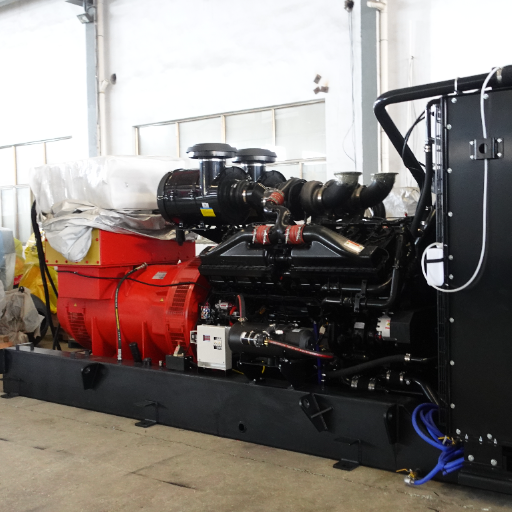
During a severe weather event or an overload on the grid, the hospital can’t wait for a hired truck to come. The stationary generators are permanent installations hardwired into the electrical infrastructure of the building and tied in with automatic transfer switches that switch power back on without human intervention.
Portable generators have no place as primary emergency power in hospitals. They are limited in capacity, lack automatic controls, and have nowhere safe to store fuel for their use with a Type 1 operational system. In comparison, stationary units are engineered to start immediately, run indefinitely, and provide a seamless link to the Life Safety System, Critical Branches, and Equipment Branches.
The global hospital backup power market clocked $8.4 billion in 2026 and is expected to grow at 7.2% CAGR until 2034. Diesel generators still dominate 42.3% of the market, justified by their sub-ten-second start, high energy density, and on-site fuel independence-a must in the hospital scenario. Natural gas has begun to emerge, as has dual fuel, but pipelines were among the visible examples of vulnerabilities during disasters.
The framework is clear for facility managers looking at a new build, wing expansion, or generator replacement: for a Medicare-certified facility, the stationary generator must meet the requirements of NFPA 99 Type 1, NFPA 110 Level 1 Type 10, and CMS 96-hour runtime, with no exceptions.
Regulatory Framework: NFPA 99, NFPA 110, and CMS
Hospital emergency power is governed by a stack of interlocking codes. Understanding which standard controls which requirement prevents costly compliance failures during accreditation surveys.
NFPA 99 — The Essential Electrical System
NFPA 99: Health Care Facilities Code defines the Essential Electrical System (EES) and assigns risk categories. Hospitals are Category 1 facilities, meaning interruption of electrical power is likely to cause major injury or death. This triggers the requirement for a Type 1 EES.
A Type 1 EES consists of three completely separate branches — Life Safety, Critical, and Equipment — each with independent wiring, overcurrent protection, and transfer switches. The generator is the alternate power source that feeds all three branches when utility power is lost.
NFPA 110 — Performance and Testing
NFPA 110: Standard for Emergency and Standby Power Systems governs the generator itself as an Emergency Power Supply System (EPSS). Hospitals require a Level 1 system, where failure could result in loss of human life. The generator must meet Type 10 performance: automatic start, voltage and frequency stabilization, and load transfer within 10 seconds of utility failure.
NFPA 110 also controls fuel storage sizing, installation clearances, ventilation, exhaust, and the testing protocols that accreditation surveyors review.
CMS Emergency Preparedness Final Rule
The Centers for Medicare and Medicaid Services (CMS) require certified hospitals serving Medicare beneficiaries to have contracts for fuel delivery, that guarantees 96 hours of operation for emergency generators at full load. The provisions of the regulation named 42 CFR 482.15 were an immediate response to Hurricane Katrina and Superstorm Sandy after the fuel supply to numerous affected hospitals was cut off, resulting in significant loss of life.
NEC Article 517 and The Joint Commission
NEC Article 517 covers selective coordination, wiring separation, and fire-rated feeder protection for healthcare facilities. The Joint Commission (TJC) enforces compliance through unannounced surveys. Non-compliance can result in conditional accreditation, fines, or loss of Medicare and Medicaid funding.
For a broader look at how emergency infrastructure is classified across industries, see our complete guide to emergency power systems.
The Three Branches of Hospital Emergency Power
The Type 1 EES is not a single backup circuit. It is three independent electrical systems, each with distinct loads, transfer timing, and wiring requirements.
Life Safety Branch
The Life Safety Branch powers systems essential for safe evacuation and basic building protection. Loads include egress lighting, exit signs, fire alarm systems, emergency communications, and automatic door releases. Generator support equipment — fuel transfer pumps, ventilation fans, and cooling systems — also connects here.
This branch requires non-delayed automatic transfer. When utility power fails, the automatic transfer switch (ATS) must restore Life Safety loads immediately, with no intentional delay.
Critical Branch
The Critical Branch powers equipment directly related to patient care in areas where interruption could cause injury or death. Loads include selected receptacles and task lighting in operating rooms, ICUs, emergency treatment areas, and coronary care units. Ventilators, patient monitors, nurse call systems, blood banks, and medication dispensing equipment also run on this branch.
Like the Life Safety Branch, Critical Branch loads must be restored within 10 seconds. For Tier 1 trauma centers and surgical suites, closed-transition ATS with bypass isolation is often specified to enable maintenance and testing without interrupting power to life-support equipment.
Equipment Branch
The Equipment Branch supplies major mechanical systems necessary for hospital operation but where a brief interruption is not immediately life-threatening. Loads include medical air compressors, medical vacuum pumps, HVAC serving surgical and ICU zones, select elevators, chillers, sump pumps, and sewage pumps.
This branch uses delayed automatic transfer to prevent generator overload from simultaneous motor starting inrush. Sequencing large loads — starting chillers 10 seconds after air compressors, for example — ensures the generator reaches stable voltage before accepting high-inrush equipment.
Sizing Stationary Generators for Hospitals
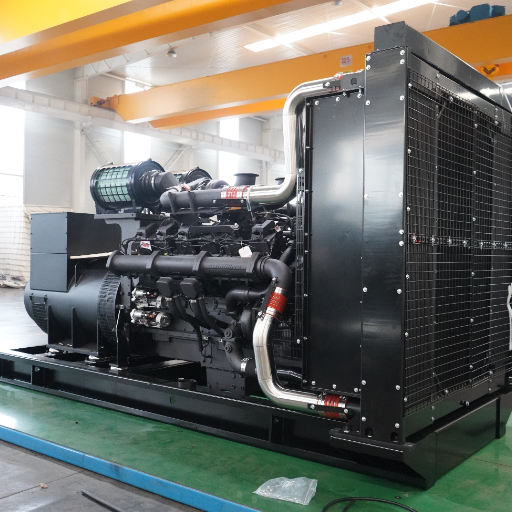
Accurate sizing starts with a branch-by-branch load study, not a rule of thumb.
There is no code-mandated formula like “10 kVA per operating room” or “3 kVA per ICU bed.” Those figures are informal planning metrics at best. Formal sizing requires circuit-by-circuit connected load tabulation across all three EES branches, plus motor starting surge analysis and future growth margin.
The Sizing Methodology
- List every load on the EES: Include receptacles, lighting, motors, UPS systems, and imaging equipment on Life Safety, Critical, and Equipment branches.
- Calculate running watts: Sum the continuous operating load for all connected equipment.
- Add motor starting surge: Large HVAC compressors and medical air pumps can draw 3 to 6 times their running current at startup. The generator must handle the largest single motor starting surge without voltage dip exceeding equipment tolerances.
- Apply the 125% rule: NEC Article 445 requires generator capacity of at least 125% of the full load current of the connected equipment.
- Add 20% future growth: Hospital power demand grows continuously. New imaging suites, additional ORs, and IT infrastructure expansion all add load.
Facility-Type Benchmarks
While every hospital requires a custom load study, these ranges provide a starting point for procurement planning:
| Facility Type | Bed Count | Typical Generator Size | Configuration |
|---|---|---|---|
| Small clinic / outpatient | N/A | 30 — 100 kW | Single unit |
| Community hospital | 50 — 150 | 300 — 750 kW | Single or paralleled pair |
| Large acute-care / teaching | 200 — 500+ | 1 MW — 3 MW+ | Paralleled N+1 plant |
| Trauma center / Level 1 | 300 — 800+ | 2 MW — 5 MW+ | Paralleled N+1 or 2N |
A 200-bed community hospital with two operating rooms, a 20-bed ICU, and standard imaging typically lands in the 400 — 600 kW range after load study and growth margin. A 500-bed Level 1 trauma center with robotic surgery suites, cardiac catheterization labs, and full research imaging can exceed 2 MW.
For detailed guidance on sizing methodology for permanent installations, see our article on industrial stationary generators in the 500 kW class.
When Marcus Chen, facilities director at a 180-bed regional medical center in Southeast Asia, expanded his surgical wing in 2024, he assumed his existing 350 kW genset would handle the new load. The load study revealed that two new MRI chillers and a robotic surgery suite added 180 kW of Equipment Branch demand. His original unit would have operated at 97% capacity — well above the safe threshold. He upsized to a 600 kW paralleled pair with N+1 redundancy, giving him 1,200 kW total capacity and the ability to service one unit without dropping the EES.
Fuel Strategy and 96-Hour Runtime Requirements
CMS mandates 96 hours of fuel supply. NFPA 110 Section 7.9 requires fuel storage sized at 133% of anticipated consumption. Most facilities miscalculate one or both.
The 96-Hour CMS Rule
All Medicare-certified hospitals must maintain sufficient fuel — on-site storage, verified delivery agreements, or both — to operate the EES at maximum anticipated load for 96 continuous hours. This is a planning requirement, not a suggestion. During Joint Commission surveys, inspectors demand documented evidence: fuel delivery contracts with specific time commitments, annual resupply plan tests, and proof that community-wide demand during disasters will not compromise delivery.
The 133% NFPA Buffer
If your generator burns 25 gallons per hour at full EES load, the raw 96-hour need is 2,400 gallons. NFPA 110 requires tank capacity of 3,192 gallons — 133% of raw need. This buffer accounts for fuel density variation, load fluctuation, engine efficiency degradation, altitude derating, and temperature effects.
Diesel vs. Natural Gas vs. Dual-Fuel
| Fuel | Pros | Cons | Best For |
|---|---|---|---|
| Diesel | Fastest startup, highest energy density, on-site storage control, proven reliability | Fuel degradation (12 — 16 month shelf life), higher emissions, noise | Primary standby for all hospital classes |
| Natural gas | Cleaner emissions, quieter operation, no storage tanks | Pipeline dependency; if gas service fails, generator fails | Urban hospitals with stable pipeline infrastructure |
| Dual-fuel | Redundancy without pipeline dependency; can switch fuels | More complex system, higher initial cost | Critical facilities in disaster-prone regions |
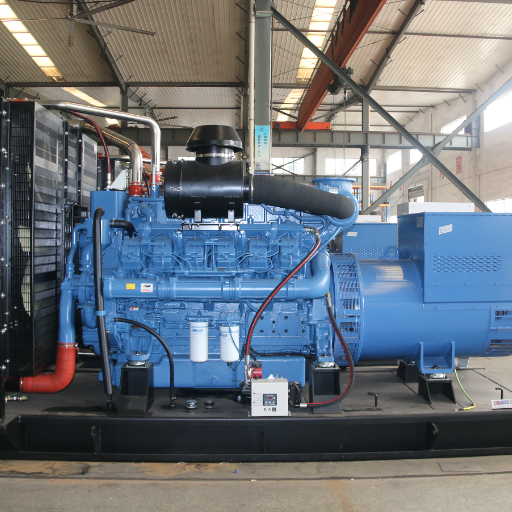
Most hospitals specify diesel as the primary emergency fuel because it delivers the sub-10-second start and complete independence from utility infrastructure. Natural gas is viable for urban facilities with reliable pipeline service, but the 2021 Texas winter storm demonstrated that gas pipeline pressure can fail during the same events that cause grid outages. For Level 1 EPSS, fuel independence is non-negotiable.
Diesel fuel must be tested and polished annually to prevent microbial contamination and oxidation. Tank integrity testing, leak detection, and secondary containment are also required by NFPA 37 and local environmental regulations.
Testing, Maintenance, and Documentation
Compliance is not a one-time installation achievement. It is a continuous program of documented testing and maintenance.
Weekly Inspections
Every week, qualified personnel must perform visual inspections of the generator, starting batteries, coolant levels, engine oil, and fuel supply. The inspection must be logged with date, time, inspector name, and any deficiencies found.
Monthly Loaded Testing
NFPA 110 and The Joint Commission require the generator to run under load for a minimum of 30 continuous minutes at 30% or more of nameplate kW rating. If the hospital’s actual EES load is below 30%, an external load bank must be used. The ATS must also be exercised monthly.
Annual and Triennial Testing
A full 4-hour continuous load bank test is required to verify generator capacity, wet-stack prevention, and cooling system performance under sustained load. Test frequency is interpreted as annual by some accreditation bodies and triennial (36-month) by others; the safest practice is annual testing with 4-hour duration.
Recordkeeping
All inspection logs, test reports, maintenance records, and repair documentation must be maintained on-site and available for surveyor review. Electronic logging systems are acceptable if they provide tamper-evident timestamps and cannot be altered after entry.
For a deeper technical look at load bank testing protocols and documentation standards, see our generator load bank testing guide.
Dr. Elena Vasquez, chief of facilities at a 320-bed hospital in Latin America, learned the value of rigorous documentation during an unannounced Joint Commission survey in 2023. Her generators were mechanically sound, but three months of test logs were missing — lost during a software migration. The surveyor issued a finding for inadequate recordkeeping. It took six weeks of reconstructed logs, vendor affidavits, and a follow-up visit to clear the deficiency. Her new rule: paper backups of every electronic log, updated within 24 hours of every test.
N+1 Redundancy and Paralleling for Hospital Plants
Code minimum requires one generator capable of carrying the full EES load. Best practice — and Joint Commission expectation — is N+1 redundancy.
N+1 means the total installed capacity exceeds the minimum required load by at least one full unit. If a hospital requires 800 kW of EES capacity, an N+1 plant might use three 500 kW generators in parallel, providing 1,500 kW total. Any two units can carry the load, so one unit can fail or undergo maintenance without compromising patient care.
Paralleled 500 — 1,000 kW units are increasingly preferred over single massive blocks for several reasons:
- Redundancy: A single 2 MW block has no backup if it fails. Four 750 kW units in parallel provide 3 MW total with N+1 margin.
- Load sharing: Parallel operation keeps individual units at efficient load factors, reducing wet-stacking and extending engine life.
- Scalability: Additional units can be added as the hospital expands without replacing the entire plant.
- Testing flexibility: One unit can be taken offline for maintenance while the remaining units carry the EES.
Closed-transition paralleling switchgear enables zero-blackout testing by synchronizing the generator with the utility before transfer. This allows monthly loaded tests without ever interrupting power to the Critical Branch — a significant advantage for facilities where even a momentary transfer event is undesirable.
The redundancy philosophy for hospital stationary generators mirrors the approach used in data center design. For a technical comparison of N+1 and 2N architecture across mission-critical facilities, see our guide to stationary generators for data centers.
ZC Power Stationary Generator Solutions for Hospitals
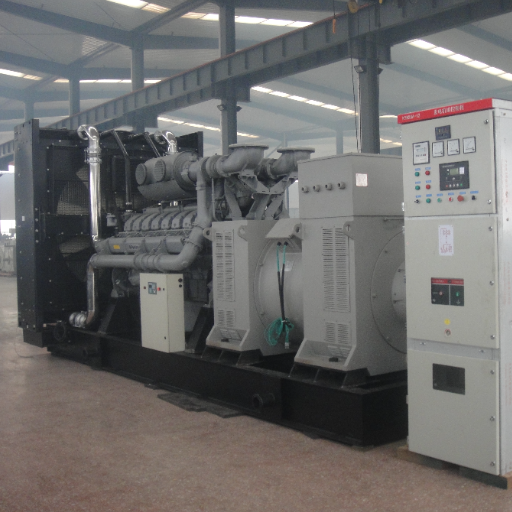
Specifying hospital emergency power is not a catalog exercise. It requires load study validation, branch-by-branch coordination, and factory acceptance testing that proves the system will perform when lives depend on it.
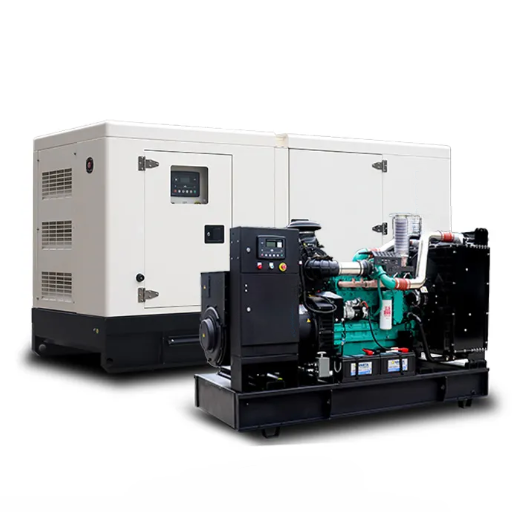
At Shandong ZC Power CO., LTD., we manufacture Tier III/IV stationary generator systems from 8 kVA edge modules to 4,000 kVA power plants. Established in 1999 and operating a 300,000-square-meter facility with a national standard testing center, we verify every unit at 100% rated load before shipment.
Our hospital-grade stationary generator sets include:
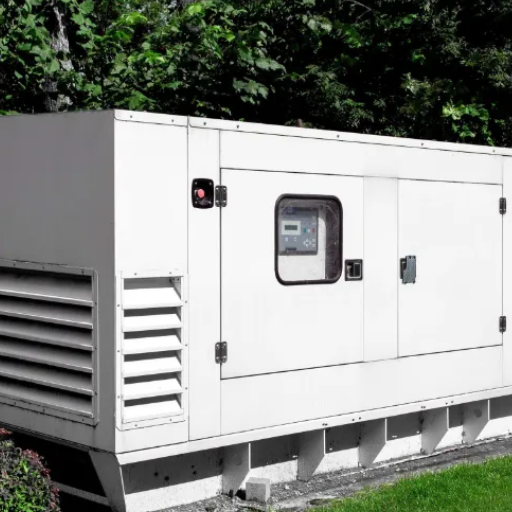
- Silent canopies with multi-layer acoustic insulation keeping operational noise below 75 dB at 7 meters — critical for urban hospitals near residential zones.
- AMF (Auto Mains Failure) panels with Deep Sea Electronics or SmartGen controllers for automatic grid monitoring, engine starting, and load transfer within the NFPA 110 Type 10 window.
- Paralleling switchgear for N+1 redundant plants, with closed-transition capability for zero-blackout testing.
- Custom voltage and frequency configurations for international hospital projects, including 50 Hz and 60 Hz variants.
- ISO9001, CE, and CCC certification ensuring compliance with global healthcare infrastructure standards.
Whether you are equipping a 50-bed rural clinic or a 600-bed Level 1 trauma center, our team of 80+ technical engineers works with your electrical contractor and AHJ to deliver a compliant, tested, and documented emergency power solution.
Contact the ZC Power engineering team to request a hospital-specific site assessment, EES load study support, and factory-direct quote for your next stationary generator project.
Frequently Asked Questions
How fast must a hospital backup generator start?
NFPA 110 mandates that Level 1 EPSS units automatically start, reach rated voltage and frequency, and transfer the Life Safety and Critical Branch loads within 10 seconds of utility failure. This is known as Type 10 performance. UPS systems bridge the gap for milliseconds-critical equipment until the generator stabilizes.
What size generator does a 200-bed hospital need?
There is no universal rule. A 200-bed community hospital typically requires 400 — 600 kW after branch-by-branch load study, motor starting surge analysis, and 20% future growth margin. A 200-bed teaching hospital with robotic surgery and cardiac cath labs may need 800 kW or more. Formal sizing must follow NEC Article 445 and NFPA 99 load calculation methods.
How long must hospital generators be able to run?
CMS requires 96 hours of continuous operation at maximum anticipated load. NFPA 110 requires fuel storage sized at 133% of the consumption needed for that runtime. On-site diesel tanks, vendor delivery agreements, or a combination of both can satisfy the requirement if properly documented and tested.
What is the difference between the Life Safety Branch and the Critical Branch?
The Life Safety Branch powers egress lighting, fire alarms, exit signs, and generator support equipment. The Critical Branch powers patient care equipment in operating rooms, ICUs, and emergency treatment areas. Both require restoration within 10 seconds, but they must be wired independently with separate transfer switches.
Do hospitals need N+1 generator redundancy?
Code minimum requires one generator capable of carrying the full EES load. However, N+1 redundancy — total installed capacity exceeding minimum by at least one unit — is considered best practice and is often expected by Joint Commission surveyors. Large hospitals typically use paralleled units to achieve both redundancy and scalable capacity.
Conclusion
Stationary generators for hospitals are permanent in nature, not transient entities. Picking the right system will demand matching the branch architecture in the NFPA 99 Type 1 to your facility layout, confirmation of NFPA 110 performance for a Type 10 system, fuel storage sizing for 96 hours at 133% consumption, and, lastly, approval to adhere to an established documented test program before Joint Commission surveyors.
The cost of getting it wrong is measured in patient safety, accreditation status, and hundreds of thousands of dollars per outage. The cost of getting it right is a factory-tested, code-compliant stationary generator plant that protects your facility for decades.
At ZC Power, we engineer stationary generators for hospitals from 8 kVA to 4,000 kVA with full load bank verification, custom voltage configurations, and global export support. Contact our engineering team today for a hospital-specific site assessment, compliant EES design review, and factory-direct quotation.