Natural Gas Generator Emissions: The Complete Guide
Natural gas generator emissions run roughly 90 to 95 percent below diesel on NOx, with essentially no particulate matter or sulfur. A gas unit typically meets EPA standards with a built-in three-way catalyst, no SCR and no diesel particulate filter. Cleaner than diesel, though, isn’t clean. A gas genset still emits CO2 and small amounts of unburned methane, and the rules that bind your site depend less on the fuel badge than on how the unit is rated: emergency, prime, or continuous.
That rating question is where most natural gas generator emissions guides stop short. They end at “gas is cleaner,” which leaves a facility manager and sustainability officer reading the same spec sheet and reaching opposite conclusions. This guide separates the three questions buyers keep conflating: local air quality, climate impact, and compliance. If you still decide whether gas suits your site, our complete natural gas generators guide walks through the full fuel-supply and cost picture.
By the end you can name what a gas genset emits, which EPA rules apply, what the emergency-hour limits cost you, and how to answer a methane question in an ESG report. Every number below traces to the EPA rule text or an OEM source.
Key Takeaways
- A natural gas generator emits roughly 90 to 95 percent less NOx than an equivalent diesel unit, with virtually no particulate matter or sulfur, and it meets EPA limits with a built-in three-way catalyst, no SCR or DPF.
- Under NSPS Subpart JJJJ, you comply by buying an EPA-certified engine and operating it per the manufacturer, so certified gas units need no stack test.
- The rating, not the fuel, decides your permit: an emergency-rated gas unit can run unlimited hours during real outages but only 100 hours a year for testing, with at most 50 of those for non-emergency work.
- Natural gas emits about 27 percent less CO2 per unit of energy than diesel, but unburned methane slip at roughly 28 times CO2 can eat into that advantage if you spec the wrong combustion design.
- Gas tends to permit far more easily than diesel because there is no bulk fuel tank to spill and no SCR or DPF to test, which is why data centers and hospitals in strict air districts are switching.
What Emissions Does a Natural Gas Generator Produce?
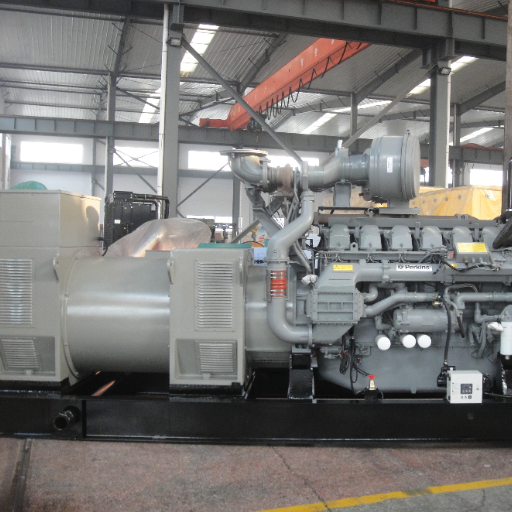
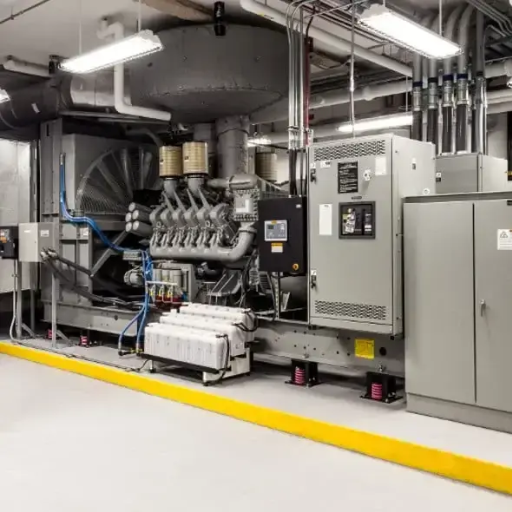
A natural gas generator produces nitrogen oxides (NOx), carbon monoxide (CO), carbon dioxide (CO2), and small amounts of unburned fuel, mostly methane, that slip through the exhaust as volatile organic compounds (VOCs). It produces essentially no particulate matter and no sulfur dioxide because pipeline gas is a clean, sulfur-free fuel and burns as a gas rather than as injected liquid droplets.
That combustion difference drives the control hardware, and the numbers follow.
Natural Gas Generator Emissions vs Diesel: The Numbers
Here is the pollutant-by-pollutant comparison. Criteria-pollutant rows draw on a Generac comparison of comparable 500 kW units; the CO2 factors are the EIA’s per-unit-of-energy coefficients.
| Pollutant | Natural gas genset | Diesel genset (Tier 4, SCR + DPF) | Bottom line |
|---|---|---|---|
| NOx | About 95% lower, meets EPA limits with a three-way catalyst | Controlled to Tier 4 by SCR urea injection | Massive gap at the source |
| Particulate matter (PM) | Virtually none, the fuel produces no soot | Filtered by DPF, still the diesel problem child | Gas wins cleanly |
| Sulfur dioxide (SO2) | Essentially zero | Trace, from fuel sulfur | Gas wins cleanly |
| Carbon monoxide (CO) | About 59% lower | Higher before and after treatment | Gas wins |
| NMHC / VOC | About 98% lower, including methane slip | Higher before and after treatment | Gas wins |
| CO2 per MMBtu | About 117 lb | About 161 lb (#2 diesel) | Gas is about 27% lower |
Ultra-low-NOx gas engines go further. Enchanted Rock, which operates natural gas backup fleets, reports NOx about 400 times lower than a Tier 4f diesel, and says those units can run non-emergency hours without tripping into Title V territory.
For the full operating-cost and fuel-supply decision between the two fuels, our natural gas vs diesel generator guide does the head-to-head. This article focuses on emissions and compliance.
Why Gas Needs No SCR or DPF
Diesel reaches Tier 4 by bolting on selective catalytic reduction (SCR) that injects urea, plus a diesel particulate filter (DPF) that traps soot and must be regenerated. Gas skips both. A stoichiometric gas engine with a three-way catalyst (NSCR) gets the same or better NOx result with nothing to refill and nothing that clogs.
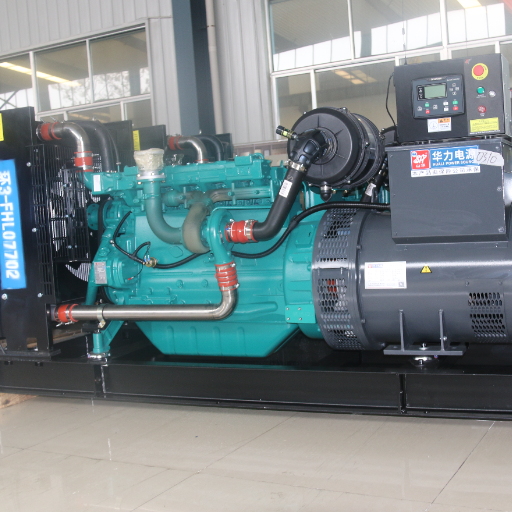
That’s the practical difference buyers feel. SCR means urea tanks, winterized dosing lines, and a maintenance line item. A DPF means regeneration scheduling and ash service. A three-way catalyst means you change one element on a long interval and otherwise forget it. Every ZC Power gas genset is engine-family certified and full-load tested at our national-standard testing center before shipment, so the certification paperwork you hand to the air authority starts at the factory.
Which EPA Standards Apply to Natural Gas Generators?
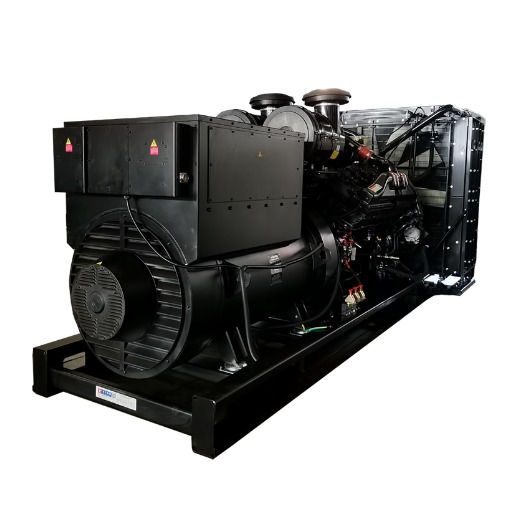
Two federal rules govern a stationary natural gas generator in the United States, plus whatever your state or local air district adds. That is the EPA emissions standards for natural gas generators question, and it confuses buyers because the two rules run in parallel.
NSPS Subpart JJJJ: Certified-Engine Compliance
Stationary spark-ignition engines, which is what a natural gas generator is, fall under New Source Performance Standards, 40 CFR Part 60, Subpart JJJJ. The model is purchase-and-operate. You don’t test your engine to prove compliance. You buy an engine from an EPA-certified engine family, one that was emission-certified by its manufacturer to the g/kW-hr NOx, CO, and VOC limits published in the rule, and then you operate and maintain it per the manufacturer’s instructions.
That’s a genuinely different burden from a diesel’s. A certified unit needs no stack test at installation: the engine’s certificate and your maintenance records answer the air authority’s questions.
NESHAP Subpart ZZZZ: Most New Engines Get a Pass
The parallel rule is the National Emission Standards for Hazardous Air Pollutants for stationary reciprocating internal combustion engines (RICE), 40 CFR Part 63, Subpart ZZZZ. For a new natural gas engine that meets Subpart JJJJ, EPA treats JJJJ compliance as satisfying ZZZZ, so you don’t stack a second set of requirements on top.
State and Local Rules Can Be Stricter
Federal standards are the floor. In non-attainment areas, California’s CARB and districts like the SCAQMD around Los Angeles layer their own limits on top, and those rules can cap hours or demand testing the federal rules don’t. The pattern, quantified in the permitting section, is that local restrictions fall hardest on diesel.
Emergency vs Non-Emergency: The Rating That Decides Your Permit
Here is the part every competitor guide skips, and it’s the single most useful thing in this article. The EPA rules key off the unit’s duty rating, and crossing the emergency-non-emergency line changes your compliance obligations overnight.
The 100-Hour Testing Allowance and the 50-Hour Cap
Under 40 CFR 60.4243, an emergency-rated engine faces no hour limit during an actual emergency, meaning a power failure or voltage sag that threatens life, property, or equipment. Outside real emergencies the allowance is tight: up to 100 hours a year of maintenance and readiness testing, with at most 50 of those for non-emergency work like demand response.
The unit must run a non-resettable hour meter, and you must keep the logs. That hour meter is the whole enforcement story, which brings us to Marcus.
Marcus managed power for a Houston hospital whose “emergency” gas unit ran a 20-minute weekly exercise, about 17 hours a year. Then a regional utility asked his facility to carry 60 hours of non-emergency load during a transformer shortage. 60 hours blew straight past the 50-hour sub-cap, his unit no longer qualified as emergency, and overnight it was bound by full non-emergency limits its permit was never written for. The thing that caught him was a non-resettable hour meter, a part worth essentially nothing.
Non-Emergency Duty Runs Under Full Limits
Rate a gas unit prime or continuous and there’s no annual hour cap. That freedom comes at a price: the engine must meet its emission limits at all times, the catalyst has to actually work under load, and the permit carries hourly caps in pounds per hour and tons per year that your load profile must stay under.
What Does Losing Emergency Status Cost Your Site?
Lose emergency status and you don’t just lose the hour flexibility. You inherit full non-emergency emission limits, potential stack testing, a revised permit with enforceable annual caps, and sometimes a demonstration that your controls work at load. For a facility that sized a simple emergency unit, that can mean an SCR retrofit, precisely the hardware gas was supposed to avoid.
The honest fix is to pick the rating before you spec, not after an auditor reads the hour meter.
Natural Gas Simplifies Permitting (Real Examples)
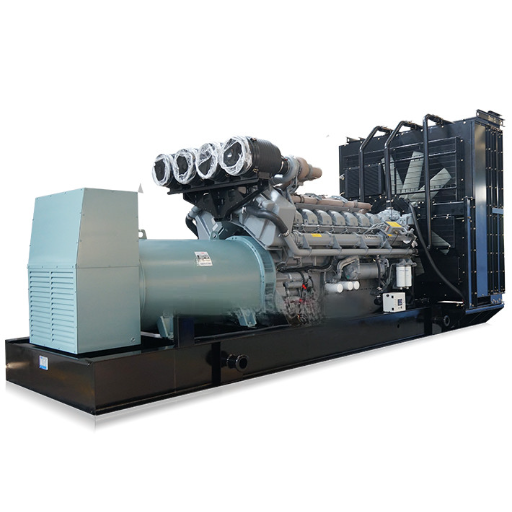
The permitting advantage of gas is real, and here it is in numbers instead of marketing. DC’s environmental department publishes its source permits, and they show how light a gas unit’s load can be.
| Site | Unit | Duty | Permit caps |
|---|---|---|---|
| Fort Totten (DC) | 260 kW gas | Emergency | NOx 0.2 tons/yr, VOC 0.2 tons/yr, CO 0.4 tons/yr |
| DC Water | Two 1,303 kW gas units | Non-emergency | NOx 2.31 lb/hr (about 10.12 tons/yr each), CO 1.16 lb/hr |
Three structural reasons gas permits this lightly:
- No bulk liquid fuel tank, so no SPCC spill plan and no fuel-delivery noise for the neighbors.
- No SCR or DPF, so no after-treatment to demonstrate or test.
- NOx this low keeps a site far below the 100-tons-per-year threshold that drags a source into Title V major-source territory, a federal regime you want to stay out of.
Priya saw that gap decide a project in 2025. She managed infrastructure for a Los Angeles data center whose redundancy build had come down to a fuel choice. The diesel standby she first specced sat in SCAQMD territory, where Rule 1470 caps operating hours and imposes testing on diesel units. The natural gas option needed no such testing and qualified under a standard permit pathway. The emissions table, not the kW rating, made the call: gas, with hours to spare. That pattern is exactly why natural gas generators for data center deployments are accelerating.
NFPA standards now back the shift: NFPA 70 Article 700.12(C) and NFPA 110 accept piped gas for emergency systems where simultaneous grid and gas failure is unlikely, so officials who once demanded diesel now sign off on gas where a pipeline exists.
When a Gas Unit Still Needs a Permit
Gas isn’t permit-proof. Large non-emergency units need a state or local construction permit with enforceable hourly and annual caps, as the DC Water example shows, and some districts require a one-time stack test above a size threshold. Push past the Title V major-source threshold and the federal burden applies to gas like anything else. The rule of thumb: small emergency units permit by certificate, application permits large non-emergency units.
The Honest Greenhouse Gas Picture: CO2 and Methane
For local air quality, gas wins decisively. For climate, the answer is more honest, and this is the part that wins over the sustainability officer who has heard one too many “clean natural gas” claims.
On CO2, natural gas emits about 117 lb per MMBtu versus about 161 lb for #2 diesel, roughly 27 percent less per unit of energy, per the EIA’s published coefficients. The per-kilowatt-hour number depends on engine efficiency, but on a like-for-like burn, gas carries a real carbon advantage.
Then comes methane. Unburned methane that slips through the exhaust is far more potent than CO2, at about 28 times its warming effect over 100 years. The magnitude of the slip depends on the engine design. A lean-burn large engine can slip on the order of 3 to 4 g/kWh, while the best high-pressure direct-injection designs run near 0.2 g/kWh, and IEA-AMF research notes that unaccounted slip can halve the apparent CO2 benefit of gas.
The design answer is the same one that wins on NOx. A rich-burn gas engine with a three-way catalyst oxidizes most of its methane slip because the catalyst is designed to burn the unburned fuel, not just reduce NOx. So the configuration that meets EPA standards is also the configuration that protects your climate story.
Amina found this out the hard way. She built Scope 1 inventories for a cold-storage operator, and her gas generator line kept coming up short on her own audit. The diesel units were simple to count. The gas units quietly emitted unburned methane that a CO2-only calculator missed, and at a global warming potential of about 28, that slip was worth as much carbon as the fuel was displacing. Her fix: rich-burn units with three-way catalysts, then renewable natural gas to close the loop. That last step is a story for our biogas generator guide.
Choosing a Gas Genset for Emissions and Compliance
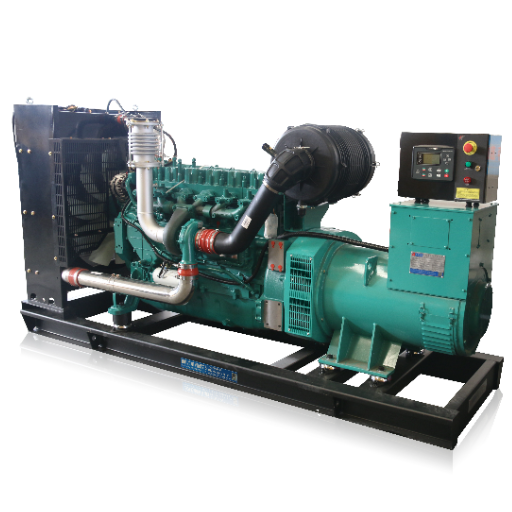
Put the whole picture together and the buying decision is six steps in order.
- Pick the duty rating honestly. Emergency, prime, or continuous is the decision that sets your entire compliance burden. Understate it and you inherit an SCR retrofit later.
- Buy a certified engine family. Confirm that the certificate of conformity covers the exact model and that the manufacturer still holds it.
- Spec rich-burn with a three-way catalyst for low NOx and low methane slip in one move, rather than a lean-burn engine that trades NOx control for slip.
- Fit the non-resettable hour meter and log every minute, including the 20-minute weekly exercise. This one component is your compliance record.
- Keep the maintenance chain. Certified compliance means operating and maintaining per the manufacturer, and your records are the evidence.
- Confirm the permit path with the air authority before you commit, with your planned hours and size on the table, not after.
Gas gensets run from 8 kVA to 4,000 kVA across engine families, so size is rarely the constraint. The rating and the records are. Not sure which rating your operation actually needs? Send the ZC Power engineering team your load profile and duty rating, and we’ll map the compliance path before you commit to a spec.
Natural Gas Generator Emissions: Frequently Asked Questions
Do natural gas generators emit less CO2 than diesel?
Yes. Natural gas carries about 117 lb of CO2 per MMBtu versus about 161 lb for #2 diesel, roughly 27 percent less per unit of energy, before accounting for methane slip.
Do natural gas generators need an air permit?
It depends on size, location, and duty. An engine certificate typically permits small emergency-rated units alone; large non-emergency units need a state or local permit with enforceable caps. Confirm with your local air district before you buy.
How much NOx does a natural gas generator emit?
Roughly 90 to 95 percent less than a comparable diesel unit, and a rich-burn gas engine with a three-way catalyst meets EPA limits without SCR. Ultra-low-NOx designs go lower still.
Are natural gas generators better for the environment than diesel?
For local air quality, clearly yes, on NOx, PM, and SO2. On climate, gas is about 27 percent lower in CO2 per unit of energy, but unburned methane slip matters, so combustion design and fuel source determine the honest answer.
What is methane slip in a generator?
It is unburned methane that escapes through the exhaust. Methane traps about 28 times more heat than CO2 over 100 years, so slip can offset gas’s carbon advantage. A rich-burn engine with a three-way catalyst oxidizes most of it.
How many hours can an emergency generator run per year under EPA rules?
Unlimited during actual emergencies. For everything else, up to 100 hours of maintenance and readiness testing a year, with at least 50 for non-emergency work. Cross the line and the unit loses emergency status and must meet full non-emergency limits.
Natural Gas Generator Emissions: The Bottom Line
Natural gas generator emissions are three separate stories that buyers keep folding into one. For local air quality, gas crushes diesel on NOx, PM, and SO2 with far simpler hardware. For climate, gas is genuinely lower-carbon per unit of energy, but only if you control methane slip instead of ignoring it. And for compliance, the fuel matters far less than the rating you give the unit, because emergency and non-emergency duty live under completely different rules.
Start with the decision that controls the rest: rate the unit honestly, buy a certified rich-burn engine family, fit the hour meter, and confirm the permit path before you spec. If you’re weighing gas against diesel or sizing for a restricted air district, talk it through with engineers who build and test the machines. Contact the ZC Power engineering team with your load profile and duty rating, and we’ll walk through the emissions picture and the permit path before you commit a dollar.