Prime vs Standby Power: The Difference Between Generator Power Ratings (2026)
The difference between prime and standby power ratings comes down to two limits: how many hours a year the engine may run, and how much load it may average. Prime power allows unlimited annual hours at a variable load. Standby power caps the same engine at 200 hours per year.
Here’s the part that trips people up. One 6-cylinder diesel block can ship as a 550 kVA standby set, a 500 kVA prime set, and a 450 kVA continuous set. Same block. Same alternator frame. Three nameplates.
Most buyers assume the bigger number is the better machine. It isn’t. Those figures describe three duty cycles, and the one you buy sets your warranty coverage, your overhaul interval, and your emissions position.
This guide covers the definitions behind prime vs standby power, all six ratings in the current ISO 8528-1 standard, and the second nameplate axis almost nobody explains.
Key Takeaways
- Standby power (ESP) caps the same engine at 200 hours per year with a 24-hour average load factor of 70% or less, and it carries no overload allowance at all.
- Prime power (PRP) permits unlimited annual hours at a variable load, also at a 70% average, and it is the only rating that grants a 10% overload for 1 hour in every 12.
- The 2018 edition of ISO 8528-1 added two ratings most comparison tables still omit: DCP for data centres and MAX for transient peak demand.
- For the same engine, standby output runs roughly 10% to 15% above prime, and prime runs roughly the same margin above continuous.
- Misrating a standby set into prime duty can void the warranty and, in the United States, cost the site its emergency-engine exemption under 40 CFR Part 60 Subpart IIII.
What Is Standby Power (ESP)?
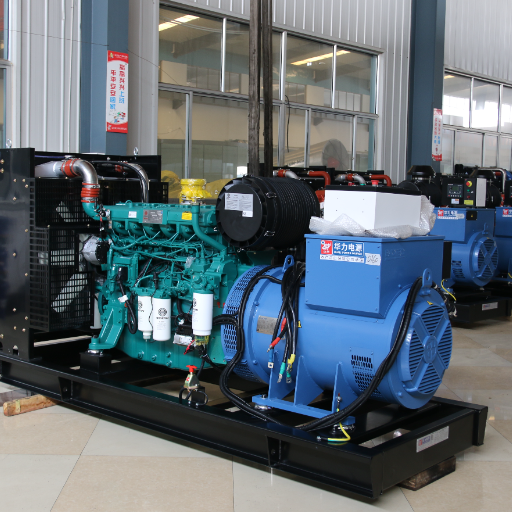
Standby power, formally Emergency Standby Power (ESP), is the ISO 8528-1 rating for a genset that carries load only when the utility supply fails. The definition holds three limits, and all three bind.
- The unit runs no more than 200 hours per year.
- The average load across any 24-hour window stays at or below 70% of rated output.
- There is no overload allowance. Not 10%, not for one minute.
Most articles stop at the 200-hour figure. The load-factor limit is the one that catches buyers out, because it binds even inside the hour cap. A 500 kVA standby set averaging 400 kVA is inside the hours rule and outside the load rule.
What sits above the 200-hour ceiling
The cap isn’t an engine limit. It’s a duty assumption: an emergency asset on a reasonably reliable grid sees outages measured in tens of hours, not hundreds.
Engine makers also publish broader standby figures, near 500 hours per year, for grids that fail frequently but briefly. That band is now formalised as Limited-Time Power. If a supplier quotes an “extended standby” rating, ask which ISO category it maps to.
What Is Prime Power (PRP)?
Prime power, or Prime Rated Power (PRP), applies when the genset is the main source of electricity rather than a fallback. ISO 8528-1 permits unlimited annual hours at PRP, provided the load varies and the 24-hour average stays at or below 70% of the rating.
“Unlimited hours” doesn’t mean “unlimited output.” A 1,000 kVA prime set can run 8,760 hours a year, and its 24-hour average still has to land near 700 kVA. Run it flat out at 950 kVA and you’ve left the rating, whatever the hour meter says.
The 10% overload allowance, and its three limits
PRP is the only rating that permits overload: 10% for one hour in every twelve. A 500 kVA prime set may briefly deliver 550 kVA. Three qualifications get left out of most explanations.
- The annual total is capped. The figure most engine makers apply sits around 25 hours per year. Treat it as application guidance, not a fixed number, and confirm it against the engine datasheet.
- It belongs to prime only. Standby and continuous carry no overload allowance. If a quote describes overload capacity on an ESP-rated set, the quote is wrong.
- It exists for motor starting, not extra capacity. The allowance absorbs inrush when a large motor kicks in. Size the running load inside the rating and let the overload handle the surge, which is why motor starting generator sizing and duty rating are two halves of one decision.
Prime-rated sets are built heavier: larger radiators, bigger oil sumps, upgraded filtration, alternators with better transient response. Mining, quarrying, and off-grid construction are prime duty by definition, which is why you’ll see heavy duty diesel generator packages specified there. Our diesel standby generator guide covers the backup side.
The Other Two Ratings: Limited-Time (LTP) and Continuous (COP)
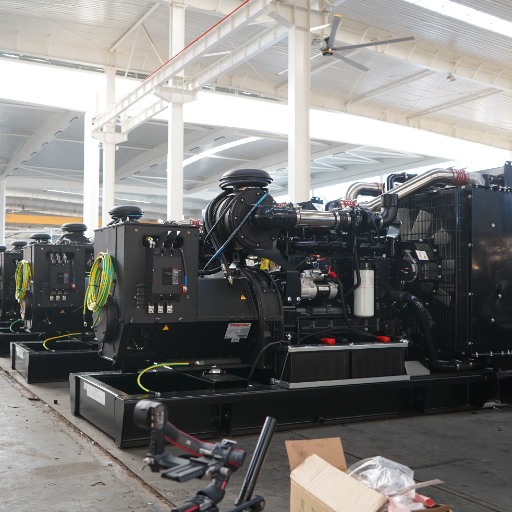
Limited-Time Power (LTP) permits up to 500 hours per year and, unusually, allows loading to 100% of the rating during that window. It carries no overload allowance. LTP suits seasonal demand: a plant running off-grid for six weeks a year, or a project bridging the gap before a permanent supply arrives.
Continuous Operating Power (COP) allows unlimited hours at a constant load near 100% of the rating, again with no overload. COP is correct when the load profile is flat: remote pumping, gas compression, steady process loads.
Specify COP where you need PRP and you pay for capacity you’ll never use. Specify PRP where you need COP and you accept a rating that assumes your load moves. Neither mistake is fatal. Specifying standby for either one is.
The Ratings Nobody Lists: DCP and MAX
ISO 8528-1 was revised in 2018, replacing the 2005 edition, and the third edition added two ratings. Walk the top results for this query and you’ll find ESP, PRP, LTP, and COP presented as though the standard stopped there. It didn’t.
| Rating | Code | Annual hours | Load factor | Overload | Typical application |
|---|---|---|---|---|---|
| Emergency Standby Power | ESP | 200 max | Variable, 24-h avg ≤70% | None | Hospital, data hall, fire pump backup |
| Prime Rated Power | PRP | Unlimited | Variable, 24-h avg ≤70% | 10% for 1 h in 12 | Off-grid mining and remote sites |
| Limited-Time Power | LTP | 500 max | Up to 100% | None | Seasonal or project power off-grid |
| Continuous Operating Power | COP | Unlimited | Constant, about 100% | None | Baseload pumping and process load |
| Data Centre Power | DCP | Unlimited | Matched to facility design | None | Data halls running off-grid, not grid-parallel |
| Maximum Power | MAX | Transient only | Peak, applied briefly | Voltage ±10%, frequency ±8%, 5 minutes | Motor starting on lower-power units |
DCP (Data Centre Power) allows unlimited running hours but prohibits sustained parallel operation with the grid. That’s the whole point of the rating. A data hall running its own plant indefinitely, disconnected from the utility, is doing something different from a facility riding alongside the grid.
MAX works differently. It isn’t a duration rating. It describes a transient peak for lower-power units: the set must hold voltage within ±10% and frequency within ±8% for five minutes. MAX answers the question of what happens in the seconds after a large load steps on.
Why the Same Engine Carries Three Different Numbers
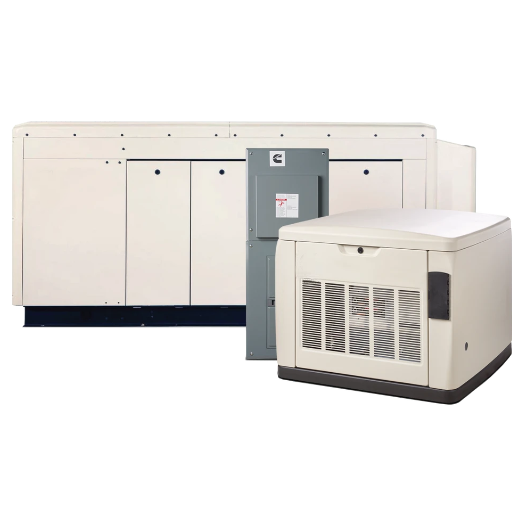
A rating isn’t a physical limit discovered in a lab. It’s a published contract defining how long the machine may run, how much load it may carry, and how often it must be serviced before overhaul.
Tomás Iglesias learned that the hard way. In early 2024 he was sourcing power for a copper concentrator in northern Chile with no grid connection. Two quotes landed on his desk: a 500 kVA standby-rated set, and a 450 kVA prime-rated set at roughly 12% more. He read 500 against 450, picked the cheaper one, and ran it eight hours a day.
The engine threw a head gasket at around 4,100 hours, and the manufacturer declined the claim because a standby-rated unit had been run in prime service. The rebuild cost more than the two quotes had differed by.
Thermal load and combustion temperature
Heat is what a rating manages. In standby duty the engine runs briefly, then rests and cools. In prime duty the heat load is continuous and must be removed as quickly as it’s generated. That’s why prime packages carry larger radiators and higher-capacity coolant pumps, and why the 70% average exists: it keeps combustion temperatures inside the range the oil and pistons were designed for.
Overhaul life and maintenance intervals
Hours drive wear, so duty drives the maintenance calendar. A prime-rated unit running 4,000 hours a year reaches overhaul somewhere in the 12,000 to 18,000 hour range. A standby unit accumulating 100 hours a year may go decades on the same components.
Standby sets are usually maintained on calendar time because hours don’t accumulate quickly; prime sets are maintained against the hour meter. Our generator load bank testing comparison covers why low-hour standby units need periodic loading anyway: an engine idling at 20% load for its whole life develops wet stacking and glazing, a different failure mode from running too hard.
The Second Axis: ISO 8528-1 Performance Classes G1 to G4
The power rating answers “how long, and how much.” ISO 8528-1 assigns a second, independent value that answers a different question: how clean is the power?
That’s the performance class, running from G1 to G4. It isn’t a marketing tier. It’s defined by how tightly the set must hold voltage and frequency when the load changes, which is the behaviour that decides whether sensitive equipment survives a transfer.
| Class | Typical loads | What it establishes |
|---|---|---|
| G1 | Lighting, resistive heating | Voltage and frequency held for steady loads |
| G2 | Pumps, fans, conveyors, motors | Accepts step loads within declared limits |
| G3 | Telecom, thyristor loads, UPS-fed systems | Tighter transient limits for distortion-sensitive equipment |
| G4 | Data centres, precision electronics | Tightest transient behavior in the standard; needed for a clean UPS handover |
A 500 kVA PRP set can be G2 or it can be G4, and both nameplates are honest. The difference shows up in the tenth of a second after a large load switches on, and it decides whether your UPS rides through the event or transfers to battery.
That’s why a prime vs standby power comparison that stops at the kW figure is only half a specification. If your load includes UPS systems, variable-speed drives, or server hardware, ask for the performance class in writing. The exact transient limits sit in the standard, published by ISO 8528-1:2018.
The Difference Between Prime and Standby Power Ratings in Numbers
Nearly every page on this topic says standby is “higher” than prime. Almost none gives you the number. Here’s the relationship that holds across the major engine platforms: standby output runs roughly 10% to 15% above prime, and prime roughly the same margin above continuous.
| Rating | Nameplate output | Relationship to prime |
|---|---|---|
| Standby (ESP) | 550 to 575 kVA | Roughly 10% to 15% above prime |
| Prime (PRP) | 500 kVA | Reference figure |
| Continuous (COP) | 425 to 450 kVA | Roughly 10% to 15% below prime |
Those bands are commercial guidance, not standard text, so treat them as a sanity check on a quote rather than a substitute for the datasheet. If a supplier’s spread is materially wider or narrower, ask them to walk you through the derivation.
One habit keeps you out of trouble here. Convert before you compare, because a set quoted in kVA and a load calculated in kW aren’t the same unit, and our kVA to kW conversion walkthrough covers the power factor step people skip. Then remember these figures are declared at ISO reference conditions of 25 °C, 100 kPa, and 30% relative humidity, so a set at 2,000 metres in a hot climate won’t deliver its nameplate. That’s the subject of generator altitude derating, and the load side starts with generator load calculation.
When Misrating Becomes a Regulatory Problem
The warranty consequence of misrating is well understood: run a standby set in prime duty and you can lose engine coverage. The regulatory consequence is less known, and it’s more expensive.
In the United States, a generator qualifies as an emergency engine under 40 CFR Part 60 Subpart IIII only while it stays inside its operating limits. Cross the line and it’s reclassified as non-emergency, which means meeting the far stricter Tier 4 Final standard.
The exemption, and where it ends
The limits are specific, and they’re set out in the regulation itself:
- No time limit during an actual outage. Emergency operation during a real utility failure isn’t capped.
- 100 hours of non-emergency running per calendar year is the outer boundary.
- Up to 50 of those hours may be non-emergency, and they may not be used for peak shaving or non-emergency demand response.
- A non-resettable hour meter is required, so running time is provable.
- Reporting through CEDRI is triggered above 100 horsepower with more than 15 hours of demand response per year, due by 31 March.
- The unit must run on ultra-low-sulfur diesel, 15 ppm sulfur maximum.
A standby-rated generator used for peak shaving therefore does two things at once: it leaves its ISO rating, and it’s drawing on a regulatory budget never sized for the job.
Once a set is non-emergency, the aftertreatment changes completely. Cummins summarises the Tier 4 pathway as a diesel oxidation catalyst, a particulate filter, and selective catalytic reduction running on diesel exhaust fluid. That’s a different machine, with more cost and a larger enclosure footprint.
Dana Whitfield found this out at a refrigerated distribution centre in Ohio. The facility runs a flat, high load around the clock, which made it a strong candidate for a utility’s demand-response programme. Between 2023 and 2025 her team ran the site’s 1,250 kVA standby genset for peak-shaving events, accumulating roughly 90 hours of non-emergency operation. That crossing put the unit outside the exemption, leaving a choice between emergency-only duty with the hour meter as evidence and a Tier 4 Final replacement.
If your site is considering demand response, settle the regulatory position before the first event.
How to Choose the Right Rating: A Five-Step Sequence
Work through these in order and the rating falls out of the answers. It’s the fastest way to settle prime vs standby power for a live project.
- Estimate annual running hours. Under 200 points to ESP. Between 200 and 500, look at LTP or a documented manufacturer extension. Above 500, move to PRP. Flat and continuous means COP.
- Establish the 24-hour average load factor. At or below 70% and varying, PRP fits. Near 100% and steady, COP is correct.
- Assess grid reliability and outage duration. A dependable grid with short interruptions means standby duty. A grid that fails for hours or days means the genset is your primary source, and that’s PRP.
- Check the regulatory classification. If the set will run for anything other than outage response, confirm the emissions category before you specify hardware.
- Apply environmental derating and confirm the performance class. Site conditions change achievable output, and G1 to G4 decides whether the power is clean enough for what you’re feeding.
Skipping these is the same pattern as generator sizing mistakes more broadly: buyers optimise the nameplate number and inherit the consequences later.
Reading the Rating on a Quote or Nameplate
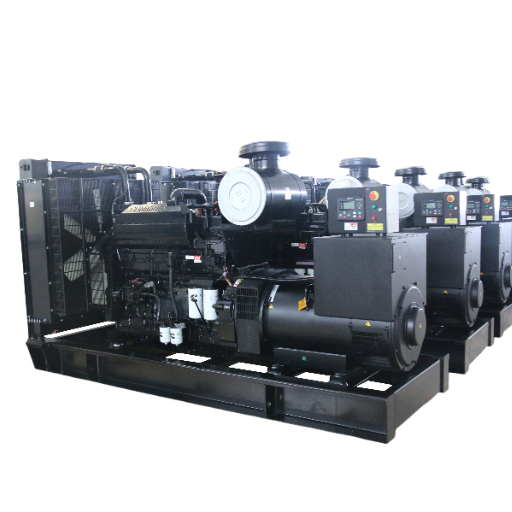
Before you approve an order, confirm four things. First, which ISO rating is stated: ESP, PRP, LTP, COP, DCP, or MAX. A bare kW figure with no rating code isn’t a specification.
Second, which performance class accompanies it, because G2 or G4 decides whether the set holds through a UPS transfer. Third, the permitted annual hours, any total overload-hour cap, and whether the figures are declared at ISO reference conditions or at site conditions. Fourth, whether the emissions classification matches how the site will actually operate the set, not how you described the duty at quotation stage.
Yusuf Karadeniz runs a good version of this check. In 2025 he was procuring a 630 kVA set for a private hospital campus in Türkiye, where the grid is stable but summer interruptions run for hours. The specification called for a standby rating.
Reading the outage log, he found the site would average around 240 annual runtime hours, outside ESP. The order was reissued as PRP before the enclosure was cut. Cost difference: a little over 9%. Cost of discovering it in year two: an engine rating review with the manufacturer, during which the campus had no backup at all.
For life-safety installations, rating also interacts with testing: our NFPA 110 Type 10 vs Type 60 breakdown covers the load-carry duration rules, and the lifecycle economics of a misrating sit in commercial standby generator cost.
Prime vs Standby Power Ratings: Frequently Asked Questions
What is the difference between prime and standby power ratings?
Standby power (ESP) permits up to 200 hours per year at a 24-hour average load of 70% or less, with no overload allowance. Prime power (PRP) permits unlimited annual hours at the same 70% average and adds a 10% overload for one hour in every twelve. For one engine, the standby figure runs roughly 10% to 15% higher.
Is a standby generator rating higher than prime?
Yes, for the same hardware. The engine is derated less aggressively for emergency duty, so the standby nameplate reads higher. It isn’t a more capable machine, just the same machine allowed a shorter duty cycle.
Can I use a standby generator for prime power?
No, not without leaving its rating. Standby duty caps the unit at 200 annual hours and carries no overload allowance, so continuous operation exceeds both limits. Running a standby set in prime service can void warranty coverage and, in the US, put the unit outside the emergency-engine exemption.
What is the difference between prime, standby, and continuous power?
Standby is limited to 200 hours per year with no overload. Prime allows unlimited hours at a variable load with a limited 10% overload. Continuous allows unlimited hours at a constant load near 100% of the rating, with no overload.
How many hours per year can a standby generator run?
ISO 8528-1 caps the ESP rating at 200 hours per year. Manufacturer-extended standby ratings of up to about 500 hours exist for grids with frequent outages, and that band maps to the LTP rating. Emergency operation during a real outage isn’t counted against the separate US limit on non-emergency running.
Does prime power mean unlimited hours?
It means unlimited hours at a variable load with a 24-hour average of 70% or less. The hours are unlimited; the load is not. Constant operation near 100% of the rating is continuous power (COP), a different specification.
The Bottom Line
The difference between prime and standby power ratings is a pair of limits, not a pair of prices. Standby caps you at 200 hours a year and gives you no overload. Prime gives you unlimited hours at a variable load and a limited 10% overload. Continuous adds a flat profile and takes the overload away.
Three habits separate a well-specified order from an expensive lesson. Know your annual hours and your 24-hour average load factor. Ask for the performance class beside the power rating, because the same kVA can arrive as G2 or G4. And check the emissions classification if the set will ever run for anything but an outage.
Shandong ZC Power has built diesel generator sets since 1999 at our 300,000-square-metre facility in Jining, Shandong, where every unit is load-bank tested and documented against its declared rating in our national standard testing centre. The range runs 8 kVA to 4000 kVA in open, silent, trailer, and containerized form.
Contact our engineering team with your load list, annual runtime estimate, and site conditions. We’ll confirm which rating your project needs, in writing, before you commit.