Heavy Duty Diesel Generator Fuel Consumption: Chart & Guide (500kW–4,000kW)
A heavy duty diesel generator typically consumes 0.20–0.25 liters per kWh (0.05–0.07 gallons per kWh) at full load, with hourly burn rising from roughly 100 L/h for a 500kW unit to over 800 L/h for a 4,000kW unit. Actual consumption depends on load factor, engine efficiency, site conditions, and maintenance quality.
For a broader foundation on industrial gensets, read our heavy duty diesel generator buying guide.
That single number rarely matches reality on site. In 2022, a Nigerian data center operator sized a 1,000kW genset using the manufacturer’s brochure figure of 190 L/h at 75% load. The brochure was accurate for 1000kW diesel generator fuel consumption under test conditions. What the operator missed was that his average load was only 35%, and the older Cummins engine in the rented backup unit was running richer than specified. Real burn came in at 145 L/h instead of the planned 95 L/h. Over 2,000 hours of annual testing, the fuel budget was off by nearly $120,000.
Fuel is usually the largest cost of owning a diesel generator, not the purchase price. This guide gives you the exact formula, a heavy duty diesel generator fuel consumption chart, and the practical adjustments that prevent budgets from collapsing.
Key Takeaways
- Heavy duty diesel generator fuel consumption at full load is typically 0.20–0.25 L/kWh (0.05–0.07 gal/kWh).
- Use the formula Fuel (L/h) = [kW × Load Factor × SFC (g/kWh)] ÷ [1,000 × Diesel Density (kg/L)] for site-specific estimates.
- Generators are most efficient at 60–80% load; below 30% load, fuel use per kWh can rise 40–60% and cause wet stacking.
- Fuel tank sizing should target 24–72 hours of autonomy at the expected average load, not nameplate kW.
- Altitude and high ambient temperature can increase fuel consumption per kWh by 2–5% per 1,000m due to derating.
What Is Heavy Duty Diesel Generator Fuel Consumption?
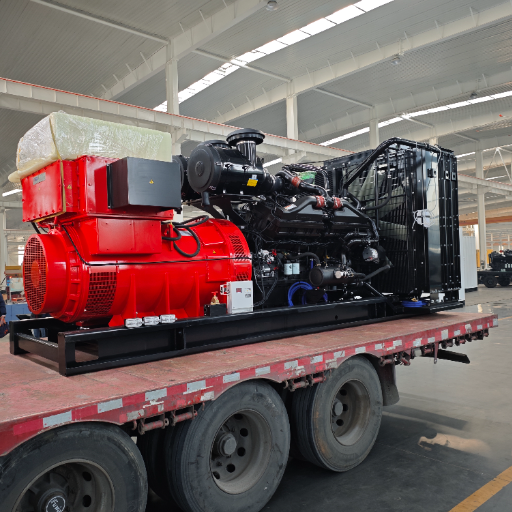
Heavy duty diesel generator fuel consumption is the rate at which a large industrial genset burns diesel fuel, usually expressed in liters per hour (L/h) or gallons per hour (gal/h). It is driven by the real electrical load, the engine’s specific fuel consumption (SFC), and site conditions such as altitude and temperature.
Most buyers confuse fuel consumption with fuel efficiency. Consumption is a volume rate: how many liters the engine burns per hour. Efficiency is an output ratio: how much useful electrical energy the generator produces per liter burned. A 2,000kW genset and a 500kW genset may have similar efficiency, but the larger unit consumes far more fuel because it produces more power.
The key engineering metric is Specific Fuel Consumption (SFC), measured in grams per kWh (g/kWh). Modern heavy duty diesel engines typically achieve 200–230 g/kWh at rated load. Older or mechanically governed engines may run closer to 240–260 g/kWh. GenPowerUSA’s complete guide to diesel generator fuel use uses a similar 0.1 gal/kWh rule of thumb for smaller units; the same principle scales upward for heavy-duty gensets.
At Shandong ZC Power CO., LTD. (ZC Power), we specify gensets from 8kVA to 4,000kVA. When a procurement team asks us for a fuel estimate, we always ask two questions first: what is the real average load, and what are the site conditions? The answer changes the number significantly.
The Engineering Formula for Fuel Consumption
There are two ways to estimate heavy duty diesel generator fuel consumption: the precise SFC method and the quick rule of thumb.
Formula 1: Using Specific Fuel Consumption (SFC)
This is the method factory engineers use when they know the engine’s certified SFC:
Fuel (L/h) = [Rated Power (kW) × Load Factor × SFC (g/kWh)] ÷ [1,000 × Diesel Density (kg/L)]
Where:
- Rated Power (kW) = generator electrical output rating
- Load Factor = actual load ÷ rated load (as a decimal)
- SFC (g/kWh) = engine specific fuel consumption from datasheet
- Diesel Density ≈ 0.84 kg/L at 15°C
Formula 2: Quick Rule of Thumb
For fast estimates when you do not have the exact SFC:
Fuel (L/h) ≈ kW Output × 0.22 to 0.25 L/kWh
Fuel (gal/h) ≈ kW Output × 0.06 to 0.07 gal/kWh
A 1,000kW generator at full load therefore burns roughly 220–250 L/h (58–66 gal/h). At 75% load, the same unit burns approximately 165–190 L/h.
Diesel Density Note
Diesel density varies with temperature and fuel grade. At 15°C, standard diesel is about 0.84 kg/L. In hot climates, density can drop to 0.82 kg/L, which slightly increases the volume consumed for the same energy. For rough estimates, 0.84 is sufficient. For precise tender documents, use the density specified by your fuel supplier.
Worked Example: 1,000kW at 75% Load
A mining site runs a 1,000kW prime-rated genset at an average 750kW electrical output. The engine datasheet lists SFC at 210 g/kWh at that load point.
Fuel (L/h) = [1,000 × 0.75 × 210] ÷ [1,000 × 0.84]
Fuel (L/h) = 157,500 ÷ 840
Fuel (L/h) = 187.5 L/h
Over 7,000 running hours per year, that is 1,312,500 liters. At 1.10/Ldeliveredtoaremotemine, the annualfuelbillisroughly1.10/Ldeliveredtoaremotemine, the annualfuelbillisroughly1,443,750. A 5% efficiency improvement from a newer engine would save over $72,000 per year.
Using the Formula as a Generator Fuel Consumption Calculator
The same SFC formula works as a generator fuel consumption calculator for any kW rating and load factor. Simply enter your actual output kW, engine SFC, and local diesel density. Many procurement teams build this into a spreadsheet so they can test multiple load scenarios before sizing fuel tanks or signing fuel supply contracts.
The chart below gives practical L/h and gal/h estimates for common industrial ratings at 50%, 75%, and 100% load. These figures assume a modern engine with SFC around 210 g/kWh and diesel density of 0.84 kg/L. They align with published diesel generator fuel consumption chart data from Generator Source, extended upward for the 500kW–4,000kW heavy-duty range.
Metric Chart (L/h)
| Genset Rating | 50% Load | 75% Load | 100% Load |
|---|---|---|---|
| 500kW | 55–65 | 82–98 | 115–130 |
| 750kW | 82–98 | 125–145 | 170–195 |
| 1,000kW | 110–130 | 165–190 | 220–250 |
| 1,500kW | 165–195 | 245–285 | 330–375 |
| 2,000kW | 220–260 | 330–380 | 440–500 |
| 3,000kW | 330–390 | 495–570 | 660–750 |
| 4,000kW | 440–520 | 660–760 | 880–1,000 |
Imperial Chart (gal/h)
| Genset Rating | 50% Load | 75% Load | 100% Load |
|---|---|---|---|
| 500kW | 15–17 | 22–26 | 30–34 |
| 750kW | 22–26 | 33–38 | 45–52 |
| 1,000kW | 29–34 | 44–50 | 58–66 |
| 1,500kW | 44–52 | 65–75 | 87–99 |
| 2,000kW | 58–69 | 87–100 | 116–132 |
| 3,000kW | 87–103 | 131–151 | 174–198 |
| 4,000kW | 116–137 | 174–201 | 232–264 |
How to Use the Chart
Find your genset rating in the left column. Then select the column that matches your realistic average load factor, not your nameplate kW. A 1,000kW genset running at 50% load consumes roughly half the fuel of the same unit at 100% load, but not exactly half because part-load efficiency is worse. Use the SFC formula when you need a precise heavy duty diesel generator fuel consumption number for budgeting or fuel tank sizing.
For a deeper look at matching generator size to real load, see our heavy duty diesel generator sizing guide.
How Load Factor Affects Fuel Use
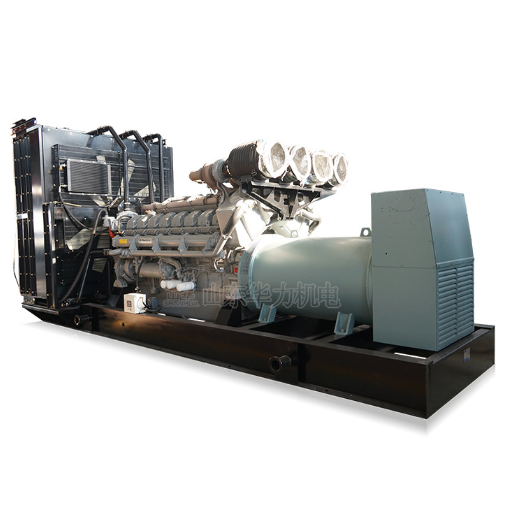
Load factor has a nonlinear effect on heavy duty diesel generator fuel consumption. Diesel engines are tuned for a narrow optimal range. Move outside that range, and fuel use per kWh rises.
Part-Load Efficiency Curve
At 100% load, the engine runs at its design combustion temperature and turbo boost. Efficiency is high. At 75% load, efficiency drops slightly. At 50% load, it drops more. Below 30% load, every kWh produced costs significantly more fuel.
Why Low Load Increases L/kWh
At low loads, the engine does not generate enough exhaust energy to drive the turbo efficiently. Combustion temperatures fall, fuel atomization suffers, and a larger proportion of each injection event is wasted as heat rather than converted to mechanical work. The engine still burns fuel to overcome internal friction and pump losses, but produces little useful output.
Wet Stacking Explained
Wet stacking occurs when a diesel engine runs below 30% load for extended periods. Unburned fuel and carbon deposits accumulate in the exhaust system, turbocharger, and aftertreatment. The engine smokes, oil dilutes, and long-term damage accelerates.
In 2021, a hospital in Southeast Asia installed a 2,000kW standby genset for a load that rarely exceeded 400kW. Monthly exercise runs at no-load made the problem worse. Within 18 months, the diesel particulate filter was saturated and the turbo needed replacement. Fuel economy had degraded by nearly 15%.
Optimal Operating Range
For heavy-duty diesel generator fuel efficiency, target 60–80% of rated load during normal operation. This keeps the engine in its thermal efficiency sweet spot and avoids wet stacking. If your average load is consistently below 40%, consider load banking, load sequencing, or a smaller genset.
Engine Brand and Technology Differences
Engine choice is one of the biggest drivers of fuel consumption in heavy-duty diesel generators. Not all diesel engines deliver the same SFC. Brand, injection technology, turbocharging, and aftercooling all matter.
Typical SFC Ranges by Engine Brand
| Engine Brand | Typical SFC at Full Load | Notes |
|---|---|---|
| Cummins | 200–220 g/kWh | Common-rail QSK series widely used in data centers |
| Perkins | 205–225 g/kWh | Strong in mid-range prime power |
| Volvo | 195–215 g/kWh | High-efficiency marine/industrial engines |
| MTU | 195–210 g/kWh | Premium SFC, common in critical facilities |
| Weichai | 205–230 g/kWh | Cost-effective for heavy industrial duty |
| Yuchai | 210–235 g/kWh | Strong service network in Africa and Asia |
Common-Rail vs Mechanical Injection
Modern common-rail electronic injection systems deliver fuel at extremely high pressure with multiple injection events per cycle. This improves atomization, reduces smoke, and lowers SFC by 5–10% compared to older mechanical injection pumps.
Turbocharging and Aftercooling
Turbocharged engines compress more air into the cylinders, allowing more complete combustion. Aftercoolers (intercoolers) reduce the compressed air temperature, increasing air density further. Together, these technologies improve fuel efficiency and reduce emissions.
At ZC Power, we match the engine brand and technology to the duty cycle. A mine running 7,000 hours per year justifies a higher-efficiency engine because fuel savings repay the premium. A standby unit running 50 hours per year may not.
Calculating Operating Cost per kWh
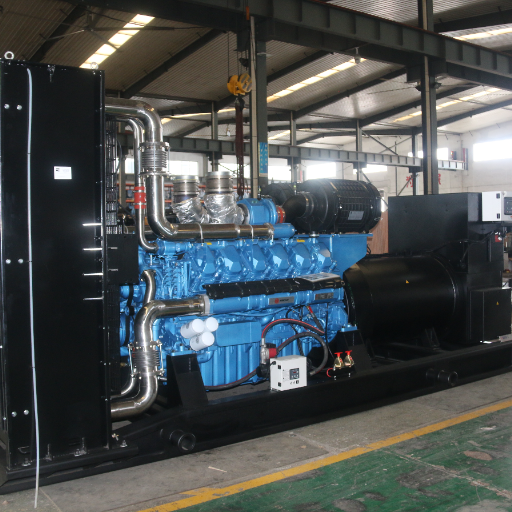
Heavy duty diesel generator fuel consumption is only part of the operating cost. A complete cost-per-kWh calculation includes fuel, lubricating oil, routine maintenance, and overhaul reserves. Vosto Machinery’s professional analysis of diesel generator operating costs per kWh shows how engine brand and SFC translate into long-term cost differences.
Full Operating Cost Formula
Operating Cost ($/kWh) = Fuel Cost + Lube Oil Cost + Maintenance Reserve + Overhaul Reserve
Component Breakdown
| Cost Component | Typical Range | Calculation Basis |
|---|---|---|
| Fuel | 0.22–0.22–0.35/kWh | Diesel price × SFC ÷ alternator efficiency |
| Lube oil | 0.005–0.005–0.012/kWh | Oil changes, top-ups, filters |
| Maintenance | 0.010–0.010–0.025/kWh | Filters, belts, hoses, labor |
| Overhaul reserve | 0.010–0.010–0.020/kWh | Major rebuild reserve over 20,000–30,000 hours |
| Total | 0.25–0.25–0.41/kWh | Varies heavily by duty cycle and site |
Example: 1,000kW Genset at $1.20/L Diesel
Assume 210 g/kWh SFC, 0.84 kg/L density, $1.20/L diesel, and 7,000 hours per year at 75% load:
- Fuel consumption: 187.5 L/h
- Electrical output: 750 kW
- Fuel cost per kWh: (1.20/L×187.5L/h)÷750kW=∗∗1.20/L×187.5L/h)÷750kW=∗∗0.30/kWh**
- Add lube, maintenance, and overhaul reserve: 0.34–0.34–0.38/kWh total
This is why lifecycle cost usually exceeds purchase price by 2–3× over 10 years for prime-power gensets.
Want to see how fuel planning fits into remote power systems? Read our guide on heavy duty diesel generator for mining.
For a current, detailed breakdown of what drives each quote, our heavy duty diesel generator price guide for 2026 shows how engine tier, enclosure, controls, and logistics shape the final number.
Fuel Tank Sizing for Heavy Duty Generators
Fuel tank sizing must be based on real heavy duty diesel generator fuel consumption, not guesswork. Undersized tanks create supply risk. Oversized tanks add cost and environmental compliance burden.
Autonomy Rule of Thumb
| Application | Typical Autonomy |
|---|---|
| Standby/urban | 8–24 hours |
| Prime power with reliable fuel delivery | 24–48 hours |
| Remote mine or islanded grid | 48–72 hours |
| Hurricane/cyclone season or seasonal access | 72–168 hours |
Tank Capacity Formula
Tank Capacity (L) = Average Fuel Consumption (L/h) × Autonomy Hours × 1.1
The 1.1 multiplier provides a 10% safety margin and accounts for unusable bottom volume.
Example: 1,500kW Genset, 72 Hours
A remote site runs a 1,500kW genset at an average 70% load. Using the quick rule of thumb:
- Output: 1,500 × 0.70 = 1,050 kW
- Consumption: 1,050 × 0.23 = 241.5 L/h
- Tank capacity: 241.5 × 72 × 1.1 = 19,127 L
Round up to the nearest standard tank size, in this case 20,000 L.
Site Conditions That Increase Consumption
Site conditions change both the usable power output and the heavy duty diesel generator fuel consumption per kWh.
Altitude Derating
At high altitude, thinner air reduces oxygen available for combustion. The engine controller injects more fuel to compensate, but maximum power falls. A common rule is ~1% derating per 100m above 1,000m for naturally aspirated engines; turbocharged engines fare better but still derate at altitude. Because the same electrical work must be done by a smaller effective engine, fuel consumption per kWh rises. Total consumption may stay similar, but the genset must work harder relative to its rating.
Temperature Derating
High ambient temperature reduces cooling system capacity and air density. A common rule is ~3% derating per 10°C above 40°C. This also pushes the engine away from its optimal operating point.
Dust and Filter Restriction
Clogged air filters increase intake restriction, reducing turbo efficiency and forcing richer fueling. In dusty mining environments, filter maintenance intervals may need to drop from 500 hours to 250 hours or less.
Fuel Quality
Low-quality diesel with high sulfur or water content reduces combustion efficiency and accelerates injector wear. Remote sites should use on-site filtration and water separators to protect fuel economy.
For more on matching generator ratings to site conditions, see our explanation of prime vs standby power ratings.
How to Reduce Heavy-Duty Diesel Generator Fuel Consumption
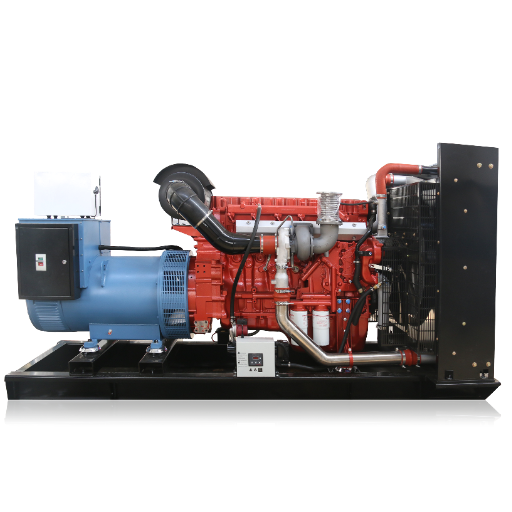
Reducing heavy duty diesel generator fuel consumption starts with specification and continues through operation.
Right-Sizing
An oversized genset spends most of its life at low load. Right-sizing ensures the unit operates in the 60–80% efficiency window. If your peak load is 800kW but average load is 400kW, consider two smaller units in parallel rather than one 1,000kW unit.
Load Management and Sequencing
Stagger the startup of large motors. Use soft starters or VFDs to reduce inrush. In multi-genset installations, sequence units so each runs at higher average load rather than all units at low load.
In 2023, a data center in Lagos resequenced its two 1,000kW gensets from parallel N+1 operation to single-unit rotation. Each unit now ran at 65–75% load instead of 35–40%. Annual fuel savings exceeded 12%.
Load Banking and Exercise
Standby units should be exercised monthly with a load bank at 50–75% rated load for 30–60 minutes. This burns off carbon deposits and keeps the engine near its efficient operating temperature.
Maintenance Best Practices
A disciplined generator maintenance contract keeps fuel consumption close to the manufacturer’s specification. Key tasks include:
- Replace air and fuel filters on schedule
- Calibrate injectors every 2,000–4,000 hours
- Check turbocharger boost pressure
- Maintain coolant temperature within specification
- Use the correct grade of lubricating oil
To build a service program that actually protects your investment, our guide to heavy duty diesel generator maintenance lays out hour-based intervals, fuel and oil care, and predictive monitoring practices.
Hybrid Battery-Diesel Options
For sites with large load swings, a battery energy storage system can absorb peaks and allow the diesel engine to run at a steady, efficient setpoint. Fuel savings of 15–30% are possible in the right application.
Common Mistakes in Fuel Estimates
Even experienced engineers make these errors when estimating heavy-duty diesel generator fuel consumption.
Using nameplate kW instead of actual load. A 1,000kW genset running at 400kW average does not burn 1,000kW worth of fuel. Use the real load profile.
Ignoring the part-load penalty. Fuel use does not scale linearly with load. At 25% load, you may burn 40–60% more fuel per kWh than at full load.
Forgetting derating. Altitude and temperature reduce usable output and increase specific fuel consumption. Apply site conditions before sizing fuel systems.
Undersizing fuel tanks. Tank sizing must use realistic consumption and autonomy requirements, not a 24-hour rule of thumb.
Buying low-efficiency engines. A cheaper engine with 230 g/kWh SFC costs far more over 10,000 hours than an efficient engine with 205 g/kWh SFC.
When to Involve a Factory Engineer
Some heavy duty diesel generator fuel consumption estimates are simple; others require detailed analysis. Contact a factory engineer when:
- Total load exceeds 1,000kW or operating hours exceed 2,000 per year
- The site is above 1,500m altitude or regularly exceeds 45°C
- Fuel costs dominate the lifecycle financial model
- Multiple gensets operate in parallel or with load banks
- You need fuel tank sizing and fuel system design
- The application is prime power or continuous duty
At ZC Power, our team of 80+ engineers analyzes load profiles, selects engines for efficiency, and sizes fuel systems for autonomy. Every genset we build is load-bank tested in our national standard testing center before shipment.
Contact the ZC Power Engineering Team for a free fuel consumption estimate and factory-direct proposal.
Conclusion
Heavy duty diesel generator fuel consumption is not a single number. It is a function of load factor, engine efficiency, site conditions, and operating practice. At full load, expect 0.20–0.25 L/kWh. At part load, account for the efficiency penalty. At altitude or in extreme heat, add derating margin.
Use the SFC formula for precise estimates. Use the consumption chart for quick reference. Size fuel tanks for real autonomy needs, not guesswork. And choose an engine technology that matches your duty cycle, because fuel and maintenance will usually cost more than the genset itself.
At ZC Power, we have been building diesel generator sets from 8kVA to 4,000kVA since 1999. If you are planning a project and need accurate fuel estimates, our engineers can calculate consumption for your real load profile and recommend the right engine, tank size, and operating strategy.
Request Your Free Fuel Consumption Estimate and get a factory-direct quote for your next heavy duty diesel generator.