
Three-Phase Generator Sizing: Formulas, Voltage Configs & Worked Examples (2026)
To size a three-phase generator, convert your total load to kVA with the formula kVA = (V × I × 1.732) / 1,000, verify the load is balanced across all three phases, confirm the largest motor can start without excessive voltage dip, and add 20% to 25% margin. That is the whole method in one sentence.
Here is the part most sizing guides skip: the majority of industrial undersizing failures we see are not capacity errors. They are phase errors. A buyer totals up the kilowatts correctly, orders the right kVA on paper, and then cooks a stator winding because every single-phase load landed on L1. Three phase generator sizing is a per-phase discipline, not a total-power discipline, and this guide treats it that way.
This is one chapter of the full sizing process. Our complete generator sizing guide covers load inventory, duty ratings, derating, and margin from start to finish.
Sizing a system now? Send your phase-by-phase load list to our engineering team for a free three-phase sizing review. Contact ZC Power.
Key Takeaways
- The core formula is kVA = (V × I × 1.732) / 1,000, using line-to-line voltage. The 1.732 is √3, and dropping it underestimates power by 42%.
- Size per phase, not just in total: no phase may exceed its rated current, and no single-phase load between two lines should exceed one-third of the three-phase rating without manufacturer confirmation.
- ISO 8528-3 limits continuous negative phase sequence current to 10% of rated current; NEMA MG1-32 allows 10% current unbalance. These are the numbers behind the informal “1/3 rule.”
- A 480V/60Hz specification and a 400V/50Hz specification are not interchangeable. Confirm voltage configuration and frequency before comparing quotes.
- Motor starting surge hits phases individually. A balanced running load can still fail the starting test.
What Is Three-Phase Power?
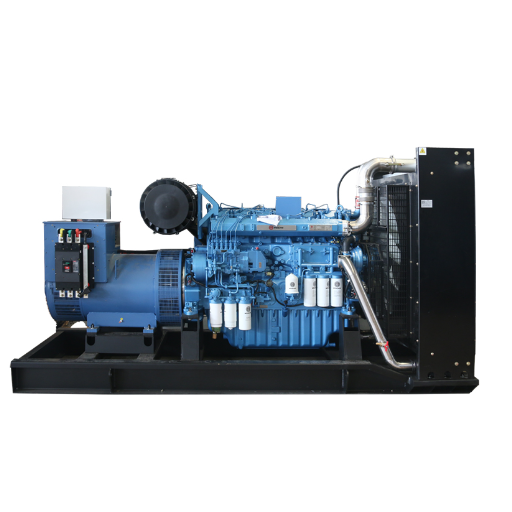
Three-phase power delivers electricity through three alternating currents offset by 120 degrees, so total power delivery stays nearly constant. Single-phase power pulses to zero 100 or 120 times per second. That constant delivery is why motors run smoother, start stronger, and convert power about 1.5 times more efficiently on three-phase supply.
Picture three sine waves, each peaking at a different moment. When one phase crosses zero, the other two are carrying the load. A single-phase motor needs capacitors and starter windings to fake that rotating field; a three-phase motor gets it for free, which is why anything above roughly 5 HP is almost always wound for three-phase.
| Factor | Single-Phase | Three-Phase |
|---|---|---|
| Power delivery | Pulsing (hits zero each half-cycle) | Nearly constant |
| Motor starting torque | Low; needs start capacitors | High; self-starting |
| Conductor material for same kW | Baseline | ~25% less copper |
| Typical applications | Homes, small offices, lighting | Industry, HVAC, commercial buildings |
| Common genset range | 5–50 kVA | 20–4,000 kVA |
| Cost per kW of capacity | Higher | Lower |
Is a three-phase generator cheaper to run? The energy costs the same either way, but three-phase transmission uses less conductor material and three-phase motors waste less as heat, so the system-level cost per delivered kilowatt is lower. The advantages compound with size, which is why utilities supply factories in three-phase and homes in single-phase.
When Do You Actually Need Three-Phase?
Specify three-phase when any of these are true: you run motors over 5 HP, your utility service is three-phase, your total load exceeds roughly 50 kVA, or you supply a commercial building with rooftop HVAC. If your utility service is already three-phase, the question answers itself: your backup genset must match it.
Three-Phase Voltage Configurations Explained
Before you size anything, confirm which configuration you are sizing for. “Three-phase” describes the waveform, not the voltage, and the same kVA rating delivers very different current at different voltages.
| Configuration | Line-to-Line / Line-to-Neutral | Frequency | Typical Applications & Regions |
|---|---|---|---|
| 208/120V wye | 208V / 120V | 60 Hz | US light commercial, small industry |
| 240V delta | 240V / none standard | 60 Hz | Older US industrial, high-leg delta sites |
| 480/277V wye | 480V / 277V | 60 Hz | US industrial plants, large HVAC, data centers |
| 600/347V wye | 600V / 347V | 60 Hz | Canadian industrial |
| 400/230V wye | 400V / 230V | 50 Hz | Europe, Africa, Middle East, most of Asia |
| 415/240V wye | 415V / 240V | 50 Hz | UK legacy, Australia, parts of Africa |
| 380/220V wye | 380V / 220V | 50 Hz | South America, China, parts of Asia |
This table answers the question no US-focused competitor bothers with: what your configuration is called in the market you are actually buying for. A genset is not “a 250 kVA unit.” It is a 250 kVA unit at a specified voltage and frequency, and the alternator is wound, or reconnected, for exactly that point.
Wye vs Delta
A wye configuration connects one end of each winding to a common neutral point, which gives you two usable voltages: line-to-line (480V) and line-to-neutral (277V). Delta connects the windings in a closed loop with no neutral, so single-phase taps are limited or unavailable. For generator applications, wye dominates because most sites need the neutral for lighting and office loads.
12-Lead Reconnectable Alternators
Most industrial alternators ship with 12 leads that can be reconnected between configurations: series wye, parallel wye, series delta, and more. One frame can serve 208V, 240V, 480V, or 400V/50Hz markets. The kVA rating changes slightly with reconnection because winding current limits stay fixed, so always confirm the rating at your configured voltage, not the catalog headline. At ZC Power we reconnect and re-rate 12-lead alternators on the production line for every export order, and the datasheet we issue reflects the configured point, not the generic frame.
50 Hz vs 60 Hz
Frequency is set by engine speed: 1,800 rpm for 60 Hz, 1,500 rpm for 50 Hz on a 4-pole alternator. A 60 Hz unit run at 50 Hz must be derated, and voltage per hertz must stay within the alternator’s design envelope. This is why a 480V/60Hz quote and a 400V/50Hz quote are not the same machine with a different sticker. Specify both numbers, every time.
The Three-Phase Generator Sizing Formula
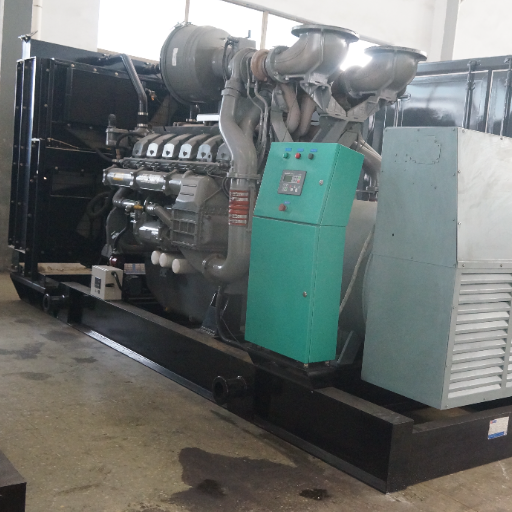
Keep this reference block; it is the entire mathematical core of three phase generator sizing:
- kVA = (V × I × 1.732) / 1,000
- kW = kVA × PF (0.8 for standard diesel gensets)
- I = (kVA × 1,000) / (V × 1.732)
Worked example. Your clamp meter reads 180 A per phase on a 480V system: kVA = (480 × 180 × 1.732) / 1,000 = 149.7 kVA, which is 120 kW at 0.8 PF. Reverse it for current: a 250 kVA genset at 480V delivers (250 × 1,000) / (480 × 1.732) = 301 A rated line current.
The 1.732 is √3, and it exists because line-to-line voltage spans two phase windings whose peaks are offset by 120 degrees. Forgetting it underestimates three-phase power by 42%, the single most common spreadsheet error in the load lists our engineers review. For the power factor side of the math, see our kVA to kW conversion guide.
Three-Phase kVA to Amps Quick Reference
| Genset Rating | Amps at 480V/60Hz | Amps at 400V/50Hz |
|---|---|---|
| 100 kVA | 120 A | 144 A |
| 250 kVA | 301 A | 361 A |
| 350 kVA | 421 A | 505 A |
| 500 kVA | 601 A | 722 A |
Rated current drives breaker selection, cable sizing, and transfer switch ratings, so calculate it before you sign anything.
Three-Phase Generator Load Calculation Step by Step
- Inventory loads by phase, not just in total. Record every load with its voltage, phase connection, running current, and power factor. The phase column is the one most spreadsheets omit, and the one that matters most.
- Convert everything to kVA at one reference voltage. Mixed 480V and 208V loads cannot be compared until they share a unit. Our generator load calculation guide walks through the full measurement method.
- Identify the largest motor and its starting method. A 50 HP motor started direct-on-line draws roughly six times its running kVA for several seconds. The surge, not the running load, often sets the genset size; our motor starting generator sizing guide covers that analysis in full.
- Apply a diversity factor. Not everything runs at once. Industrial sites typically diversify to 80% to 90% of connected load.
- Check phase balance. Assign single-phase loads to keep per-phase currents within 10% of each other (the next section gives the standards behind that number).
- Add 20% to 25% margin and match a standard rating. Round up to a standard frame: 250, 350, 500 kVA. Verify the result with the generator sizing calculator.
A quick illustration: a machine shop totals 92 kW across 480V three-phase machines and 120V single-phase office loads. Converted at 0.8 PF that is 115 kVA running. The largest motor, a 25 HP lathe spindle started direct-on-line, surges about 112 kVA. With diversity and margin, the specification lands at 175 kVA, not the 125 kVA a running-load-only calculation would suggest.
Balanced vs Unbalanced Loads: The Section Every Guide Skips
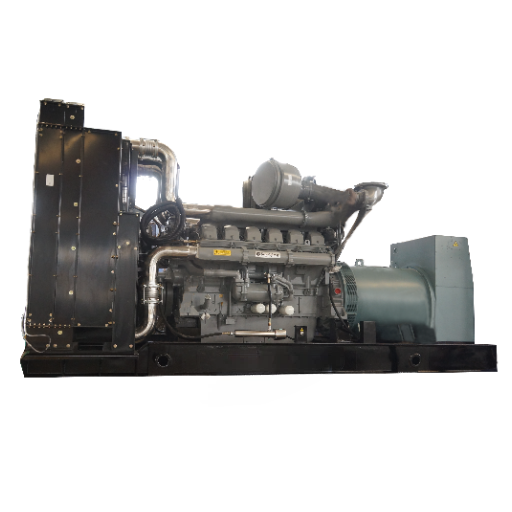
An unbalanced load forces one or two stator windings to carry more current than the third. The imbalance creates negative-sequence currents that heat the rotor, and sustained imbalance overheats the heavily loaded winding until its insulation fails. Unbalanced loading is one of the leading causes of premature alternator failure.
This is not folklore. The standards put hard numbers on it:
| Standard | Limit |
|---|---|
| ISO 8528-3 | 10% negative phase sequence current, continuous |
| IEC 60034-1 | 5% negative-sequence component (8% for open-ventilated machines) |
| NEMA MG1-32 | 10% continuous current unbalance |
The informal industry rule says a single-phase load between any two lines should not exceed one-third of the genset’s three-phase rating. Manufacturer application data, including Cummins Generator Technologies guidance, refines it: smaller frames can tolerate single-phase draws up to roughly two-thirds of the three-phase rating, while above about 500 kVA the 10% unbalance limit governs absolutely. The safe working rule: stay inside one-third unless the alternator datasheet for your specific frame says otherwise, and never exceed nameplate line current on any phase.
Keeping balance is a checklist, not a hope: distribute single-phase loads across all three phases at the panel, verify with a clamp meter after commissioning, and recheck whenever you add equipment. For broader configuration context, Generator Source documents how voltage options interact with single-phase taps.
When a textile mill outside Lagos specced a 250 kVA genset, the arithmetic was correct: 190 kVA of running load with sensible margin. But the installer had landed every single-phase lighting and office circuit on L1. Phase currents measured 340 A, 210 A, and 195 A. The overloaded winding ran hot for four months before its insulation carbonized. A rebalanced load schedule, plus a per-phase sizing review, is what the original purchase needed. The kVA was right; the phase math was never done.
Can You Run Single-Phase Loads on a Three-Phase Generator?
Yes, within limits. Connect single-phase loads line-to-neutral on a wye system, distribute them across all three phases, keep any single load under one-third of the three-phase rating, and never exceed rated current on any phase. Heavy single-phase demands may require derating the genset or reconnecting the alternator.
Worked Example: Sizing a Three-Phase Generator for a Manufacturing Plant
A fabrication plant runs this load schedule on a 480/277V wye service:
| Load | kW | PF | Running kVA | Phase Notes |
|---|---|---|---|---|
| Compressor A, 50 HP, DOL start | 37 | 0.8 | 47 | Three-phase |
| Compressor B, 50 HP, soft starter | 37 | 0.8 | 47 | Three-phase |
| Welders (3) | 60 | 0.7 | 86 | Spread across phases |
| HVAC | 40 | 0.8 | 50 | Three-phase |
| Lighting & office | 25 | 0.9 | 28 | Single-phase, balanced |
Running total: 199 kW and 258 kVA. Add 25% margin: 322 kVA, so the shortlist is a 350 kVA genset (280 kW at 0.8 PF), which runs at 74% of rating at peak.
Now the checks a running-load calculation misses. First, motor starting: with everything else running (211 kVA base), compressor A starts direct-on-line at roughly 280 kVA surge. Momentary demand is 491 kVA against the 350 kVA genset. Estimated voltage dip: (280 / 350) × 15% reactance = 12%, inside the 15% industrial limit. Second, phase balance: the 28 kVA of single-phase load spreads to about 9 to 10 kVA per phase, roughly 3% of rated current per phase, comfortably inside ISO 8528-3. Both checks pass, and 350 kVA is confirmed rather than assumed.
For diesel-specific factors at this scale (duty rating, fuel, cooling), our heavy duty diesel generator sizing guide picks up where the electrical math ends. And if this same plant were in a 50 Hz market, the identical process runs at 400V: the kVA numbers barely move, but the amps table above shows current rising 20%, which changes cable and breaker selection.
Voltage and frequency assumptions can sink a project even when the kVA is right. A Peruvian mining contractor ordered a standby unit configured 480V/60Hz for a site whose grid was 380V/50Hz. The mismatch surfaced at commissioning. Because the alternator was a 12-lead reconnectable frame, the unit was reconnected to 380/220V wye and re-governed to 1,500 rpm with a modest derate, and the project recovered. The buyer now writes voltage, configuration, and frequency into every RFQ line, which is the habit this section exists to build.
Three-Phase Generator Sizing Mistakes
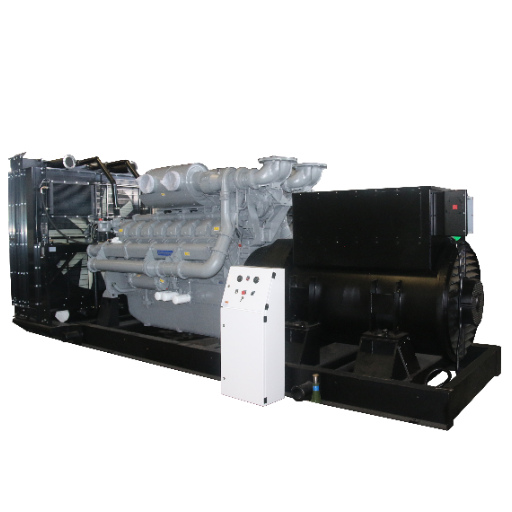
- Sizing on total kW while ignoring per-phase current. A 250 kVA genset at 480V is a 301 A per-phase machine. Any load plan that pushes one phase past 301 A fails, no matter what the total says.
- Assuming the 1/3 single-phase tap is always safe. It is a conservative rule of thumb, not a standard. Small frames tolerate more; large frames tolerate less. Check the alternator datasheet.
- Mixing 208V and 480V loads without a common reference. Add kVA, never amps, and convert everything to one voltage before comparing.
- Forgetting that starting current is per-phase. A motor surge hits the phases it is wired to. Balanced running loads can still fail the starting test.
- Specifying 60 Hz configurations for a 50 Hz market. A 480V/60Hz unit is not a 400V/50Hz unit. State both numbers in the RFQ, as the Peru project learned.
Conclusion
Sound three phase generator sizing comes down to five moves: convert the load with kVA = (V × I × 1.732) / 1,000, confirm the voltage configuration and frequency, inventory loads phase by phase, respect the imbalance limits in ISO 8528-3 and NEMA MG1-32, and verify the largest motor can start inside the voltage dip limit. Total kVA gets the headline; per-phase math decides whether the machine survives.
At Shandong ZC Power CO., LTD., we build and reconnect three-phase gensets from 20 kVA to 4,000 kVA for 50 Hz and 60 Hz grids worldwide, and every datasheet we issue states the rating at your configured voltage.
Frequently Asked Questions
What is the formula for sizing a three-phase generator?
The core formula is kVA = (V × I × 1.732) / 1,000, using line-to-line voltage and measured line current. Convert kVA to kW by multiplying by the power factor (0.8 for standard diesel gensets), then add 20% to 25% margin and check phase balance and motor starting separately.
How many amps does a 250 kVA three-phase generator produce?
At 480V/60Hz, a 250 kVA genset delivers 301 A per phase: (250 × 1,000) / (480 × 1.732). At 400V/50Hz the same rating delivers 361 A. Rated current, not kVA, is what drives breaker, cable, and transfer switch selection.
Can I run single-phase loads on a three-phase generator?
Yes, within limits. Connect single-phase loads line-to-neutral on a wye system, spread them across all three phases, keep any single load under one-third of the three-phase rating, and never exceed rated current on any phase.
What is the one-third rule for three-phase generators?
The informal rule says a single-phase load connected between any two lines should not exceed one-third of the genset’s three-phase kVA rating. It is a conservative rule of thumb, not a standard: small frames can tolerate up to roughly two-thirds, while frames above about 500 kVA are governed by the 10% current unbalance limit in NEMA MG1-32.
What happens if a three-phase generator runs unbalanced?
The heavily loaded winding carries more current than the others, and the imbalance creates negative-sequence currents that heat the rotor. Sustained imbalance overheats the winding until the insulation fails. ISO 8528-3 limits continuous negative phase sequence current to 10% of rated current for exactly this reason.
Do I need a single-phase or three-phase generator?
Choose three-phase if you run motors over 5 HP, your utility service is three-phase, your total load exceeds roughly 50 kVA, or you supply a commercial building with rooftop HVAC. Homes and small offices with modest loads are typically fine on single-phase.
Is a 480V/60Hz generator the same as a 400V/50Hz generator?
No. A 480V/60Hz unit and a 400V/50Hz unit differ in alternator winding configuration, engine speed (1,800 rpm vs 1,500 rpm), and rating at the configured point. A 12-lead reconnectable alternator can be converted between them with a modest derate, but always state voltage, configuration, and frequency in your RFQ.
What is the difference between wye and delta configurations?
A wye configuration ties one end of each winding to a common neutral, giving two usable voltages (for example, 480V line-to-line and 277V line-to-neutral). Delta connects the windings in a closed loop with no neutral. Most generator applications use wye because sites need the neutral for lighting and office loads.
What is a 12-lead reconnectable alternator?
It is an alternator built with 12 accessible winding leads that can be reconnected between series wye, parallel wye, series delta, and other configurations. One frame can serve 208V, 240V, 480V, or 400V/50Hz markets, with a small rating change per configuration. Always confirm the kVA rating at your configured voltage, not the catalog headline.
How much margin should I add when sizing a three-phase generator?
Add 20% to 25% above your diversified running load, then round up to the next standard rating. A genset runs most efficiently and reliably at 70% to 80% of its rated capacity, so the margin doubles as your operating point, not just spare capacity.
Have a phase-by-phase load list ready? Send it to our engineering team for a free sizing review and a factory-direct quote. Contact ZC Power.


