Generator Sizing for EV Charging: Level 1 to DC Fast (2026)
Generator sizing for EV charging starts from the charger’s power draw, not the vehicle’s battery size. As a rule: a Level 1 charger (1.2 to 1.5 kW) needs a 2 to 3 kW generator, a Level 2 charger (6 to 19.2 kW) needs 8 to 25 kVA, and a DC fast charger (20 to 350 kW) needs 60 kVA and up. Always size on the genset’s continuous rating, then add 20 to 25 percent headroom.
Here is why this question is suddenly everywhere. Utilities in the US now quote 12 to 24 months and 50,000 to 50,000 to 150,000 for grid connection upgrades at a DC fast charging site. Fleet operators, rural fuel stations, and site contractors are not waiting. They are putting chargers on gensets now, either as a bridge to grid connection or as permanent off-grid infrastructure.
The math is not hard, but it is different from normal generator sizing. EV chargers are continuous, power-electronic loads with strict power quality requirements. In 25 years of building gensets from 8 kVA to 4,000 kVA at our facility in Jining, Shandong, we have learned exactly where EV charging projects go wrong. This guide gives you the working method: sizing steps, tables you can use directly, and worked examples from a home charger to a truck depot.
Key Takeaways
- Size from charger kW, not battery kWh. Convert to kVA at the charger’s power factor, add 20 to 25 percent headroom, and use the genset’s continuous rating, never its peak rating.
- Level 1 needs only 2 to 3 kW; Level 2 needs 8 to 25 kVA; DC fast charging starts around 60 to 100 kVA per charger.
- EVSE equipment expects clean power: low harmonic distortion (THD), stable frequency, and correct grounding. Alternator quality matters as much as engine size.
- Multi-charger commercial sites rarely need the sum of all charger ratings. Load management and staggered sessions cut required capacity dramatically.
- Fleet depots increasingly pair gensets with battery buffers, letting the genset run at its efficient 70 to 85 percent load while the battery absorbs charging spikes.
EV Charging Levels and Power Requirements
Everything in generator sizing for EV charging flows from which charging level you are feeding:
| Charging Level | Voltage | Typical Power | Real-World Use |
|---|---|---|---|
| Level 1 (AC) | 120V single-phase | 1.2–1.5 kW | Emergency top-up, overnight home charging |
| Level 2 (AC) | 240V single-phase / 400V three-phase | 6–19.2 kW | Home, workplace, destination charging |
| DC Fast Charging (DCFC) | 400V+ three-phase input | 20–350 kW | Public stations, fleet depots, highway corridors |
For background on home charging levels, the US DOE Alternative Fuels Data Center maintains a clear reference. The key sizing insight: Level 1 and 2 are within reach of small gensets, while DCFC is firmly industrial three-phase territory.
How to Size a Generator for an EV Charger: 5 Steps
This is the procedure our engineers use, adapted from our general generator sizing methodology for charging loads.
1. Start From Charger kW, Not Battery kWh
A 75 kWh battery tells you nothing about the load. The charger sets the draw. A 7.2 kW Level 2 charger pulls 7.2 kW whether it is charging a compact car or a truck. Find the charger’s rated input power on its datasheet.
2. Convert to kVA and Add Headroom
Chargers draw apparent power (kVA), not just real power (kW). Divide charger kW by its power factor, typically 0.95 to 0.99 for modern chargers, or 0.8 if unspecified. Then add 20 to 25 percent headroom so the genset runs in its efficient band rather than at its limit. If you need the conversion math, our kW to kVA conversion reference covers it in both directions.
3. Use the Continuous Rating, Never Peak
A charging session lasts hours, not seconds. Size on the genset’s prime or continuous rating. A portable unit advertised at “9,500 watts” that only sustains 7,500 watts continuous will not carry a 7.2 kW charger safely. This is the single most common consumer mistake.
4. Verify Power Quality
EV supply equipment monitors incoming power and will refuse to charge, or charge at reduced current, if quality is poor. Check three things: total harmonic distortion (a quality alternator keeps THD under 5 percent), frequency stability under load, and grounding. Some EVSE units require a bonded neutral; confirm compatibility with your charger manufacturer before purchase.
5. Account for Everything Else on the Genset
At a home, that means the refrigerator and lights running during a charging session. At a commercial site, it means lighting, HVAC, payment terminals, and canopy systems. Add these loads at realistic demand factors before finalizing capacity.
Quick Reference: Charger Size to Genset Size
| Charger | Charger Power | Recommended Genset |
|---|---|---|
| Level 1, 120V 12A | 1.4 kW | 2–3 kW inverter |
| Level 2, 240V 32A | 7.2 kW | 10–12 kVA |
| Level 2, 240V 48A | 11.5 kW | 15–18 kVA |
| Level 2, three-phase 22 kW | 22 kW | 30–35 kVA |
| DCFC 20–30 kW | 20–30 kW | 40–60 kVA |
| DCFC 60 kW | 60 kW | 90–100+ kVA |
For a fast preliminary check on your own numbers, try our generator sizing calculator.
What Size Generator to Charge an Electric Car at Home?
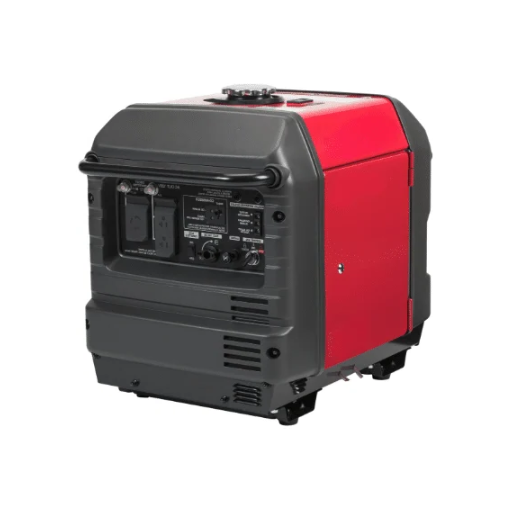
For home and emergency use, the answers are simpler than most guides suggest.If you are still deciding on a starting figure before you factor in the charger, our overview answering what size generator do i need gives quick sizing charts by home size, fuel type, and EV charging setup so you can bracket the number first.
Level 1 emergency charging works on almost any quality 2 to 3 kW inverter generator. You will add roughly 5 to 8 km of range per hour, which is enough to reach a working charger after an outage. Level 2 home charging needs 10 to 12 kVA for a 7.2 kW charger, which puts you into small diesel or large portable territory.
When Hurricane season knocked out power for four days at her Florida home last year, Karen, a Model 3 owner, ran her car’s mobile connector at 120V from a 2.2 kW inverter unit for six hours each evening. She gained about 40 km of range daily, enough to reach a functioning public charger 30 km away when she needed it. Her takeaway matches ours: a portable genset is an emergency bridge, not a daily charging solution. If you plan to charge at Level 2 every day, a properly installed grid connection or a permanently installed standby genset beats a portable unit on cost within months.
Worked Example: Level 2 Home Backup
A homeowner wants a permanently installed standby genset that can run a 7.2 kW Level 2 charger plus essential loads during outages.
- Charger input: 7.2 kW
- Essential home loads: refrigerator 0.8 kW, lighting and electronics 1.2 kW, furnace fan 1.0 kW, misc. 0.5 kW = 3.5 kW
- Total real power: 10.7 kW
- Convert at 0.95 power factor: ≈ 11.3 kVA
- Add 25 percent headroom: ≈ 14 kVA
- Selection: a 15 kVA silent diesel standby genset
The silent canopy matters here. A 15 kVA open-type unit running overnight in a residential area will generate complaints long before it finishes charging the car.
Because a charger is usually just one part of what a standby unit must cover, it pays to size the whole house at the same time. Our detailed guide to whole house generator sizing shows how to build the full load list with NEC demand factors, so the charger and your essential circuits are accounted for in one calculation rather than bolted on as an afterthought.
Generator Sizing for EV Charging Stations (Commercial)
Choosing a generator for EV charging station duty changes both the scale and the architecture. Chargers run prime duty, often 12 or more hours per day, and site economics depend on getting capacity right.
Worked Example: One 60 kW DC Fast Charger
A rural site wants a single 60 kW DCFC unit with lighting and a small kiosk.
- Charger input: 60 kW output / 0.95 efficiency ≈ 63 kW input
- Site loads: 5 kW (lighting, kiosk, payment systems)
- Total real power: 68 kW
- Convert at 0.95 power factor: ≈ 72 kVA
- Add 25 percent headroom: ≈ 90 kVA
- Selection: a 100 kVA prime-rated, three-phase genset
Because DCFC is inherently three-phase, the per-phase balance and current limits from our three-phase generator sizing guide apply directly.
Multi-Charger Sites: Never Sum the Ratings
Two 60 kW chargers do not require 200 kVA if you manage the load. Charging sessions rarely peak simultaneously, and most modern chargers support dynamic load sharing, automatically splitting available power between vehicles. A managed two-charger site typically runs well on 125 to 150 kVA.
When Tendai, who operates a fuel station outside Bulawayo, Zimbabwe, got a grid upgrade quote with an 18-month timeline, he installed two 50 kW DC chargers beside his diesel pumps instead. His site runs on two parallel 100 kVA gensets with load-sharing controllers: one unit carries overnight Level 2 fleet charging alone, and the second synchronizes automatically when daytime DCFC demand arrives. His chargers were earning revenue 14 months before the utility would have connected him.
Fleet Depots: Genset Plus Battery Is the New Default
Depot charging concentrates demand into brutal peaks: ten trucks plugging in at 6 PM is a step load no reasonably sized genset should follow directly. The architecture winning real deployments pairs a prime-rated genset with a battery energy storage system. The genset runs steady at 70 to 85 percent of rating, its most efficient band, while the battery absorbs spikes and fills from the genset during troughs. Research on PV-battery-diesel microgrid control strategies confirms this load-smoothing approach cuts both fuel consumption and required genset capacity.
A phased approach works well here. One documented 20-truck electric semi depot ran its entire first phase on trailer-mounted gensets and DC fast chargers with no grid connection at all, collecting real load data while permanent infrastructure was built. For depot-scale plants of 500 kVA and above, our guide to heavy duty diesel generator sizing covers paralleling, fuel logistics, and step-load acceptance in depth.
Choosing the Generator Type for EV Charging
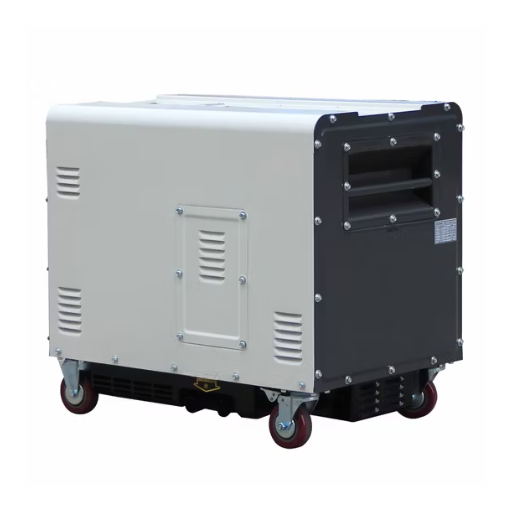
The right genset type depends on your charging level and duty cycle:
| Genset Type | Capacity Range | Best For | Notes |
|---|---|---|---|
| Inverter portable (gasoline) | 2–7 kW | Level 1 emergency charging | Cleanest output in the small class; recoil-start convenience |
| Silent diesel | 10–100 kVA | Level 2 home/workplace, single DCFC | Prime-rated; canopy keeps noise under 75 dB(A) at 7 m |
| Containerized / parallel diesel | 250 kVA–4,000 kVA | Multi-charger stations, fleet depots | Scalable; units synchronize and share load automatically |
| Natural gas | 20 kVA and up | Sites with pipeline gas | Lower emissions; needs continuous gas supply, so not for outage backup |
Whichever type you choose, hold the spec sheet to four requirements: prime or continuous rating for charging duty, THD under 5 percent from a quality brushless alternator with AVR, correct grounding configuration for your EVSE, and verified load bank test data from the manufacturer. For a deeper comparison of fuel types at commercial scale, see our diesel vs natural gas generator analysis.
Generator Sizing for EV Charging: Fuel Cost Breakdown
Nobody budgets a charging project without this question, and almost no sizing guide answers it. The math is straightforward once you know one number: a diesel genset running in its efficient 70 to 85 percent load band delivers roughly 3.2 to 3.6 kWh per liter of diesel.
| Scenario | Fuel Burn | Effective Cost per kWh* | Cost per 100 km of Range* |
|---|---|---|---|
| 2.2 kW inverter, Level 1 (light load) | ~0.9 L/hr | ~$0.60 | ~$9 |
| 15 kVA diesel, 7.2 kW Level 2 (good load) | ~2.3 L/hr | ~$0.35 | ~$5.30 |
| 100 kVA diesel, 60 kW DCFC (optimal load) | ~17 L/hr | ~$0.31 | ~$4.60 |
*Assumes diesel at $1.10/liter and a vehicle consuming 15 kWh per 100 km. Your fuel price and vehicle efficiency will shift these figures.
Two lessons fall out of the table. First, gensets charging EVs get cheaper per kWh as they get bigger and better loaded, because specific fuel consumption improves toward the efficient band. A lightly loaded small unit can cost twice as much per kWh as a well-loaded 100 kVA machine. Second, genset electricity typically runs two to three times the grid rate, which is exactly why the winning business cases are bridge power (earning revenue 12 to 24 months before the utility connects you) and genuinely off-grid sites, not replacing a cheap grid connection you already have. For permanent off-grid EV charging, prime-rated diesel with a battery buffer remains the default architecture.
Generator Sizing for EV Charging: Common Mistakes
- Sizing on peak watts. Portable generators advertise peak output. Charging is a continuous load; use the continuous rating only.
- Ignoring power quality. A cheap alternator with high THD will make EVSE equipment fault or refuse to charge. Insist on THD data.
- Forgetting power factor. Sizing a 7.2 kW charger on a 7.5 kW genset leaves zero margin after the kW-to-kVA conversion. Do the conversion, then add headroom.
- Summing charger ratings at multi-charger sites. Load management routinely cuts required capacity by 30 to 40 percent.
- Overlooking grounding compatibility. An EVSE that expects a bonded neutral connected to a floating-neutral genset may not charge at all.
- Specifying standby rating for charging duty. A charging site genset runs prime duty, often 12+ hours daily. Specify prime or continuous ratings, and verify with load bank testing before shipment.
Frequently Asked Questions
Can you charge an EV with a generator?
Yes. Any EV can charge from a generator if the genset delivers clean, stable power at the right capacity. Inverter generators or quality diesel gensets with low harmonic distortion work best, and the grounding arrangement must match what the charging equipment expects.
What size generator do I need to charge an EV?
For Level 1 charging (1.2 to 1.5 kW), a 2 to 3 kW generator is enough. For Level 2 (6 to 19.2 kW), plan on 10 to 25 kVA. For DC fast charging, expect 60 kVA or more per charger. Always size on continuous rating with 20 to 25 percent headroom.
Can you charge an EV with a 2,000-watt generator?
Yes, but only at Level 1 speed, roughly 5 to 8 km of range per hour. That is useful in an emergency to reach a working charger, but impractical for daily charging.
Can I use a portable generator to charge a Tesla?
Yes, with the Tesla mobile connector or a J1772 adapter. Tesla vehicles allow you to reduce charging current in the settings, so match the charge rate to your genset’s continuous output. A 3,000-watt or larger inverter unit is recommended.
How long does it take to charge an EV with a generator?
Charging time depends on charger power, not the power source. A 75 kWh battery takes about 10 to 11 hours on a 7.2 kW Level 2 charger, whether the electricity comes from the grid or a properly sized genset.
Is it safe to charge an EV with a generator?
Yes, with three conditions: use a genset with clean output (THD under 5 percent), confirm grounding compatibility with your charging equipment, and never run a genset indoors or in an enclosed space due to carbon monoxide.
Can a diesel generator run a DC fast charger?
Yes. A prime-rated three-phase diesel genset is the standard solution for off-grid DC fast charging. Expect 60 to 100+ kVA per charger depending on charger rating, and consider a battery buffer for sites with spiky demand.
How much does it cost to charge an EV with a diesel generator?
A well-loaded diesel genset delivers about 3.2 to 3.6 kWh per liter of fuel, which works out to roughly 0.30to0.30to0.40 per kWh at typical diesel prices. Diesel generator EV charging typically costs two to three times most grid rates, but it is far cheaper than leaving a charging site idle while you wait 12 to 24 months for a utility connection.
Can I use a natural gas generator for EV charging?
Yes, and the sizing rules are identical: charger kW to kVA, continuous rating, 20 to 25 percent headroom. Natural gas gensets suit depot and workplace sites with pipeline gas and emissions constraints. They are not suitable for outage backup where the gas supply may fail along with the grid.
How many EV chargers can one generator power?
Divide the genset’s continuous kVA by each charger’s kVA requirement, then apply realistic diversity. With load management, a 100 kVA genset typically supports two 40 kW chargers or four to six Level 2 chargers comfortably.
Conclusion
Generator sizing for EV charging comes down to five disciplines: start from the charger’s rated input, convert kW to kVA honestly, size on continuous rating with 20 to 25 percent headroom, verify power quality and grounding, and use load management instead of summing charger ratings at commercial sites.
The mistakes all come from treating charging like an ordinary load: buying on peak watts, skipping the power factor conversion, or ignoring THD until the charger refuses to connect. Get the method right and a genset-powered charging site can be earning revenue years before the utility would have connected it, or running permanently off-grid on prime-rated power.
At Shandong ZC Power CO., LTD., our 80+ engineers configure gensets for EV charging projects across our 8 kVA to 4,000 kVA range, from single 100 kVA charger sites to parallel containerized plants for fleet depots. Every unit is verified with full load bank testing in our national standard testing center before shipment.