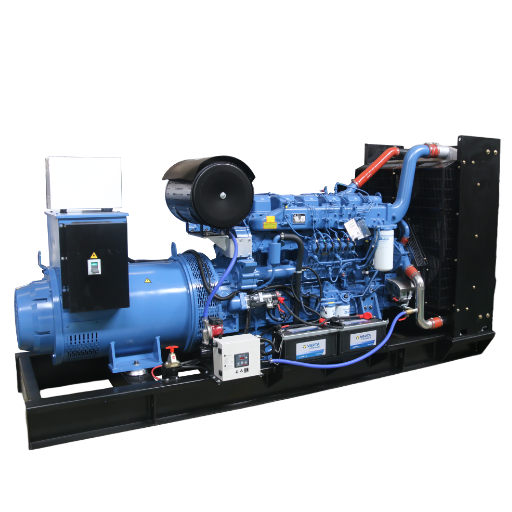
10 Generator Sizing Mistakes That Cost You Money (2026)
The most common generator sizing mistakes are sizing on running load only, confusing kW with kVA, oversizing “to be safe,” buying the wrong duty rating, and trusting nameplate data instead of measured load. Each one has a specific, predictable cost, and most are avoidable with one hour of proper load analysis.
Here is the part that surprises most buyers: after 25 years of commissioning gensets and processing warranty claims at our factory, we can tell you that the majority of sizing failures are not math errors at all. They are assumption errors. Someone guessed a load, copied a nameplate, or let a trader pick whatever was in the warehouse.
You already know an incorrectly sized generator is a problem. What this guide gives you is the specific failure mode behind each of the ten generator sizing mistakes we see most often, what each mistake actually costs, and the fix for each one. We have grouped them by consequence, so you can scan for the failure you are most worried about.If you want the full step-by-step method behind every fix below, our complete guide on how to size a generator walks through the whole process from load list to final specification.
Key Takeaways
- Sizing on running load only is mistake #1: electric motors draw 2 to 6 times their running current at startup, and a genset sized for running load will stall or trip the moment a big motor kicks in.
- Oversizing is not the safe option. Running a diesel genset below 30% of rated load causes wet stacking, carbon buildup, and shortened overhaul intervals.
- The efficient operating band is 70 to 85% of rated capacity; both extremes cost you money every hour the machine runs.
- Using a standby (ESP) rated genset for prime duty can void your warranty entirely, regardless of whether the kVA number was correct.
- Many “sizing mistakes” are actually sourcing mistakes: traders sell what is in stock, not what your load calculation requires.
Generator Sizing Mistakes That Leave You Without Power
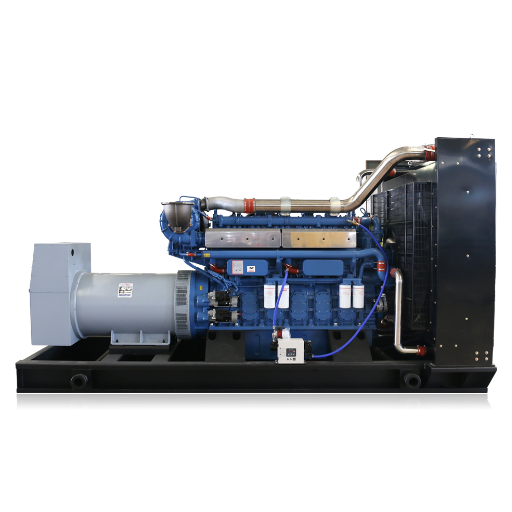
These are the undersizing errors. They stay hidden until the worst possible moment: a real outage, full load, everything starting at once.
Mistake 1: Sizing on Running Load Only
This is the single most expensive generator sizing mistake we see. A buyer adds up the running watts of every motor, pump, and compressor, adds 10%, and orders that unit. Then the first outage arrives, the main compressor tries to start, and the genset’s voltage collapses. Breaker trips. Plant stays dark.
Electric motors draw 2 to 6 times their running current during startup. A 75 kW compressor can momentarily demand 300 kVA or more from the alternator. If your sizing math never accounted for starting surge, the machine was undersized before it left the factory.
The fix: Size for the largest motor’s starting kVA on top of everything else already running. Our motor starting surge sizing guide walks through the full calculation, including soft starters and VFDs.
Mistake 2: Confusing kW with kVA
A facility needs 160 kW of real power, so the buyer orders a 160 kVA genset. It arrives, gets commissioned, and immediately runs at 100% load. Why? Because 160 kW at a power factor of 0.8 requires 200 kVA, not 160.
kW is the power that does work. kVA is what the alternator must actually deliver. The gap between them is power factor, and ignoring it undersizes your machine by 20 to 25% before you have made any other decision.
The fix: Convert every load to kVA using your real power factor, or use the industry standard 0.8 PF assumption. Our kW to kVA conversion guide has the formula and a lookup table.
Mistake 3: Trusting Nameplates Instead of Measuring Real Load
Nameplate ratings are maximums, not typicals. A motor nameplated at 45 kW may run at 28 kW all day, every day. Size your genset from nameplate sums and you will oversize by 40 to 60%. But nameplates lie in the other direction too: aging equipment, added production lines, and undocumented loads mean the real demand is often higher than anyone’s spreadsheet.
When Priya took over a cold-storage facility in Penang in 2024, the previous manager’s load sheet showed 210 kW, built entirely from nameplates collected in 2019. A week of clamp-meter measurements told the real story: 264 kW steady state, plus a 90 kW compressor bank with a 4.5x starting surge. The “correctly sized” 300 kVA genset the facility had quoted would have stalled on its first real outage. She ordered a 500 kVA unit instead. The difference in price was about $6,000. The difference in outcome was the entire frozen inventory.
The fix: Measure. Clamp meters on main feeders for at least a week of normal operation, including peak shifts. Nameplates are a sanity check, not a sizing basis.For a structured way to turn those measurements into a defensible demand figure, our dedicated guide to generator load calculation shows how to add running watts, surge, and margin into one reliable number.
Mistakes That Kill the Machine Early
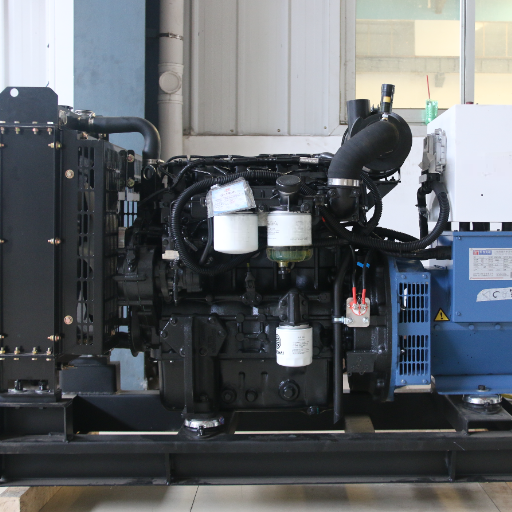
Oversizing errors are sneakier. The genset starts fine, carries the load fine, and quietly destroys itself over 18 to 36 months.
Mistake 4: Oversizing “To Be Safe”
Bigger is safer, right? For diesel gensets, no. A diesel engine running below roughly 30% of rated load for extended periods cannot reach full operating temperature. Unburned fuel and carbon accumulate in the exhaust, a condition called wet stacking. Glazed cylinder walls, fouled injectors, and oil dilution follow. Loading below 25% makes a genset extremely inefficient and measurably shortens its life, as documented in the ACIAR Cold Chain Manual.
Oversizing a generator is not caution; it is a slow-motion breakdown with a fuel bill attached. An oversized 500 kVA unit running at 25% load burns a disproportionate amount of fuel per kWh delivered, and its overhaul interval can drop by a third or more. You paid for capacity you do not use, and you pay again in fuel and maintenance for the privilege.
The fix: Target the 70 to 85% load band at normal operation. If your load is genuinely small now but growing, buy for today and add a second unit later, or use a generator sizing calculator to model staged expansion.
Mistake 5: Skipping Load Bank Testing After Commissioning
Even a perfectly sized genset is an assumption until it has carried its rated load. We see installations where the commissioning “test” was a five-minute no-load run. Six months later the first real transfer reveals an alternator that cannot hold voltage at 80% load, or a cooling system undersized for the ambient conditions.
The fix: Every new or relocated genset should pass a load bank test at 100% rated load before handover. At our factory, every unit goes through full-load testing in our national-standard testing center before it ships. If your supplier cannot tell you their load bank procedure, that tells you something.
Mistakes That Void Warranties and Break Budgets
These generator sizing mistakes are specification errors: the math was fine, but the paperwork was wrong.
Mistake 6: Buying a Standby Rating for Prime Duty
Ratings defined by ISO 8528 are not marketing labels. They are contractual operating limits:
- ESP (Emergency Standby Power): variable load, limited hours per year, grid backup only
- PRP (Prime Power): variable load, unlimited hours, 10% overload available
- COP (Continuous Power): constant load, unlimited hours, no overload
Run an ESP-rated genset as your only power source on a remote site and you will exceed its permitted hours within months. When the engine fails at 900 hours and you file a warranty claim, the hour log is the first thing the manufacturer checks. Claim denied, and they are right to deny it.
The fix: Match the rating to the duty before comparing quotes. Grid backup with occasional outages means standby. Remote site with no grid means prime or continuous. Our standby generator sizing guide explains the rating classes in detail. If two quotes differ wildly in price, check whether one supplier quietly quoted ESP and the other quoted PRP for the same job.
Mistake 7: Ignoring Altitude and Temperature Derating
A genset rated at 500 kVA at sea level and 25 degrees C does not deliver 500 kVA at 2,000 meters elevation or at 45 degrees C ambient. Air density drops, combustion suffers, and cooling capacity falls. Standard derating rules of thumb run roughly 3 to 4% per 300 meters above 1,000 m, and additional percentages for high ambient temperature.
Buyers in high-altitude mining regions and hot climates learn this the hard way: the “right size” unit that cannot carry the rated load on a hot afternoon in July.
The fix: Apply derating factors for your site’s worst-case altitude and temperature, then size up. Reputable manufacturers publish derating curves; if your application is above 1,000 m or above 40 degrees C, make the derated capacity the number you compare against your load.For the full correction tables and worked high-elevation examples, our guide to altitude derating generator sizing shows exactly how much capacity you lose and how far to size up.
Mistake 8: Specifying the Wrong Voltage or Frequency
This one sounds too basic to make the list, but it appears in commissioning reports every year. A genset built for 400V/50Hz three-phase gets shipped to a 480V/60Hz market, or a single-phase unit gets ordered for a three-phase facility. Sometimes it is a communication failure. Sometimes a trader had a unit in stock at the wrong spec and sold it anyway.
The fix: Confirm grid voltage, frequency, and phase configuration in writing before order. Modern 12-lead alternators can be reconnected for multiple voltages, but frequency changes mean different engine speeds and often a different build entirely. Our three-phase generator sizing guide covers wye vs. delta and 50Hz vs. 60Hz considerations.
Process Generator Sizing Mistakes That Cost You Later
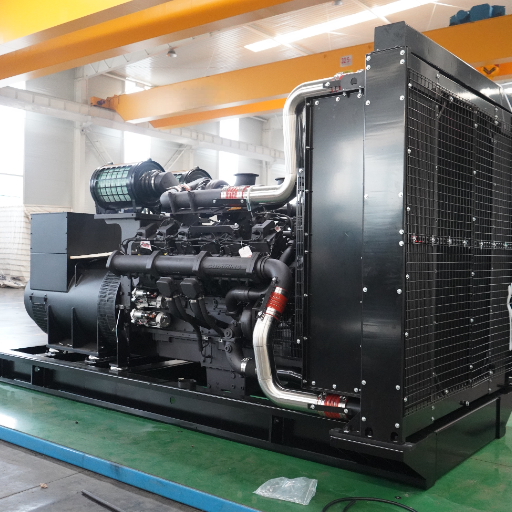
The last two mistakes happen before any math is done.
Mistake 9: No Growth Margin and No Starting Sequence
Two planning failures in one. First, a facility sized exactly to today’s load has nowhere to go: one new production line and the genset is undersized. Industry practice is to reserve 10 to 25% capacity for expansion. Second, even a correctly sized genset can fail if every motor starts simultaneously on transfer. The combined inrush exceeds anything the alternator can deliver.
The fix: Add the growth margin, and design a starting sequence. Stagger motor starts with time-delay relays or a load management controller so the largest motors start one at a time against an already-loaded genset. This costs almost nothing at the design stage and everything at the retrofit stage.This planning matters just as much at home, where a single new load like a car charger can eat your entire margin, so our guide to generator sizing for ev charger setups shows how to add one without overloading your unit.
Mistake 10: Letting a Trader “Size” the Genset From Stock
Here is the pattern we see in the field: a buyer sends requirements to five suppliers. Four respond with engineering questions. One responds within the hour with a price on a unit already sitting in a warehouse. Guess which quote is cheapest, and guess which unit is wrong for the job.
Many generator sizing mistakes are not calculation errors at all. They are sourcing errors. A trading company does not run your load calculation; it sells you the closest match in its inventory and rounds up or down to whatever is on the lot. When the unit arrives undersized, oversized, or at the wrong rating class, the trader has no engineering team to call and no parts warehouse to support you.
A mining camp in West Africa ordered two “800 kVA” gensets through a trading company in 2023, sized generously over their calculated 480 kW load “for safety.” What arrived were ESP-rated units that had been in stock for 14 months. Run as prime power at barely 30% average load, both engines wet-stacked within 18 months. Fuel consumption ran about 30% above the datasheet figures. The camp’s maintenance lead, Daniel, told our engineers the overhaul quotes exceeded what properly specified prime-rated units would have cost in the first place.
The fix: Buy from a manufacturer that engineers the machine to your load, not from a trader that matches your budget to its stock. A source manufacturer will ask for your load profile, duty cycle, altitude, and ambient temperature before quoting. That conversation is not a delay; it is the sizing process.Mission-critical sites carry the least tolerance for a stock-driven guess, which is why our guide to data center generator sizing covers N+1 redundancy, UPS coordination, and the tight voltage limits these high-value loads demand.
The Generator Sizing Mistakes Table: Consequence and Fix
| # | Mistake | Consequence | Fix |
|---|---|---|---|
| 1 | Sizing on running load only | Genset stalls or trips when motors start | Add largest motor’s starting kVA (2 to 6x) to running load |
| 2 | Confusing kW with kVA | Unit undersized by 20 to 25% at 0.8 PF | Convert kW to kVA: kVA = kW / PF |
| 3 | Trusting nameplate data | Over or undersizing by 40%+ | Clamp-meter the real load for a full week |
| 4 | Oversizing “to be safe” | Wet stacking, carbon buildup, fuel waste below 30% load | Target 70 to 85% operating band |
| 5 | No load bank test at commissioning | Hidden defects surface during first real outage | 100% load bank test before handover |
| 6 | ESP rating used for prime duty | Warranty void, premature engine failure | Match ISO 8528 rating to actual duty |
| 7 | Ignoring altitude/temperature | Unit cannot carry rated load on site | Apply derating curves, then size up |
| 8 | Wrong voltage/frequency spec | Costly rework or unusable equipment | Confirm grid spec in writing before order |
| 9 | No growth margin or start sequence | Undersized within 2 years, transfer failures | Reserve 10 to 25%, stagger motor starts |
| 10 | Trader sizes from warehouse stock | Wrong size, wrong rating, no support | Buy from a manufacturer that engineers to your load |
Frequently Asked Questions
What happens if a generator is too big?
An oversized diesel generator runs below its efficient load band, typically under 30% of rated capacity. This causes wet stacking: unburned fuel and carbon accumulate in the exhaust, cylinder walls glaze, and injectors foul. Fuel consumption per kWh rises, maintenance intervals shrink, and engine life drops. The capital wasted on unused capacity is often the smallest part of the total cost.
What happens if a generator is too small?
An undersized generator cannot carry its connected load. Voltage and frequency sag when loads are applied, motors stall or fail to start, and protective breakers trip, usually during the first real outage. Most undersized generator problems surface exactly then: chronic overloading overheats the alternator windings and engine, shortening the life of the entire unit. Undersizing fails fast; oversizing fails slowly.
What is the most common generator sizing mistake?
Sizing on running load only, without accounting for motor starting surge, is the most common mistake we see in field reports. Electric motors draw 2 to 6 times their running current at startup, so a genset sized to the running load stalls the moment a large motor kicks in. It accounts for more emergency service calls than any other sizing error.
Is it better to oversize or undersize a generator?
Neither, but they fail differently. Undersizing causes immediate, obvious failure: tripped breakers and stalled motors during the first outage. Oversizing causes slow, expensive failure: wet stacking, wasted fuel, and shortened engine life over months. The correct target is 70 to 85% of rated load during normal operation, with starting surges handled by sizing and sequencing.
What percentage of load should a generator run at?
The optimal operating band is 70 to 85% of rated capacity. Extended operation below 30% risks wet stacking and carbon buildup. Sustained operation above 90% leaves no headroom for load spikes and accelerates wear. If your normal load sits below 30% of your genset’s rating, the unit is oversized for your application.
How much extra capacity should I add when sizing a generator?
Add 10 to 25% above your calculated maximum load, including motor starting surges. This covers measurement uncertainty, future expansion, and keeps normal operation inside the efficient 70 to 85% band. Do not add more than 25% “just in case”; beyond that point you are buying wet stacking problems, not safety margin.
What is the difference between kW and kVA when sizing a generator?
kW (kilowatts) is real power: the energy that does actual work. kVA (kilovolt-amperes) is apparent power: what the alternator must deliver. The ratio between them is power factor, typically 0.8 for industrial loads. A 160 kW load at 0.8 PF requires a 200 kVA genset. Sizing in kW when the machine is rated in kVA undersizes it by 20 to 25%.
Can I use a standby-rated generator for continuous power?
No. Standby (ESP) ratings under ISO 8528 permit limited annual hours at variable load, for grid backup only. Running an ESP unit as your primary power source exceeds its design limits, and manufacturers routinely deny warranty claims when hour logs show prime-duty use. For off-grid or continuous applications, specify a PRP (prime) or COP (continuous) rating.
What size generator do I need for a home?
Home requirements vary widely with fuel type and appliances. Most homes land between 14 and 26 kW, but an all-electric house or one with a Level 2 EV charger can need considerably more. If you are starting from scratch on a residential project, our overview answering what size generator do i need gives quick sizing charts by home size, while our deeper guide to whole house generator sizing walks through the room-by-room load list and NEC demand factors.
How do I avoid generator sizing mistakes altogether?
Follow a process: measure your real load with clamp meters for a week, convert everything to kVA at your actual power factor, add motor starting surges, apply altitude and temperature derating, add 10 to 25% growth margin, and verify the ISO 8528 rating matches your duty. Then have the manufacturer review the calculation. A reputable factory will do this review free before quoting.
Get Your Generator Sizing Right the First Time
Every mistake on this list shares one root cause: someone skipped a step. They guessed instead of measuring, assumed bigger meant safer, or let inventory drive the specification instead of engineering. The fixes are not complicated. Measure the load, respect the starting surge, match the rating class, target the 70 to 85% band, and verify with a load bank test.
The good news: you do not have to do this alone. Generator sizing mistakes are far cheaper to catch on a spreadsheet than in a commissioning report.
Request a Free Sizing Review from ZC Power. Send our engineering team your load list and site conditions, and we will return a complete sizing recommendation, including starting surge analysis, derating, and rating-class selection, before you commit to anything. Every one of these generator sizing mistakes is cheaper to fix at the quoting stage than at the overhaul stage. As a source manufacturer established in 1999 with an 8 to 4,000 kVA range, we engineer the genset to your load, not to our warehouse.