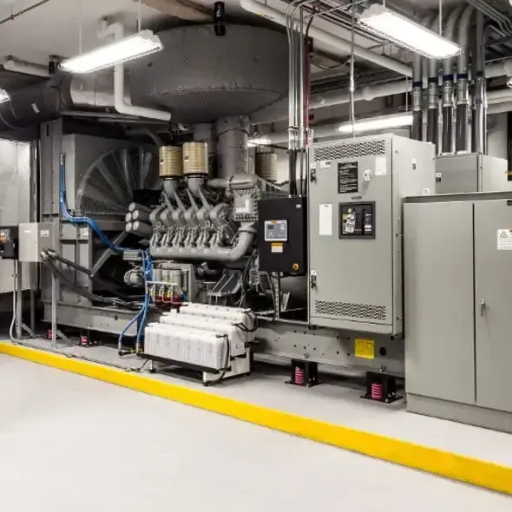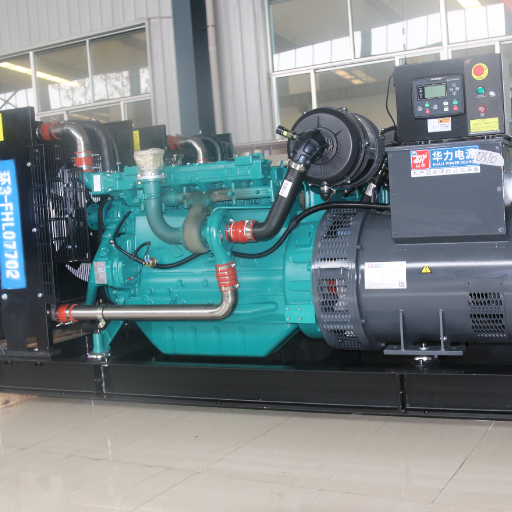
1000 kW Diesel Generator Fuel Consumption: L/h by Load
The fuel consumption of a 1000 kW diesel generator runs roughly 240 to 270 litres per hour at full load and 190 to 210 L/h at 75% load. Measured against the energy it actually produces, the same machine runs most efficiently between 75% and 80% load at about 0.25 L/kWh, and that efficiency falls away sharply below 40% load.
Those three numbers answer the question. The problem is that you have probably already found different ones.
Search for the fuel consumption of a 1000 kW diesel generator and you’ll find full-load figures of 225, 240, 252, 258, 261, 288, and 297 L/h on the first page alone. That is a 32% spread on what should be a datasheet number, and it isn’t noise. It has four causes, and once you can name them you’ll never be misled by a fuel chart again.
This guide gives you the load-indexed table for a genuine 1000 kW set, the litres-per-kWh curve that should drive your sizing decision, and the tank and cost arithmetic that follow.
Key Takeaways
- A true 1000 kW genset (1250 kVA at 0.8 power factor) burns 240-270 L/h at full load, 190-210 L/h at 75%, and 140-155 L/h at 50%.
- Most of the contradictory figures online are not 1000 kW machines at all. A “1000 kVA” generator is an 800 kW generator, and it burns roughly 190-217 L/h, which is where the low numbers come from.
- Litres per kWh, not litres per hour, is the number that tells you whether you are running efficiently. It bottoms out near 0.25 L/kWh at 75-80% load and climbs steeply below 40%.
- A 48-hour run at full load needs about 12,240 litres of usable fuel, which means a nameplate tank nearer 14,000 litres once you account for the unusable heel.
- If your generator burns more than the datasheet promises, the cause is almost always one of six things, and only one of them is the engine’s fault.
The Short Answer: Fuel Consumption of a 1000 kW Diesel Generator by Load
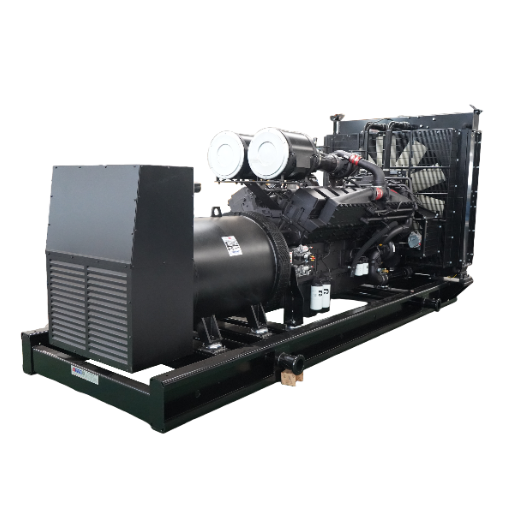
A 1000 kW (1250 kVA) diesel genset burns roughly 240 to 270 litres per hour at full load, 190 to 210 L/h at 75% load, and 140 to 155 L/h at 50% load. The table below gives the full curve, with gallons per hour and litres per kWh at each step, for a 50 Hz set running diesel at roughly 0.84 kg per litre.
| Load | Output | Consumption (L/h) | Consumption (gal/h) | Litres per kWh |
|---|---|---|---|---|
| 100% | 1000 kW | 240-270 | 63-71 | 0.24-0.27 |
| 75% | 750 kW | 190-210 | 50-55 | 0.25-0.28 |
| 50% | 500 kW | 140-155 | 37-41 | 0.28-0.31 |
| 25% | 250 kW | 76-95 | 20-25 | 0.30-0.38 |
Read the fourth column before anything else. The litres-per-hour figure falls as load falls, which looks like good news. The litres-per-kWh figure rises, which is the bad news, because you are paying more for every kilowatt-hour you actually use.
Two caveats belong with this table. These are class ranges, not a guarantee for a specific machine; your engine datasheet governs. And the 100% row depends on whether the set is rated prime or standby, which shifts the answer by roughly 10%.
Need the curve for your specific load profile? Send our engineering team your site conditions → and we will return the tested fuel figures for the engine we would fit.
1000 kW or 1000 kVA? Why Fuel Consumption Figures Never Match
This is the biggest reason the numbers disagree, and almost nobody explains it.
A generator nameplate carries two ratings. kW is real power, the work the machine actually does. kVA is apparent power, which includes the current that magnetic equipment such as motors draws without converting it into useful work. They are linked by the power factor, and for industrial gensets that factor is conventionally 0.8.
The arithmetic is unforgiving:
- 1000 kW = 1250 kVA at 0.8 power factor
- 1000 kVA = 800 kW at 0.8 power factor
These aren’t the same machine, so a listing for a 1000kVA generator set and one for a 1000 kW generator set describe two different sizes. The 1000 kVA set is 20% smaller, and it burns less fuel because it does less work.
Now look back at the figures you find online. The pages quoting 190 to 217 L/h at full load are describing a 1000 kVA set, which is an 800 kW set. The pages quoting 240 to 290 L/h are describing a true 1000 kW set.
Both are correct. Neither usually says which machine it measured.
| What the seller advertises | Actual output | Typical full-load burn |
|---|---|---|
| “1000 kW generator” | 1000 kW (1250 kVA) | 240-270 L/h |
| “1000 kVA generator” | 800 kW | 190-217 L/h |
| “1250 kVA generator” | 1000 kW | 240-270 L/h |
Sellers favour different labels by market: a European catalogue often leads with 1250 kVA for the same machine a North American listing calls 1000 kW. Neither is dishonest. But compare a 1000 kVA quote against a 1000 kW chart and you’ll conclude one supplier is lying, when you’re simply discussing different sizes.
A procurement team in Nairobi hit exactly that trap. They checked two shortlisted suppliers against the same widely circulated chart: Supplier A quoted a 1000 kVA set, Supplier B a 1000 kW set. Against a chart built for 1000 kW machines, Supplier A looked about 20% more efficient.
It wasn’t. It was a smaller machine measured against the wrong benchmark. The error surfaced only when the team asked both suppliers for the nameplate power factor, and correcting it changed which set they sized for the site.
If the kW and kVA relationship is new to you, our guide to converting kVA to kW walks through the arithmetic with worked examples.
Specific Fuel Consumption: The g/kWh Number Behind Every Litre
Engineers compare generators using specific fuel consumption (SFC), in grams of fuel per kilowatt-hour delivered to the crankshaft. For the 1000 kW class, a well-matched modern diesel engine delivers a best-point SFC of about 195 to 210 g/kWh. Turbocharged, aftercooled, electronically governed engines sit at the low end of that band; mechanically governed and older designs sit at the high end or beyond it.
Diesel density sits around 0.835 to 0.845 kg per litre, so the conversion to litres is direct. Take a 1000 kW set at 75% load, delivering 750 kW, with an SFC of 200 g/kWh:
- Fuel mass per hour: 200 g/kWh × 750 kW = 150,000 g, or 150 kg/h
- Convert to litres: 150 kg / 0.84 kg/L = 178.6 L/h
The published chart for that machine would show roughly 180 L/h. That gap is why datasheet and rule-of-thumb figures disagree, and why a rounding error compounds across a 48-hour outage.
The same fixed losses explain the shape of the litres-per-kWh curve above. Friction, cooling, oil pumping, and alternator excitation all draw on the same fuel while cylinder temperatures fall. That’s why a set sized for the load it will actually carry beats one sized for a nameplate: running 1000 kW at 250 kW costs roughly 1.4 times more per usable kilowatt-hour than running it at 750 kW, before the engine damage sustained light load causes.
Sustained operation below about 30% load also causes wet stacking, where unburned fuel and soot accumulate in the exhaust and cylinder. Our guide to load bank testing covers how to detect and clear it.
Prime, Standby, and Frequency: Three Ratings That Move Your Fuel Number
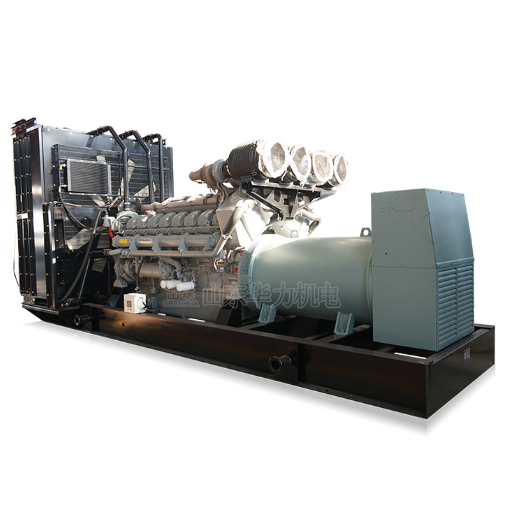
Two more variables explain the remaining disagreement between published figures, and both are usually invisible in the chart you are reading.
Prime vs Standby Fuel Consumption
Under ISO 8528-1, the same engine block ships with different nameplate ratings depending on duty. A frame sold as a 1000 kW standby unit is typically the same frame sold as a 910 kW prime unit. The prime rating carries a 10% overload allowance for one hour in every twelve; the standby rating carries none.
A supplier advertising “1000 kW” may mean either. Ask which rating the consumption figure was measured against, and confirm it matches how you intend to run the machine. Our explainer on prime vs standby power ratings covers all six ratings in the current standard.
50 Hz vs 60 Hz
A 50 Hz generator runs at 1500 rpm; a 60 Hz generator of the same frame runs at 1800 rpm. Higher engine speed means higher friction losses and a slightly different fuelling map, and the same machine spec’d for 60 Hz typically burns 2 to 4% more for the same output. A 1000 kW set burning 255 L/h at 50 Hz becomes roughly 262 L/h at 60 Hz.
This matters more than most buyers expect in markets where the two coexist. Africa, the Middle East, and South America, where ZC Power ships most heavily, contain both.
Fuel Tank Sizing for a 1000 kW Generator
Tank sizing is where a small error in your fuel consumption figure becomes a large error in capital cost. Take a mining site needing 1000 kW of prime power at an average 75% load, with 48 hours of autonomy between deliveries.
Step 1: Establish consumption at the operating load. At 75% load, plan on 200 L/h.
Step 2: Multiply by the target runtime. 200 L/h × 48 hours = 9,600 litres.
Step 3: Account for the unusable volume. A tank can’t be run to empty. The heel below the suction point plus ullage for thermal expansion typically consumes 10 to 15% of nameplate. Divide by 0.87: 9,600 ÷ 0.87 = 11,034 litres.
Step 4: Check the code requirement. NFPA 110 classes a system by the hours it can run at rated load without refuelling: Class 2 is two hours, and the common commercial classes run to 24, 48, and 96 hours (our NFPA 110 Type 10 vs Type 60 explainer covers the Type axis). The standard’s sizing convention requires capacity of 133% of calculated full-load consumption for the assigned class, which exists to keep you above the minimum even during testing and maintenance drawdown.
Step 5: Size the tank. A 12,000 litre bulk tank meets the requirement with margin, and a 500 to 1,000 litre day tank at the genset smooths the draw.
Runtime requirements vary enormously:
| Application | Typical requirement | Tank volume at 75% load |
|---|---|---|
| Commercial standby | NFPA 110 Class 2 (2 h) | ~460 L usable |
| Standard commercial facility | Class 48 | ~9,600 L usable |
| Hospital | 96 h (CMS mandate) | ~19,200 L usable |
| Remote mining, prime power | Site-specific, often 7-14 days | 33,600-67,200 L usable |
The hospital row deserves a note. The CMS Emergency Preparedness Rule requires 96 hours of on-site fuel, dedicated to the emergency system and not shared with the boiler or the fleet. A 1000 kW set at 75% load needs roughly 19,200 litres of usable storage, a tank most hospital sites do not have and a civil works project most teams discover late.
What It Costs to Run a 1000 kW Generator
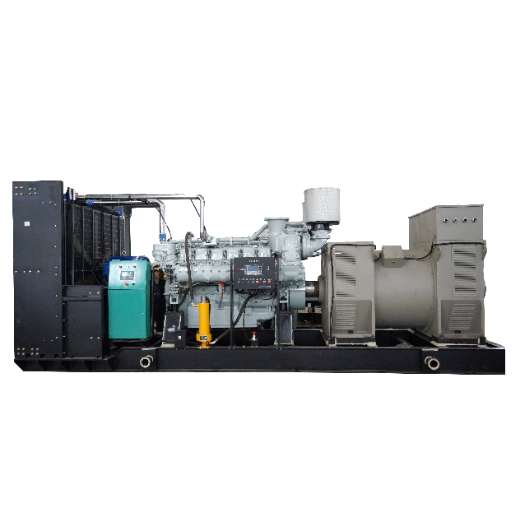
Diesel generator fuel consumption converts straight into money at your local delivered price, which means the same machine can be cheap to run in one market and punishing in another.
Using a reference price of $1.20 per litre, the maths is direct:
| Load | Consumption | Cost per hour | Cost per 24 hours |
|---|---|---|---|
| 100% | 255 L/h | $306 | $7,344 |
| 75% | 200 L/h | $240 | $5,760 |
| 50% | 148 L/h | $178 | $4,272 |
| 25% | 85 L/h | $102 | $2,448 |
Substitute your own delivered price. The US Energy Information Administration publishes weekly on-highway diesel prices by region, and it is the source most procurement contracts use for fuel adjustment clauses. In remote locations, delivered fuel carries a logistics premium that can double the pump price.
Cost per kWh, and the break-even against grid power
While the “hourly cost” metric helps estimate expenses during a power outage, it is insufficient for deciding whether to use diesel as a primary power source. To make that decision, the actual power output should divide the hourly cost (in kilowatts). Based on a 75% load factor and a fuel price of $1.20 per liter, the calculation—$240 ÷ 750 kW—yields $0.32 per kWh. When maintenance, oil, filters, and allocated overhaul reserves are factored in, the actual cost typically ranges from $0.35 to $0.45 per kWh.
Compare that against your industrial grid tariff. In most markets with a functioning grid, diesel prime power costs two to four times more per kilowatt-hour than utility supply. That break-even point tells you where diesel stops being a cost and starts being an expensive habit.
A data centre in Lagos ran a 1000 kW set as prime power during a grid upgrade. Average load sat near 300 kW for six weeks because the IT load had not yet been commissioned, and fuel per hour looked reassuring at around 90 litres. Fuel per usable kilowatt-hour was 0.30, roughly 20% worse than the same machine delivers at 750 kW. The site burned more fuel to produce less power, and the wet stacking took two load bank sessions to clear.
Why Your Generator’s Fuel Consumption Exceeds the Datasheet
A datasheet fuel figure is measured under controlled reference conditions: 25C ambient, 100 kPa barometric pressure, 30% relative humidity. Your site isn’t a test cell. Six factors explain almost every discrepancy we investigate.
- Altitude. Power falls roughly 3.5% per 1,000 feet for naturally aspirated engines, and the fuel needed to produce a given output rises correspondingly. Our guide to generator altitude derating covers the correction factors.
- Ambient temperature. Above 40C, combustion air is less dense and cooling is less effective. Expect a 2 to 4% consumption increase.
- Actual load level. If you assumed 75% but run at 40%, your consumption per usable kWh may be 20% higher than planned even though the litres-per-hour figure looks fine.
- Fuel quality. Water content, contamination, and off-spec cetane reduce combustion efficiency and can cost 3 to 5%.
- Filtration and injectors. A restricted air filter or worn injectors is the classic culprit and can add 10 to 20%. It’s the one failure mode that shows no warning until consumption or smoke gives it away.
- Age and overhaul state. A well-maintained set drifts 3 to 7% over ten years. A neglected one drifts further, and an overhaul restores most of the original figure.
Work through that list in order before you call your supplier. Item five accounts for a clear majority of “this generator is using too much fuel” complaints.
How to Reduce 1000 kW Diesel Generator Fuel Consumption
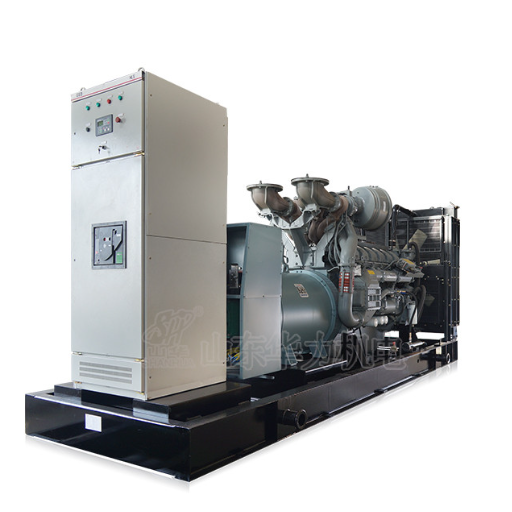
Five levers move the number. Our full guide to heavy-duty diesel generator fuel consumption covers each in depth; in short:
- Right-size the machine. A slightly smaller set at 70-80% load beats a larger set at 30%. This is the highest-impact decision, and it is made before you order.
- Manage load sequencing. Stagger motor starts and shed non-critical loads to hold the set in its efficient band.
- Run periodic load bank tests to clear wet stacking and restore combustion efficiency. See our load calculation guide for sizing the test.
- Keep to the maintenance schedule. Filters, injectors, and oil are cheap relative to the fuel they save.
- Consider hybrid battery-diesel for light-load duty, so the engine runs at its efficient point when it runs at all.
Frequently Asked Questions
What is the fuel consumption per hour of a 1000 kW diesel generator?
Roughly 240 to 270 litres per hour at full load, 190 to 210 L/h at 75% load, and 140 to 155 L/h at 50% load. Confirm against the datasheet for your engine model; the spread between brands at this rating is real.
Is a 1000 kVA generator the same as a 1000 kW generator?
No. At a power factor of 0.8, a 1000 kVA generator delivers 800 kW, while a 1000 kW generator is rated 1250 kVA. The 1000 kVA set burns roughly 190 to 217 L/h at full load, which is why published charts seem to contradict each other.
What is diesel generator fuel consumption per kWh at this rating?
Between 0.24 and 0.27 litres per kWh at full load, and about 0.25 L/kWh at the efficient point around 75 to 80% load. Below 40% load it climbs above 0.30 L/kWh.
How big a fuel tank does a 1000 kW generator need for 24 hours?
At 75% load, 200 L/h × 24 hours is 4,800 litres of usable fuel. Allowing for the 10 to 15% heel, the nameplate tank needs around 5,500 litres; at full load, roughly 6,100 litres usable.
Why does my generator use more fuel than the datasheet?
Check altitude, ambient temperature, actual load level, fuel quality, filter and injector condition, and engine hours. Restricted filtration and worn injectors alone add 10 to 20%, and are the most common cause.
Does running a generator at half load save fuel?
It saves fuel per hour but costs more per kilowatt-hour. At 50% load a 1000 kW set burns about 148 L/h, but litres per kWh rises to roughly 0.30 against 0.25 at 75% load.
Is fuel consumption different at 50 Hz and 60 Hz?
Yes. The same frame runs at 1500 rpm for 50 Hz and 1800 rpm for 60 Hz, and the 60 Hz configuration burns 2 to 4% more for the same output.
Can I reduce 1000 kW generator fuel consumption without replacing it?
Often, yes. Load sequencing, load bank testing, filter and injector servicing, and fuel quality control account for most recoverable losses. Right-sizing is the only lever that needs new equipment.
Conclusion
The fuel consumption of a 1000 kW diesel generator comes down to three figures worth remembering. Full load burns 240 to 270 L/h. Three-quarter load burns 190 to 210 L/h. Both run at about 0.25 L/kWh at their efficient point, and both get steadily more expensive per usable kilowatt-hour as load falls away.
Everything else you have read online fits around those numbers once you know the four things that move them: whether the machine is 1000 kW or 1000 kVA, which duty rating the figure was measured against, whether it runs at 50 Hz or 60 Hz, and whether it was measured in a test cell or on your site. Our heavy duty diesel generator overview covers the hardware side.
A contractor preparing a remote camp in northern Chile asked us for the tested curve before choosing a tank. At 2,800 metres, the derated output changed the load factor the site could realistically achieve, and the corrected consumption came out 6% above what the generic chart predicted. The tank went from 12,000 to 13,000 litres before anything was fabricated. Finding that after the concrete pad was poured would have cost far more than the question did.
Before you commit to a tank size, a fuel budget, or a supplier, ask for the tested consumption curve for the specific engine and site conditions you’re buying for. Not a generic chart. That’s a reasonable request, and any factory that builds and load-tests its own machines can answer it. Contact the ZC Power engineering team with your site elevation, ambient temperature range, and expected average load, and we will return the fuel figures, tank sizing, and cost per kWh for the set we would build you.