
Cummins Engine Diesel Generator Set: Read the Model Number
A Cummins engine diesel generator set is a Cummins engine inside somebody else’s package. That single sentence explains most of the confusion in this market. The engine is one component. The machine around it, including the alternator, the controller, the enclosure, and the power rating printed on the quotation, is somebody else’s decision.
The engine model number is the one part of that package a seller cannot restate. A kW figure can be typed fresh for every customer. An engine designation is fixed by the factory that cast the block.
There is a complication, and it is why this topic stays murky. The letter G in these model numbers carries four unrelated meanings, and the industry mixes them freely. The widespread belief that a -G2 suffix means prime power and -G3 means continuous power has no basis in any standard.
This guide decodes the model number, shows how to check the engine’s own rating against a quoted output, and explains how to tell a genuine factory-built engine from a badge.
Working through a quotation and want a second opinion on the engine specification? Send the model number to our engineering team and we will tell you what it actually is.
Key Takeaways
- The letter G means four different things here: generator-drive as a suffix, a build variant within an engine family, a transient performance class in ISO 8528-5, and nothing at all in the ISO 8528-1 duty ratings.
- The claim that
-G2means prime power and-G3means continuous power is a market myth. No standard maps that suffix to a duty rating.- An engine model number is an independent cross-check on a quoted output. Open the datasheet for the exact model named on the quotation and compare its generator-drive rating with the kW the quotation claims.
- Four Chinese joint ventures build engines sold as Cummins. A genuine plate names the full legal entity, such as Dongfeng Cummins Engine Co., Ltd., not merely “Cummins.”
- The engine badge says nothing about the alternator, controller, enclosure, or the emissions certification of the finished set.
What a “Cummins Engine” Badge Actually Certifies
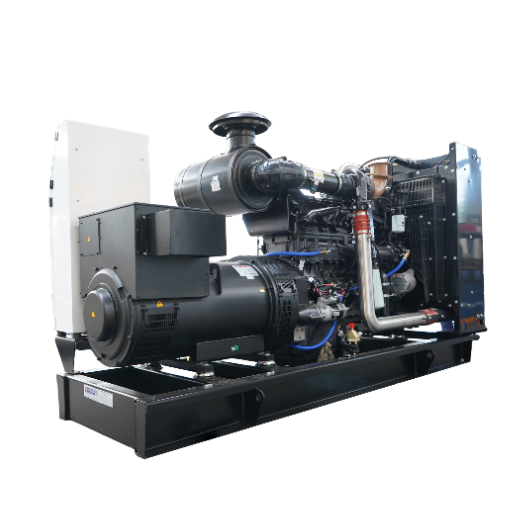
The badge certifies one component and one chain of custody. It confirms the engine block and the fuel system and rotating assembly inside it, came from a Cummins-controlled factory. That is a genuine statement, and a narrower one than most buyers assume.
The engine determines displacement, the torque curve, fuel consumption, the emissions platform, and the cost of a rebuild. Those are real variables over a twenty-year service life.
It does not determine the alternator, which is commonly Stamford, Leroy-Somer, Marathon, or an assembler’s own winding. It does not determine the controller, which may be Deep Sea, SmartGen, ComAp, or the engine maker’s own unit. Nor does it determine the enclosure, the cooling package, the fuel tank, or the automatic transfer switch.
Emissions compliance is the point that surprises people. It is a property of the complete set, not the engine alone. A compliant engine can still miss a Tier or Stage requirement because of how the exhaust and cooling were integrated around it.
Most diesel generator sets sold under a “Cummins engine” description are built by integrators, and we are one of them. We build generating sets from 8 kVA to 4,000 kVA around genuine Cummins engines alongside other engine platforms, and we say so plainly. A set with a genuine Cummins engine, a Stamford alternator, and Deep Sea controls is a legitimate purchase, a common one, and often better value than a fully branded package. What is not legitimate is describing that set as a Cummins-built genset.
There is one question worth putting to any supplier who implies the whole machine came from the engine maker: who built the set, and which controller is fitted? The answer separates a Cummins-built package from an integrated one. We cover the distinction at length, including how the warranty splits between the two parties, in our guide to heavy duty diesel generator brands.
Dmitri Volkov, a procurement lead at a mining contractor in Central Asia, is an illustrative composite of how this plays out. In 2025 his team specified a standby set for a remote camp and bought on the badge, accepting a quotation that described a “Cummins 500 kW generator.”
The delivered unit carried a genuine Cummins engine whose rated generator-drive output sat well below the quoted figure once altitude derating at the site’s 1,500 metres was accounted for. The engine was authentic. The rating had been restated, and resolution took four months.
How to Read a Cummins Engine Model Number
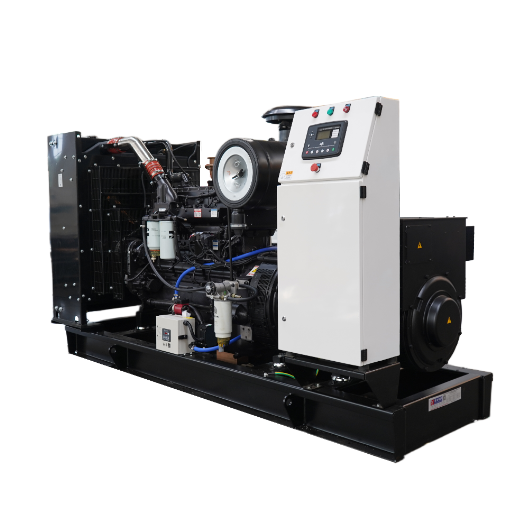
An engine model such as 6BTA5.9-G2 is a compressed specification. Read left to right, it gives you the cylinder count, the engine family, the induction and cooling arrangement, the displacement, the application, and the build variant, in that order.
The decoder
| Component | Example | Meaning |
|---|---|---|
| Cylinder count | 6 in 6BTA5.9 |
Number of cylinders |
| Series family | B |
Engine family: B is roughly 4.5 to 6.7 L, C is 8.3 L, L is roughly 8.9 to 9 L, M is roughly 11 L, N is 14 L (855 cu in), X is roughly 11.9 to 15 L, K is big-bore 19, 38, or 50 L |
| Turbocharging | T |
Turbocharged |
| Aftercooling | A |
Aftercooled (jacket water). AA means air-to-air charge cooling |
| Displacement | 5.9 |
Litres, or cubic inches on the big-bore families (855) |
| Application | -G |
Generator drive |
| Variant | 2 |
Build variant within that engine family |
| Control prefix | IS / QS |
Interact System and Quantum System electronic controls |
Four worked decodes:
6BTA5.9-G2is a 6-cylinder, B-family, turbocharged, aftercooled, 5.9-litre generator-drive engine, build variant 2.6CTAA8.3-G2is a 6-cylinder, C-family, turbocharged, air-to-air aftercooled, 8.3-litre generator-drive engine, variant 2.NT855-GAis an N-family, turbocharged, non-aftercooled unit of 855 cubic inches, about 14 litres, in generator-drive trim.KTA19-G3is a K-family, turbocharged, aftercooled, 19-litre generator-drive engine, variant 3.
The four meanings of G, and the myth worth correcting
This is where most buyers go wrong, and where a lot of published material goes wrong with them.
First, a trailing -G on a diesel engine model means generator drive. It signals that the engine was configured for fixed-speed operation driving an alternator, typically around 1,500 rpm for 50 Hz grids and 1,800 rpm for 60 Hz grids.
Second, the number after it is a build variant within that engine family. -G1, -G2, -G3, and -G7 are different builds. The variant number generally rises with output inside a family, but the relationship is not strictly monotonic, so it cannot be trusted as a shortcut. Read the output off the datasheet for the exact model.
Third, ISO 8528-5 defines performance classes also labelled G1 to G4. These grade how a set behaves during a load change: how far voltage and frequency move, and how quickly they recover. They describe transient behaviour, not duty. Class G3, the level most industrial sets are built to, carries steady-state limits of plus or minus 1% voltage deviation and plus or minus 0.5% frequency band.
Fourth, the actual duty ratings come from ISO 8528-1, and they are labelled COP, PRP, LTP, ESP, and DCP. No engine model number encodes any of them.
So the belief that “G1 means standby, G2 means prime, G3 means continuous” conflates the second meaning with the fourth, and it is unsupported. The suffix on the engine is not a duty class. Present it to a supplier as a question, not an assumption, and you will learn something about how carefully that supplier reads its own datasheets.
Two traps in the naming system
N is not a cylinder count. On the big-bore families the letter embeds displacement instead. NT855 Refers to 855 cubic inches, not to nine cylinders.
A leading G means gas, not generator drive. On a gaseous-fuel engine such as GTA855, the G at the front signals a gas-fuelled unit. Position matters: a G in front and a G at the back are unrelated.
That is why reading letters by intuition fails. Confirm any model against its datasheet rather than decoding it from memory.
Which Factory Built Your Cummins Engine
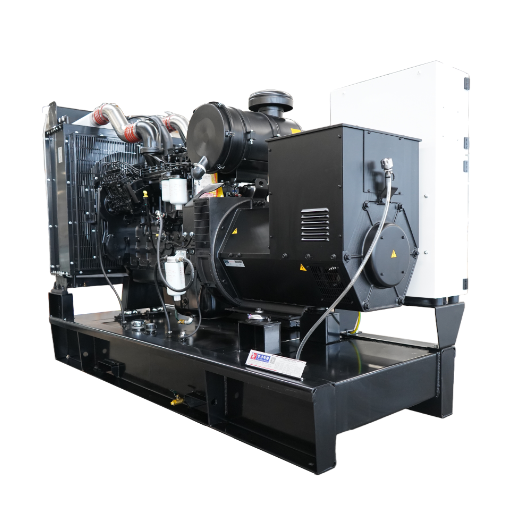
“Cummins engine” does not identify a factory, and in China it does not identify one company. Four joint ventures build engines used in generating sets, and all four are genuinely Cummins.
The four Chinese joint ventures
| Joint venture | Location | Formed | Character |
|---|---|---|---|
| CCEC, Chongqing Cummins | Chongqing | 1995 | Cummins’ only high-horsepower base in China. Builds NT855 and QSN, K19 and QSK19, K38 and QSK38, K50 and QSK50, M11 and QSM11 |
| DCEC, Dongfeng Cummins | Xiangyang, Hubei | 1996, with a B-series licence dating to 1986 | B, C, L, and Z families, plus QSB, QSC, QSL, ISDe, and ISLe. The volume mid-range base |
| XCEC, Xi’an Cummins | Xi’an | 2007 | ISM11 and QSM11, M15, X12 |
| BFCEC, Beijing Foton Cummins | Beijing | 2008 | ISF and ISG, X11, X12, X13 |
Model prefix is a rough guide to origin. NT, NTA, KTA, KT, and QSK point toward CCEC. 4BT, 6BT, 6CT, QSB, QSC, QSL, ISDe, and ISLe point toward DCEC. Treat it as a guide to verify, not a rule to rely on.
The nameplate test and the three-number cross-check
A genuine joint-venture engine’s plate names the full legal manufacturer. You are looking for “Dongfeng Cummins Engine Co., Ltd.” or the Chinese 东风康明斯, or “Chongqing Cummins Engine Co., Ltd.” A plate reading only “Cummins” with no legal entity behind it is the one to question.
Confirm that three numbers agree. The engine nameplate, the stamping on the cylinder block, and the fuel-pump nameplate should reconcile. When they do not, the engine has been assembled from mixed parts, and the rating on the datasheet no longer describes the machine in front of you.
Parts are not interchangeable across the joint ventures either. CCEC big-bore engines use mechanical fuel systems while the DCEC mid-range engines use high-pressure common rail. Order parts by engine serial number rather than by model family.
Counterfeit and grey-market verification is territory we have covered in detail elsewhere. Our guide to how to verify a Chinese generator factory covers the serial-number checks, and the Cummins versus Perkins comparison covers the provenance question end to end.
The Rating on the Datasheet Is the Only Rating
Here is the part that directly affects what you pay for.
A generating set can be rated for several different duties, and the same physical machine produces different kW figures at each. ISO 8528-1:2018 defines five categories, and the difference between them is measured in both annual hours and load pattern.
The ISO 8528-1 duty ratings
| Rating | Definition | Annual hours | Load character |
|---|---|---|---|
| COP, continuous power | Maximum power for a continuous, constant load | Unlimited within maintenance intervals | 100% constant |
| PRP, prime power | Maximum power available continuously supplying a variable load | Unlimited | 24-hour average no more than 70% of PRP; overload permitted |
| LTP, limited-time running power | Maximum power for a limited period | Capped, commonly around 500 hours per year | Constant |
| ESP, emergency standby power | Maximum power during a variable sequence in a utility outage or under test | No more than 200 hours per year | 24-hour average no more than 70% of ESP; no overload |
| DCP, data centre power | Data-centre duty | Unlimited | Constant or varying |
Two relationships hold generally, though they are typical rather than clause-level requirements. Emergency standby rating sits above prime rating for the same set, commonly by 10 to 15%. Continuous rating sits below it by a similar margin, because the duty cycle relaxes as the rating falls.
Why no engine model number encodes a duty rating
The engine’s own output is the ceiling. The duty rating is how hard you are allowed to lean on it.
A single engine build can be sold into an emergency standby application or a prime power application. Same block, same turbocharger, same displacement, different rating on the order. That flexibility is exactly why the model number cannot encode the duty. The duty is a commercial and operational choice made by the buyer and written into the purchase order.
This is also why the performance classes in ISO 8528-5 must not be confused with the duty ratings in ISO 8528-1. They sit on different axes. A set can meet a stringent transient performance class and still be sold at an emergency standby rating, or at a prime rating, and the class tells you nothing about which.
For the wider picture on how ratings affect sizing, warranty, and lifecycle cost, our heavy duty diesel generator buying guide works through the trade-offs.
Checking the Engine Against the Quoted Output
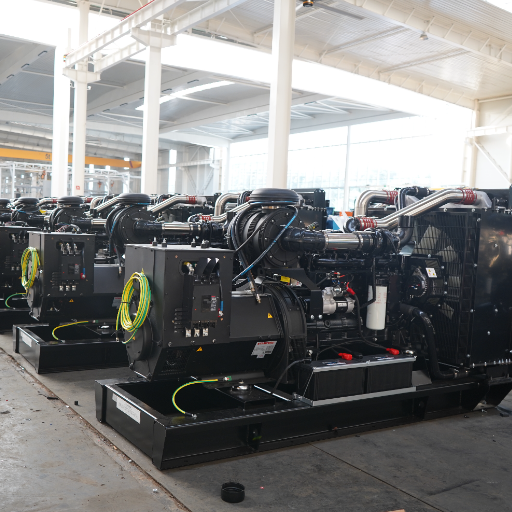
This is the technique that turns a decoder into something useful, and it is the reason the engine model number deserves more attention than buyers usually give it.
Engines in generator-drive trim are rated at fixed speeds for the two grid frequencies, roughly 1,500 rpm for 50 Hz and 1,800 rpm for 60 Hz, with the 60 Hz figure typically the higher of the two. Two representative examples show its shape:
| Engine model | Approximately 50 Hz (1,500 rpm) | Approximately 60 Hz (1,800 rpm) |
|---|---|---|
| 6BTA5.9-G2 | ~106 kW | ~120 kW |
| KTA19-G3 | ~403 kW | ~463 kW |
Those figures are approximate and variant builds differ. Read the datasheet for the exact model named on your quotation rather than a table.
The method requires no arithmetic and no engineering judgement:
- Take the engine model from the quotation.
- Open the datasheet for that exact model and variant.
- Read its generator-drive rating at your grid frequency.
- Compare that figure with the kW the quotation claims.
If the quoted standby figure sits above the engine’s own rated output for that build, the quotation has restated the rating. No acoustic, electrical, or enclosure detail in the document changes that.
Rosa Fernandes, a facilities engineer at a Portuguese food-processing plant, is an illustrative composite of the method working. Her 2026 tender returned a quotation naming a 6CTAA8.3-G2 engine and claiming 200 kW of emergency standby power.
The datasheet for that build lists roughly 150 kW at 50 Hz in generator-drive trim. She did not need to argue about enclosures or acoustic ratings. She asked the supplier to reconcile two numbers on their own paperwork, and the quotation came back revised at 150 kW standby with the price adjusted accordingly.
The check itself is only half the discipline. A set can be correctly rated and still fail to deliver on site, which is why an acceptance test belongs in the contract. Our guide to the generator load bank testing procedure explains how to prove the delivered output under real load rather than trusting the label.
What to Ask Before You Order
Six questions extract everything you need to know about a Cummins-engine generating set, and every one of them can be answered from documents the supplier already holds.
- What is the full engine model number, including the variant suffix? A supplier who quotes only “Cummins engine” is withholding the one identifier you can verify independently.
- Which legal entity manufactured it, and what does the nameplate say? You want a company name, not a brand.
- At which rating is the quoted kW figure stated? Emergency standby, prime, and continuous produce different numbers from the same machine, so the rating category belongs on the order.
- At which frequency is that figure rated? A 60 Hz rating quoted to a 50 Hz buyer describes a different machine.
- Who built the complete set, and which alternator and controller are fitted? This separates an integrated package from a brand implication.
- What is the acceptance test, and will you witness it? A rating proven in your presence under load is worth more than one printed on a datasheet.
None of these require expertise to ask. All of them produce a written record you can hold a supplier to later.
Ready to specify a set around a genuine Cummins engine? Review our industrial diesel generator range or send us the load profile and we will size it against the correct rating category.
Frequently Asked Questions
What does the G mean in a Cummins engine model number?
It depends on where the G sits and what document you are reading. A trailing G on a diesel engine model means generator drive, indicating fixed-speed operation for an alternator. A number after it, as in -G2, indicates a build variant within that engine family. Separately, ISO 8528-5 uses G1 to G4 to label transient performance classes.
Does the G2 or G3 suffix tell me the generator’s power rating class?
No, and this is the most expensive misconception on the topic. The suffix describes a build variant within the engine family. The power rating classes are defined in ISO 8528-1 as COP, PRP, LTP, ESP, and DCP, and no engine model number encodes them.
Which Cummins factory built the engine in my generator set?
Model prefix is a rough guide. The NT, NTA, KTA, and QSK families generally come from Chongqing Cummins, known as CCEC, while the 4BT, 6BT, 6CT, QSB, and QSC families generally come from Dongfeng Cummins, known as DCEC. Verify against the nameplate rather than the prefix alone.
Why does a quotation show a higher kW figure than the engine datasheet?
Because the rating was written for the sales document rather than read from the datasheet. A seller can type any kW figure into a quotation, but the factory fixes the engine model number. Open the datasheet for the exact engine model and variant named, read its generator-drive rating at your frequency, and compare.
Is a generator set with a Cummins engine and a Deep Sea controller still genuine?
Yes, provided it is described honestly. A large share of the world’s Cummins-powered generating sets are integrated packages that combine a genuine Cummins engine with an alternator and controller from other manufacturers. That is a normal and often cost-effective configuration. The problem is not the combination, it is a supplier describing an integrated package as though the engine maker built the whole machine.
Conclusion: Audit the Badge, Not the Brochure
A Cummins engine diesel generator set is a Cummins engine plus an integrator’s decisions, and the quotation is where those decisions get described. Most of that description can be written to suit the sale. The engine model number cannot be, which makes it the most useful verification tool on the document.
Three things worth carrying away. The letter G carries four unrelated meanings, and the belief that a suffix encodes a duty rating is a myth with money attached. An engine model number is an independent cross-check on a quoted output, checkable with a datasheet and no expertise. And a genuine joint-venture engine names its legal manufacturer on the plate, not just the brand.
Ask for the model number, the rating category, and the frequency before you sign anything, and put all three on the order. The conversation costs nothing and settles arguments that would otherwise arrive after the set is on site.
If you have a quotation in front of you and want to know whether the engine and the rating reconcile, our engineering team will check it and tell you plainly.


