
Rugged Mobile Generators for Oil and Gas: Field Guide
Rugged mobile generators for oil and gas are transport-rated, prime-rated generator sets, sited so that exhaust, air intakes, and wiring stay outside the classified area. The enclosure is the least important part. What decides whether a unit survives a lease road, a 48°C summer, and a 2,000 m elevation is the base frame, the coating system, the derated output, and the documentation that travels with it.
At 3 a.m. on a winter pad, the mud pump kicks in and the drawworks loads up. Nobody is thinking about the brand on the canopy. They are thinking about whether the set can absorb the block without dropping frequency.
If you have specified a mobile generator before, you know the brochure kilowatt figure rarely matches what the site gets. This guide gives you a specification you can hand to any OEM: the properties that make a set field-rated, how to choose the format, how to size on prime power, and how the emissions class changes when the unit moves. If you have a load list, our will review it at no cost.
Key Takeaways
- “Rugged” is a transport and duty specification, not a canopy style. Base frame steel, vibration isolation, coating class, IP rating, and derated output can all be written into a purchase order.
- Trailer, skid, and container solve different problems. Pick the format before the kVA, because transport weight often decides which unit is deliverable.
- Size on prime rating and peak simultaneous load. A 1,000 kW standby set is roughly a 900 kW prime set, and a unit run below about 30% load will wet-stack.
- The emissions class depends on whether the unit is mobile or installed. A trailer-mounted set moving between leases is regulated differently from the same engine on a pad.
- Hazardous-area siting decides whether the unit is allowed on site. The generator is not the classified equipment; its location and wiring are.
What Makes a Mobile Generator Rugged for Oil and Gas?
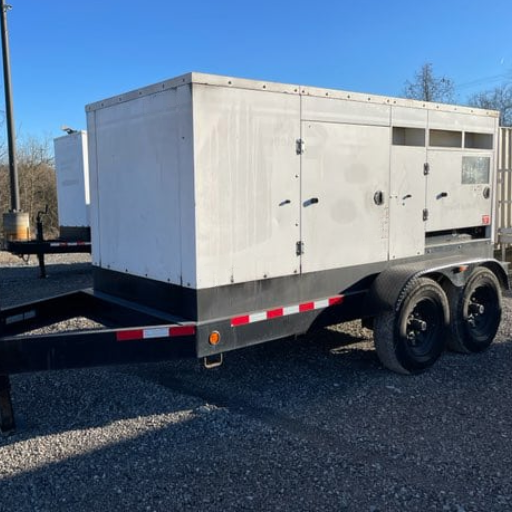
A rugged mobile generator for oil and gas is a generator set built for repeated transport and prime duty. Its base frame, enclosure, cooling, filtration, and coating are rated for the site’s ambient temperature and altitude. Ruggedness is measurable, not a paint colour.
Six specifications separate a field-rated package from a brochure-rated one.
- Base frame. Ask for steel grade and section thickness, not paint finish. Thin folded sheet will flex under a 1,500 kW set and crack at the engine mounts. Isolators should match engine mass and firing frequency.
- Coating. Specify a system against ISO 12944 C4 or C5 for coastal and offshore exposure, with dry film thickness and surface prep stated. Stainless hardware and a drained frame matter too.
- Enclosure and airflow. The canopy must keep dust and rain out without choking the radiator. Ask for radiator pressure drop and derated output at site ambient; if pressure drop is missing, the cooling package was not modelled.
- Derating. A set rated 500 kW at 25°C and sea level may deliver 435 kW at 48°C and 2,000 m. Request the curve, not a single number.
- Filtration and exhaust. Two-stage filtration with a cyclonic pre-cleaner and restriction indicator is the minimum for a drilling or frac site. Fit a spark arrestor where required.
- Lifting and tie-down. Forklift pockets, certified lifting eyes, and rated tie-down points are how the unit reaches the pad without frame damage. Ask for the rated capacities.
| Specification | Field requirement | How to verify it |
|---|---|---|
| Base frame | Welded steel, rated for repeated lifting | Steel grade, section thickness, lift-point rating |
| Coating | C4 or C5 for coastal, brine, or offshore exposure | Standard, dry film thickness, surface prep |
| Enclosure | IP54 typical, with modelled airflow | Radiator derating at site ambient, pressure drop |
| Derating | Published curve for temperature and altitude | Output at site conditions, not nameplate only |
| Filtration | Two-stage with pre-cleaner and restriction indicator | Filter model, restriction alarm set point |
A heavier canopy is not stronger, and a higher price does not guarantee a better derating curve. Ask the supplier to state the output at your maximum ambient and altitude in writing; if the answer is the brochure number, keep asking.
Trailer, Skid, or Container: Choosing the Mobile Generator Format
Pick the format before the rating. It sets transport weight, handling equipment, and installation cost. All three are available in ZC Power’s , from 8 kVA to 4,000 kVA.
Trailer-mounted: fastest to reposition
A trailer-mounted generator for oil and gas duty moves with a pickup or light truck, which suits well work, frac support, and sites where demand moves every few weeks. Specify road-legal lighting, brakes sized to gross vehicle weight, and a tow bar rated for the loaded mass. A trailer that is legal empty but overloaded with a full tank is a common mistake. If the unit will sit for years, a trailer is the wrong purchase: you pay for axles and brakes that corrode in place.
Skid-mounted: cheapest per kW
A skid-mounted generator for oilfield duty is the lowest-cost package per kilowatt and the easiest to install on a prepared pad. It has no road equipment to maintain. The trade-off is handling: a 1,000 kW skid can weigh over 10 tonnes with fuel, so every move needs a crane or heavy forklift.
Containerized: weather and security
A containerized set gives lockable, weather-tight, CSC-plated protection and ships like freight. It suits offshore, desert, and long-duration remote sites. The costs are real: a container is heavier, needs more crane capacity, and requires ventilation that works in high ambient. Our covers that detail.
| Format | Best for | Move time | Handling | Main risk |
|---|---|---|---|---|
| Trailer | Workover, frac support, moving pads | Minutes to hours | Pickup or light truck | Corrosion when parked; GVW limits |
| Skid | Fixed pad, camp power, long-duration sites | Hours to days | Crane or heavy forklift | Handling cost; no weather protection |
| Container | Offshore, desert, secure remote sites | Days | Crane and flatbed | Weight, ventilation, higher CapEx |
Transport arithmetic
The kilowatt rating does not decide whether a unit ships. Gross vehicle weight does. A 500 kW trailer set might weigh 4 to 6 tonnes dry, then gain 1 to 2 tonnes with fuel. Add the tow vehicle and you may exceed a standard licence limit.
Amara, a logistics lead, planned a cross-border campaign around ratings. A route survey found a bridge weight limit that ruled out the loaded 800 kW trailers. The units were re-specified as skids on flatbeds, with fuel delivered separately. The power never changed; the transport plan did.
Ask for dry weight, wet weight, axle loads, and the tie-down drawing, then check the route.
Sizing Rugged Mobile Generators for Oil and Gas Loads
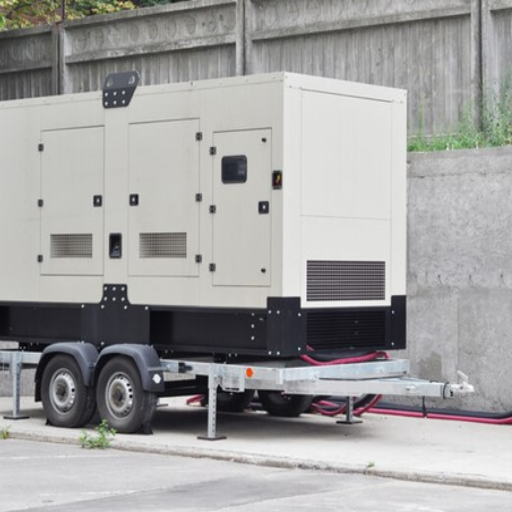
Sizing oilfield generators starts with a load list. The goal is the smallest prime-rated set that starts the largest motor while carrying the rest of the load at site ambient and altitude.
| Application | Typical prime rating | Load character | Common format |
|---|---|---|---|
| Single well or pad | 30–150 kW | Small pumps, instrumentation, lighting | Skid or small trailer |
| Gas lift or multi-well | 200–500 kW | Compressors, pumps, variable loads | Skid or container |
| Saltwater disposal or compression | 500–1,500 kW | Continuous motor load | Skid or container |
| Drilling rig auxiliaries | 1,000–1,500 kW per unit | High starting surge, cyclic | Skid, container, or rig-integrated |
| Frac spread | 2,000 kW and up, paralleled | Very high, short peaks | Trailer or container, paralleled |
Prime vs standby
ISO 8528-1 defines the ratings. Emergency standby power (ESP) covers short outages, typically a few hundred hours a year, with no sustained overload. Prime rated power (PRP) allows unlimited annual hours at a variable load. Continuous operating power (COP) is for a constant 100% load.
An off-grid oilfield set is PRP. A standby-rated unit run as sole supply is outside its design envelope and weakens any warranty position. A 1,000 kW standby set is roughly a 900 kW prime set, or 800 kW continuous. That is a planning rule, not a standard. Our guide to explains the duty cycles.
The oversizing trap
A set run below roughly 30% to 40% of rating for long periods will wet-stack: unburnt fuel, carbon, and moisture accumulate in the exhaust and cylinders.
Priya, a project engineer on a gas-lift pad, sized from nameplate totals. The list added up to 250 kW, so she ordered a 500 kVA set. Demand never exceeded 120 kW, and after four months the exhaust was wet and the turbo fouling. The fix was a smaller set and a load bank schedule.
The method:
- Build the load list with running kW and power factor.
- Convert to kVA and apply a demand factor of 0.7 to 0.85.
- Identify the largest motor and its starting method.
- Calculate starting kVA at the actual start method.
- Add the other running load, then a 10% to 20% margin.
- Derate for ambient and altitude, then select the next standard prime rating.
Worked example: 250 kW connected load
250 kW at 0.8 power factor is 312 kVA. With a demand factor of 0.8, running demand is 250 kVA. The largest motor is 45 kW.
At direct-on-line, it draws about six times the running current, or 338 kVA. Add the other 205 kW, about 256 kVA, and peak start demand is 594 kVA, pointing to a 625 kVA set.
With a soft starter limited to three times running current, starting demand falls to 169 kVA. Peak becomes 425 kVA. Add 15% and you land at 489 kVA, which rounds to 500 kVA, or 400 kW at 0.8 power factor.
Same load, one frame size smaller. The difference is the starting method. Our walks through the full calculation.
The Emissions Class Changes When the Unit Moves
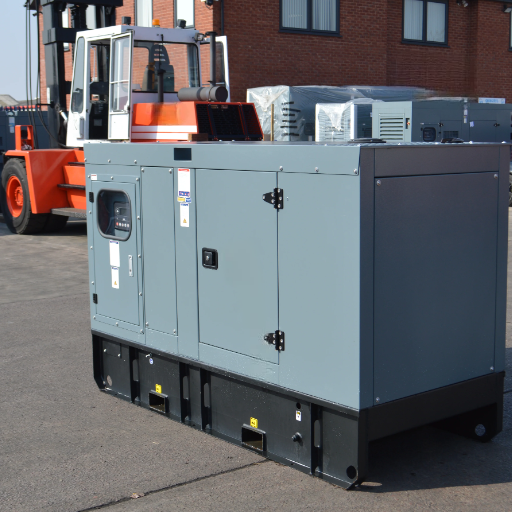
A generator engine is regulated according to how it is used. Move the same engine from a trailer to a concrete pad and the applicable rule can change.
Trailer-mounted and non-road
A trailer-mounted set that travels between leases is generally regulated as a non-road compression-ignition engine under , with Tier 4 Final limits applying to newer engine model years. The engine’s emissions label and model year are the evidence, not the brochure. If the unit is exported, the destination country’s rules apply; the US framework is an example, not a global answer.
Skidded and stationary
A set bolted to a foundation is generally a stationary compression-ignition engine. In the US, that means the New Source Performance Standards in and, where applicable, 40 CFR Part 63, Subpart ZZZZ. The hinge is 40 CFR 60.4219, which treats a stationary engine as one that is not a non-road engine under 40 CFR 1068.30.
What to request from the OEM
Ask for the engine make, model, and model year, a photograph of the emissions label, and a written statement of intended use. The confirms the current US rule; for any other country, confirm with the local regulator before the unit ships.
Diesel or Field Gas: The Fuel Decision
Diesel is the default for mobile oilfield power because it is available, transportable, and does not depend on a gas treatment skid. Field gas is cheaper per unit of energy when the site has it, but it is not free once treatment and derating are included.
The World Bank’s reported that 167 billion cubic metres of gas was flared globally in 2025. That figure is the economic case for field gas, and a reminder that the gas is often at the wellhead rather than in a pipeline.
Field gas varies in methane number, heating value, water content, and hydrogen sulphide. An engine set up for pipeline gas may not run reliably on associated gas without treatment. A conditioning skid to remove liquids, control pressure, and manage H₂S is part of the project cost. Expect a 10% to 20% derating relative to diesel, depending on gas quality and compression ratio, and ask the OEM to quote against your gas analysis.
Diesel autonomy is a logistics decision. A 24- to 72-hour tank is common for remote pads, with bunding and a spill kit.
A 500 kW set at 75% load typically burns 75 to 110 litres per hour, depending on engine and load profile. Take the datasheet curve and size the tank for the delivery interval you can guarantee. Our gives a first estimate.
Siting, Hazardous Areas, and Climate Derating
Area classification and separation
The generator is not the classified equipment. The area around the wellhead, separator, or tank battery may be classified, and the generator’s location and wiring must respect that classification.
Place the unit upwind of the wellhead under the prevailing wind, outside the classified zone shown on the site’s area-classification drawing, with exhaust and intake away from gas sources. Use gas detection where required, fit a spark arrestor where required, and confirm separation with the drawing and the authority having jurisdiction.
Do not accept a generic “50 ft” rule from a supplier. Separation depends on the classification, ventilation, and local code. Standards such as API RP 505 and IEC 60079 describe the framework, but the drawing and the AHJ govern the site.
Heat and dust
Daniel, a commissioning engineer, tested a 500 kW set on a summer pad at 48°C and 2,000 m. The unit started and carried load, but output at site conditions was closer to 435 kW once the derates were applied. The fix was not a larger canopy. It was a specification that stated the derated output before the order was placed.
For a hot site, specify the radiator for maximum ambient, not the standard 40°C rating. Add two-stage filtration, check enclosure airflow, and keep the radiator away from neighbouring equipment exhaust.
Cold and altitude
Cold starting needs block heaters, battery warmers, and the correct lubricant. Diesel waxing is a fuel problem, so specify the cold-flow grade. At altitude, the engine loses output and the turbocharger works harder; ask for the altitude curve and confirm the turbo match.
Procurement Checklist and the Rent-vs-Buy Call
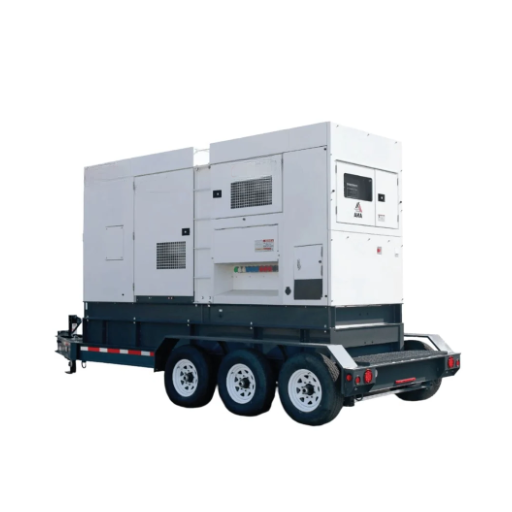
Rental usually wins under about six months, especially when the unit moves between pads. Ownership wins beyond roughly 12 to 24 months of steady runtime. In between, utilisation and mobilisation cost decide.
Twelve questions to ask before you sign
- What is the prime rating at my site’s maximum ambient temperature and altitude?
- What is the engine make, model, and emissions label?
- What steel grade and section thickness is the base frame?
- What coating system and dry film thickness are specified?
- What is the enclosure IP rating and radiator pressure drop?
- What are the lifting and tie-down ratings?
- What is the fuel tank capacity, and what is the wet weight?
- Which control panel and telematics are fitted?
- What does the witnessed load-bank test record include?
- What spare parts are recommended for the first 2,000 hours?
- What is the warranty response path and parts lead time?
- What documentation ships: drawings, test record, manuals, and emissions evidence?
If a supplier cannot answer questions 1, 2, 3, and 9 in writing, the rest of the quotation is decoration.
Frequently Asked Questions
What size mobile generator does a wellsite need?
Most single-well sites need 30 to 150 kW of prime power; multi-well gas lift and compression sites typically need 200 to 1,500 kW. Size from the load list, not the well count.
Can a diesel generator run continuously on an oil rig?
Yes, if it is prime-rated and maintained on the engine manufacturer’s schedule. A generator for drilling rig auxiliaries commonly runs 1,000 to 1,500 kW per unit, with paralleling for redundancy. A standby-rated set run continuously is outside its design envelope.
What is the difference between prime and standby power for oilfield generators?
Prime power allows unlimited annual hours at a variable load. Standby power is for short outages and does not permit sustained overload. An off-grid oilfield site needs prime power.
Are mobile generators allowed in hazardous areas?
A generator is generally not installed inside a classified zone. It is placed outside the zone, upwind where possible, with wiring and exhaust arranged to suit the classification. Confirm the location against the site’s area-classification drawing and the AHJ.
Do I need a Tier 4 generator for a wellsite?
It depends on whether the unit is regulated as non-road or stationary, and on the engine model year. Trailered units that move between sites are generally non-road; skidded or permanently installed units are generally stationary. Confirm the destination country’s rule before ordering.
Conclusion
Rugged mobile generators for oil and gas are specified, not bought off a shelf. The work is in the base frame, the coating, the derated output, the starting method, and the siting drawing. Get those right and the brand on the canopy matters far less than the documentation behind it.
Three checks prevent most field failures: state the derated output at site conditions in the purchase order, confirm whether the unit is regulated as mobile or stationary, and size on prime power with the largest motor start included.
If you are specifying a unit for a pad, rig, or campaign, send your load list, site ambient, altitude, and fuel availability to our engineering team. We will recommend a format and a prime rating, and quote it factory-direct from our plant in Jining, Shandong. or explore our .


