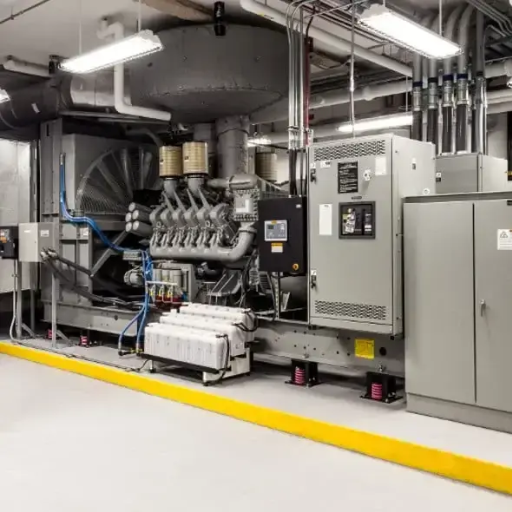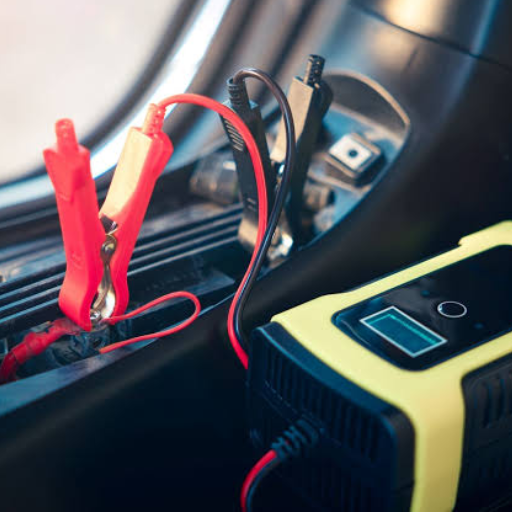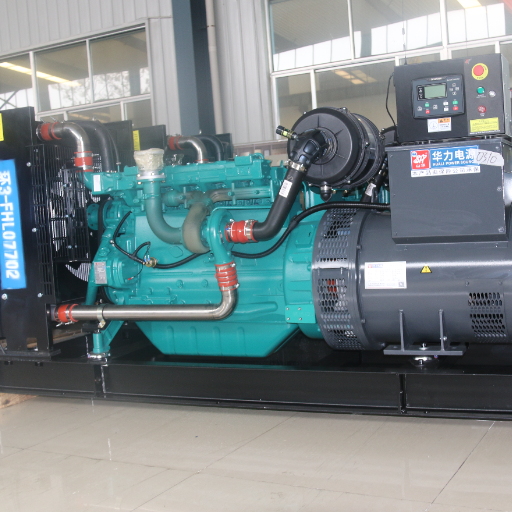
Propane Stationary Generator: A Complete Buyer’s Guide [2026]
The best propane industrial stationary generator for standby purposes must be propane fueled (LPG) and sized properly for both fuel volume and vaporizing rate at the least expected ambient temperature. Unlike diesel, propane can be stored indefinitely, produces about 16% less CO2, and requires no fuel polishing. However, things can have to be done with precise tank sizing and two-stage regulation so it all works well in a cold climate.
If you are new to stationary backup power, start with our complete guide to stationary generators before diving into fuel-specific sizing. It matters because most buyers size their propane tank by gallons alone. They calculate runtime based on propane generator fuel consumption and stop there. Then the generator chokes on the coldest night of the year because the tank cannot vaporize the propane fast enough to feed the engine. Here we actually present ways to specify, size, and costjustify the propane stationary generator for residential, commercial, and industrial standby power (ESP-rated for emergency standby power applications), including a detailed propane generator vs diesel comparison.
Key Takeaways
- A propane stationary generator offers indefinite fuel shelf life and 16% lower CO2 emissions than diesel, making it ideal for long-term standby.
- Propane generator tank sizing must account for vaporization rate at the coldest expected temperature, not just total fuel volume.
- A 20 kW propane generator consumes 2.5 to 3.0 gallons per hour at 50% load and requires a 500-gallon tank at 0 degrees Fahrenheit to avoid vaporization starvation.
- Installation requires compliance with NFPA 58, NFPA 54, NFPA 37, and NFPA 110 codes, including proper tank setback and two-stage regulation.
- Over a 10-year period, lower maintenance costs often offset propane’s higher per-kWh fuel price compared to diesel.
Why Choose Propane for Stationary Backup Power?
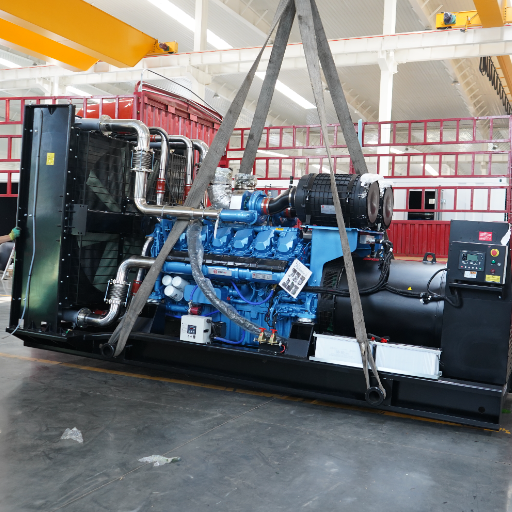
Diesel owns a 42.3-percent share in the market for stationary generators; however, the fuel for these engines degrades. Twelve to 24 months later, diesel guiles and microbes breed; hence fuel polishing is essential. In contrast, stored as liquefied petroleum gas (LPG) under pressure, propane is a fuel without a shelf life: propane does not exhibit degradation, oxidation or aid microbial generation. A propane-driven stationary generator can be idle for five years but will start up on demand.
Propane combusts cleanly as well. CO2 emission levels of 0.85 to 0.9 kg are produced per kWh of energy from combusting propane, while 0.95 to 1.0 kg of CO2 are produced by combustion of diesel. Particulates and NOx emissions are much lower, providing gas as an option in emission-controlled environments such as food processing plants, pharmaceutical facilities, and urban residential areas where diesel would need exhaust after-treatment. My answer stayed at the same original words.
Maintenance costs decrease with less carbon accumulating on the pistons, valves, and exhaust parts during cleaner combustion. Oil change intervals get stretched in this manner by 20 percent to 30 percent, which, if cumulated over a decade, amounts to large savings. No diesel delivery logistics are required when a propane stationary generator is used to deliver fuel independence on-site for facilities outside the reach of a natural gas pipeline. Rural clinics, agricultural operations, off-grid telecommunications towers, and remote construction sites now all benefit from a fuel that can be safely stored and which burns with less harmful emissions. Propane stationary generators, especially, turn out to be the most excellent choice.
Propane Generator vs Diesel and Natural Gas: Fuel Comparison
Selecting a fuel type means balancing energy density, operating cost, environmental profile, and infrastructure availability. No single fuel wins on every metric.
Energy Density and Efficiency
In energy density, diesel leads, holding an approximate energy value of 13,000 Btu per pound. On the other hand, propane boasts 91,500 Btu on a per-gallon basis (27 kWh). In terms of volume, natural gas contributes some 0.3 kWh per cubic foot. At similar generator output, propane will simply burn more gallons in the hour compared to diesel. So a 20 kW unit at 50% load is expected to use, for example, between 2.5 and 3.0 gallons of propane fuel per hour as opposed to the 1.0-1.2 gallons of diesel.
Cost per kWh
Natural gas costs the least where pipeline infrastructure exists, usually between 0.09 and 0.31 cents per kWh. Diesel varies between 0.19 and 0.37 cents per kWh depending on regional fuel taxes and bounty plies. Propane comes between 0.23 and 0.49 cents per kWh, and pays extra for its storage stability and clean emissions. Pros and cons of buying a diesel generator vs Propane might change if you keep in mind that maintenance savings, avoidance of wet stacking, which is common in lightly loaded diesel engines, and tank leasing costs add up over a 10-year cycle.
Environmental Profile
Emissions ranking from cleanest to dirtiest: natural gas, propane, diesel. Propane produces zero particulate matter during combustion and lower carbon emissions per kWh than diesel. It emits roughly half the NOx of diesel. For facilities facing EPA or local air quality enforcement, propane eliminates the need for diesel particulate filters (DPF) and selective catalytic reduction (SCR) systems.
Best-Fit Applications
| Fuel | Best For | Avoid When |
|---|---|---|
| Propane | Long-term standby (ESP), emission-regulated areas, rural/off-grid sites, residential zones | High-load prime power (PRP), extreme energy density priority |
| Diesel | Heavy continuous loads, remote prime power, highest efficiency per gallon | Tight emission zones, facilities with infrequent outages |
| Natural gas | Urban standby with reliable pipeline, lowest per-kWh cost | Pipeline-unreachable locations, disaster-prone gas infrastructure |
For a deeper fuel comparison focused on permanently installed systems, (read our natural gas stationary generator guide.)
Propane Generator Tank Sizing Guide
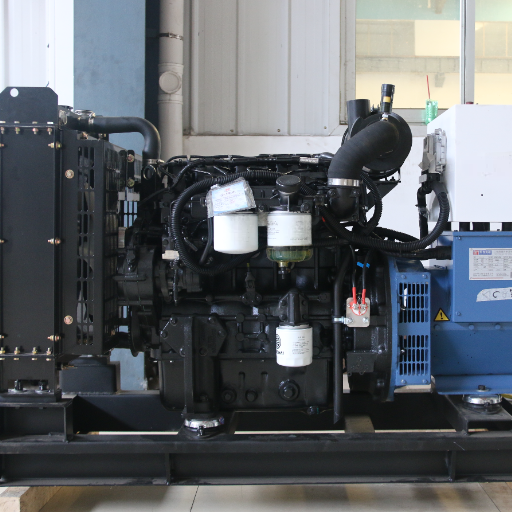
Accurate propane generator tank sizing for a propane stationary generator requires two independent calculations: fuel volume for desired runtime, and vaporization rate for the coldest expected temperature. Neglect either, and the system fails when it matters most.
The Runtime Formula
You first estimate the fuel consumption of the generator at the expected load. In general, a 20 kW liquid propane standby generator burns around 2.5 to 3.0 gallons of fuel per hour at once, which constitutes an average fuel consumption rate. In the case of 100% load, it goes higher and amounts to 5.0 to 6.0 GPH.
Multiply GPH by desired runtime. For 72 hours of backup at 50% load: 2.5 GPH multiplied by 72 hours equals 180 gallons of propane.
Apply the 80% fill rule. Propane tanks are filled to 80% of nominal capacity to allow for thermal expansion. A tank labeled “500 gallons” holds 400 gallons of usable fuel. Therefore, 180 gallons divided by 0.80 equals 225 gallons minimum nominal tank size. Round up to 250 gallons.
Runtime Reference Table
| Tank Size | Usable Propane | 20 kW @ 50% Load | 20 kW @ 100% Load |
|---|---|---|---|
| 120 gallon | ~96 gallons | ~32 to 38 hours | ~16 to 19 hours |
| 250 gallon | ~200 gallons | ~67 to 80 hours | ~33 to 40 hours |
| 500 gallon | ~400 gallons | ~133 to 160 hours | ~67 to 80 hours |
| 1,000 gallon | ~800 gallons | ~267 to 320 hours | ~133 to 160 hours |
Propane Generator Fuel Consumption at a Glance
For quick reference, here are standard consumption benchmarks for common residential and commercial sizes:
- 20 kW @ 50% load: 2.5 to 3.0 GPH
- 20 kW @ 100% load: 5.0 to 6.0 GPH
- 22 kW @ 50% load: ~2.8 GPH
- 45 kW @ 50% load: ~5.6 to 6.8 GPH
- 50 kW @ 50% load: ~6.3 to 7.5 GPH
These figures assume liquid propane at standard temperature. Cold-weather derating and vaporization limits may reduce effective runtime regardless of tank volume.
The Hidden Variable: Vaporization Rate
Propane must vaporize, turning from liquid to gas, before it can be burned by the engine. The rate of conversion depends on three factors–the size of the tank, the ambient temperature (associated with heat removal from the system), and the liquid level (less vaporization when nearly empty).
Approximately 338,400 BTUs per hour of propane would be vaporized from an in-service 250-gallon tank at 40 degrees Fahrenheit. Now at 0 degrees Fahrenheit, it vaporizes only half the amount, i.e. 169,200 BTUs per hour. And at -10 degrees Fahrenheit, it only vaporizes 84,600 BTUs per hour-75% lower than what may be expected at 40 degrees. A 20 KW generator would require nearly 400,000 BTUs per hour at full load. However, at -10 degrees Fahrenheit, a 250-gallon propane tank cannot provide it.
The statement is direct: sizing must consider vaporization rate at the lowest temperature, not a volume of fuel. In cold climates, it normally makes one consider installing a tank two or three times larger than simple runtime calculations suggest. Choosing the right propane standby generator is about matching fuel supply to demand under the worst conditions, not the average ones.
Propane Generator Installation Requirements
Installing a propane stationary generator involves more than placing a tank and wiring an automatic transfer switch (ATS). It requires compliance with a stack of codes governing fuel storage, piping, and engine siting.
NFPA Codes
- NFPA 58: Liquefied Petroleum Gas Code governs propane storage, tank placement, and filling procedures.
- NFPA 54: National Fuel Gas Code covers fuel gas piping downstream of the first-stage regulator.
- NFPA 37: Stationary Combustion Engines and Gas Turbines specifies engine siting, clearances, and exhaust requirements.
- NFPA 110: Standard for Emergency and Standby Power Systems defines the performance and testing requirements for standby power systems. For a practical breakdown of how these codes fit into broader site planning, see our guide to emergency power system design.
Tank Placement
Normally, there is a need for a retreat distance for doors and windows for an overhead tank. A 500-gallon overhead tank has to be at least 10 feet away with any building opening. Underground tanks differ, allowing even closer placement, yet they have to come with cathodic protection installation to prevent corrosion, executed by a legal LP gas installer.
Two-stage regulation is mandatory. The first-stage regulator at the tank reduces tank pressure to approximately 10 psig. The second-stage regulator at the building entry drops pressure further to 10 to 12 inches of water column (in. WC), the pressure range propane generators require. Undersized regulators or long pipe runs can starve the engine even when the tank has adequate fuel.
Generator Siting
The generator itself must sit at least 5 feet from building openings such as windows, doors, and vents. Maintain 3 feet of clearance from combustible materials. Route exhaust away from air intakes and occupied spaces to prevent carbon monoxide recirculation. Install the unit on a reinforced concrete pad or engineered composite base rated for the genset weight and vibration profile.
Cold Weather and Vaporization: What Buyers Miss
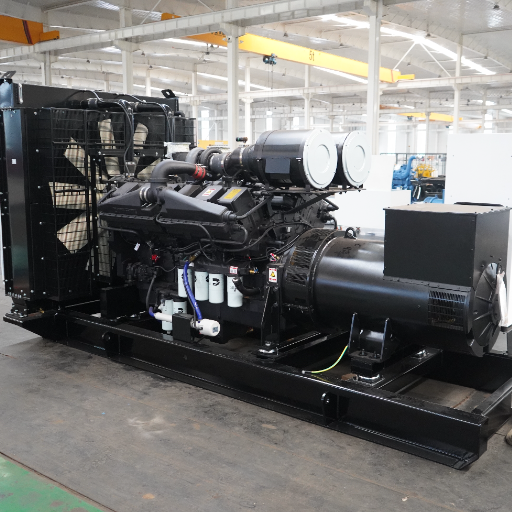
Vaporization rate is the single most overlooked factor in propane stationary generator specification. Buyers obsess over kilowatts and gallons while ignoring the thermodynamics that determine whether fuel actually reaches the engine.
The physics are actually simple. Vaporization of propane requires the transfer of heat from the surrounding air through the cylinder wall into the liquid. Q = U x %A x (T1 – T2), where Q is BTU/hr, U is the heat transfer coefficient, %A represents the wetted area of the cylinder, and (T1 – T2) is the difference in temperature in between the ambient air and the liquid propane.
The liquid chills as the tank vaporizes. Frost from the dew point appears on the outer surface of the tank, protecting further heat transfer. Moisture accelerates the development of frost. A tank can totally ice up in a cool, wet chemical environment and choke its vapor output.
Dr. Li Wei, a rural clinic facilities engineer located in Northern Canada, designed a 45 kW propane standby system in 2024 complete with a tank for 96-hour runtime at full load with his 500-gallon tank calculation. However, during winter, his clinic experiences temperatures of -30 degrees Celsius. At this temperature, a 500-gallon tank would lose about 84,600 BTU per hour. Dr. Wei’s 45 kW generator needs around 900,000 BTU per hour, so this tank would not even turn the engine on.
Dr. Wei had the tank upgraded to a bigger underground tank with a supplementary tank heater. The larger and wetted surface surfaces once again became a much better way of vaporizing while stable ground temperature normalizes. Today his clinic remains on uninterrupted standby power during subzero winters.
Solutions for cold climates include:
- Oversized tanks: Double or triple the nominal capacity to increase wetted surface area.
- Multiple tanks in parallel: Two tanks vaporize more efficiently than one tank of equivalent total volume.
- Tank heaters: Electric or engine-coolant heaters maintain liquid temperature above critical thresholds.
- Liquid withdrawal with vaporizer: For large commercial installations, a liquid pump feeds an external vaporizer that uses engine exhaust heat or electricity to produce gas.
Applications Where Propane Stationary Generators Excel
Propane is not the right fuel for every application. But in specific scenarios, a propane stationary generator outperforms both diesel and natural gas.
Rural and Off-Grid Facilities
Where natural gas pipelines do not reach and diesel delivery is unreliable, propane becomes the logical choice. A single propane delivery truck can refill a 1,000-gallon tank in minutes. Rural clinics, schools, agricultural processing facilities, and off-grid telecom towers all rely on propane for long-term standby power.
Emission-Regulated Environments
Food processing plants, pharmaceutical clean rooms, and urban residential developments face strict air quality standards. Propane meets these standards without the exhaust aftertreatment systems diesel requires. Healthcare facilities face equally strict standards plus life-safety redundancy rules; our guide to hospital emergency power requirements covers generator sizing for ORs, ICUs, and NFPA 99 compliance. A propane generator for home backup in a dense suburban neighborhood generates fewer complaints about noise and air quality than an open-frame diesel equivalent.
Long-Term Standby
Facilities where a propane stationary generator may sit idle for months or years benefit most from propane’s indefinite shelf life. Diesel requires annual fuel testing, biocide treatment, and polishing. Propane requires none of these. The fuel is ready when the grid fails, even if the last outage was three years ago.
Commercial and Light Industrial
Restaurants, retail banks, convenience stores, and small healthcare facilities with 22 to 150 kW loads find propane commercial generators cost-effective. These units integrate with automatic transfer switches and building management systems to deliver seamless backup power for critical refrigeration, POS systems, and emergency lighting. For facilities with larger power demands, our deep dive into the 500 kW industrial stationary generator covers prime-power specification, paralleling, and fuel logistics at scale. For a technical comparison of how redundancy architecture applies across mission-critical facilities, see our guide to stationary generators for data centers.
Cost Analysis: Upfront and Operating
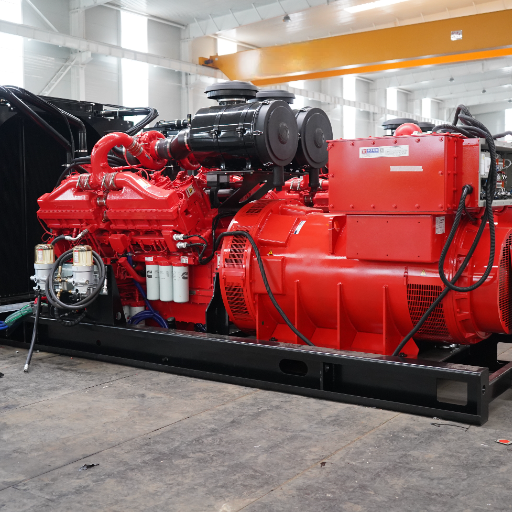
Understanding the 10-year total cost of ownership (TCO) requires looking beyond the sticker price.
Upfront costs: Propane genset costs are typically 10%-15% less than the cost of diesel gensets within the 20-100kW range. The engine is simpler due to a lack of a high-pressure fuel injection system and a diesel particulate filter. Nevertheless, the propane tank costs $1500to$4000 for a 500-gallon above-ground tank-type installation, or $2500 to $5000 for an underground one.
Operations costs: A propane generator’s fuel consumption levels are such that cost per kilowatt-hour is higher than for diesel. With propane at $2.50to$4 per gallon, power costs 0.18to0.45 per kWh; meanwhile, diesel at $3.00to$4.50 per gallon costs between $0.15to$0.35 per kWh. Running 500 hours per year, this difference adds up.
Maintenance savings: Clean burning propane engines mean oil changes can be extended by 20 to 30%, spark plugs are also cheaper to replace than diesel fuel injector rebuild. No DPF regeneration. No DEF refills. Minimum savings over 10 years are about 20-30%, partially offsetting the fuel premium by then. Anyway, this is just another yield, requiring proper receipt of maintenance; strategic use consistently with proper maintenance schedules ensures for longer times before changing oils and prevents cold-start failures.
10-year TCO example: With a stationery propane generator concentrate at 50 kW and connected to a 500-gallon tank, the initial cost would be about 18,000(generatorplusfamily)versus18,000(generatorplusfamily)to20,000 for a diesel generator. With 200 hours of operation per year, the annual fuel costs run to approximately 12,000for10yearswith12,000for10yearswith9,000 for diesel. On the other hand, propane costs of operation 44,000 versus4,000versus6,000 for diesel. Total 10-year TCO: propane 34,000,diesel34,000,diesel35,000. The gap narrows or reverses depending on local fuel prices and running time.
When Maria Santos, operations manager at a food processing plant in Brazil, evaluated backup power in 2023, diesel seemed cheaper on paper. But her facility sits in an EPA-enforced air quality zone. Adding DPF and SCR aftertreatment to a diesel unit pushed the installed cost above a propane equivalent. Over five years, she saved $8,000 in maintenance and avoided two emission-related shutdowns. Her 200 kW liquid propane standby generator now runs her packaging lines during every grid outage without a single environmental violation.
ZC Power Propane Stationary Generator Solutions
Specifying a propane stationary generator is an engineering decision, not a catalog purchase. At Shandong ZC Power CO., LTD., we manufacture cross-fuel generator systems from 8 kVA to 4,000 kVA, including dedicated propane, natural gas, dual-fuel, and diesel configurations.
Our factory-direct approach eliminates dealer markup. Every unit undergoes 100% load bank testing in our national standard testing center before shipment. We engineer custom voltage and frequency configurations for international grids, sound-attenuated canopies for noise-sensitive sites, and weather-resistant enclosures for extreme climates.
Our engineering team calculates vaporization rates according to a propane application, specifies two-stage regulation systems, and sizes tanks for the lowest expected ambient temperature. We deliver factory-tested, code compliant systems with ISO 9001, CE, and CCC certification, whether you need a 20kW propane generator for home backup or a 500 kW commercial plant for rural infrastructure. Check out our numerous cross-fuel industrial generators to determine how propane, natural gas, and diesel can add to your standby power strategy.
Contact the ZC Power engineering team to request a propane-specific site assessment, vaporization rate calculation, and factory-direct quote for your next stationary generator project.
Frequently Asked Questions
How long will a propane generator run on a 500-gallon tank?
At 50% load, this typical 20-kW gaseous generator will burn somewhere between 2.5 and 3.0 gallons of fuel. A 500-gallon tank provides approximately 400 gallons of usable fuel at 80% fill. At 50% load, the runtime will be roughly 133 to 160 hours or 67 to 80 hours at 100% load. Always check the vaporization rate at your worst-case temperature, as the hourly propane fuel consumption on a genset does not mean anything if the tank cannot vaporize fast enough in extreme cold.
Can a propane generator run on natural gas?
Some propane generators are sold as a dual-fuel or tri-fuel unit from the factory. Others can be converted with carburetion kits that are approved for the retailer. However, natural gas runs at a lower pressure between 5 to 7 inches of water column (WC) as against propane that runs at 10 to 12 inches of WC. Conversion requires a change of regulator setting and adjustment of orifices, often with recalibration of ECU. Conversion must never be done in the initial field without the manufacturer’s consent; it nullifies warranty and jeopardizes safety.
What size propane tank do I need for a 22 kW generator?
The rule of thumb is that at 50% load, a 22 kW generator consumes 2.8 GPH. In order to sustain 72 hours of generator runtime, you will need a 200 usable gallon tank, which equates to about a 250-gallon nominal tank. Based on a 0˚ F ambient temperature, a 250-gallon tank provides nearly 169,200 BTU/hr for vaporization. A 22 kW generator at full load needs close to 440,000 BTU/hr. In cold-weather conditionals, use a 500-gallon tank to ensure ample vaporization.
Do propane generators work in cold weather?
Yes, but with constraints. Propane vaporization slows as temperature drops. Below 0 degrees Fahrenheit, small tanks may not vaporize fast enough to feed the engine. Solutions include oversized tanks, tank heaters, multiple tanks in parallel, or liquid withdrawal systems with external vaporizers. Always size for the coldest expected temperature, not the average winter low.
Are propane generators quieter than diesel?
Generally yes. Propane engines produce less combustion knock than diesel engines. A propane stationary generator in a sound-attenuated canopy typically operates below 70 dB at 7 meters, compared to 75 to 80 dB for an equivalent diesel unit. This makes propane preferable for residential, hospital, and noise-regulated commercial zones. For buyers in noise-regulated zones, our overview of sound-attenuated propane generators explains canopy design, enclosure ratings, and dB benchmarks across fuel types.
How much does it cost to install a propane standby generator?
Total installed cost for a 20 to 25 kW propane generator for home backup ranges from 8,000to8,000to15,000 including the genset, 250 to 500-gallon tank, transfer switch, electrical connections, and permits. Commercial installations from 50 to 150 kW range from 20,000to20,000to50,000 depending on tank size, fuel line routing, and code requirements in your jurisdiction.
Conclusion
A propane stationary generator is a strategic choice for facilities that value fuel stability, clean emissions, and low maintenance over raw energy density. The fuel never degrades. The engine runs cleaner. And in rural, off-grid, or emission-regulated environments, propane often outperforms both diesel and natural gas.
But success depends on one critical detail: vaporization rate. Size your tank for the coldest night of the year, not just the longest outage. Account for propane generator tank sizing, two-stage regulation, code-compliant tank placement, and realistic 10-year TCO before you commit. The generator that starts reliably in a blizzard is the one sized by BTU per hour, not gallons alone.
The global stationary generator market reached USD 29.72 billion in 2026 according to Fortune Business Insights, and the propane segment is growing at 11.3% CAGR, faster than diesel or natural gas. Buyers are recognizing what engineers have known for decades: for standby power, fuel readiness matters more than fuel price.
At ZC Power, we engineer propane stationary generators from 8 kVA to 4,000 kVA with full vaporization analysis, load bank verification, and global export support. Contact our engineering team today for a propane-specific site assessment and factory-direct quotation.