Natural Gas Stationary Generators: Pros, Cons, and Total Cost of Ownership [2026]
A Houston colocation facility deployed a 1.5 MW natural gas stationary generator system in 2023 to achieve reduced fuel expenses. Pipeline pressure throughout the region experienced a decline during Hurricane Beryl which struck in July 2024. The natural gas system failed to operate while adjacent data centers with diesel tanks achieved complete operational continuity. The facility incurred $2.1 million in SLA penalties because of an 8-hour downtime incident.
You already know that choosing the wrong stationary fuel can be expensive. Most natural gas stationary generator guides make two main mistakes. They are either shallow sales pitches that ignore pipeline risks, or overly technical spec sheets with no business case. Neither option assists a facility manager in making proper capital expenditure choices.
This guide delivers what others miss. You will get exact total cost of ownership numbers, honest reliability analysis, and a clear framework for when natural gas is the right stationary fuel and when diesel remains mandatory. We will cover how natural gas works, the TCO crossover math, best-fit applications, maintenance reality, and the pipeline risks no one talks about.
If you are new to permanently installed backup power, start with our complete guide to stationary generators for a foundation on types, fuels, and applications.
What Is a Natural Gas Stationary Generator?
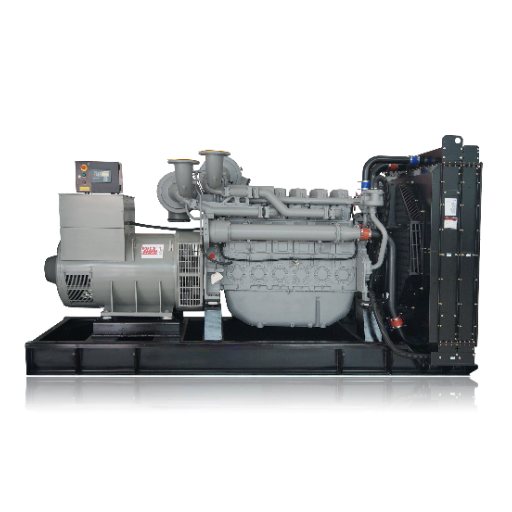
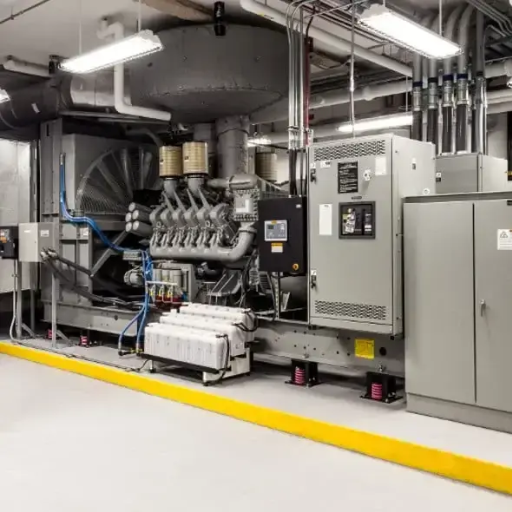
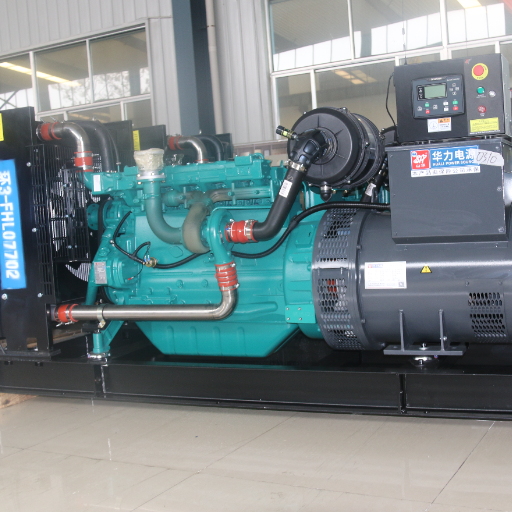
A natural gas stationary generator is a permanently installed genset that draws fuel directly from a utility natural gas pipeline. The systems connect to the building’s gas service for continuous fuel supply instead of using fuel tanks which portable units depend on. The engines operate with spark-ignition engines which developers designed to work with methane-based fuel instead of diesel units which use compression-ignition engines.
The fuel path is straightforward. Natural gas enters the system through the utility meter and passes through a pressure regulator which then combines with air before entering the engine’s combustion chambers. The generator produces electrical power by transforming mechanical energy which it synchronizes to match the facility’s voltage and frequency standards.
Natural gas stationary generators provide power range between 8 kW for residential use and 500 kW for commercial and industrial applications. The system enables operators to connect multiple units in parallel which allows them to achieve greater operational capacity.
The Real Benefits of Natural Gas Stationary Generators
Unlimited Runtime (If the Pipeline Holds)
The most obvious advantage of a natural gas stationary generator is the elimination of fuel storage logistics. As long as the pipeline remains pressurized, the unit can run for days or weeks without refueling. This makes natural gas attractive for regions with extended outage histories or facilities that require continuous prime power.
Lower Operating Costs
Natural gas proves to be the most economical fuel choice for applications that operate continuously over extended periods. The cost of natural gas ranges from 0.08 to 0.15 per kWh while diesel prices range from 0.15 to 0.25 per kWh. The expenses for maintenance work show a decrease. The operation of natural gas engines requires no diesel particulate filters (DPF) or diesel exhaust fluid (DEF) or the fuel polishing procedures that diesel fuel storage needs.
Cleaner Emissions Profile
The EPA Emissions Standards Reference Guide states that natural gas emits 25% less CO2 per kWh when compared to diesel fuel. natural gas results in lower nitrogen oxide (NOx) emissions together with reduced particulate matter emissions. The advantage proves important in areas which do not meet clean air standards because local rules forbid diesel use.
Quieter Operation
Natural gas engines that use spark ignition technology produce less noise than diesel engines which operate on compression ignition. The system’s superior noise control capability allows cities to issue permits more easily while eliminating residential areas from needing extensive soundproofing measures.
The Georgia poultry processing plant operated 6000 hours during 2024 which counted as their main operational period. Their diesel generators consumed 180000 diesel fuel every year which resulted in maintenance costs of 28000. The company experienced a reduction in fuel expenses to 110000 and maintenance costs to 16000 after they switched from diesel to natural gas generators. The 18-month payback on the higher upfront equipment cost made the switch an easy financial decision. The operations manager said that natural gas becomes more environmentally friendly at high operational periods because it reduces costs by significant amounts.
The Hidden Drawbacks (And When Diesel Wins)
Pipeline Dependency Risk
Natural gas stationary generators are only as reliable as the pipeline feeding them. During Hurricane Sandy in 2012, approximately 21% of natural gas generators failed to start due to low pipeline pressure. During the Texas winter storm of 2021, widespread natural gas supply failures left many facilities without backup power. Unlike diesel, natural gas offers no on-site fuel autonomy.
Higher Upfront Equipment Cost
Commercial natural gas stationary generators are typically 15% to 25% more expensive than equivalent diesel units. Installation also requires gas line extension, pressure verification, and sometimes meter upgrades. These upfront costs must be recovered through lower operating expenses over time.
Power Density Limits
Natural gas stationary generators typically top out around 400 to 500 kW per unit. Diesel scales to 4,000+ kW. For very large industrial loads, natural gas may require multiple paralleled units, adding complexity and cost.
Total Cost of Ownership: The Crossover Analysis
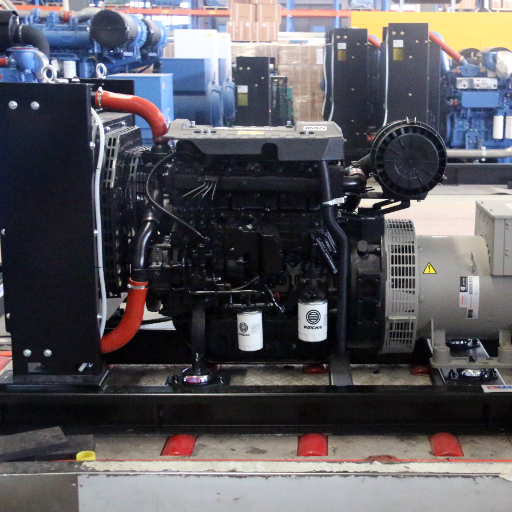
The most important financial question is not “Which fuel is cheaper?” It is “At what runtime does natural gas become the lower total cost of ownership option?”
10-Year TCO Breakdown by Runtime
| Annual Runtime | Diesel TCO (100 kW) | Natural Gas TCO (100 kW) | Winner |
|---|---|---|---|
| 50 hrs/year | ~$75,000 | ~$82,000 | Diesel |
| 200 hrs/year | ~$88,000 | ~$86,000 | Tie |
| 500 hrs/year | ~$105,000 | ~$95,000 | Natural Gas |
| 1,000+ hrs/year | ~$135,000 | ~$110,000 | Natural Gas |
These estimates include equipment, installation, fuel, maintenance, and typical repairs over a 10-year period. For detailed 2026 pricing benchmarks, see our stationary generator cost breakdown.
The Crossover Rule
Natural gas becomes cost-competitive at roughly 250 to 300 runtime hours per year. For prime power or continuous operation above 2,000 hours annually, natural gas delivers significant savings. For standby-only applications under 100 hours per year, diesel often wins on total cost of ownership due to lower upfront costs.
Hidden Costs Most Guides Miss
Pipeline service fees together with demand charges result in monthly commercial gas bill increases that exceed three hundred dollars. The installation of earthquake shutoff valves becomes necessary because seismic zones require their presence. The replacement costs of spark-ignition components which include ignition coils and spark plugs exceed those of diesel fuel system parts. The loss of one pipeline during an essential outage period will create greater financial damage than the total fuel savings achieved over multiple years.
Best-Fit Applications for Natural Gas Stationary Generators
Urban Commercial Buildings
Offices, retail centers, and hospitality properties with reliable municipal gas service are excellent candidates. Noise restrictions and emissions ordinances in urban environments often favor natural gas over diesel.
Healthcare (Non-Life-Safety Loads)
The building requires natural gas to operate its administrative sections and HVAC systems and kitchen facilities and to provide power for its entire lighting system. The NFPA 20 and NFPA 110 standards require diesel fuel to power fire pumps and essential operating room equipment.
Mountain View Medical Center in Denver needed backup power for its new outpatient wing in 2024. The engineering team wanted natural gas for emissions compliance, but ZC Power’s engineers identified a problem: the fire pump required NFPA 20 compliance, which mandates diesel. The final design used a diesel generator for the fire pump and life-safety circuits, with a natural gas unit for HVAC and administrative loads. The project engineer explained that “splitting the loads by criticality gave us the best of both fuels” for our system design.
For a complete examination of NFPA 99 standards, critical safety protocols, and compliance mandates for healthcare facility backup power, (see our stationary generators for hospitals guide.)
Data Centers (With Fuel Redundancy)
Natural gas can serve as primary backup in data centers that maintain dual-fuel capability or secondary diesel redundancy. Extended runtime is valuable for grid instability, but pipeline dependency makes natural gas risky as the sole backup source.
For a detailed technical breakdown of redundancy architectures, precise load sizing, and optimized fuel planning for mission-critical data center systems, (see our stationary generators for data centers guide.)
Food Processing and Cold Storage
Continuous operation facilities benefit from lower fuel costs. Clean emissions also simplify permitting for indoor-adjacent or enclosed installations.
Residential and Multi-Family
Whole-home backup with existing gas service is a strong use case. Homeowners appreciate the lower maintenance requirements and unlimited runtime potential.
Sizing and Installation Requirements
Pressure and Flow Rate Verification
Natural gas stationary generators require specific inlet pressure and flow capacity. Residential units typically need 7 to 11 inches water column. Commercial units may require 2 to 5 PSI. The gas meter and service line must be sized to handle both the building’s peak gas demand and the generator’s fuel consumption simultaneously. Always verify capacity with the gas utility before specifying a unit.
Ventilation and Clearance
NFPA 37 governs the installation of gas-fueled engines. Requirements include minimum clearances from buildings, windows, and ignition sources. Adequate ventilation is essential to prevent heat buildup and ensure safe exhaust discharge.
Three-Phase Commercial Sizing
Commercial natural gas generators are available from 25 kVA to 500+ kVA. Power factor and motor starting surge must be carefully evaluated. Natural gas engines generally produce lower starting torque than diesel engines, which can affect the ability to start large motors directly. For guidance on load calculations, see our stationary generator sizing guide.
Maintenance: What to Actually Expect
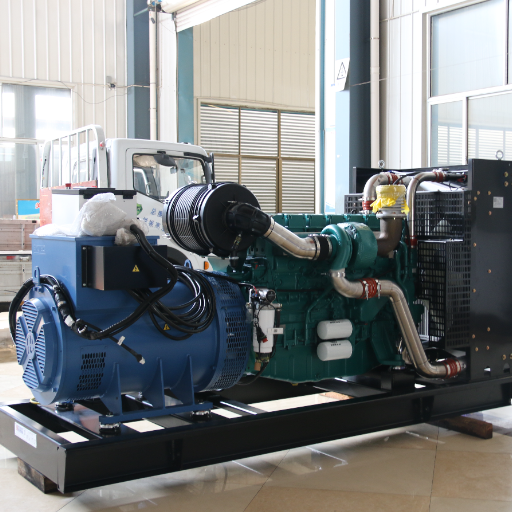
Natural Gas Maintenance Schedule
- Oil changes: Every 500 hours or bi-annually
- Spark plugs: Every 1,000 hours
- Air filter: Less frequent than diesel due to cleaner combustion
- Valve adjustments: More frequent than diesel
- No fuel polishing, DEF, or DPF regeneration required
Annual Maintenance Cost Estimate
| Application Size | Annual Maintenance Cost |
|---|---|
| Residential (20-50 kW) | 400−400−600 |
| Commercial (100-250 kW) | 800−800−1,200 |
| Industrial (300-500 kW) | 1,500−1,500−2,500 |
These costs are typically 30% to 40% lower than equivalent diesel units, primarily due to the absence of diesel after-treatment systems and fuel storage maintenance.
Natural Gas vs Diesel vs Propane: The Stationary Fuel Decision Matrix
| Factor | Natural Gas | Diesel | Propane |
|---|---|---|---|
| Fuel Cost per kWh | Lowest | Medium | Highest |
| Runtime | Unlimited (pipeline) | Tank-limited | Tank-limited |
| Upfront Cost | Higher | Medium | Lower |
| Maintenance | Lowest | Highest | Medium |
| Emissions | Cleanest | Highest particulates | Clean |
| Reliability in Disasters | Medium | Highest | High |
| Max Unit Size | ~500 kW | 4,000+ kW | ~500 kW |
| Code Compliance | Limited | Universal | Limited |
For a deeper fuel comparison, read our diesel vs natural gas generator comparison.
If you wish to delve deeper into stationary propane generators—particularly regarding permanently installed systems—please refer to our Guide to Stationary Propane Generators.
When to Choose Natural Gas (And When to Avoid It)
Choose Natural Gas If:
- Annual runtime exceeds 250 to 300 hours
- Reliable municipal gas service exists
- Clean air or noise restrictions apply
- Extended outages lasting days are expected
- The application is non-critical (not life-safety or fire pumps)
Avoid Natural Gas If:
- The application requires NFPA 20 fire pump compliance
- The site lacks reliable gas infrastructure
- Disasters in your region commonly disrupt utilities
- Power requirements exceed 500 kW per unit
- Fuel autonomy is a strategic priority
Why Partner with a Factory-Direct Manufacturer?
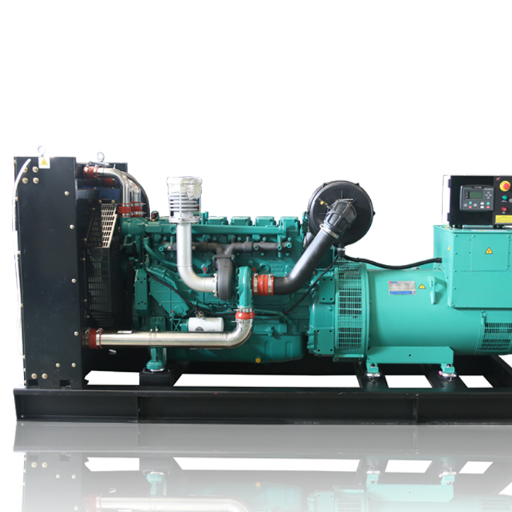
Natural gas stationary generators require precise fuel-system engineering. Gas pressure, composition, and moisture content vary significantly by region. A trading company sells whatever is in stock. A factory-direct manufacturer calibrates the carburetion, regulator sizing, and engine mapping to your site’s exact gas conditions.
At Shandong ZC Power CO., LTD.:
- Custom Fuel System Engineering: We size regulators, gas trains, and venting for your local pipeline pressure and gas quality.
- Cross-Fuel Flexibility: We manufacture diesel, natural gas, propane, and dual-fuel stationary gensets from 8 kVA to 4,000 kVA.
- National-Standard Testing: Every unit is load-bank tested in our national-standard testing center before shipment with certified output reports.
- Global Export Support: Our team of 80+ engineers provides installation guidance, voltage customization, and lifetime OEM parts supply.
Conclusion: Choose the Fuel That Matches Your Reality
Natural gas stationary generators offer compelling advantages. Lower operating costs, cleaner emissions, and unlimited runtime potential make them attractive for commercial buildings with reliable gas service and moderate-to-high runtime. But they are not the right choice for every application.
The decision comes down to four factors: runtime hours, infrastructure reliability, code requirements, and criticality. For life-safety systems, fire pumps, disaster-prone regions, or very large loads, diesel remains the professional standard. For urban commercial buildings, food processing, and residential backup with reliable pipelines, natural gas often delivers the lowest total cost of ownership.
Get the decision right the first time, and you secure decades of cost-effective backup power. Get it wrong, and a single pipeline failure can erase years of savings in a single day.