
Commercial Standby Generator: Complete Buying Guide for Businesses 2026
A commercial standby generator is a permanently installed backup power system that automatically activates within seconds of a utility grid failure, providing emergency electricity to critical commercial and industrial equipment. Unlike portable generators, commercial standby systems integrate with automatic transfer switches (ATS), fuel storage, and building electrical systems to restore power without human intervention. For facilities managers, procurement professionals, and engineers, selecting the right commercial standby generator requires understanding sizing methodology, code compliance, fuel options, and total cost of ownership.
In 2021, a winter storm left a Dallas manufacturing facility as the only operational industrial site in a 10-mile radius. While competitors lost millions in spoiled inventory and downtime, this facility’s properly sized diesel standby generator with automatic transfer switching restored full power within 10 seconds. The investment in commercial standby power had paid for itself in a single outage.
Yet the market presents a fragmented information landscape. Most standby generator guides target homeowners, leaving facilities managers without the sizing, compliance, and procurement guidance they need. Power outages cost U. S. businesses an estimated $150 billion annually, according to the Department of Energy. For manufacturing plants, data centers, hospitals, and retail chains, even brief interruptions translate directly to lost revenue, damaged equipment, and regulatory violations.
In this comprehensive buying guide from ZC Power, we will walk you through every decision point in selecting a commercial standby generator: sizing by industry, NFPA 110 compliance, fuel type selection, manufacturer vetting, and total cost of ownership. With 25 years of experience manufacturing standby power systems from 8kVA to 4,000kVA, we will help you make informed decisions based on engineering fundamentals and regulatory compliance.
Key Takeaways
- A commercial standby generator automatically restores power within 10-60 seconds of grid failure, with capacity requirements ranging from 50kW for small retail to 2,000kW+ for hospitals and data centers.
- Diesel is the preferred fuel for critical commercial applications above 150kW due to on-site storage independence and NFPA 20 fire pump code requirements.
- NFPA 110 Type 10 (10-second restoration) is required for hospitals and data centers, while Type 60 (60-second restoration) suits general commercial buildings.
- Total 10-year cost of ownership includes equipment (40-50%), fuel (25-35%), maintenance (15-20%), and installation (10-15%).
- Factory-direct sourcing from certified manufacturers can reduce equipment cost by 30-50% compared to Tier 1 dealer pricing.
What Is a Commercial Standby Generator?
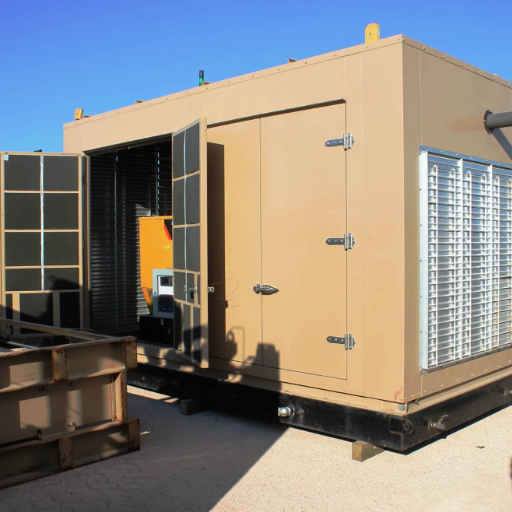
A commercial standby generator is a permanently installed backup power system designed to supply emergency electricity to commercial and industrial facilities during utility grid failures. Unlike portable units, these systems integrate directly with a building’s electrical infrastructure through an automatic transfer switch (ATS) that monitors utility power continuously and initiates generator start-up within seconds of detecting a failure.
Under ISO 8528, standby power rating (ESP) designates a generator capable of supplying emergency power for the duration of a utility outage, with a typical maximum of 200-500 operating hours per year. This distinguishes standby generators from prime power units, which run continuously in off-grid applications, and continuous power units, which serve as base-load generation.
Standby vs Emergency vs Prime Power for Commercial Buildings
| Classification | Usage | Runtime | Typical Commercial Applications |
|---|---|---|---|
| Standby Power (ESP) | Emergency backup | 200-500 hours/year | Office buildings, retail, and warehouses |
| Emergency Power | Life safety only | Code-defined | Fire pumps, egress lighting, alarm systems |
| Prime Power (PRP) | No utility available | Unlimited | Remote operations, construction camps |
| Continuous Power (COP) | Constant base load | Unlimited | Off-grid industrial, utility support |
For a manufacturing plant or commercial building connected to a municipal grid that experiences occasional outages, a standby power rating is the correct choice. The generator rests until needed, then delivers full rated output for the duration of the emergency.If you are unsure which rating fits your operation, our deeper breakdown of standby vs prime power explains how runtime expectations and duty cycles should drive that decision.
NFPA 110 Classification for Commercial Facilities
The National Fire Protection Association’s Standard 110 defines two critical classification systems for standby generators. Understanding these classifications determines both equipment specification and installation requirements.
Type Classification defines how quickly power must be restored:
- Type 10: Power restored within 10 seconds (hospitals, data centers, critical manufacturing)
- Type 60: Power restored within 60 seconds (general commercial buildings, retail, non-critical facilities)
Level Classification defines the consequence of failure:
- Level 1: Failure could result in loss of human life or serious injury (healthcare, emergency response)
- Level 2: Less critical applications where failure is less likely to impact life safety (general commercial, retail)
A hospital performing surgery requires NFPA 110 Type 10, Level 1. A suburban office building protecting server equipment typically requires Type 60, Level 2. Misclassifying your facility can result in failed inspections, insurance complications, and inadequate protection during emergencies.
For a side-by-side comparison of restoration speeds and where each applies, see our guide to NFPA 110 Type 10 versus Type 60 systems.
How Commercial Standby Generators Work
The automatic transfer switch (ATS) is the heart of any commercial standby generator system. This device monitors utility voltage and frequency continuously, detects grid failure, initiates generator start-up, transfers the electrical load from utility to generator, and re-transfers back to utility when power returns.
Sequence of Operation
When the utility grid fails, the following sequence occurs automatically:
- Monitoring: The ATS continuously monitors utility voltage and frequency.
- Detection: When voltage drops below threshold (typically 80% of nominal) or frequency deviates beyond acceptable limits, the ATS registers a failure.
- Generator Start: The ATS sends a start signal to the generator controller, which initiates the engine cranking sequence.
- Warm-up: The generator runs unloaded until voltage and frequency stabilize, typically 5-10 seconds.
- Transfer: The ATS disconnects the utility feed and connects the generator feed using a break-before-make sequence.
- Re-transfer: When utility power returns and stabilizes, the ATS transfers the load back to utility.
- Cool-down: The generator runs unloaded for 3-5 minutes to cool the engine before shutting down.
For a Type 10 system, the entire sequence from detection to load transfer must complete within 10 seconds. This requires a generator with fast-starting capability, typically achieved through maintained engine temperature via block heaters and quick-response fuel injection systems.
Transfer Switch Types for Commercial Loads
| Type | Description | Best For |
|---|---|---|
| Open Transition | Break-before-make | Standard commercial buildings |
| Closed Transition | Make-before-break | Zero-interruption loads |
| Soft Load Transfer | Synchronized transfer | Large motor starts, sensitive equipment |
| Bypass Isolation | Maintenance bypass | Critical facilities requiring 100% uptime |
Open transition is the standard for most commercial applications and represents the most cost-effective solution. Closed transition, which momentarily parallels utility and generator before transferring, is required for data centers and semiconductor manufacturing where even microsecond interruptions can cause equipment damage.Because the switch must carry your full load reliably, review our guidance on automatic transfer switch sizing to match ampacity, withstand rating, and transition type to your facility.
AMF Panels and Smart Controls
Modern commercial standby systems incorporate Auto Mains Failure (AMF) panels that automate the entire detection-to-transfer sequence without human intervention. Advanced controllers from Deep Sea Electronics (DSE) or SmartGen add remote monitoring capabilities, allowing facilities managers to check generator status, fuel levels, battery condition, and fault codes from a smartphone or building management system.
Load management and prioritization features allow the controller to sequence non-critical loads, reducing peak starting current and enabling a smaller generator to serve a larger facility. Exercise scheduling ensures the generator runs under load at programmed intervals, maintaining engine health and confirming operational readiness.When the generator, ATS, fuel supply, and controls are engineered to work together as one integrated standby power system, you eliminate the coordination gaps that cause failed transfers and inspection problems.
Sizing a Commercial Standby Generator by Industry
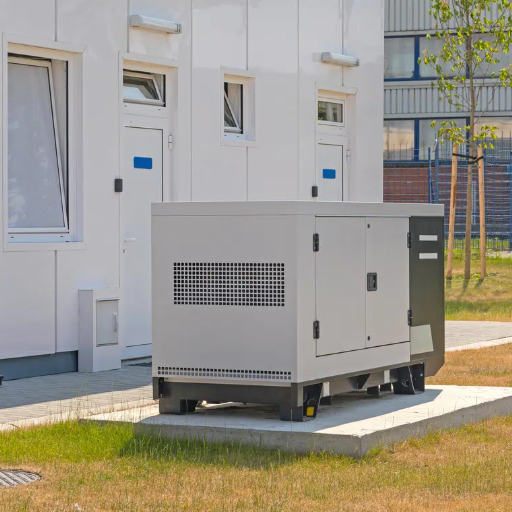
Sizing a commercial standby generator requires more than adding up equipment nameplate ratings. Industrial loads include motor starting surges, power factor considerations, diversity factors, and future growth margins that can double or triple the apparent requirement.
Commercial Load Analysis Process
Follow this systematic approach to size your commercial standby generator:
- Inventory all loads requiring backup power during an outage.
- Separate essential from optional circuits, eliminating non-critical loads.
- Calculate running kW for each load using actual measured values rather than nameplate ratings.
- Identify motor starting surge requirements, which typically run 3-7 times running current for large motors.
- Apply diversity factors, recognizing that not all equipment operates simultaneously.
- Add 20% future growth margin to accommodate facility expansion.
The 80% rule governs generator sizing: generators operate most efficiently and safely when running at 70% to 80% of rated capacity. If your total calculated maximum load including starting surges is 400kW, you should specify a 500kW commercial standby generator, not a 400kW unit.For a step-by-step walkthrough of load tables, surge factors, and worked examples, our dedicated commercial standby generator sizing guide expands on this process in detail.
Sizing by Commercial Application Type
| Application | Typical Size | Key Considerations |
|---|---|---|
| Small retail / restaurant | 50-100 kW | Refrigeration, POS, essential lighting |
| Office building | 100-300 kW | Elevator, HVAC, lighting, server room |
| Hospital (critical) | 500-2,000+ kW | Life safety, OR, ICU, imaging |
| Data center | 500-3,000+ kW | Cooling, servers, network infrastructure |
| Manufacturing | 200-5,000+ kW | Production lines, process control |
| Hotel | 200-500 kW | HVAC, elevator, kitchen, fire safety |
Marcus Chen, facilities director of a 200-room hotel in Orlando, initially calculated a backup generator capacity of 180 kilowatts based on operating load when planning for 2025. However, considering the inrush current when HVAC compressors start (3.5 times the operating current), elevator motor startup, and the power demands of kitchen equipment, the peak power requirement jumped to 340 kilowatts. With a 20% margin for growth, the final capacity was determined to be 425 kilowatts. The commercial backup generator cost $87,000 to install, but in its first year of operation, it saved the hotel approximately $45,000 in lost revenue due to three power outages.
Common Commercial Load Values
- Central AC (10-ton commercial): 15,000W running / 45,000W starting
- Commercial refrigeration: 2,000-5,000W per unit
- Elevator: 25,000-75,000W (consult manufacturer)
- Fire pump: Per NFPA 20 requirements
- Server rack: 3,000-10,000W per rack
Fuel Type for Commercial Standby: Diesel vs Natural Gas
Fuel selection is one of the most consequential decisions in commercial standby generator specification. The choice affects equipment cost, runtime capability, maintenance requirements, code compliance, and total cost of ownership.
Diesel Standby Generators
Diesel is the standby fuel of choice for critical commercial applications above 150kW. Diesel engines provide the highest torque and starting capability for large motor loads, operate independently of utility gas pipelines, and store fuel on-site for extended runtime.
Key advantages for commercial standby:
- On-site fuel storage: Diesel stores in day tanks and bulk storage tanks, providing days or weeks of runtime without refueling.
- NFPA 20 compliance: Fire pump codes require diesel-powered pumps in many jurisdictions, making diesel the natural choice for integrated standby systems.
- Large load capability: Diesel generators scale from 50kW to 4,000+kW, covering the full commercial and industrial range.
- Cold-weather reliability: Diesel engines start reliably in sub-zero conditions with proper block heaters and fuel additives.
The primary disadvantage is fuel maintenance. Diesel degrades over time, requiring fuel polishing systems and periodic testing to ensure availability during emergencies. NFPA 110 also mandates fuel quality testing as part of the maintenance schedule.For a complete look at engine options, fuel storage strategies, and runtime planning, see our focused resource on the diesel standby generator and where it outperforms other fuels.
Natural Gas Standby Generators
Natural gas generators burn cleanly and require less maintenance than diesel. However, they depend on utility gas pipeline availability, which can fail during earthquakes, hurricanes, or infrastructure damage.
Natural gas suits commercial applications where:
- Fuel pipeline reliability is high and seismic risk is low
- Load requirements are under 500kW
- Local codes restrict on-site diesel storage
- Maintenance staff prefer lower service intervals
For a data center in California’s earthquake zone, natural gas represents a single point of failure if the gas pipeline ruptures. A diesel system with on-site fuel tanks provides independence from both electric and gas utility failures.
Commercial Fuel Comparison Table
| Factor | Natural Gas | Diesel | Propane |
|---|---|---|---|
| Fuel availability | Pipeline | Tank storage | Tank storage |
| Runtime | Unlimited (pipeline) | Limited by tank | Limited by tank |
| Maintenance | Lowest | Moderate | Low |
| Large loads (500kW+) | Limited | Excellent | Limited |
| Code compliance (critical) | Good | Best | Good |
| Fuel storage fire risk | Low | Moderate (NFPA 37) | Low |
| Initial cost | Lower | Higher | Lower |
Commercial Standby Generator Cost Breakdown
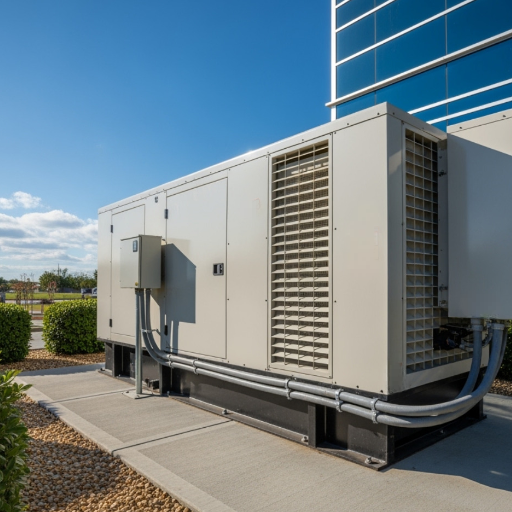
Understanding commercial standby generator cost requires breaking the investment into equipment, installation, fuel, and maintenance components. The equipment itself typically represents only 40-50% of the 10-year total cost of ownership.
Equipment Costs by Capacity
| Size Range | Typical Equipment Cost | Applications |
|---|---|---|
| 50-100 kW | 8,000−8,000−25,000 | Small retail, restaurants |
| 100-250 kW | 25,000−25,000−70,000 | Office buildings, small manufacturing |
| 250-500 kW | 70,000−70,000−180,000 | Large commercial, light industrial |
| 500-1,000 kW | 180,000−180,000−400,000 | Industrial, hospitals, data centers |
| 1,000+ kW | $400,000+ | Large industrial, critical infrastructure |
These ranges reflect factory-direct pricing from certified manufacturers. Tier 1 dealer pricing (Caterpillar, Cummins direct dealers) typically adds 40-80% to equipment cost. Used Tier 1 equipment falls between factory-direct new and Tier 1 dealer new, but carries warranty limitations and unknown operating history.
Installation Costs for Commercial Facilities
Installation adds significant cost beyond the equipment itself:
- Electrical (ATS, switchgear, feeders): 10,000−10,000−75,000+
- Fuel system (diesel tanks, gas lines): 5,000−5,000−50,000+
- Concrete pad and enclosure: 5,000−5,000−30,000
- Permits and inspections: 2,000−2,000−10,000
- Engineering and design: 5,000−5,000−25,000
For a 500kW commercial standby generator, total installed cost typically ranges from 120,000 to 120,000 to 250,000, depending on fuel type, electrical complexity, and local permit requirements.
For a full pricing methodology with line-item breakdowns by capacity, our commercial standby generator cost guide helps you build an accurate budget before requesting quotes.
Operating and Maintenance Costs
Annual operating costs include:
- Fuel: Consumption varies by load factor; a 500kW diesel generator at 75% load burns approximately 35-45 gallons per hour.
- Maintenance contracts: 0.02−0.02−0.05 per kWh of runtime, covering oil changes, filter replacements, and inspections.
- Load bank testing: Annual testing per NFPA 110 requirements, typically 2,000−2,000−5,000 per test.
- Battery replacement: Every 3-5 years, approximately 500−500−2,000 depending on battery bank size.
Code Compliance: NFPA 110 for Commercial Facilities
NFPA 110 compliance is not optional for commercial standby generator installations. Building inspectors, fire marshals, and insurance underwriters all reference this standard. Failure to comply can result in certificate of occupancy denial, insurance cancellation, or regulatory fines.
NFPA 110 Type Selection
The Type classification determines how quickly your standby system must restore power:
- Type 10: 10-second restoration. Required for hospitals, data centers, emergency response facilities, and any application where interruption could impact life safety.
- Type 60: 60-second restoration. Acceptable for general commercial buildings, retail, warehouses, and non-critical facilities.
Type 10 systems require faster-starting engines, maintained block heaters, and more sophisticated ATS controls. The generator must reach stable voltage and frequency within seconds, not tens of seconds. This specification adds 10-20% to equipment cost compared to Type 60.
NEC Articles for Commercial Standby Systems
The National Electrical Code governs installation requirements through several articles:
- Article 445: Generators — general installation requirements
- Article 700: Emergency Systems — wiring, circuits, and sources
- Article 701: Legally Required Standby Systems — systems whose failure would create hazards or hamper rescue operations
- Article 702: Optional Standby Systems — systems for property protection where life safety is not involved
- Article 517: Healthcare Facilities — specific requirements for hospitals and clinics
Most commercial standby generators for general business fall under Article 702 (Optional Standby Systems). Manufacturing facilities with hazardous processes may fall under Article 701. Healthcare facilities always fall under Articles 700 and 517.
Acceptance Testing Requirements
NFPA 110 requires an 8-hour full load test before a new standby system can be accepted. This test verifies that the generator can sustain rated output for an extended period without overheating, excessive vibration, or fuel system failures. Transfer switch operational testing confirms that the ATS transfers and re-transfers correctly under load.
Documentation of all tests, including load levels, transfer times, and ambient conditions, must be maintained for the life of the system. During Joint Commission surveys at hospitals, inspectors routinely request these records. Missing documentation can result in conditional accreditation.
How to Choose a Commercial Standby Generator Manufacturer
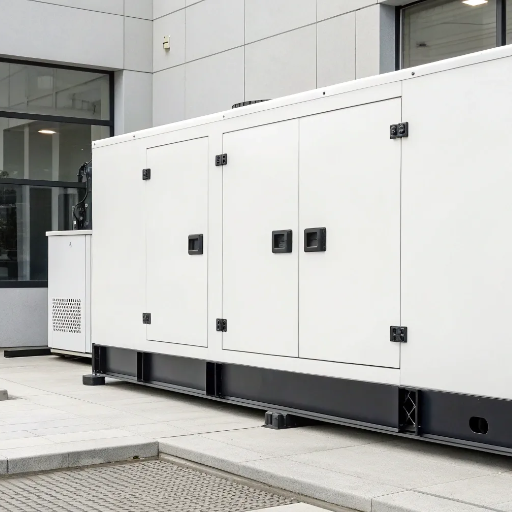
Selecting a manufacturer is as critical as selecting the generator itself. The manufacturer’s engineering capability, quality control, certification status, and aftermarket support directly impact the reliability and lifecycle cost of your standby system.For a structured vetting framework, our guide to choosing a commercial generator manufacturer walks through the certifications, audits, and red flags that separate real factories from resellers.
Factory Audit Checklist
Before committing to a manufacturer, verify the following:
- Manufacturing facility size and capacity: A legitimate manufacturer operates a substantial production facility, not a small assembly workshop.
- Quality control processes: ISO 9001 certification is the minimum standard; ask about incoming inspection, in-process testing, and final verification protocols.
- Certifications: CE marking for European markets, EPA certification for U. S. markets, CCC for Chinese domestic market, and any industry-specific certifications.
- Engine and alternator partnerships: Verify direct relationships with engine brands (Cummins, Perkins, Weichai) and alternator manufacturers (Stamford, Leroy-Somer).
- Production lead times and capacity: Ensure the manufacturer can deliver within your project timeline.
Certification Verification
Certifications are your assurance that equipment meets international safety and performance standards. Key certifications to verify:
- ISO 9001: Quality management system certification, indicating documented processes and continuous improvement.
- CE Marking: European conformity, confirming compliance with EU safety, health, and environmental requirements.
- EPA Certification: Required for diesel engines sold in the United States.
- Load Bank Testing Documentation: Every unit should have verified output testing before shipment.
Aftermarket Support Evaluation
A commercial standby generator is a 20-30 year investment. Aftermarket support determines whether that investment delivers reliable returns:
- Spare parts availability: Can the manufacturer air-ship critical parts within 48 hours?
- Technical support responsiveness: Do they have qualified engineers who can diagnose control panel faults remotely?
- Service network coverage: Do they have authorized service centers in your region?
- Warranty terms: Standard warranties range from 1 year / 1,000 hours to 2 years / 2,000 hours for premium units.
Trading Company vs Direct Manufacturer
The generator industry has a middleman problem. Many suppliers on international platforms are trading companies, not manufacturers. The difference matters for pricing, customization, and long-term support.
| Factor | Trading Company | Direct Manufacturer (ZC Power) |
|---|---|---|
| Pricing | Marked up 15-40% | Factory-direct pricing |
| Technical support | Limited or outsourced | In-house engineering team |
| Customization | Restricted | Full OEM/ODM capability |
| Quality control | Unverified | Direct oversight |
| Lead times | Extended | Direct production scheduling |
| After-sales service | Third-party dependent | Manufacturer-backed |
When Raj Patel, procurement manager for a hospital construction project in Nairobi, evaluated suppliers in 2025, he received quotes from three trading companies and two direct manufacturers. The trading company quotes were 25% lower on paper but included no load bank testing documentation, no customization options for 50Hz/415V operation, and no spare parts commitment. The direct manufacturer (ZC Power) provided factory video tours, ISO 9001 and CE certificates, full load bank test reports, and a written spare parts availability guarantee. Raj’s project saved $42,000 on equipment and eliminated the risk of unsupported imported machinery.
At Shandong ZC Power CO., LTD., we manufacture commercial standby generators from 8kVA to 4,000kVA in our 300,000-square-meter facility. Every unit undergoes rigorous full-load testing in our national standard testing center. Our 80+ technical engineers provide direct support for sizing, specification, installation guidance, and lifetime parts supply.
Maintenance Strategy: Contracts vs In-House
A commercial standby generator that is not maintained is a liability, not an asset. NFPA 110 mandates specific maintenance intervals, and insurance underwriters increasingly require documented maintenance records.
NFPA 110 Required Maintenance Schedule
| Frequency | Task |
|---|---|
| Monthly | Visual inspection, fuel level check, exercise run (30 minutes minimum) |
| Quarterly | Exercise under load |
| Annual | Comprehensive service, load bank test, transfer switch operational test |
| 3-year | Transfer switch detailed maintenance, fuel quality testing |
Skipping monthly exercise runs is the most common maintenance failure. Diesel engines that sit idle for months develop fuel system problems, battery sulfation, and moisture accumulation. A 30-minute exercise run once per month maintains engine seals, circulates lubricating oil, and confirms starting system health.
In-House vs Contracted Service Comparison
| Factor | In-House | Maintenance Contract |
|---|---|---|
| Cost (annual) | 3,000−3,000−8,000 (labor) | 5,000−5,000−15,000 |
| Expertise | Variable | Certified technicians |
| Response time | Immediate | Scheduled |
| Documentation | Self-managed | Provided by contractor |
| Load bank testing | Requires equipment rental | Usually included |
| Best for | Large facilities with staff | Small-medium facilities |
For facilities with qualified maintenance staff, in-house service reduces cost but requires investment in training, tools, and load bank equipment. For most small and medium commercial facilities, a maintenance contract provides predictable costs, certified expertise, and documentation for compliance audits.If you are weighing that decision, our overview of what a strong generator maintenance contract should include helps you compare coverage, response times, and reporting before you sign.
Total Cost of Ownership and ROI Analysis
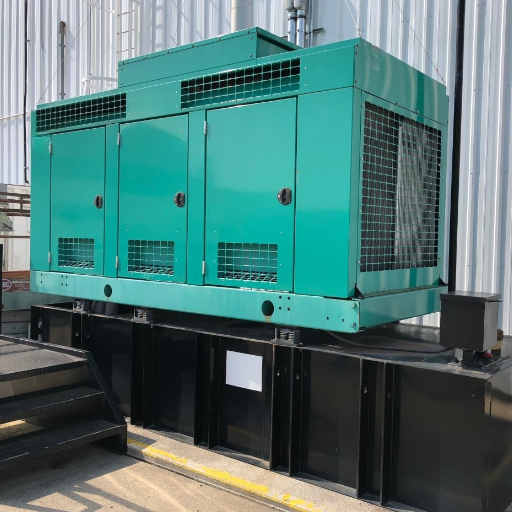
The purchase price of a commercial standby generator is only the beginning. A complete total cost of ownership (TCO) analysis includes equipment, installation, fuel, maintenance, and the avoided cost of downtime.
Downtime Cost Calculation
The financial impact of a power outage varies dramatically by industry:
| Facility Type | Downtime Cost per Hour |
|---|---|
| Manufacturing | 5,000−5,000−50,000+ |
| Data center | 100,000−100,000−1,000,000+ |
| Retail | 500−500−5,000 |
| Hospital | Life safety (immeasurable) |
For a manufacturing plant producing 2millioninrevenueweekly,a4−houroutagerepresentsapproximately2millioninrevenueweekly,a4−houroutagerepresentsapproximately33,000 in lost production, plus potential equipment damage, restart costs, and delayed shipments. A properly sized commercial standby generator prevents this loss entirely.
Standby Generator ROI Framework
Calculate return on investment using the following framework:
- Initial investment: Equipment + installation + commissioning
- Annual operating costs: Fuel + maintenance + insurance adjustments
- Insurance premium reductions: Many insurers offer 5-15% discounts for facilities with tested standby power
- Tax depreciation: Commercial standby generators typically qualify for accelerated depreciation
- Downtime cost avoidance: (Annual outage probability) x (Average outage duration) x (Downtime cost per hour)
To turn these inputs into a defensible business case, our standby generator ROI guide provides the formulas and scenarios you can present to finance and leadership.
Payback Period Scenarios
| Facility Type | Outage Risk | Estimated Payback |
|---|---|---|
| Critical manufacturing | High | 1-3 years |
| Data center | Very high | 1-2 years |
| Hospital | Critical | Immediate (regulatory requirement) |
| General commercial | Moderate | 3-5 years |
A 500 kW commercial standby generator system with an installation cost of $150,000 serves a manufacturing plant with a $150,000 installed capacity. This plant faces a downtime risk of $25,000 per hour, with two downtimes per year averaging four hours each. The system avoids $200,000 in downtime costs annually. Even including annual fuel and maintenance costs of $15,000, the payback period is less than 12 months.
Frequently Asked Questions
What is the difference between a standby and an emergency generator?
A standby generator provides backup power for general facility operations during utility outages. An emergency generator serves only life safety systems such as fire pumps, egress lighting, and alarm systems. Emergency systems have stricter code requirements under NEC Article 700.
How long can a commercial standby generator run continuously?
Standby-rated generators are designed for limited runtime, typically 200-500 hours per year. For continuous operation, a prime power or continuous power rating is required. With adequate fuel storage, a diesel standby generator can run for days or weeks during extended outages.
What size commercial standby generator do I need for my facility?
Size depends on your critical load inventory, motor starting surges, and future growth plans. Small retail typically requires 50-100kW, office buildings 100-300kW, hospitals 500-2,000kW, and data centers 500-3,000kW+. Always add a 20% growth margin to your calculated load.
How much does a commercial standby generator cost installed?
Total installed cost ranges from 25,000−25,000−60,000 for 50-100kW systems, 60,000−60,000−180,000 for 100-500kW systems, and 180,000−180,000−500,000+ for 500-1,000kW systems. Installation includes electrical, fuel system, concrete pad, permits, and engineering.
What is the best fuel type for commercial standby generators?
Diesel is preferred for critical applications above 150kW due to on-site storage, NFPA 20 fire pump compliance, and large load capability. Natural gas suits smaller commercial loads in areas with reliable pipeline infrastructure. Propane works for remote locations without natural gas service.
How often should a commercial standby generator be tested?
NFPA 110 requires monthly exercise runs of at least 30 minutes, annual load bank testing under full rated load, and transfer switch operational testing every 3 years. Monthly testing is the most critical — engines that sit idle develop fuel and battery problems.
What is NFPA 110 Type 10 and when is it required?
NFPA 110 Type 10 requires power restoration within 10 seconds of utility failure. It is mandatory for hospitals, data centers, emergency response facilities, and any application where interruption could impact life safety. General commercial buildings typically require Type 60 (60-second restoration).
How do I choose between a maintenance contract and in-house service?
Facilities with qualified maintenance staff and load bank equipment can manage in-house service at lower cost. Most small and medium facilities benefit from maintenance contracts that provide certified technicians, scheduled inspections, and compliance documentation.
Is a diesel or natural gas standby generator better for commercial use?
Diesel is better for critical applications above 150kW, facilities requiring on-site fuel independence, and any installation requiring NFPA 20 fire pump compliance. Natural gas is suitable for smaller loads in areas with reliable pipeline infrastructure and low seismic risk.
How long do commercial standby generators last?
With proper maintenance, diesel standby generators last 20-30 years. Engine overhaul at 15,000-30,000 hours extends life significantly. Alternators typically outlast engines. The limiting factor is usually controller obsolescence rather than mechanical wear.
Conclusion
Selecting a commercial standby generator is one of the most consequential infrastructure decisions a facilities manager or procurement professional makes. The right system protects revenue, ensures code compliance, and maintains operational continuity during grid failures. The wrong system wastes capital, fails inspections, or leaves critical loads unprotected.
The five critical decision points are: accurate sizing by industry and load type, correct NFPA 110 Type and Level classification, fuel selection matched to your risk profile and code requirements, manufacturer vetting that verifies engineering capability and aftermarket support, and total cost of ownership analysis that includes the full 10-year lifecycle.
When your facility requires an industrial-grade commercial standby generator with NFPA 110 compliance and automatic transfer capability, ZC Power manufactures diesel generator sets from 8kVA to 4,000kVA in our 300,000-square-meter facility. Every unit undergoes rigorous full-load testing in our national standard testing center, backed by ISO9001, CE, and CCC certifications.


