How to Size a Generator: Complete 2026 Guide for Homes, Businesses, and Industry
To size a generator, list every electrical load you need to run, total the running watts, add the starting surge for your largest motors, apply a 20 to 25% safety margin, convert the result to kVA, and choose the next standard generator rating above that figure. The steps are the same whether you are backing up a family home or a 4,000 kW industrial plant, and this guide walks you through all of them.
An undersized generator fails the moment you need it most. An oversized one wastes fuel, capital, and engine life every year it runs. In 25 years of building generator sets from 8 kVA to 4,000 kVA at Shandong ZC Power, the single most common and most expensive mistake we see is incorrect sizing. It happens to homeowners, facility managers, and experienced electrical contractors alike.
You probably already know that generator sizing matters. What most guides don’t tell you is how to do it properly across different applications, or why the rules that work for a suburban house fall apart on a mining site at 3,400 meters elevation. By the end of this guide, you’ll have a proven 10-step methodology, worked examples from real projects, and a free worksheet to calculate your own numbers.
Here is what we’ll cover: the core formula, motor starting surge, kW versus kVA, load diversity, derating for altitude and heat, sizing by application type, the ten costliest mistakes, four worked case studies, and when to bring in a professional engineer.
Key Takeaways
- Generator sizing = total running load + largest motor starting surge + 20 to 25% safety margin, converted to kVA at 0.8 power factor.
- Direct-on-line motors draw 5 to 7x their running current at startup, which is why starting surge, not running load, usually dictates generator size.
- Generators run best at 70 to 85% of rated capacity; chronic operation below 30% load causes wet stacking and engine damage.
- Altitude above 500 ft cuts output by roughly 3% per 1,000 ft, and heat above 40°C costs another 1% per 5.5°C, so site conditions can force you up a full size class.
- When in doubt, get a professional load review; a free engineering assessment costs nothing compared to a failed installation.
What Is Generator Sizing and Why Does It Matter?
The Definition
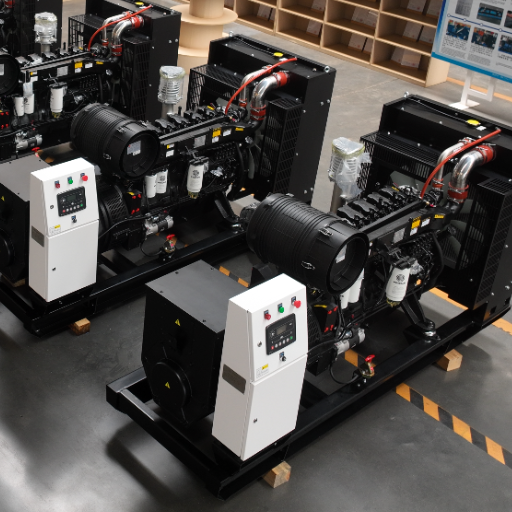
Generator sizing is the process of calculating the electrical load a generator must supply, including running watts, motor starting surges, and future expansion, then matching that load to the correct kW or kVA rating. Get it right and the generator starts every load cleanly, runs efficiently, and lasts for decades. Get it wrong and you pay twice: once for the machine, and again for the failure.
The Cost of Undersizing
When a generator is too small, the largest motor on the system can’t start. Voltage collapses, breakers trip, and sensitive electronics reboot or die. In industrial settings the damage goes further: PLCs lose their programs, servers corrupt, and production lines stop mid-batch.
David, a facility manager at a food processing plant outside Houston, learned this in August 2025. His team had sized their standby unit on running load alone: 380 kW of freezers, compressors, and packaging lines. When a hurricane knocked out the grid, the 500 kW generator started fine. Then the 150 HP refrigeration compressor tried to start, voltage dipped below 30%, and the control system crashed hard. The plant lost $180,000 in spoiled product before an electrician could manually stage the loads. The generator wasn’t broken. It was just two size classes too small for the starting surge it had to absorb.
The Cost of Oversizing (Wet Stacking)
Oversizing looks safer but carries its own penalty. A diesel engine running chronically below 30% of its rated load never reaches full operating temperature. Unburned fuel and soot accumulate in the exhaust system, a condition known as wet stacking. It raises fuel consumption, shortens engine life, and eventually requires an expensive top-end overhaul.
Oversizing also wastes capital directly. Moving from a 250 kVA to a 400 kVA unit adds roughly 25 to 40% to the purchase price, plus bigger foundations, heavier cabling, and a larger automatic transfer switch. Correct sizing is not about buying the biggest machine you can afford. It is about buying the right machine once.
How to Size a Generator: The 10-Step Process
This is the same methodology our engineers use on factory projects from Lagos to Lima. Follow all ten steps and you’ll land within one size class of the right answer every time.If you would rather see the underlying math laid out in full, our dedicated guide to generator load calculation walks through each formula with worked totals you can copy.
Step 1: Inventory All Electrical Loads
List every device the generator must supply. For a house, that means lighting, refrigeration, air conditioning, well pumps, and the EV charger in the garage. For a plant, it means production machinery, HVAC, compressors, IT, and safety systems. Split the list into critical loads (must run during an outage) and convenience loads (nice to have). Together, these two lists form the basis of your generator load calculation.
Step 2: Determine Running Wattage
Find each load’s running watts from its nameplate, manual, or a clamp meter measurement. Nameplate watts are conservative; measured watts under real conditions are better. Use measured values wherever you can.
Step 3: Calculate Starting Wattage (Motor Surge)
Identify every motor-driven load: pumps, compressors, fans, conveyor drives. Multiply the running watts of the largest motor by its starting multiplier (see the motor starting section below; 6x is the default for direct-on-line). Add that surge to your total running load.
Step 4: Apply Load Diversity Factor
Not everything runs at full power at the same moment. Multiply your combined running load by a diversity factor: 0.8 for homes, 0.65 to 0.75 for commercial buildings, 0.85 to 0.9 for industrial plants. Never apply diversity to the starting surge of the largest motor.
Step 5: Convert kW to kVA
Divide your kW total by the generator’s rated power factor, usually 0.8. A 160 kW load requires a 200 kVA generator, not a 160 kVA one.
Step 6: Add Safety Margin
Multiply by 1.2 to 1.25. This covers measurement error, aging equipment, and modest future growth.
Step 7: Apply Environmental Derating
Reduce the generator’s rated output for altitude above 500 ft and ambient temperatures above 40°C (details below). If your site is hot or high, you need a bigger nameplate to deliver the same usable power.
Step 8: Select Duty Rating (Standby, Prime, or Continuous)
Match the generator’s rating to its job. Standby (ESP) for emergency backup behind a grid connection. Prime (PRP) for variable-load continuous duty. Continuous (COP) for constant base-load power. Our guide to prime vs standby power ratings explained breaks down the differences.For emergency backup systems specifically, our guide to standby generator sizing covers the ESP rating and how to match it to intermittent outage duty.
Step 9: Verify with Field Measurements
For anything above 100 kW, run a data logger on the incoming supply for one to two weeks. Real demand profiles beat estimates every time, and they often reveal loads nobody listed.
Step 10: Final Specification and Selection
Round up to the next standard generator size, confirm voltage, phase, frequency, and enclosure type, then specify the ATS to match. Done correctly, you’ll have a machine that starts every load, runs in its efficiency sweet spot, and leaves room to grow.
kW, kVA, and Power Factor Explained
Real Power vs Apparent Power
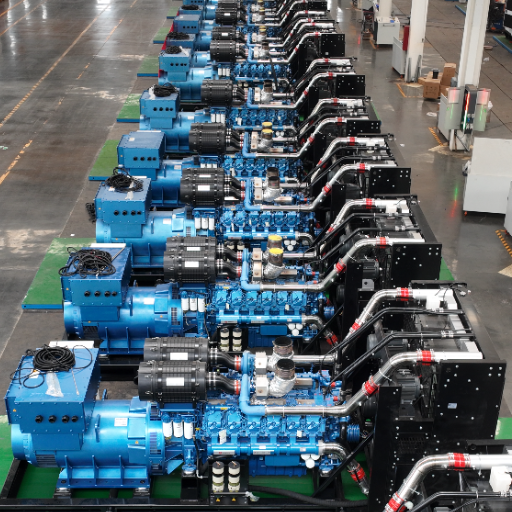
Kilowatts (kW) are real power: the energy that actually turns motors and heats elements. Kilovolt-amperes (kVA) are apparent power: the total electrical capacity the generator must produce, including the reactive power that magnetizes motor windings but does no useful work. The ratio between them is the power factor. Because gensets are sold in kVA but loads are measured in kW, the kVA to kW conversion is one of the first calculations you’ll make. If this step trips you up, our plain-language guide to kva to kw conversion breaks down the 0.8 power factor rule with side-by-side examples.
The 0.8 Power Factor Standard
Per ISO 8528-1, diesel gensets are rated at 0.8 lagging power factor. That means a 500 kVA generator delivers 400 kW of real power. Buyers who shop in kVA but calculate in kW routinely under size by 20%.
Three-Phase Sizing Formula
For three-phase systems, apparent power is:
kVA = (Voltage x Amps x 1.732) / 1000
At 400V, a 200 kVA generator supplies 289 amps. Knowing your current draw in amps and your system voltage, you can work backwards to the kVA rating you need.Our detailed walkthrough of three phase generator sizing shows how to apply this formula across common voltage and phase configurations.
Worked Conversion Examples
- 80 kW load / 0.8 PF = 100 kVA generator required
- 240 kW load / 0.8 PF = 300 kVA generator required
- 600 kW load / 0.8 PF = 750 kVA generator required
If your facility runs a lot of variable frequency drives or switch-mode power supplies, also check harmonic distortion. Total harmonic distortion above roughly 15% forces a further kVA derating and may require an oversized alternator.
Motor Starting Surge and Locked Rotor Amps
Why Starting Surge Dominates Sizing
An induction motor at the instant of startup behaves almost like a short circuit. A direct-on-line (DOL) motor draws 5 to 7x its full load current for one to three seconds. The generator must absorb that surge without its voltage dipping so far that contactors drop out or drives trip on under voltage. In wattage terms, a motor’s starting watts, often called surge watts, routinely run five to six times its running watts.Because this single factor so often decides the final rating, our dedicated guide to motor starting generator sizing explains how to calculate surge and voltage dip for each starting method.
Surge Multipliers by Starting Method
| Starting Method | Surge Multiplier | Notes |
|---|---|---|
| Direct-on-line (DOL) | 5-7x FLA | Cheapest starter, worst surge |
| Star-delta | 2.5-3.5x FLA | Reduces surge, reduces starting torque too |
| Soft starter | 2-3x FLA | Adjustable ramp, good for pumps |
| Variable frequency drive | 1.2-1.5x FLA | Best for the generator, highest cost |
If a 100 kW DOL motor dominates your load list, it alone can demand 600 kW of surge capacity. Swapping its starter for a VFD can drop the required generator by a full size class, sometimes paying for the drive in generator savings alone.
Voltage Dip Limits by Application
Per IEEE 446, most industrial equipment tolerates a 15% voltage dip during starting. Data centers and hospitals typically specify 10%. Lighting circuits tolerate 20%. If your calculated dip exceeds the limit, either upsize the generator or soften the motor start.
Staggered Starting Strategies
Sequencing beats brute force. Program your ATS or PLC to start the largest motor first (when nothing else is loading the generator), wait for it to reach speed, then bring on the rest in order of size. Good sequencing routinely lets a 400 kVA generator do the job a 600 kVA unit would otherwise handle.
Load Diversity and Demand Factors
Why Everything Doesn’t Run at Once
A factory never starts every motor simultaneously. An office building never runs every air handler at full capacity on the same afternoon. Diversity factor captures that reality, and it keeps you from buying capacity that will never be used.
Diversity Factors by Application Type
| Application | Typical Diversity Factor |
|---|---|
| Residential | 0.70-0.85 |
| Commercial / office | 0.60-0.75 |
| Retail | 0.70-0.80 |
| Industrial | 0.80-0.90 |
| Data center | 0.95-1.00 |
NEC Article 220 Demand Calculations
In the United States, NEC Article 220 prescribes demand factors for sizing service equipment, and the same logic applies to generators. The first 10 kVA of residential load counts at 100%, the remainder at 40%. Commercial kitchens, hospitals, and data centers each carry their own prescribed factors. Where local code applies, it overrides rules of thumb.
Safety Margin and Future Expansion
The 20-25% Standard Margin
Add 20 to 25% on top of your calculated load. This absorbs measurement error, nameplate optimism, aging equipment that draws more current than it did new, and the small loads everyone forgets: the battery chargers, the security system, the coffee machine in the maintenance office.
The 80% Loading Rule
Diesel generators are healthiest between 70 and 85% of rated load. Below 30%, wet stacking sets in. Above 90%, you’re abusing the machine and shortening overhaul intervals. Size so your typical running load lands in that sweet spot, not at the nameplate maximum.
Planning for Future Growth
A well-built genset runs for 20 to 30 years. Your facility won’t stand still that long. If you have concrete expansion plans, new production lines, a building addition, a second EV charger bank, size for them now. Retrofitting a larger generator later costs far more than the initial step up.
Environmental Derating: Altitude, Temperature, and Site Conditions
Altitude Derating
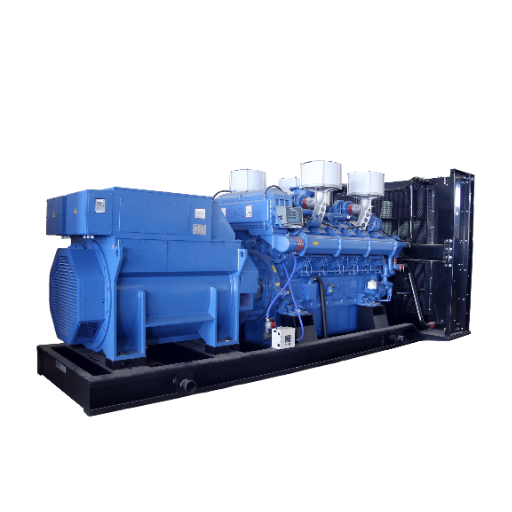
Thin air means less oxygen for combustion and less cooling capacity. Per ISO 8528-1, naturally aspirated engines lose roughly 3% of output per 1,000 ft (300 m) above 500 ft elevation. Turbocharged engines do better but still derate above 3,300 ft (1,000 m).For high-elevation projects, our guide to altitude derating generator sizing gives the full correction tables and worked examples so you don’t undersize in thin air.
The operations team at a copper mine in Peru found this out the expensive way. Their site sat at 3,400 meters, and the 1,250 kVA prime units they had specified at sea level could barely deliver 1,000 kVA in the thin Andean air. Two generators had to run where one should have sufficed, doubling fuel bills for eighteen months until properly derated replacements arrived. Altitude isn’t a footnote in generator sizing; at elevation it’s the whole calculation.
Temperature Derating
Engines are rated at 25 to 40°C ambient depending on specification. Above the rating point, expect to lose about 1% of output per 5.5°C (10°F). A unit in a 50°C Saudi Arabian summer can lose 4 to 5% before altitude even enters the picture.
Humidity, Dust, and Salt Spray
Coastal installations need anti-corrosion treatment. Dusty sites need upgraded air filtration or the engine derates as filters clog. High humidity attacks insulation resistance in alternators. These factors don’t always change the kVA you need, but they change the build specification, and ignoring them shortens service life dramatically.
Combined Derating Worked Example
A 500 kVA generator installed at 2,000 ft in a 46°C climate: altitude costs about 4.5%, temperature about 4%. Combined derating of roughly 8.5% leaves 457 kVA usable. If your calculated load was 460 kVA, you need to step up to a 625 kVA nameplate. For a deeper treatment of combined derating, use the altitude and temperature calculators built into the free sizing worksheet below.
How to Size a Generator by Application Type
Residential Sizing (5-50 kW)
For whole-house backup, list the big loads first: central air conditioning (3-5 kW running, up to 15 kW starting), electric water heater (4.5 kW), well pump (1.5-2.5 kW), electric range (8-12 kW), and now, increasingly, the Level 2 EV charger. Most 2,000-3,000 sq ft homes land between 14 and 26 kW once surge and margin are included. Nearly all home standby units are single-phase, which keeps the math simple compared to the three-phase sizing used commercially.For a room-by-room approach to residential backup, our guide to whole house generator sizing shows how to build the load list and pick the right unit.
| Home Size / Load Profile | Typical Generator Size |
|---|---|
| Essential circuits only (fridge, lights, furnace fan) | 5-10 kW |
| Average 2,000 sq ft home with central AC | 14-20 kW |
| Large home, AC + EV charger + home office | 22-30 kW |
| Estate, multiple AC zones, pool equipment | 36-50 kW |
For a room-by-room walkthrough, see our whole house generator sizing companion article, or jump straight to the free online generator sizing calculator.If you are still narrowing down the basics, start with our overview answering what size generator do i need for typical homes and load profiles.
Commercial Sizing (50-500 kW)
Offices, retail, schools, and clinics. Loads are dominated by HVAC, lighting, and IT. Diversity factors are favorable (0.6 to 0.75) because occupants don’t peak everything at once. A 5,000 sq ft medical clinic typically sizes out at 100-150 kVA; a small hotel at 200-400 kVA. Industry-specific numbers are in our commercial standby generator sizing by industry guide.
Industrial Sizing (500-4,000 kW)
Manufacturing, mining, water treatment, oil and gas. Motor starting dominates everything here, and one 500 HP DOL compressor can demand more surge capacity than the rest of the plant combined. Duty rating matters as much as size: a quarry genset running 16 hours a day needs a prime rating, not standby. Our heavy duty diesel generator sizing for industrial plants article goes deep on this segment.
2026-Specific Loads: EV Chargers, Home Offices, Battery Storage
Three loads are reshaping residential and commercial sizing right now:
- Level 2 EV chargers: 7.2 to 9.6 kW continuous, for hours at a time. Two chargers can exceed the entire rest of a home’s load.
- Home offices: modest individually (1-2 kW) but they push backup expectations from “keep the fridge cold” to “keep the household earning.”
- Battery storage and heat pumps: inverter-driven heat pumps start gently but run long; battery inverters can either add load (charging) or subtract it (discharging) depending on how the system is configured.
Given how quickly charging loads change the math, our guide to generator sizing for ev charger setups covers how to add one or more Level 2 chargers without overloading your unit.
Marcus, a homeowner in Lagos, added a 9.6 kW EV charger to his house in early 2026 without revisiting his generator. His existing 11 kW unit had handled the home comfortably for four years. The first night he charged the car while the air conditioner cycled on, the generator overloaded and shut down at 2 a.m. The fix cost him nothing but arithmetic: the charger plus house needed a 20 kW unit, and sizing up before the next outage season was far cheaper than the tow truck and the lost work day.
10 Common Generator Sizing Mistakes
- Sizing on running watts alone. Starting surge, not running load, dictates size on any system with motors.
- Confusing kW with kVA. Shopping in kVA but calculating in kW undersizes you by 20% at 0.8 power factor.
- Ignoring power factor entirely. Heavy inductive loads (old motors, welders) run at 0.7 PF or worse, demanding more kVA than nameplate kW suggests.
- Forgetting the largest motor rule. You only need surge capacity for one motor at a time if you sequence starts, but you always need it for the biggest one.
- Skipping derating. Altitude and heat quietly erase 10 to 20% of nameplate capacity at many sites.
- Buying standby rating for prime duty. A standby-rated unit run continuously will wear out in a fraction of its design life.
- No growth margin. Facilities grow; generators don’t. Twenty percent headroom now beats a replacement in five years.
- Trusting nameplates over measurements. Real loads often run 20 to 30% below nameplate, and occasionally above it.
- Oversizing for “safety.” Chronic light loading causes wet stacking, glazing, and early overhaul. Bigger is not safer.
- Ignoring harmonics. Facilities full of VFDs and switch-mode supplies can need 10 to 15% extra kVA or an oversized alternator to keep voltage clean.
For a fuller breakdown of each pitfall and how to avoid it, see our dedicated guide to the most common generator sizing mistakes.
Not sure whether your numbers are right? ZC Power’s engineering team reviews load lists for free. Send us your inventory and we’ll confirm the calculation before you commit to a purchase.
Worked Case Studies
Case Study 1: Whole-House Standby (22 kW)
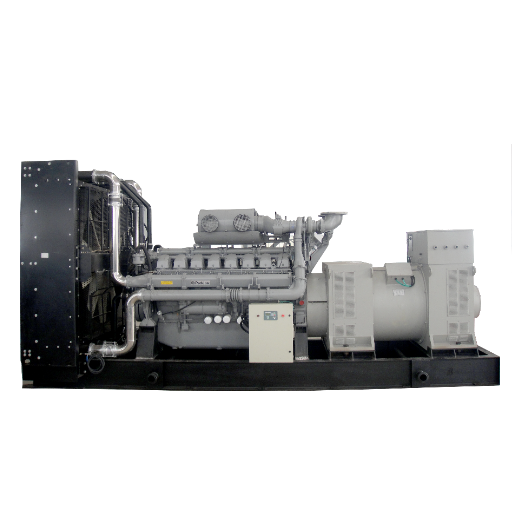
A 2,400 sq ft home: 4 kW central AC (12 kW starting), 1.8 kW well pump (5.4 kW starting), refrigerator, freezer, lighting, electronics, and a 7.2 kW EV charger. Running total: 17.4 kW. Largest surge (AC): adds 8 kW over its running share. Adjusted peak: 25.4 kW, or 31.75 kVA at 0.8 PF. With the charger managed to avoid overlapping the AC start, a 22 kW (27.5 kVA) unit handles the home; without load management, step up to 30 kVA.
Case Study 2: Small Office Building (150 kW)
A 5,000 sq ft office: 60 kW of HVAC, 25 kW of lighting and receptacles, 20 kW server room with UPS, 10 kW miscellaneous. Total connected: 115 kW. Diversity at 0.7 gives 80.5 kW running; largest motor (30 kW rooftop unit, DOL) adds 150 kW surge, for a peak of about 205 kW, or 256 kVA. A soft starter on the rooftop unit cuts the peak to roughly 140 kW (175 kVA), and a 150 kW standby unit with sequencing does the job. The starter costs a few hundred dollars; the avoided generator upsize costs several thousand.
Case Study 3: Manufacturing Plant (800 kW)
A machining facility: 450 kW of CNC and support equipment, 90 kW HVAC, 60 kW compressed air (200 HP compressor, DOL), 40 kW lighting and offices. Running total at 0.85 diversity: 544 kW. The compressor’s 6x surge (360 kW over running) pushes the peak to about 900 kW, or 1,125 kVA. Sequenced starting and a 25% margin land the specification at an 800 kW (1,000 kVA) standby unit, verified against two weeks of logged demand data before purchase.
Case Study 4: Data Center N+1 (2 x 1,000 kW)
A colocation facility with a 500 kW critical IT load behind UPS, plus 300 kW of cooling and support. Design load: 800 kW continuous, no diversity permitted (data centers run flat out). N+1 redundancy requires any single unit to carry the full load: 1,000 kVA continuous-rated units, two installed, with 10% voltage dip limits on UPS-supported transfer. Sizing here is about redundancy architecture as much as kilowatts; see our data center generator sizing article for the full N+1 methodology.Our complete guide to data center generator sizing covers N+1 and 2N redundancy, UPS coordination, and the tight voltage-dip limits critical IT loads demand.
Generator Sizing Tools and Free Worksheet
Downloadable Excel Sizing Worksheet
We’ve packaged the full 10-step methodology into an Excel worksheet our own engineers use for preliminary sizing. It includes running and starting load entry, diversity and demand factors, automatic kW-to-kVA conversion, derating calculators for altitude and temperature, and a standard-size selector that rounds you to the correct rating.
How to Use the Worksheet
Enter your loads line by line, nameplate or measured. Mark motor loads and their starting method, and the sheet applies the correct surge multiplier automatically. Set your site elevation and maximum ambient temperature, and it derates for you. The output is a recommended kVA rating with margin already applied, ready to hand to any supplier, though we’d naturally suggest handing it to ours.
When to Consult a Professional Engineer
Complex Installations That Require Engineering Review
Bring in a qualified engineer when any of the following apply: loads above 500 kW, paralleled generators, NFPA 110 Level 1 life-safety systems (hospitals, high-rises), harmonic-heavy facilities, altitude above 3,000 ft, or any installation requiring permits and stamped drawings. The same applies when the generator must coordinate with an existing ATS, UPS, or solar-plus-storage system; our ATS sizing and coordination guide covers that interface. Any mission-critical installation should also be verified with load bank testing before it goes into service, confirming the unit carries its rated load under real conditions.
ZC Power’s Free Load List Review Service
As a factory-direct manufacturer with 80+ technical engineers and a 300,000 sqm production facility, we review customer load lists at no charge. Send your inventory, site elevation, and duty requirements, and our team will return a verified sizing recommendation, usually within two business days. It’s the same engineering that goes into every genset we build, and it costs you nothing whether or not you buy from us.
Frequently Asked Questions
How do I calculate what size generator I need?
Add up the running watts of every load, apply a diversity factor, add the starting surge of your largest motor (typically 6x its running watts for DOL starts), add a 20 to 25% safety margin, then divide by 0.8 to convert kW to kVA. Round up to the next standard generator size.
What size generator do I need to run a whole house?
Most 2,000 to 3,000 sq ft homes with central air conditioning need 14 to 26 kW. Homes with electric heating, EV chargers, or pool equipment often land at 30 kW or more. Calculate from your actual load list rather than averages.
What size generator for a 200 amp service?
A 200 amp, 240V residential service can theoretically draw 48 kW, but real demand rarely exceeds 15 to 25 kW. A 20 to 30 kW generator typically covers a 200 amp home with central AC.
How do you size a generator for a motor?
Multiply the motor’s running watts by its starting multiplier: 5 to 7x for direct-on-line, 2.5 to 3.5x for star-delta, 2 to 3x for soft starters, 1.2 to 1.5x for VFDs. The generator must absorb that surge with less than 15% voltage dip.
What is the difference between kW and kVA in generators?
kW is real power; kVA is apparent power. At the standard 0.8 power factor, a generator’s kW equals its kVA multiplied by 0.8. A 100 kVA unit delivers 80 kW.
How much should I oversize my generator?
Add 20 to 25% over your calculated peak load. More than that invites wet stacking and wasted capital; less risks overload during starting surges.
What happens if my generator is too small?
Motors fail to start, voltage dips crash electronics, breakers trip, and the unit may shut down on overload. Repeated overloads also overheat the alternator and shorten its life.
Can I run my whole house on a portable generator?
A large portable (9-12 kW) can run essential circuits through a transfer switch, but rarely a full home with central AC and electric appliances. For whole-house coverage, a permanently installed standby unit is the correct tool.
Conclusion and Next Steps
Learning how to size a generator comes down to five disciplines: list every load honestly, respect motor starting surge, convert kW to kVA at 0.8 power factor, apply your safety margin and site derating, and match the duty rating to the job. Follow the 10-step process and you’ll land on the right machine, whether it’s a 14 kW home standby unit or a 1,000 kVA industrial prime power set.
Sizing errors are the most expensive mistake in this industry, and they are entirely avoidable with an hour of careful arithmetic. If you’d rather have that arithmetic checked by people who do it daily, our engineering team is ready to help.
[Contact the ZC Power engineering department] for a free load list review, a customized site assessment, and a factory-direct quote on the generator that fits your numbers exactly.