Heavy Duty Diesel Generator: Industrial Buying Guide (500kW–4,000kW)
A heavy duty diesel generator is an industrial genset rated from 500kW to 4,000kW or more, engineered to deliver prime, standby, or continuous power in the world’s most demanding environments. These machines are not oversized commercial backup units; they are purpose-built electromechanical systems designed to run continuously in mines, data centers, manufacturing plants, and oilfields where failure is not an option.
But here is the problem most procurement teams discover too late: buying one is not a simple capacity-plus-price decision.
When the grid fails at a remote mine or a Tier III data center loses utility power, a miscalculated voltage dip, an undersized fuel tank, or a poorly matched engine brand can turn a multi-million-dollar investment into a multi-million-dollar liability. The difference between a reliable installation and a catastrophic outage often comes down to details that are easy to overlook in a standard spec sheet.
In this guide, we will walk through how to specify, evaluate, and procure a heavy-duty diesel generator set for industrial applications. You will learn how to size for large motor starting, how site conditions derate output, how fuel consumption and total cost of ownership really work, and what separates a factory-direct manufacturer from a trading company with a website. As a source manufacturer that has built and shipped these units for more than 25 years, Shandong ZC Power CO., LTD. (ZC Power) approaches this from the engineering floor, not the sales desk.
Global demand for heavy-duty diesel generators continues to grow. According to MarketsandMarkets, the worldwide diesel generator market is projected to reach $25.61 billion by 2031, expanding at a 5.9% CAGR. Much of that growth is driven by data centers, mining, and critical infrastructure projects that cannot wait 40–100+ weeks for Tier 1 OEM lead times.
Key Takeaways
- A heavy duty diesel generator is generally defined as 500kW to 4,000kW+ and must be specified for prime, standby, or continuous duty under ISO 8528-1.
- Industrial sizing requires load inventory, motor starting kVA, future expansion margin, and site-specific derating for altitude, temperature, and dust.
- Fuel and maintenance over 10 years typically exceed the purchase price by 2–3x, making lifecycle cost more important than the lowest bid.
- Engine and alternator brand selection should prioritize local parts availability, service network, emissions compliance, and warranty support.
- Factory-direct manufacturers can deliver faster lead times and deeper customization than Tier 1 OEMs backed up by 40–100+ week backlogs.
What Is a Heavy Duty Diesel Generator?
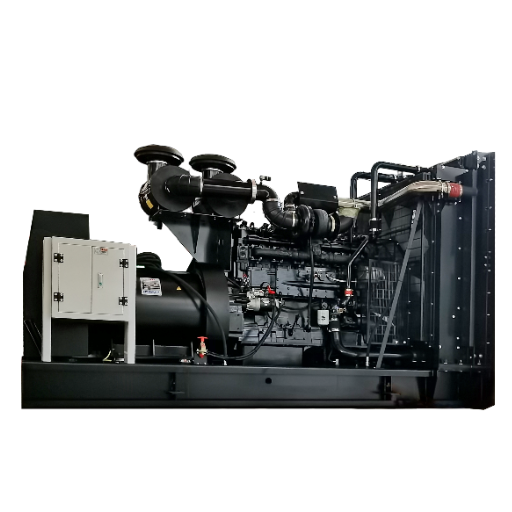
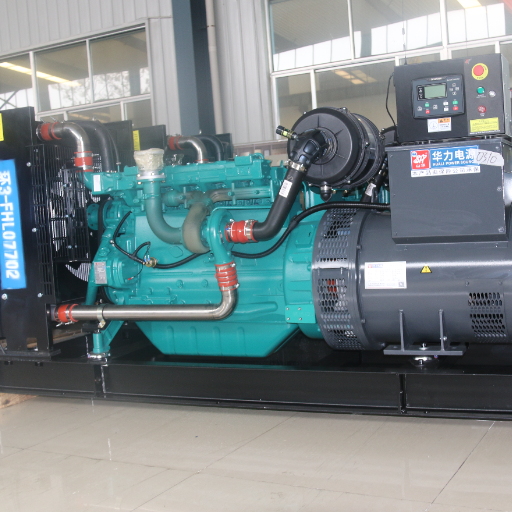
The term “heavy duty” gets used loosely in marketing copy, but in industrial power it has a practical meaning. A heavy-duty diesel generator is a diesel-driven alternator set, or genset, typically rated from 500kW (625kVA at 0.8 power factor) up to 4,000kW (5,000kVA) or larger. These units are designed for applications where both output and reliability are critical, often operating in environments that would destroy smaller commercial standby equipment.
In other words, an industrial diesel generator is built for continuous duty, severe environments, and large electrical loads. It is not a residential backup unit scaled up; it is a fundamentally different class of machine.
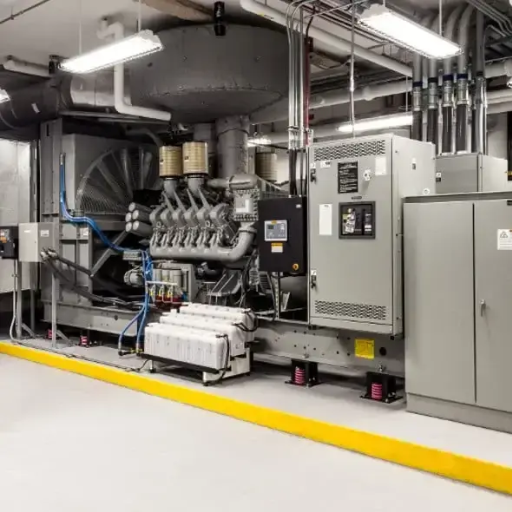
Construction differences from commercial or residential units are substantial. When specifying a heavy-duty diesel generator, buyers should look for larger cast-iron engine blocks, heavy-duty steel base frames, industrial alternators with reinforced windings, and cooling systems sized for continuous operation. The control systems are more sophisticated, with digital governor control, automatic voltage regulation (AVR), and often remote monitoring or parallel synchronization capability. Enclosures range from open skid mounts to sound-attenuated canopies and CSC-certified shipping containers.
Power ratings follow ISO 8528-1, the international standard for reciprocating internal combustion engine-driven alternating current generating sets. The four ratings buyers need to understand are:
- Emergency Standby Power (ESP): Maximum output available during a utility outage, typically limited to 200 hours per year with no overload capability.
- Limited-Time Running Power (LTP): Similar to ESP but with a defined number of hours per year, often used where grid support is occasionally needed.
- Prime Power (PRP): Variable load operation for unlimited hours, with an average load factor typically limited to 70% of PRP over 24 hours.
- Continuous Power (COP): Constant 100% load for unlimited hours, used in base-load applications such as remote mining or islanded microgrids.
Choosing the wrong rating is expensive. A unit bought for standby duty and then run continuously will fail prematurely. A unit specified for a prime power when only emergency backup is needed wastes capital and fuel. This is why the first question an engineer asks is not “how many kilowatts do you need?” but “how will the generator actually run?”
Heavy Duty Diesel Generator Applications
Heavy-duty diesel generators serve industries where power interruption carries severe financial, operational, or safety consequences. Specifying the right heavy-duty diesel generator for each site means matching capacity, enclosure, and cooling to local conditions. The same 1,500kW genset can look very different depending on whether it is cooling servers in Singapore or crushing ore at 4,000 meters in Peru.
Mining and Quarry Operations
Mining sites often operate far from any utility grid. A heavy-duty diesel generator at a mine provides prime power for crushers, conveyors, hoists, and camp facilities. Dust, vibration, altitude, and extreme temperature swings make robust construction essential. In many cases, multiple generators run in parallel to form an islanded power station.If your operation runs in remote or high-altitude terrain, our dedicated guide to the heavy duty diesel generator for mining covers parallel operation, dust protection, and altitude derating in far more detail.
Data Centers and Telecom Facilities
Data centers require N+1 or 2N redundancy with automatic transfer and millisecond response. A heavy-duty diesel generator for data center use is usually enclosed in a sound-attenuated canopy or container to limit noise and is paired with uninterruptible power supplies (UPS) and automatic transfer switches (ATS) to bridge the gap until utility power returns or generators reach rated speed.
Manufacturing Plants and Process Industries
For continuous process industries such as chemicals, food processing, pulp and paper, and automotive, a power outage can ruin an entire production batch or damage sensitive equipment. Heavy duty standby or prime gensets keep critical lines running until the grid stabilizes.
Oil, Gas, and Remote Construction
Drilling rigs, wellhead sites, pipeline construction camps, and offshore platforms depend on mobile or containerized gensets. These units must withstand salt spray, sand, and high vibration while delivering reliable power for pumps, compressors, and lighting.
Healthcare and Emergency Services
Hospitals, blood banks, and emergency response centers use heavy duty standby generators to comply with life-safety codes. Reliability, fast starting, and fuel autonomy are non-negotiable.
Site-Specific Challenges
Every application brings its own environmental stressors. A heavy duty diesel generator specified for sea-level conditions will not deliver its nameplate rating at a high-altitude mine without proper derating and modification. High altitude reduces engine output because thinner air limits combustion. High ambient temperature reduces cooling capacity. Dust and sand clog air filters and radiators. Humidity accelerates corrosion.
Mini-Story: The Voltage Dip That Shut Down a Crusher
In 2023, a procurement team at a copper mine in Zambia ordered a 1,250kW genset based on running load calculations alone. The running load was 980kW, so the unit appeared comfortably sized. What they missed was the inrush current of the 600hp ball mill motor, which demanded nearly six times its running kVA during startup. The first time the mill tried to start on generator power, the voltage dip collapsed the control voltage for the conveyor system and tripped the entire crushing line. Two days of lost production cost more than the price difference between a properly sized 1,500kW set with motor-starting analysis and the undersized unit they originally purchased.
Power Ratings and Sizing Basics
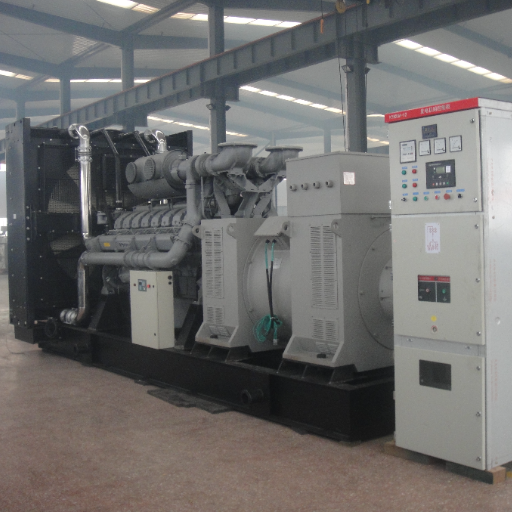
Sizing a heavy-duty diesel generator is the most important step in the procurement process. Generator sizing combines electrical load analysis, motor starting requirements, future expansion, and site derating into a single rated machine. Undersized and the unit overloads or fails to start large motors. Oversize and you waste capital, fuel, and floor space while risking engine damage from under-loading, commonly called wet stacking. Because a sizing error is one of the most costly mistakes a buyer can make, our step-by-step guide to heavy duty diesel generator sizing walks through load inventory, motor starting kVA, and derating with worked examples.
kW vs. kVA and Power Factor
Generators are rated in both kilowatts (kW) and kilovolt-amperes (kVA). The relationship is:
kW = kVA × Power Factor
Most industrial loads have a power factor between 0.8 and 0.95. A 1,000kVA generator at 0.8 power factor delivers 800kW of real power. If your load has a poor power factor due to motors, transformers, or welding equipment, you may need power-factor correction capacitors or a larger alternator.
Motor Starting kVA
Electric motors draw locked-rotor amperage during startup, often 5–7 times their full-load current. This surge lasts only a few seconds, but it can collapse generator voltage if the alternator is not sized for it. The key metric is motor starting kVA, and the allowable voltage dip is typically 15–30% depending on the sensitivity of connected equipment.
For large motors, engineers use reduced-voltage starters, soft starters, or variable frequency drives (VFDs) to limit inrush. However, these add cost and complexity, so the decision must be made during sizing, not after installation.
Load Inventory and Diversity Factor
A proper load inventory lists every piece of equipment, its running kW, starting kVA, and duty cycle. This inventory is the foundation of generator sizing for any heavy duty diesel generator. Not all equipment runs at once, so a diversity factor is applied. For example, a plant may have 2,000kW of connected load but only 1,400kW running simultaneously.
The standard sizing workflow is:
- List all critical loads and their running kW.
- Identify the largest motor and calculate its starting kVA.
- Apply diversity factor based on operating profile.
- Add 20–25% future expansion margin.
- Apply altitude and temperature derating.
- Select the next standard generator rating above the calculated requirement.
Worked Example: Sizing for a 2,000kW Industrial Plant
Suppose a cement plant needs standby power for critical kilns, conveyors, and bagging machines. The running load inventory totals 1,600kW. The largest motor is a 400kW induced-draft fan with a starting kVA of 2,400. Applying a 0.85 diversity factor gives 1,360kW running load. Adding 20% future margin brings the requirement to 1,632kW. After applying 10% derating for high ambient temperature, the effective requirement for the heavy duty diesel generator becomes 1,795kW. The plant should specify a 2,000kW standby-rated genset, not a 1,600kW unit.
Types of Heavy Duty Diesel Generators
The same engine and alternator package can be delivered in several physical configurations. Choosing the right type of heavy duty diesel generator depends on noise limits, weather exposure, mobility needs, and installation timeline.
Open Type
Open-type gensets mount the engine, alternator, radiator, and control panel on a structural steel skid. They offer the lowest cost, the best cooling airflow, and the easiest maintenance access. They are ideal for indoor engine rooms or remote sites where noise is not a concern.If you are torn between an exposed skid and an enclosed unit, our comparison of open type vs silent type generator breaks down the cost, cooling, noise, and maintenance trade-offs so you can choose with confidence.
Silent or Sound-Attenuated Canopy
Silent canopies enclose the genset in an acoustically lined steel enclosure. A silent heavy duty diesel generator keeps noise below 75 dB(A) at 7 meters, which is essential for hospitals, urban data centers, and commercial sites near residential areas. The trade-off is higher cost and slightly reduced cooling access.For noise-sensitive sites, our guide to the silent heavy duty diesel generator explains how acoustic enclosures, exhaust silencers, and airflow design work together to hit strict decibel limits.
Containerized
Containerized generators are built into standard 20-foot or 40-foot shipping containers, often with CSC certification for sea freight. They provide integrated fuel tanks, lighting, ventilation, and weatherproofing. A containerized heavy duty diesel generator deploys rapidly and is ideal for oilfield camps, military applications, and disaster response. These units can be lifted by crane, shipped by sea, and commissioned within days of arrival.For projects that demand fast deployment in remote or harsh locations, our guide to the containerized heavy duty diesel generator covers CSC certification, integrated fuel systems, and weatherproofing in detail.
Trailer or Mobile
Trailer-mounted sets bring generator power to construction sites, events, and emergency locations. They sacrifice some fuel capacity and weather protection for mobility. For remote construction projects that move frequently, a trailer-mounted configuration can reduce logistics costs significantly.
Engine and Alternator Brands for Heavy Duty Units
Engine and alternator selection is a long-term strategic decision for any heavy duty diesel generator. A generator may run 20,000 hours over its life, and the availability of parts and service matters more than the brand badge on the radiator.To compare the strengths of each option side by side, our overview of the leading heavy duty diesel generator brands weighs parts availability, service networks, and emissions compliance across major engine and alternator makers.
Common Engine Brands
- Cummins: Wide global service network, strong in data center and standby applications.
- Perkins: Popular in Europe, Africa, and Asia; good parts availability and emissions compliance.
- Weichai and Yuchai: Cost-competitive Chinese engines with growing global support, often used in prime power and mining.
- MTU: Premium engines favored for data centers and mission-critical standby.
- Mitsubishi: Strong reputation in large prime-power and continuous-duty applications.
- Caterpillar: Broad industrial portfolio with extensive dealer network and high resale value.
Alternator Brands
Common industrial alternator suppliers include Stamford, Leroy-Somer, and Faraday. In a heavy duty diesel generator, the alternator must match the engine’s torque curve and the site’s voltage stability requirements. Key specifications include insulation class, excitation system (self-excited, PMG, or AREP), voltage regulation accuracy, and bearing configuration.
Selection Criteria
When comparing brands, evaluate:
- Parts availability in your region
- Authorized service network density
- Emissions compliance (EPA Tier 4 Final, EU Stage V, or local regulations)
- Warranty terms and conditions
- Fuel consumption at partial and full load
- Resale value and local market familiarity
For buyers in regions with strict emissions rules, engine selection for a heavy duty diesel generator may be constrained before any other factor. For buyers in remote areas, parts availability often overrides brand preference.
Fuel Consumption and Operating Costs
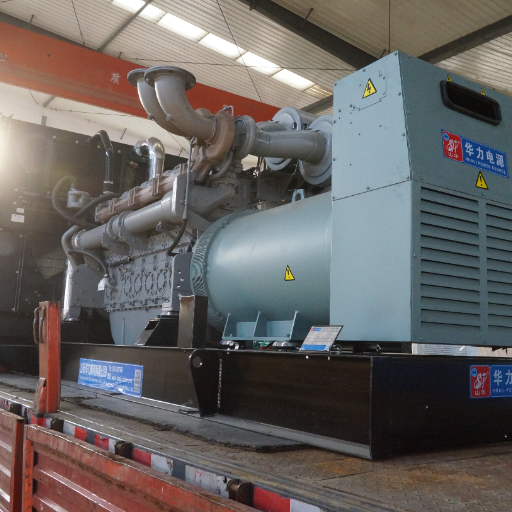
Fuel is the largest operating cost for most heavy duty diesel generators. Over a 10-year lifecycle, fuel plus maintenance plus parts typically exceeds the purchase price by 2–3x. PR Newswire cites the diesel generator market reaching $25.61 billion by 2031, confirming that buyers are allocating major capital to these systems and should weigh lifecycle cost heavily.
Typical Fuel Consumption Rates
Approximate full-load fuel consumption for a modern heavy duty diesel generator is shown below. These figures depend on engine efficiency, load factor, and ambient conditions.
| Capacity | Full Load (L/hr) | Half Load (L/hr) |
|---|---|---|
| 500kW | 110–125 | 60–75 |
| 1,000kW | 210–240 | 115–140 |
| 1,500kW | 310–355 | 170–205 |
| 2,000kW | 410–470 | 225–270 |
| 3,000kW | 610–700 | 335–405 |
These figures are approximate. Always request the manufacturer’s fuel consumption curve for the specific engine and operating profile.To turn these numbers into an accurate operating budget, our deep dive into heavy duty diesel generator fuel consumption explains how load factor, ambient conditions, and power factor shift real-world usage.
Fuel Tank Sizing and Runtime
Fuel tank capacity determines autonomy. A hospital may need 96 hours of fuel storage to meet code. A mine may want 7 days because fuel deliveries arrive weekly. Tank sizing balances runtime against fuel degradation, fire code requirements, and physical space.
Total Cost of Ownership
TCO includes:
- Initial capital cost
- Fuel over the operating life
- Lubricating oil, coolant, filters, and consumables
- Scheduled maintenance labor
- Major overhauls (typically every 12,000–30,000 hours)
- Spare parts inventory
- Financing, insurance, and installation
A lower purchase price from a trading company can evaporate quickly if fuel consumption is 10% higher or if parts are unavailable. Factory-direct manufacturers can provide verified fuel curves and documented parts plans, which make the total cost of ownership for a heavy duty diesel generator more predictable.
Mini-Story: The TCO Spreadsheet That Changed the Bid
A facilities manager at a textile mill in Vietnam compared three 1,000kW genset quotes in 2024. The lowest bid was 18% cheaper than the factory-direct option. Before selecting it, she built a 10-year TCO model assuming 2,000 running hours per year and local diesel prices. The cheapest unit consumed 12% more fuel per kWh and used a non-standard alternator with no local parts stock. Over 10 years, the apparent savings disappeared by year four. She awarded the contract to the factory-direct manufacturer because the verified fuel curve and guaranteed parts availability made the lifecycle cost lower, even though the upfront price was higher.
Heavy Duty Diesel Generator Pricing
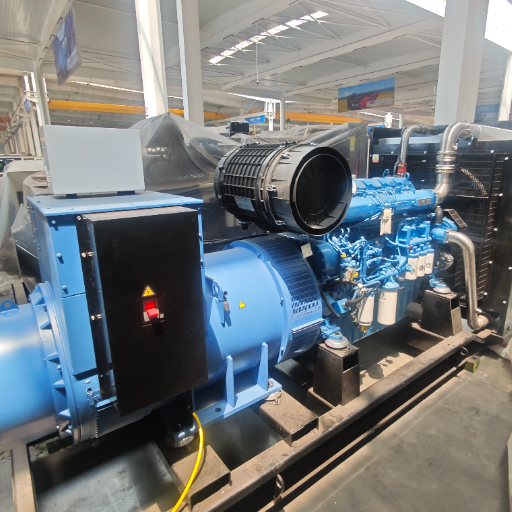
Pricing for heavy duty diesel generators varies widely based on capacity, engine brand, enclosure type, controls, and export logistics. The following ranges are indicative of factory-direct or OEM-equivalent pricing for new equipment:
| Capacity | Open Type (USD) | Silent Canopy (USD) | Containerized (USD) |
|---|---|---|---|
| 500kW | $45,000–75,000 | $65,000–95,000 | $85,000–120,000 |
| 1,000kW | $95,000–150,000 | $130,000–190,000 | $170,000–240,000 |
| 1,500kW | $150,000–230,000 | $200,000–290,000 | $260,000–360,000 |
| 2,000kW | $210,000–320,000 | $280,000–400,000 | $360,000–500,000 |
| 3,000kW+ | $350,000–550,000+ | $470,000–700,000+ | $600,000–900,000+ |
These ranges assume mainstream engine brands, standard voltage configurations, and typical export terms. Highly customized heavy duty diesel generator systems with advanced emissions treatment, paralleling switchgear, or special enclosures can exceed these figures.For a current, detailed breakdown of what drives each quote, our heavy duty diesel generator price guide for 2026 shows how engine tier, enclosure, controls, and logistics shape the final number.
Cost Drivers
The main factors that move price are:
- Engine brand and emissions tier: Tier 4 Final / Stage V engines cost more than equivalent non-emissions engines.
- Enclosure type: Open, silent canopy, or containerized.
- Control system: Basic SmartGen modules cost less than Deep Sea Electronics (DSE) units with remote monitoring.
- Alternator specification: PMG excitation, premium bearings, and enhanced insulation add cost.
- Fuel tank and ancillary equipment: Day tanks, fuel polishing systems, exhaust treatment, and ATS integration.
- Shipping and commissioning: Sea freight, customs clearance, inland transport, and on-site commissioning.
Factory-Direct vs. Dealer Pricing
Tier 1 OEM dealers carry significant overhead and are currently quoting 40–100+ week lead times for large industrial units due to data center and infrastructure demand. A factory-direct generator manufacturer with in-house production can often deliver custom heavy duty diesel generators in 18–30 weeks while providing direct engineering accountability.
Want to see how factory-direct pricing applies to your project? Contact the ZC Power engineering team for a customized technical proposal and detailed TCO analysis.
Installation, Codes, and Site Integration
A generator is only as reliable as its installation. Even the best-engineered genset will fail if ventilation is inadequate, fuel is contaminated, or the foundation transmits vibration into the building.Because so many outages trace back to poor site integration rather than the machine itself, our guide to heavy duty diesel generator installation covers foundations, ventilation, exhaust routing, and code compliance step by step.
Foundation and Vibration Isolation
Heavy duty generators generate significant vibration and torque reaction during starting. They require a reinforced concrete foundation sized to the unit’s weight and dynamic loads. Spring or rubber-in-shear isolators separate the skid from the foundation to protect the building structure and connected pipework.
Ventilation and Cooling Airflow
Radiators require enormous airflow. When installing a heavy duty diesel generator indoors, engine rooms must be designed with intake louvers, exhaust fans, and sufficient free area to prevent recirculation of hot air. A common rule of thumb is to provide at least 1.5 to 2 times the radiator airflow area in free ventilation opening, but the manufacturer should always provide specific requirements.
Exhaust Routing and Emissions Treatment
Exhaust piping must be properly sized, insulated, and routed to prevent backpressure that robs power and damages turbochargers. In regions with strict emissions, selective catalytic reduction (SCR) or diesel particulate filters (DPF) may be required.
Fuel Storage and Day Tanks
Bulk fuel storage must comply with local environmental and fire codes. In a heavy duty diesel generator installation, day tanks near the generator keep a small, clean supply available while bulk tanks are isolated. Fuel polishing systems remove water and particulates before they reach the injection system.
Noise Walls and Environmental Permitting
Outdoor installations may require noise walls or acoustic barriers to meet local ordinances. Environmental permits may govern fuel storage capacity, spill containment, and exhaust emissions.
Applicable Codes and Standards
Key standards include NFPA 110 for emergency and standby power systems, ISO 8528-5 for generating set performance, and local electrical codes for grounding, overcurrent protection, and ATS integration. IEN.eu provides a detailed overview of what to consider when purchasing a diesel generator, including cooling, alternator excitation, and enclosure selection. Always involve a qualified electrical engineer and local authorities early in the project.
Maintenance for Heavy Duty Generators
Heavy duty generators are built to last decades, but only with disciplined maintenance. A well-maintained heavy duty diesel generator can operate 20,000 to 30,000 hours before a major overhaul; a neglected one can fail in a fraction of that time.To build a service program that actually protects your investment, our guide to heavy duty diesel generator maintenance lays out hour-based intervals, fuel and oil care, and predictive monitoring practices.
Hour-Based Service Intervals
Typical maintenance intervals are the same across most heavy duty diesel generator platforms:
- Daily or weekly: Visual inspection, coolant and oil level check, fuel level, battery voltage.
- Every 250 hours: Engine oil and filter change, fuel filter inspection, air filter check.
- Every 500 hours: Coolant filter, fuel filters, alternator inspection, control system test.
- Every 1,000–2,000 hours: Valve adjustment, turbocharger inspection, coolant change, vibration analysis.
- Major overhaul: Typically 12,000–30,000 hours depending on engine type and duty cycle.
Oil, Coolant, Filter, and Fuel System Maintenance
Clean fuel is the single most important factor in diesel engine longevity. Water or particulates in fuel damage injectors and pumps. Oil analysis programs can detect wear metals and coolant contamination before they cause catastrophic failure.
Load Bank Testing and Predictive Maintenance
Standby generators must be exercised under load, not just idled. Load bank testing validates rated output, burns off carbon deposits, and identifies developing problems. Modern controllers with remote monitoring track running hours, oil pressure, coolant temperature, and fault codes, enabling predictive maintenance.
For more detail, see our guides on generator maintenance contracts and generator load bank testing.
Why Choose ZC Power for Heavy Duty Diesel Generators
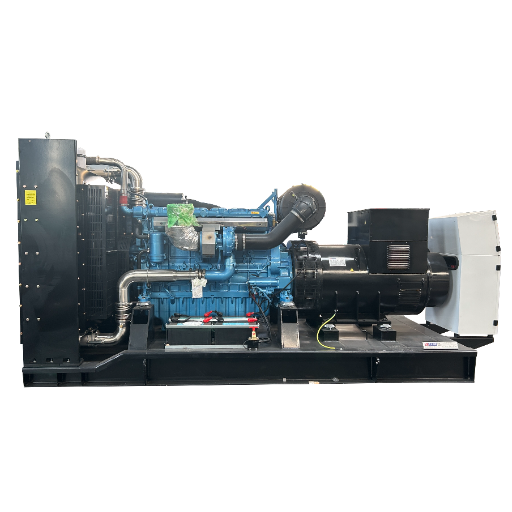
Specification is only half the battle. The other half is choosing a manufacturing partner that can deliver what the spec sheet promises and support it for years after commissioning.
Factory Scale and Heritage
ZC Power was established in 1999 and operates a 300,000-square-meter manufacturing facility in Jining, Shandong. We are a source manufacturer of heavy duty diesel generators, not a trading company. That means buyers deal directly with the engineering team that designs the genset and the production line that builds it.
Custom Engineering and OEM/ODM Capabilities
We manufacture diesel generator sets from 8kVA to 4,000kVA in open, silent, containerized, and trailer configurations. As a heavy duty diesel generator builder, our engineering team customizes voltage, frequency, controller logic, canopy dimensions, paint specifications, and environmental protection to match each project’s exact requirements.
National Standard Testing Center and Certifications
Every unit is tested in our national standard testing center under full-load conditions before shipment. We hold ISO 9001, CE, and CCC certifications, and maintain direct partnerships with Cummins, Perkins, Weichai, Yuchai, Stamford, Leroy-Somer, Deep Sea Electronics, and SmartGen.
Global Export Logistics and Commissioning Support
We have exported heavy machinery to more than 50 countries across Africa, the Middle East, Southeast Asia, South America, and Eastern Europe. Our team manages sea freight, customs documentation, container loading, and overseas commissioning. With 80+ technical engineers, we provide lifetime technical support and direct OEM spare parts supply.
Mini-Story: The Containerized Genset That Crossed an Ocean
In early 2024, an EPC contractor in the Middle East needed four 1,500kW prime-power gensets for an oilfield camp. The site was remote, the summer ambient temperature exceeded 50°C, and the project timeline allowed only 10 weeks from order to arrival. ZC Power engineered containerized sets with oversized radiators, heavy-duty air filtration, and CSC-certified frames. The units were load-bank tested in our national testing center, shipped by sea, and commissioned on-site with our engineers. They began delivering base-load power 22 weeks after the purchase order, while a Tier 1 OEM alternative was still quoting 44-week delivery.
Frequently Asked Questions
What is considered a heavy duty diesel generator?
A heavy duty diesel generator is generally defined as an industrial genset rated from 500kW to 4,000kW or larger, built with reinforced engines, industrial alternators, and heavy-duty frames for continuous or standby operation in demanding environments.
How much fuel does a 1,000kW diesel generator use per hour?
At full load, a modern 1,000kW diesel generator typically consumes 210 to 240 liters of diesel per hour. At half load, consumption drops to roughly 115 to 140 liters per hour. Exact figures depend on engine efficiency, ambient conditions, and load power factor.
How long can a heavy duty diesel generator run continuously?
A generator specified for prime power (PRP) or continuous power (COP) can run indefinitely as long as fuel, coolant, oil, and maintenance supplies are available. Standby-rated units are limited by their ISO 8528-1 hour restrictions and are not intended for continuous operation.
What size generator do I need for a manufacturing plant?
Start with a complete load inventory including running kW, starting kVA for large motors, diversity factor, and future expansion margin. Then apply site derating for altitude and temperature. Most plants should size the genset so normal operation runs at 70–80% of rated capacity.
What are the best engine brands for heavy duty generators?
The best brand depends on your application and region. Cummins, Perkins, Weichai, Yuchai, MTU, Mitsubishi, and Caterpillar are all strong options. Prioritize local parts availability, service network, emissions compliance, and warranty terms.
Are containerized generators weatherproof?
Quality containerized generators are weather-resistant and designed to protect the genset from rain, dust, and salt spray. They are not fully hermetic, but with proper ventilation, insulation, and sealing they perform reliably in harsh environments. CSC certification allows them to be shipped as standard sea containers.
How often should a heavy duty generator be serviced?
Service intervals are based on operating hours. Oil and filters are typically changed every 250 hours, with more comprehensive inspections every 500 to 1,000 hours. Standby units also require regular exercise and annual load bank testing.
What is the difference between prime and standby power ratings?
Prime power (PRP) enables variable-load operation for unlimited hours, typically at a 70% average load factor. Standby power (ESP) is for emergency use during utility outages and is limited to a maximum number of hours per year. Using a standby-rated generator for prime power will void warranties and cause premature failure.
Conclusion
A heavy duty diesel generator is one of the most consequential capital investments an industrial facility can make. The right unit protects revenue, safety, and operational continuity for decades. The wrong unit creates a hidden liability that reveals itself only during the worst possible moment.
The procurement process is not complicated, but it is unforgiving. Start by defining the duty cycle and load profile accurately. Size for motor starting, future growth, and site-specific derating. Compare engines and alternators on lifecycle value, not just purchase price. Account for installation, fuel, maintenance, and support over the full operating life. And choose a manufacturer that can verify its output, customize to your site, and support the equipment wherever it runs.
At ZC Power, we have built heavy duty diesel generators for mines, data centers, manufacturing plants, and remote infrastructure projects for more than 25 years. Our national standard testing center, 80+ engineers, and factory-direct model give buyers the engineering confidence and delivery speed that Tier 1 OEM backlogs cannot match right now. Whether you need a single standby unit or a complete prime power heavy duty diesel generator plant, we engineer the solution to your exact site conditions.
Contact the ZC Power Engineering Team Today to request a free load assessment, factory-direct quote, and customized technical proposal for your next heavy duty diesel generator set.