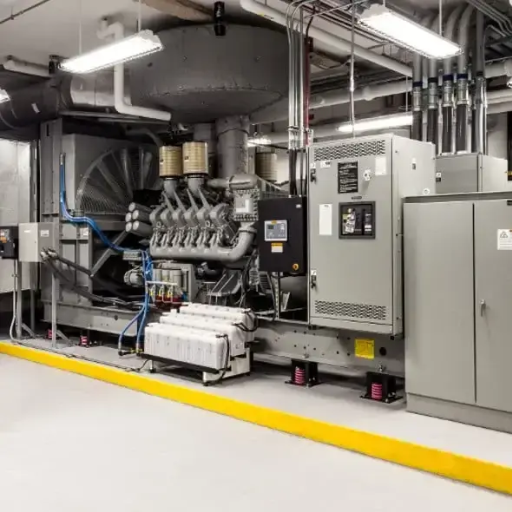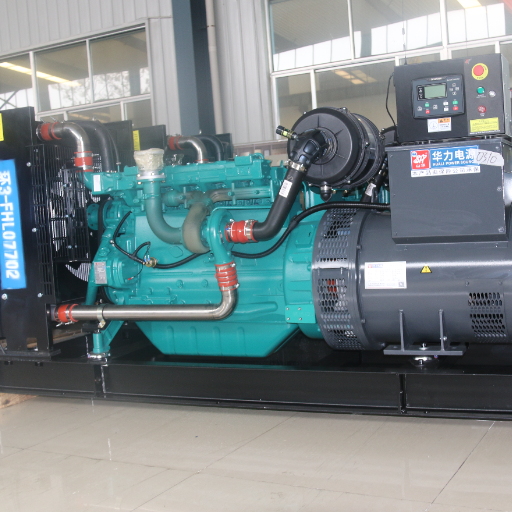
Containerized Heavy Duty Diesel Generator: A Factory-Direct Buyer’s Guide (500kVA–3,500kVA)
A containerized heavy duty diesel generator packages a diesel genset inside an engineered enclosure. Before ordering, check four things together: the complete equipment fit, cooling under site conditions, the transport arrangement, and access for maintenance. A container label alone answers none of these questions.
This guide covers procurement questions for projects in the title’s 500kVA–3,500kVA range. That range describes the guide’s coverage; it does not mean that every rating fits a particular container size. Your decision should follow the selected configuration’s drawings and supporting documents.
Start with these checks:
- Match the enclosure drawing to the engine, alternator, cooling system and accessories actually quoted.
- Separate dimensions for shipping from the space needed for operation and service.
- Confirm the transport documentation and handling plan for the complete shipment.
- Compare noise data under stated conditions and quotations with the same supply scope.
What a containerized genset package includes
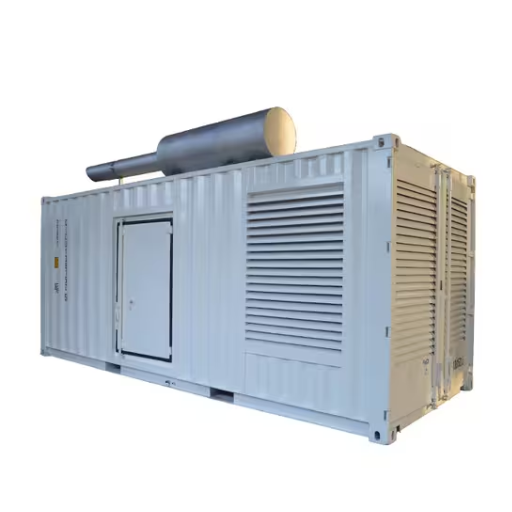
A containerized package brings the genset and its enclosure into one specified assembly. Depending on the design, it may include a radiator, fuel tank, controls, exhaust silencer, acoustic treatment and access doors. Establish which items are inside the enclosure, which travel separately, and which remain site work.
Teksan’s diesel genset manual, section 2.2.2, shows why the details matter: container dimensions and the positions of silencers, fuel tanks and access doors vary across its designs. It is a manufacturer example, rather than a specification for a ZC Power order.
Ask for the engine, alternator and controller model numbers alongside the enclosure specification. Confirm the required prime or standby power rating and the conditions attached to it. Enclosing a genset does not establish its available output at your site.
When to compare open, canopy and container formats
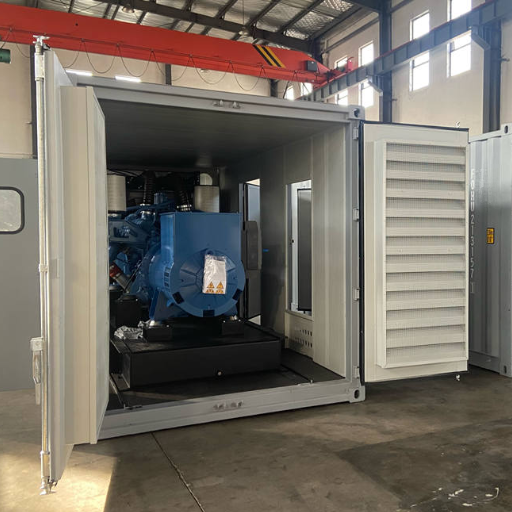
Use the illustration to compare enclosure concepts. Confirm the actual protection, noise performance and transport arrangements in the selected equipment’s documents.
| Format | Main procurement question | Scope to clarify |
|---|---|---|
| Open set | Can the planned room or shelter accommodate the equipment and its interfaces? | Building ventilation, acoustic treatment, access and shipment packaging |
| Silent canopy | Does the specified canopy meet the project’s exposure and acoustic requirements? | Intake and discharge paths, service openings and site connections |
| Containerized set | Does the complete package fit the logistics plan and operating site? | As-shipped dimensions, approvals where applicable, cooling and component removal |
Compare all three against the same project requirements. A container enclosure is a packaging choice, rather than proof of the lowest installed cost or fastest commissioning. Our open type vs silent type generator guide covers the adjacent format comparison in more detail.
Choose the container around the complete configuration
Nominal 20ft, 40ft and High-Cube labels
Use nominal container classes to discuss options, then request the actual dimensions. External length does not tell you the usable space remaining after acoustic sections, cooling equipment, tanks and control panels are fitted. A High-Cube proposal still needs a configuration drawing showing how the extra height is used.
The Atlas Copco QEC brochure provides a useful example of model-specific package information, service features and control options. Its dimensions describe the named QEC products; they should not be used as a capacity-to-container fit rule for another supplier.
Establish the load requirement before comparing enclosures. Use our heavy duty diesel generator sizing guide for that separate decision, then ask for a package drawing covering the selected rating and equipment.
Shipping envelope versus operating envelope
Request separate views of the unit as shipped and as operated. Identify removable silencers, ducts, hoods or other accessories, if present. The delivery packing list should say who installs them and what work follows unloading.
On the site layout, mark open doors, airflow paths, cable and fuel interfaces, exhaust routing, and the space required to withdraw service parts. A package may fit the transport route while still needing more space at its operating location. Have the supplier identify the clearances required by the selected design.
What to mark on the general-arrangement drawing
| Drawing item | Question to resolve before purchase |
|---|---|
| Equipment arrangement | Does it match the quoted engine, alternator, radiator, tanks and controls? |
| Shipping dimensions and mass | Are external projections, shipped accessories and loading condition identified? |
| Handling details | What lifting or handling method applies to this complete configuration? |
| Ventilation and exhaust | Where are the inlets, discharge and exhaust interfaces in operating condition? |
| Access and removal paths | Can routine parts and major components pass through the proposed openings? |
| Site interfaces | Which connections, supports and accessories are supplied by each party? |
Record the drawing revision in the quotation and purchase agreement. Request an updated drawing when a proposed substitution changes the arrangement.
Verify cooling, weather exposure and acoustics together
Confirm the design conditions
Give the supplier the site’s ambient-temperature range, altitude, duty requirement and exposure conditions. Ask for confirmation of the package rating under those conditions, including any applicable limitations. An engine datasheet alone does not settle whether the complete enclosure arrangement meets the project requirement.
Teksan’s manual, sections 3.4–3.5, treats cooling airflow, hot-air discharge and exhaust routing as design-sensitive matters. Use that principle to request evidence for your package. Do not copy another model’s ventilation dimensions or installation limits.
Review the installed airflow and exhaust arrangement
Ask the supplier to assess the intake and discharge paths with the proposed louvers, acoustic sections, ducts and nearby obstructions included. Request confirmation of the available airflow and pressure margin, and identify any assumptions about site layout or service condition. For exhaust connections, obtain the selected model’s limits and the agreed scope for site-installed sections.
For configuration discussions, see our generator cooling systems page. The acceptance evidence should still identify the exact equipment and installed arrangement being purchased.
Specify exposure and noise requirements
Describe rain, wind, dust, salt exposure and corrosion concerns in the inquiry. Ask which coatings, filtration, drainage and weather-protection measures are included, and what maintenance they require. A ventilated container should not be assumed to be a sealed or universally dustproof enclosure. Our weather-resistant generator canopy guide explains related exposure questions.
For a noise claim, request the sound metric, measurement method, distance, operating load and test configuration. Ask whether the report covers the quoted enclosure and exhaust arrangement. Teksan’s section 3.8 also notes that acoustic solutions depend on environmental conditions. Compare the report with the project’s assessment requirements before accepting a quoted sound level.
Confirm the transport plan before ordering
Obtain applicable approval and examination records
The International Maritime Organization’s CSC overview explains safety approval plates and periodic examination for containers within the Convention’s scope. It does not establish approval of a particular generator package.
Ask the supplier and logistics provider which requirements apply to the proposed shipment. Where CSC approval and examination records are applicable, obtain evidence relevant to the modified, as-shipped configuration. Ask how alterations and the installed equipment have been addressed; do not rely solely on the fact that the donor enclosure once carried a plate.
Agree the complete handling arrangement
Provide the carrier or forwarder with the shipment drawings, mass, projections, handling information and proposed route. Obtain confirmation of the booking and handling arrangement before relying on standard container transport. If the assembly requires another cargo arrangement, clarify its loading, securing and unloading scope with the logistics provider.
Keep transport questions separate from electrical, emissions and site approvals. Request the documentation applicable to the destination, intended use and exact equipment. Neither an enclosure description nor a transport approval demonstrates compliance with every obligation at the operating site.
Check routine service and major component removal
Review access task by task. Ask the supplier to show how technicians reach filters, belts, drains, batteries, radiator-cleaning points and control panels. Include the proposed fuel and exhaust arrangements in that review, rather than checking an empty container drawing.
Then ask about larger jobs: withdrawing the radiator, alternator or engine may require a different opening and working area. Request the removal method, required tools or lifting equipment, and the space that must remain available outside the enclosure. Confirm lighting, access doors and emergency-access provisions in the agreed scope.
In its Norway drinking-water project case study, Genesal Energy reports rearranging components to address restricted operation and maintenance access. This is a supplier-reported example of a layout issue to investigate, rather than a ZC Power project or a universal container design.
Resolve these questions before the layout is fixed. Our heavy duty diesel generator installation guide covers downstream installation considerations; the selected equipment’s approved instructions should govern the actual work.
Compare the complete project cost and supply scope
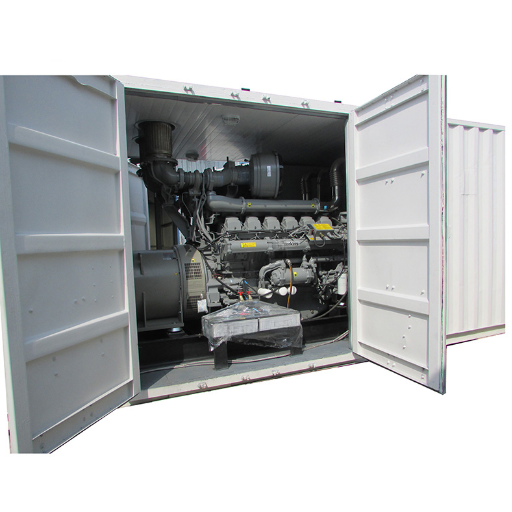
Use this illustration to identify cost categories, rather than as a quotation or a prediction of savings. Compare project-specific supplier offers and site-work estimates on the same basis.
| Cost or scope item | What to request in each offer |
|---|---|
| Equipment and enclosure | Identified models, acoustic package, tanks, controls and supplied accessories |
| Civil works | Foundations, supports, access preparation and any separate shelter or barriers |
| Logistics | Freight arrangement, handling, unloading equipment and relevant documentation |
| Site assembly and connections | Exhaust, electrical and fuel interfaces, ducts and separately shipped items |
| Testing and handover | Agreed test scope, reports, commissioning responsibilities and instructions |
| Operation and maintenance | Fuel assumptions, service tasks, consumables, parts and access requirements |
| Future relocation | Disconnection, handling, transport preparation and reinstatement scope |
Ask suppliers to mark inclusions, exclusions and buyer responsibilities explicitly. This is more useful than comparing enclosure prices while leaving civil works or unloading outside one offer. For wider purchasing context, see our heavy duty diesel generator price guide; obtain a project-specific quotation for the actual package.
Assess fuel costs using the proposed load profile and model data. Our diesel generator fuel consumption guide provides further reading. Request the consumption basis and usable fuel arrangement for the quoted configuration instead of assuming a runtime from container size.
Do the same for schedule: identify drawing approval, fabrication, testing, transport, site preparation and commissioning responsibilities. Integrated packaging changes the work scope, but the project programme must account for the work that remains.
Procurement document checklist and next step
Before placing an order, assemble a package that connects the quotation to the drawings and acceptance criteria:
- Configuration: engine, alternator and controller identities, agreed rating and site conditions.
- Arrangement: current shipping, operating and service drawings, including mass and handling details.
- Cooling and exhaust: design basis, installed paths, limits and site interfaces.
- Exposure and acoustics: specified protection measures and relevant noise data with test conditions.
- Transport: applicable approval and examination records, plus the agreed shipment arrangement.
- Testing and handover: agreed procedures, report deliverables, instructions and responsibility for site work.
- Commercial scope: inclusions, exclusions, service arrangements and any proposed substitutions requiring approval.
Tailor the inquiry to the application, then check the proposed container against the complete configuration. For mining projects, include dust, altitude, fuel logistics and relocation constraints; our mining generator guide expands on that setting. For urban backup, state the noise assessment conditions and available operating space. For EPC work, identify the interfaces between the equipment supplier, installer and logistics provider.
For multi-unit projects, request the system design for controls, protection, fuel and redundancy. A container enclosure alone does not provide paralleling or N+1 performance. Review the proposed engine and alternator identities as part of that specification; our generator brands guide covers the separate component-selection discussion.
Recent industry context reinforces the value of early coordination. In “From strategy to standby,” published on 15 October 2026, Cummins discusses early backup-power planning for AI data centres. For container procurement, the practical next step is to review the enclosure configuration and site interfaces before committing to a layout.
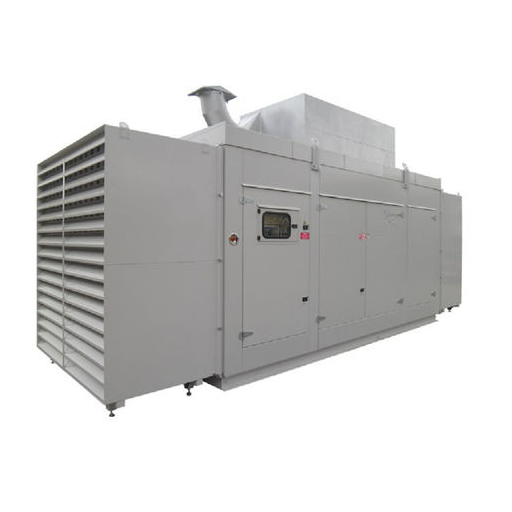
Treat the illustration as a procurement prompt. Prices, capacity fit, transport acceptance and noise performance must come from the documents for the selected configuration.
To discuss a containerized heavy duty diesel generator project with ZC Power, send your project requirements: load and rating needs, destination, site conditions, noise requirement, transport route and access constraints. Include any tender specification and site layout so the inquiry has a clear basis. For the broader equipment-selection process, see our heavy duty diesel generator buying guide.
Frequently asked questions
What is a containerized diesel generator?
It is a diesel genset installed within an engineered container enclosure. The supplied cooling, fuel, acoustic, control and exhaust arrangements depend on the package specification. Confirm what is integrated and what remains to be installed at site.
Does a 20ft or 40ft container determine generator capacity?
No. Nominal length does not establish the fit or available output of a complete configuration. Request drawings and rating information covering the selected equipment, cooling arrangement, site conditions and service access.
Is a containerized genset automatically approved for shipping?
No. Confirm the transport arrangement with the supplier and carrier or forwarder. Obtain applicable approval and examination evidence for the as-shipped assembly, including how modifications have been addressed.
What should a generator noise claim include?
Ask for the sound metric, measurement method, distance, load and tested configuration. Check that the data applies to the quoted enclosure and exhaust arrangement, and assess it against the project’s requirements.
Does the container eliminate all site work?
No. Request an explicit schedule of remaining work, including foundations, unloading, connections, external accessories, testing and commissioning. Identify the responsible party for each item before comparing offers.
How can I check maintenance access before buying?
Request a service-access drawing and review both routine tasks and major component removal. Confirm door openings, withdrawal paths, required tools or lifting equipment, and the external space that must remain available.