How to Choose a Diesel Generator Set Manufacturer: 2026 B2B Buyer’s Guide
The right diesel generator set manufacturer is one that can prove three things: verifiable certifications (ISO 9001, CE, and ISO 8528 compliance), witnessed load bank testing on every unit, and direct factory accountability for parts and support. If a supplier cannot show you all three, you are not dealing with a manufacturer.
Here is the problem. Type “diesel generator set manufacturer” into any B2B marketplace and you will get thousands of suppliers with identical-looking websites, identical stock photos, and wildly different prices. What those websites will not tell you is that most of them do not build anything at all.
Consider what happened to Daniel, a procurement manager for a Kenyan infrastructure contractor, in early 2025. He sourced a 500kVA standby genset from a supplier whose website showed gleaming production lines and claimed 15 years of manufacturing experience. The price was 30% below three competing quotes. When the unit failed its commissioning test in Nairobi, Daniel asked for the load bank report from the factory. There wasn’t one. The “manufacturer” was a four-person trading company operating from a serviced office, and the genset had been assembled in an unregulated workshop with a refurbished engine. The project absorbed a six-week delay and roughly $18,000 in replacement and penalty costs.
You already know that a generator set is a 15-to-20-year infrastructure decision, and that the purchase price is only a fraction of its true cost. This guide gives you the same verification framework our engineers use when auditing component suppliers: how to separate real manufacturers from assemblers and traders, which certifications actually matter, and the exact questions to ask before you sign a purchase order. At Shandong ZC Power, we have operated our own 300,000-square-meter production facility since 1999, so we will also show you what honest answers to these questions look like.
Key Takeaways
- Most online “manufacturers” are trading companies or assembly shops. Ask for a live factory video tour and engine brand authorization letters before requesting a quote.
- ISO 9001 is a baseline, not proof of quality. The standard that matters for gensets is ISO 8528, and you should ask which performance class (G1-G3) the factory tests to.
- Demand load bank test reports at 25%, 50%, 75%, and 100% load for your specific unit, not a generic certificate.
- Spare parts commitments must be in writing. A parts lead time over three weeks effectively cancels out any reliability claim.
- Factory-direct sourcing typically saves 20-40% versus trading company markups while giving you direct access to the engineers who built your machine.
What Is a Diesel Generator Set?
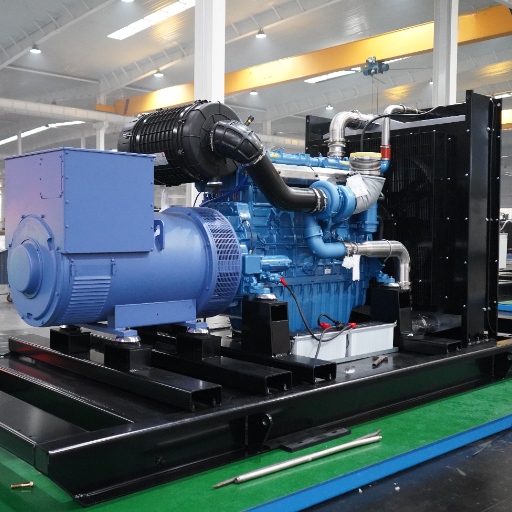
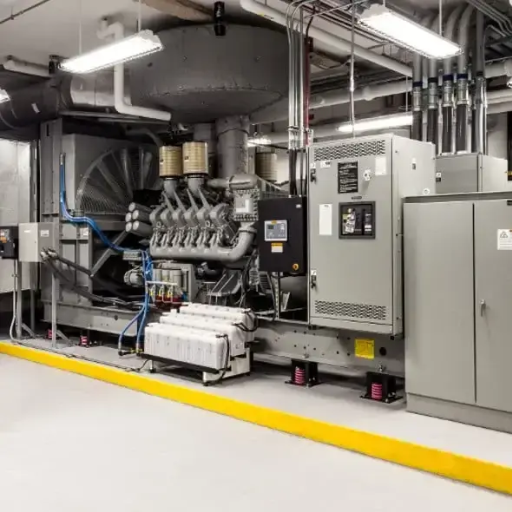
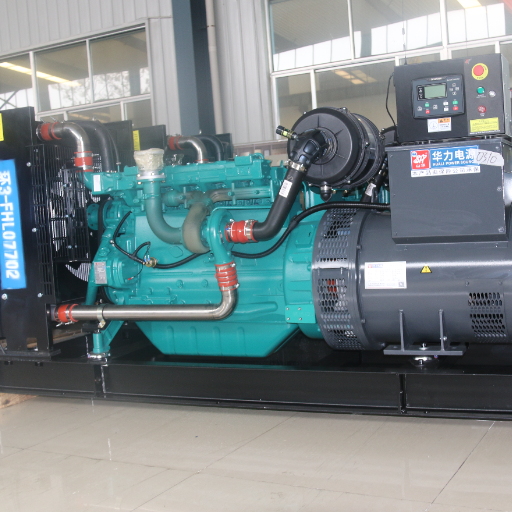
A diesel generator set (or genset) is a complete power generation unit that combines a diesel engine, an alternator, a control system, and a base frame or protective canopy into one integrated machine. Unlike a standalone engine or alternator, a genset is engineered, tested, and rated as a single system.
That distinction matters more than most buyers realize. The word “set” is where quality lives or dies. A world-class Cummins engine paired with a cheap copper-aluminum alternator, an undersized radiator, and a counterfeit controller is still a bad genset. System integration, meaning how the manufacturer matches, mounts, wires, cools, and tests these components together, determines whether your unit delivers its rated kW output for two decades or fails during its first real outage.
This is also why the choice of diesel generator set manufacturer matters more than the choice of engine brand. The engine is one component. The manufacturer is responsible for everything else.
Manufacturer vs. Assembler vs. Trading Company
Before you evaluate any supplier, you need to understand who you are actually talking to. Suppliers in this market fall into three categories, and they can look identical on a website.
The 3 Types of “Manufacturers” You Will Find Online
1. True OEMs and source factories. These companies own production lines, employ engineers, and build gensets under their own name or for distributors. They hold direct authorization from engine brands like Cummins, Perkins, Volvo, or Yuchai, and from alternator brands like Stamford or Leroy-Somer. Verification is simple: ask for the engine brand authorization certificate. A genuine manufacturer sends it within a day. Hesitation is a red flag.If you want branded units built to your own specification, look specifically for a true OEM diesel generator partner rather than a reseller putting its logo on someone else’s machine.
2. GOEMs (general original equipment manufacturers). These are legitimate assembly factories that integrate branded engines and alternators from multiple suppliers. They offer flexibility and customization, and many produce excellent equipment. To vet them, request the bill of materials for your build. Every major component should carry a brand name and model number. If the BOM says “generic” or “standard” alternator, walk away.
3. Trading companies. These are resellers with no factory at all. They source from whatever workshop offers the lowest price that month, add a markup of 20% to 40%, and disappear when you need warranty support. For consumer goods, traders are tolerable. For a 50,000 to 50,000 to 500,000 industrial power asset, they are an unacceptable risk.
Red Flags That Signal a Trading Company
- No factory specifics. Real manufacturers publish their facility size, production capacity, and testing equipment. Traders use vague phrases like “modern workshop.”
- Refusal of live video tours. Ask the sales rep to walk onto the production floor with a smartphone right now. A factory can do this in minutes. A trader cannot do it at all.
- Generic certifications. ISO certificates should be auditable through third parties like SGS, BV, or TUV. Ask for the certificate number and verify it.
- No engineering depth. Ask a technical question about alternator winding pitch or ATS integration. A factory’s engineering team answers precisely. A trader forwards your email and waits.
These warning signs are only the start. For a deeper walkthrough of the audit process, see our guides on how to verify a Chinese generator factory and how to spot a low quality generator supplier before you shortlist anyone.
7 Criteria for Evaluating a Diesel Generator Set Manufacturer
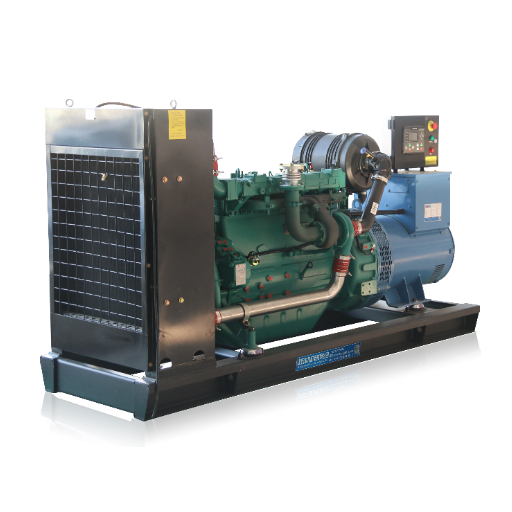
Once you have confirmed you are dealing with a real factory, use these seven criteria to compare candidates. This is the same framework professional procurement teams use when auditing suppliers.
1. Verified Certifications
ISO 9001 is the baseline for quality management, and it matters, but with over one million certified organizations worldwide, it proves a system exists rather than that the product is good. Look for the full stack: ISO 9001 for quality management, CE marking for European market access, CCC for Chinese domestic compliance, and the genset-specific ISO 8528 standard (more on that below). For North American projects, add EPA Tier 4 Final or UL/CSA requirements. A serious diesel generator set manufacturer holds every certification relevant to your destination market and supplies the documentation without being chased.If your project ships into Europe, prioritize CE certified generator manufacturers who can hand over an auditable declaration of conformity on request.
2. Engine and Alternator Brand Authorization
Counterfeit and refurbished components are the most common failure source in imported gensets. Insist on written authorization or supply agreements with recognized engine brands (Cummins, Perkins, Volvo, Weichai, Yuchai) and 100% copper alternators from Stamford, Leroy-Somer, or equivalent tier. These partnerships also protect you long-term: genuine components mean spare parts are available globally, not just from one factory’s warehouse.If you are still weighing which powerplant fits your duty cycle, our cummins vs perkins generator comparison breaks down the trade-offs in cost, parts availability, and fuel economy.
3. Testing Infrastructure
This is the single strongest separator between real manufacturers and assembly shops. A qualified factory operates load banks sized to its largest unit and tests every genset at 25%, 50%, 75%, and 100% load before dispatch, recording fuel consumption curves, voltage stability, frequency regulation, and noise levels. Ask for the factory acceptance test (FAT) report for your serial number. At ZC Power, every unit passes through our national standard testing center before crating, and the report ships with the machine. If a supplier offers only a generic “test certificate,” they are guessing at their own output.To understand exactly what a credible test should cover, review the full generator load bank testing procedure and match it against whatever report a supplier sends you.
4. Engineering Depth and Customization Capacity
No two projects share the same requirements. A mining site at 3,500 meters altitude needs engine derating. A coastal hospital needs salt-spray-resistant coating and a sub-75 dB silent canopy. A distributor needs OEM branding in their colors. Ask how many engineers the factory employs and request drawings from a comparable past project. A factory with a deep engineering bench, our team numbers over 80 technical engineers, treats customization as routine. A small shop treats it as an excuse for delays.When your specification falls outside standard models, work with a dedicated custom genset manufacturer that can engineer to your altitude, climate, and branding requirements.
5. Product Range
Range signals production maturity. A capable genset manufacturer should offer open, silent, trailer-mounted, and containerized configurations across a wide kVA span (ours runs from 8kVA to 4000kVA), with both 50Hz and 60Hz options and customizable voltage for your local grid. A supplier limited to a narrow band of standard models is usually reselling someone else’s production.
6. After-Sales Support and Spare Parts
Get the spare parts commitment in writing: ten years minimum, with named engine-brand service channels in your region. A parts lead time longer than three weeks quietly cancels every reliability claim in the brochure. Also ask who answers the phone when the unit faults at 2 a.m. Because we build the machines, our engineers troubleshoot from the original schematics of your specific build, and authentic replacement parts ship directly from the factory.For a checklist of what a strong commitment should include, see our guide to generator warranty and after sales support before you accept any supplier’s terms.
7. Export and Documentation Experience
For international buyers, execution risk extends past the factory gate. Your supplier should routinely handle FOB and CIF terms, secure container loading for heavy machinery, and the full documentation pack: operator manuals, wiring schematics, GA drawings, FAT certificate, certificate of origin, and the destination-market declaration of conformity. A diesel generator set manufacturer with two decades of export history into Africa, the Middle East, the Americas, and Southeast Asia has already solved the customs problems you have not thought of yet. If this is your first cross-border purchase, our step-by-step guide to import generator from China walks through shipping terms, paperwork, and customs clearance.
Certifications Decoded: What Actually Matters for Gensets
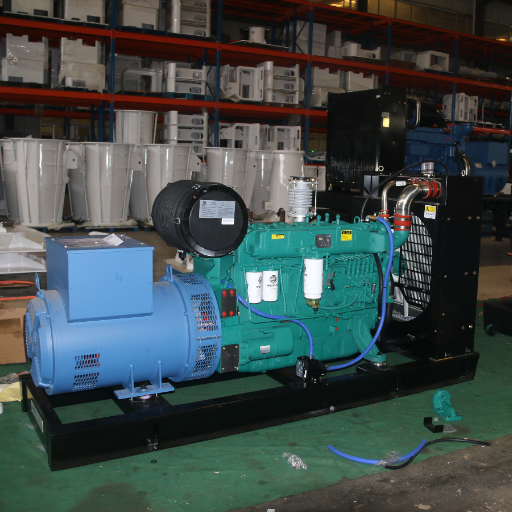
ISO 8528: The Standard Built for Generator Sets
ISO 8528 is the international standard written specifically for generator sets, and it is where procurement conversations get serious. Two parts of it deserve your attention.
First, power ratings. ISO 8528 defines Emergency Standby Power (ESP), Prime Power (PRP), and Continuous Power (COP). These are not marketing labels; they define how many hours per year and at what load profile the genset may run. A unit quoted at “500kW” without a stated rating could be a 500kW standby machine that a competitor’s 450kW prime-rated unit would outperform in real use. Comparing quotes without aligning ratings is how buyers overpay.
Second, performance classes. ISO 8528-5 defines classes G1 through G4 based on how tightly the genset holds voltage and frequency during load changes. A construction site running tower cranes can accept G1. A hospital feeding MRI machines and life-safety systems needs G2 or G3 transient response. Ask every candidate manufacturer which class their units are tested to. Most low-end suppliers have never been asked this question, and their silence will tell you everything.
Regional Emissions Compliance
If your project sits in a regulated market, emissions compliance is not optional. North American installations generally require EPA Tier 4 Final; European projects require EU Stage V. Reputable manufacturers design these variants deliberately, with certified aftertreatment systems, rather than promising to “handle it later.” Confirm compliance for your destination market at the quotation stage, because retrofitting emissions hardware after delivery is effectively impossible.
Factory-Direct vs. Tier 1 Brands: The Real Cost Equation
Buyers often frame this decision as Caterpillar or Cummins Power Generation versus everyone else. That framing misses the actual math.
Tier 1 brands build excellent equipment, and for some mission-critical applications their global dealer networks justify the premium, which commonly runs 40% to 100% above comparable factory-direct equipment. But a certified generator manufacturer in China using the same Cummins or Perkins engines, the same Stamford alternators, and the same Deep Sea controllers delivers equivalent core performance at a fraction of the capital cost. What you give up is brand prestige and a local dealer showroom. What you gain is budget you can redirect into redundancy, longer fuel autonomy, or a second unit.
In 2024, a facility manager named Priya conducted a comparative assessment for a pharmaceutical plant on the outskirts of Hyderabad. A Tier 1 supplier quoted $210,000 (including delivery to the site) for a single 800 kVA standby generator set. In contrast, the direct-from-manufacturer quote totaled $238,000 for two 500 kVA units operating in parallel—units built using engines from the same series and certified to ISO 8528-5 G2 standards. By investing just 13% more, she secured a genuine N+1 redundancy configuration. During a subsequent grid failure in the monsoon season, one unit handled the entire critical load while the other underwent routine maintenance; the single-unit solution offered by the Tier 1 supplier could not provide this margin of safety.
The lesson is not that premium brands are overpriced. It is that a verified source manufacturer changes what your budget can buy.
Questions to Ask a Diesel Generator Set Manufacturer Before You Sign
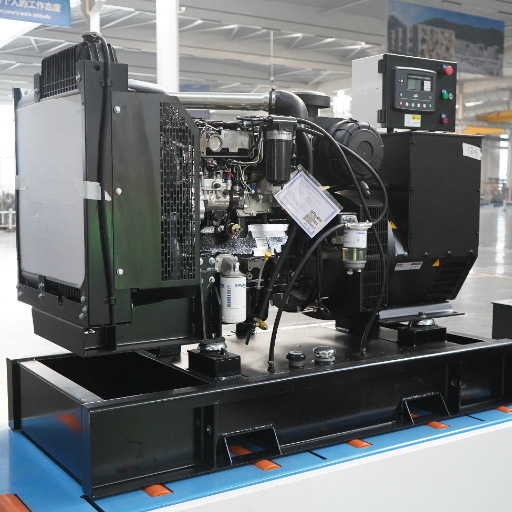
Copy this list into your next RFQ. The speed and precision of each supplier’s answers will rank your candidates faster than any brochure:
- Can you provide your engine and alternator brand authorization certificates?
- Will you share the load bank FAT report at 25/50/75/100% load for my specific serial number?
- Which ISO 8528 power rating (ESP, PRP, COP) and performance class (G1-G3) applies to my quote?
- Can I tour your factory, in person or by live video, before order confirmation?
- What is your written spare parts availability commitment, and what is the typical parts lead time to my country?
- Which third-party body (SGS, BV, TUV) audited your ISO certificates, and what are the certificate numbers?
- Can you provide references from export projects in my region or industry?
A true diesel generator set manufacturer answers all seven within days, with documents attached. Every hesitation, deflection, or “we will confirm after deposit” answer is information.For an expanded checklist you can drop straight into your procurement process, see our full list of questions to ask a generator manufacturer before signing.
Frequently Asked Questions
Is it safe to buy a diesel generator set from a Chinese manufacturer?
Yes, provided you verify the factory using the criteria above. China builds the engines and components inside many Western-branded gensets. The risk is not geography; it is unverified suppliers. Apply the same audit rigor you would anywhere.
What is the difference between a generator and a generator set?
A generator technically refers to the alternator alone. A generator set is the complete integrated unit: engine, alternator, controls, cooling, and enclosure, tested and rated as one system. For procurement purposes, always specify and evaluate the full set.
How much does an industrial diesel generator set cost?
Pricing varies widely by rating, configuration, and engine brand, but factory-direct sourcing typically reduces capital cost by 20% to 40% versus trading company pricing, and substantially more versus Tier 1 brand premiums. Request itemized quotes at matched ISO 8528 ratings to compare accurately.
How long should a diesel generator set last?
A quality industrial genset delivers 15,000 to 30,000 operating hours, often 20 to 30 years of standby service, when properly maintained. That lifespan is exactly why the manufacturer’s parts support and engineering continuity matter as much as the machine itself.
Conclusion: Audit the Factory Before It Ships the Machine
Choosing a diesel generator set manufacturer is not a branding decision; it is a verification exercise. The framework is straightforward:
- Confirm you are dealing with a real factory, not a trading company, using live tours and authorization letters
- Demand witnessed load bank testing and ISO 8528-rated performance, not generic certificates
- Secure written spare parts and after-sales commitments before payment
- Compare quotes at matched power ratings, and let factory-direct pricing expand what your budget buys
Every red flag in this guide is something a genuine manufacturer will never trigger. That is the standard we hold ourselves to: a 300,000-square-meter facility operating since 1999, a national standard testing center behind every unit, ISO9001, CE, and CCC certifications, and a team of 80+ engineers who answer technical questions directly because they designed the machine.
Your next step is simple: put us through the checklist. Contact the ZC Power engineering team for a live factory tour, a sample FAT report, and a factory-direct quote on your project. Or explore our full range of industrial diesel generator sets to see what a source manufacturer builds from 8kVA to 4000kVA.