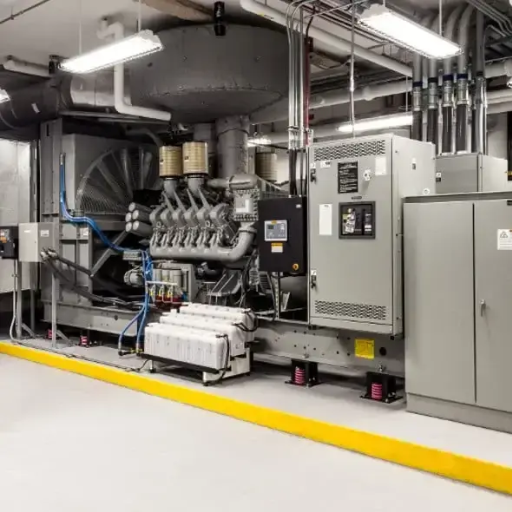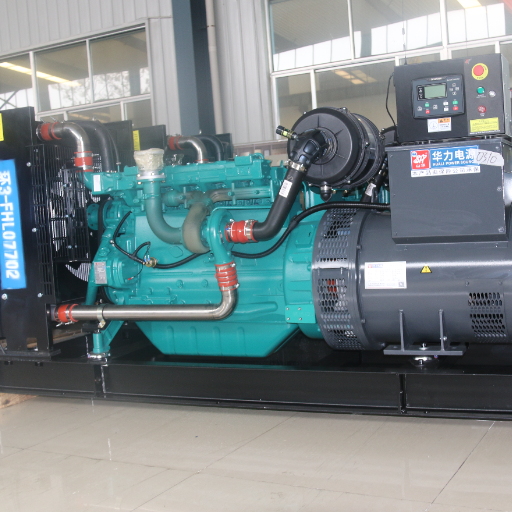
Industrial Natural Gas Generators: The Complete Buyer’s Guide (2026)
Industrial natural gas generators are spark-ignited generator sets that convert pipeline or bottled gas into electrical power, and for most facilities with reliable gas access, they deliver lower fuel costs, cleaner emissions, and unlimited runtime compared to diesel. If your site has a stable gas supply and runs more than a few hundred hours per year, a natural gas genset is often the most cost-effective power solution you can buy.
Consider what happened at a bottling plant outside Jakarta last year. The facility manager, Rahman, was spending over $11,000 a month on delivered diesel for his prime power units. After switching to a 500kW natural gas generator set tied into the municipal gas line, his fuel bill dropped by roughly 40%, and his team stopped managing fuel deliveries entirely. The payback period on the new equipment came in under three years.
Stories like Rahman’s are becoming common. Rising diesel prices, tightening emissions regulations, and expanding gas infrastructure are pushing industrial buyers worldwide to reconsider natural gas. Yet most buying guides assume you operate in the United States, with cheap pipeline gas and EPA permitting rules. This guide is different. Drawing on ZC Power’s 25 years of manufacturing generator sets for export markets across Africa, the Middle East, Southeast Asia, and South America, we cover what actually matters when you specify, size, and source industrial natural gas generators: the engineering, the gas supply questions most vendors skip, and the sourcing decisions that protect your investment.
Key Takeaways
- Natural gas generators cost 30–60% less per kWh to fuel than diesel where pipeline access exists, but diesel still wins for low-runtime standby and sites without gas infrastructure.
- Gas engines derate faster than diesel at altitude (roughly 4% per 1,000 ft vs. 2–3%), so high-elevation sites must size up accordingly.
- Gas supply design makes or breaks a project: keep full-load pressure drop under 2 inches of water column and give every genset a dedicated regulator.
- Combined heat and power (CHP) configurations can recover $100,000 or more annually in thermal value on a 500kW unit.
- Sourcing factory-direct from a certified manufacturer eliminates middleman markups and unlocks custom voltage, enclosure, and dual-fuel options.
What Is a Natural Gas Generator and How Does It Work?
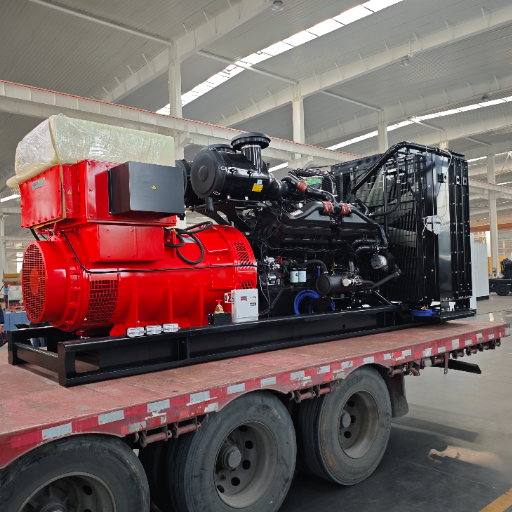
A natural gas generator set is a complete power unit built around a spark-ignited internal combustion engine. Instead of compression-igniting diesel fuel, the engine mixes natural gas with air and ignites it with spark plugs, much like a gasoline engine but engineered for continuous industrial duty. The engine drives an alternator, which produces three-phase electrical power for your facility.
Spark-Ignited vs. Dual-Fuel Configurations
Buyers generally choose between two configurations. A dedicated spark-ignited gas engine runs purely on natural gas and delivers the lowest emissions and simplest fuel system. A dual-fuel engine runs primarily on gas but can switch to diesel automatically if gas pressure drops, giving you fuel redundancy for critical loads.
For hospitals, data centers, and other life-safety applications, dual-fuel offers an attractive middle ground. If fuel redundancy is on your radar, our deeper look at the dual fuel generator natural gas diesel setup explains how the automatic switchover works and when it earns its extra cost. For prime power in oil and gas fields or manufacturing plants with stable gas supply, a dedicated gas engine is usually the better economic choice.
Core Components of a Gas Genset
Every industrial natural gas generator set includes five core systems:
- Gas engine: The prime mover, typically a heavy-duty spark-ignited block rated for continuous operation
- Alternator: Converts mechanical rotation to electrical power; specify 100% copper windings (Stamford or Leroy-Somer class) for stable output
- Gas train: The regulator, valves, and safety shutoffs that condition incoming gas to the pressure the engine requires
- Control panel: Digital controllers (Deep Sea or SmartGen) that manage starting, protection, and synchronization
- Enclosure: Open-frame, sound-attenuated canopy (below 75 dB at 7 meters), or fully containerized housing
Natural Gas vs. Diesel Generators: An Engineer’s Comparison
The natural gas generator vs. diesel debate dominates every procurement discussion we have with clients. The honest answer is that neither fuel wins universally. The right choice depends on your runtime hours, gas access, and emissions requirements. Here is how the two technologies compare on the factors that matter:
| Factor | Natural Gas | Diesel |
|---|---|---|
| Electrical efficiency | 30–38% at full load | 35–42% at full load |
| Fuel cost per kWh | 30–60% lower with pipeline access | Higher, plus delivery logistics |
| Fuel storage | None required (pipeline-fed) | On-site tanks, polishing, spill containment |
| Runtime | Unlimited with pipeline supply | Limited by tank capacity |
| Emissions | Low particulates, simpler permitting | Requires Tier 4 aftertreatment (DEF/SCR) |
| Altitude derating | ~4% per 1,000 ft | ~2–3% per 1,000 ft |
| Grid independence | Depends on gas utility | Fully autonomous |
Diesel engines are more thermally efficient, converting roughly 35–42% of fuel energy into electricity versus 30–38% for gas engines, according to GenPower USA’s efficiency analysis. But raw efficiency is not the same as operating cost. In markets with pipeline access, natural gas frequently costs 30–60% less per kWh produced, as OnPoint Generation’s facility comparison documents. The more hours you run, the stronger the gas advantage becomes.For a full breakdown of the trade-offs on cost, reliability, and disaster performance, see our dedicated natural gas vs diesel generator comparison before you commit to either fuel.
Emissions are the other decisive factor. Natural gas produces minimal particulate matter and significantly lower NOx, which simplifies air permitting in regulated markets. If permitting is a concern in your jurisdiction, our overview of natural gas generator emissions walks through the CO2, NOx, and methane numbers you’ll need to document. Diesel standby units face runtime restrictions and expensive aftertreatment systems in strict jurisdictions.
When Diesel Still Wins
Be skeptical of any vendor who tells you gas is always the answer. Diesel remains the correct choice when your site has no gas infrastructure, when you need full independence from utilities (hospitals and life-safety systems), or when annual runtime is low. A standby unit running 100 hours a year will never recover the cost of gas pipeline connection fees.
Want a straight answer for your specific site? [Talk to a ZC Power engineer] about your runtime profile and gas access, and we will model both options before you spend anything.
How to Size a Natural Gas Generator for Your Facility
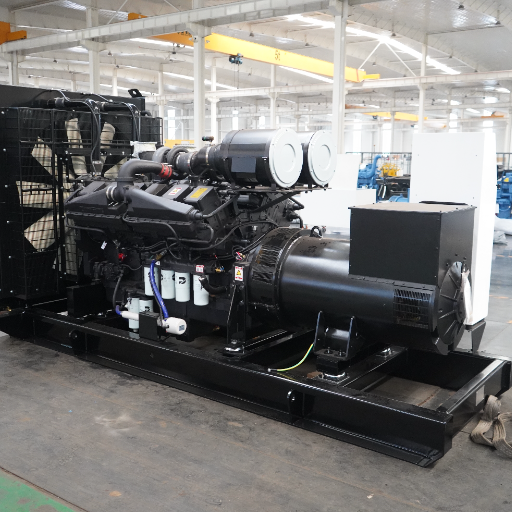
Correct natural gas generator sizing follows the same discipline as diesel sizing, with a few gas-specific adjustments. Get it wrong in either direction and you pay: undersized units trip breakers during motor starts, while chronically underloaded engines suffer carbon buildup and shortened service life.
Step 1: Calculate Running Load Plus Motor Starting Surge
List every critical load the generator must carry, then identify the motors among them. An electric motor started across the line draws 2 to 4 times its running current during startup, and some heavy machinery surges to 5 times running current, as Innovus Power’s industrial generator guide notes. Soft starters and variable frequency drives reduce this inrush dramatically, so document your starting method for each large motor.
Step 2: Apply the 20–30% Safety Margin
Generators run most efficiently at 70–80% of rated capacity. Add a 20–30% margin above your calculated peak load to cover future expansion and keep the engine in its healthy operating band. If your peak load including surge is 400kW, specify a 500kW unit, not a 400kW unit.
Step 3: Apply Altitude and Temperature Derating
This is where gas sizing diverges from diesel. Naturally aspirated gas engines lose roughly 4% of rated output per 1,000 ft of elevation, compared to 2–3% for diesel, per Generator Source’s buyer guide. Turbocharged gas engines perform better but still derate.
A mining contractor we worked with in South America learned this the hard way. His team installed a 300kW gas genset, correctly sized for their load, at a camp sitting 8,000 ft above sea level. Nobody had applied altitude derating. The unit effectively became a 225kW machine, and it tripped every time the camp’s water pumps started. Replacing it with a properly derated 400kW unit cost far more than specifying it correctly the first time. Always tell your manufacturer your exact site elevation and ambient temperature range.
Step 4: Match kW Ranges to Facility Type
As a starting framework, typical natural gas generator sizes by application run as follows, consistent with Depco’s sizing guidance:
- Restaurants, clinics, retail: 30–80kW
- Manufacturing plants and office buildings: 100–300kW
- Data centers, campuses, high-rises: 500kW to 1MW and above, often with parallel gensets
These are starting points, not answers. For a step-by-step walkthrough of the full calculation, our natural gas generator sizing guide covers load auditing, surge factors, and derating in detail, or you can request a free site assessment from our engineering team.
Gas Supply Requirements Most Buyers Overlook
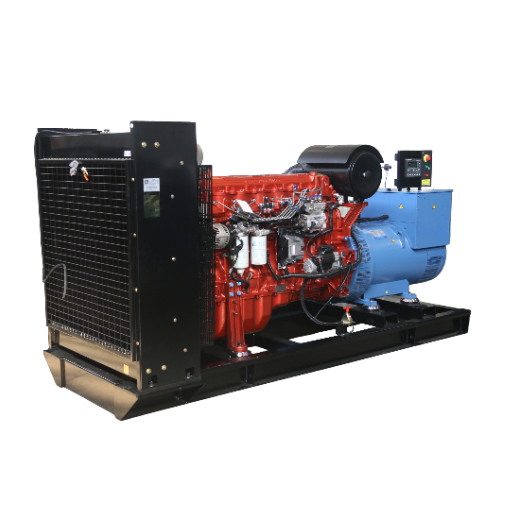
Here is the section most buying guides skip, and the one that causes the most project failures. A natural gas generator is only as reliable as the gas supply feeding it. Before you sign any purchase order, answer these questions with your gas utility.
Keep Full-Load Pressure Drop Under 2 Inches of Water Column
Gas pressure falls as flow increases. If the pressure at the engine drops too far when the genset ramps to full load, the engine starves and shuts down, usually at the exact moment you need power most. The Generac industrial gas supply design guide specifies keeping the pressure drop below 2 inches of water column from no-load to full-load. Ask your utility for the available pressure and flow at your meter, and size the gas line accordingly.Getting these details right is a core part of a clean commissioning, which is exactly what our natural gas generator installation guide covers, from gas line routing to final sign-off.
Give Every Genset a Dedicated Regulator and Fuel Line
Never share a gas line between your generator and other large appliances, such as boilers or furnaces. When those appliances fire up, they rob pressure from the generator. In multi-genset installations, each unit needs its own regulator. This is inexpensive engineering that prevents expensive failures.
No Pipeline? You Still Have Options
Many of our export markets lack municipal gas networks, yet gas power remains viable:
- Wellhead and flare gas: Oil and gas operators can generate power from gas that would otherwise be flared, turning a waste product into free fuel
- CNG and LNG virtual pipelines: Compressed or liquefied gas delivered by truck and regasified on-site serves mines and remote industrial camps
- Biogas: Agricultural operations, landfills, and wastewater plants can run modified gas gensets on methane they produce themselves If you generate methane on-site, our biogas generator guide explains how we calibrate the gas train and engine to handle variable methane content and contaminants.
If any of these apply to your project, tell your manufacturer upfront. Gas quality, methane content, and contaminants all affect engine specification, and a factory with real engineering depth will configure the gas train and engine calibration to match.Where bottled fuel is your only option, it’s also worth weighing a natural gas vs propane generator comparison, since propane changes both your storage strategy and your engine setup.
Industrial Applications for Natural Gas Generators
Standby Power for Factories and Commercial Facilities
For manufacturing plants and commercial buildings with municipal gas access, a commercial natural gas generator on standby duty eliminates fuel storage, fuel polishing, and delivery logistics. Paired with an AMF (Auto Mains Failure) panel and automatic transfer switch, the genset detects a grid failure and restores power within seconds, with no operator intervention and no concern about how long the outage lasts.To see how these units are configured for emergency duty specifically, our guide to the standby natural gas generator covers transfer switching, response times, and duty ratings.
Prime and Continuous Power in Heavy Industry
Oil and gas fields, mining operations, and agricultural processors run generators thousands of hours per year, which is precisely where gas economics shine. Continuous-duty gas engines serve wellhead power, compressor stations, and remote camps, often fueled by the site’s own gas. If uninterrupted runtime is your priority, it helps to understand how long can a natural gas generator run on pipeline supply and what maintenance intervals set the practical limits.
Combined Heat and Power: The Hidden ROI
A gas genset converts roughly a third of its fuel into electricity. Much of the rest becomes heat, and capturing that heat transforms project economics. Combined heat and power (CHP) systems route engine jacket water and exhaust heat into process hot water, steam, or absorption chilling. According to Power Generation Enterprises’ industrial buyer guide, a 500kW CHP installation can recover 100,000to100,000to145,000 per year in thermal energy value. Food processing, textiles, breweries, and greenhouses are ideal candidates.
Mission-Critical Power for Data Centers
Facilities that cannot tolerate a second of downtime demand a different level of engineering, from redundant configurations to fast load acceptance. Our guide to the natural gas generator for data center applications explains the parallel setups, dual-fuel redundancy, and controls these environments require.
6 Questions to Ask Before You Buy
Whether you buy from ZC Power or anyone else, get documented answers to these six questions:
- What duty rating is the engine? Standby (ESP), Prime (PRP), and Continuous (COP) ratings are not interchangeable. Insist the rating matches your actual runtime profile.
- What emissions certification does it carry? Verify compliance with your local air quality authority before purchase, not after delivery.
- What enclosure and noise level is included? For urban or hospital installations, specify a sound-attenuated canopy rated below 75 dB at 7 meters.
- Which controller and ATS are supplied? Premium panels (Deep Sea, SmartGen) with AMF capability protect your loads and enable remote monitoring.
- How was the unit tested? Every genset should pass full load-bank testing at the factory, with a test report you can review.
- Who supports it after commissioning? Confirm spare parts availability, technical documentation, and direct access to engineers who know the build.Plan ahead here by reviewing our natural gas generator maintenance guide, which lays out the service intervals and spare parts that keep a gas engine reliable for years.
Why Source Natural Gas Generators Directly from the Manufacturer
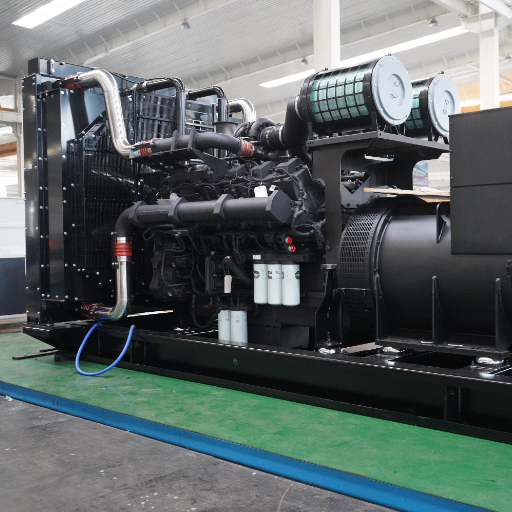
The final decision is where to buy, and it matters more than most buyers expect. As a gas genset manufacturer established in 1999, we see proof of this constantly. A distributor we now partner with in East Africa spent years reselling gas gensets bought through a trading company. When a client’s 250kW unit developed a gas train fault, the trader had no engineering staff and no parts stock. The unit sat idle for seven weeks. After switching to factory-direct supply, the same distributor gets technical schematics from the engineers who built each machine, OEM parts air-shipped on request, and custom-branded canopies that build his own local reputation.
Working directly with a source manufacturer delivers four concrete advantages:
- Factory-direct pricing: No middleman markup of 20–40%, so your budget goes into the machine, not a commission chain .To set realistic expectations before you request a quote, our natural gas generator price guide breaks down equipment and installed costs by size class.
- Verified quality: ZC Power operates a 300,000-square-meter facility established in 1999, with ISO9001, CE, and CCC certification and a national-standard testing center that load-tests every unit before shipment
- Real customization: Voltage and frequency matched to your grid, dual-fuel configurations, containerized enclosures, and OEM/ODM branding for distributors
- Lifetime support: A dedicated team of 80+ technical engineers provides installation guidance and parts supply for the life of the equipment
Trading companies sell what is in stock. Manufacturers engineer what your site actually needs. The distinction shows up years later, in uptime and in your total cost of ownership.
Frequently Asked Questions
Are natural gas generators cheaper to run than diesel?
Yes, in most markets with pipeline access. Natural gas typically costs 30–60% less per kWh generated than diesel, and the savings grow with annual runtime. For standby units running under 200 hours per year, however, the fuel savings rarely offset gas connection costs, so diesel often remains more economical.
Can a natural gas generator run continuously?
Yes, provided the engine is rated for Prime (PRP) or Continuous (COP) duty and the gas supply is stable. Continuous-duty gas gensets routinely power oil fields, mines, and industrial plants around the clock. Pipeline supply means runtime is effectively unlimited, with no refueling stops.
What size natural gas generator do I need for a factory?
Most manufacturing plants require 100–300kW, but the correct size depends on your running load, motor starting surges, a 20–30% safety margin, and altitude or temperature derating. A factory at high elevation may need to upsize by 25% or more. A professional load audit is always worth the effort.
What happens to a natural gas generator if gas pressure drops?
Low gas pressure causes the engine to lose power or shut down on its protection system. This is why supply design matters: keep full-load pressure drop under 2 inches of water column, use dedicated regulators, and consider a dual-fuel configuration for critical loads that cannot tolerate a gas interruption.
Conclusion: Specify with Engineering Discipline, Source with Confidence
Industrial natural gas generators offer a compelling package for the right applications: fuel costs 30–60% below diesel, cleaner emissions and simpler permitting, unlimited runtime on pipeline supply, and CHP economics that can return six figures annually. But those benefits only materialize when the project is engineered correctly.
Keep four principles in mind as you move forward. First, match the duty rating to your real runtime profile. Second, size for running load plus motor surge, plus margin, plus altitude and temperature derating. Third, engineer the gas supply with the same rigor as the electrical system: pressure stability, dedicated regulators, and honest answers from your utility. Fourth, choose a supply partner who will still answer the phone in five years, with parts and engineering support behind every unit.
Whether you are specifying standby power for a factory, prime power for a remote site, or a CHP system that monetizes waste heat, our engineering team can help you configure the right solution at true factory-direct pricing.
[Contact the ZC Power Engineering Team Today] for a free site assessment, load analysis, and customized quote on your next natural gas generator set.